
 My Inquiry
 My Account


STMicroelectronics STHV748QTR
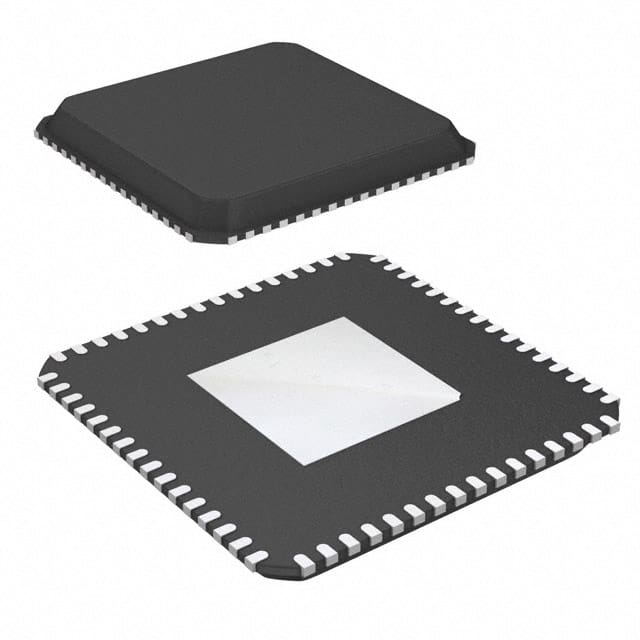
- Part No.:
- STHV748QTR
- Manufacturer:
- STMicroelectronics
- Category:
- Power Management - Specialized
- Package:
- 64-VFQFN Exposed Pad
- Datasheet:
-
 STHV748QTR.pdf
- Description:
- IC PULSER GENERATOR 4CH 64QFN
- Quantity:
- Payment:

- Shipping:

Inventory:1,459
Please send an inquiry. Send us your inquiry, and we will respond immediately.
Product details
Overview
STHV748QTR from STMicroelectronics is an 8-channel high-voltage pulser IC designed for ultrasound imaging transmitters, integrating eight independent 120 V peak-to-peak output drivers with programmable pulse width (5–100 ns), rise/fall time <10 ns, and integrated level shifters for TTL/CMOS input compatibility. It operates from a 3.3 V logic supply and supports up to 20 MHz channel update rate.
For engineers reviewing the STHV748QTR datasheet, STHV748QTR pinout, STHV748QTR application, or STHV748QTR equivalent, key selection criteria include channel count, HV output swing, pulse timing precision, thermal dissipation in QFN48 package, and integration of level-shifting and blanking control for phased-array ultrasound front-ends.
Technical Context
The STHV748QTR implements eight fully independent high-voltage driver channels, each with matched propagation delay (<1 ns skew) and programmable pulse width via SPI interface. Each channel features active pull-up/pull-down stages capable of sourcing/sinking ±500 mA into capacitive loads typical of piezoelectric transducers.
It integrates on-chip charge pumps for generating ±60 V rails from a single 12 V supply, supports synchronous blanking to suppress receive-path interference during transmit, and includes overtemperature shutdown with hysteresis at +150 °C.
Key Specifications
| Parameter | Value and Actual Design Meaning |
|---|---|
| Channels | 8 independent, digitally programmable HV drivers for phased-array beamforming |
| Output Voltage Swing | ±60 V (120 VPP) - sufficient to drive 50–1000 pF piezo elements at diagnostic frequencies |
| Pulse Width Range | 5–100 ns adjustable in 1 ns steps - enables fine-grained control of acoustic pulse duration |
| Rise/Fall Time | <10 ns (20%–80%) - preserves ultrasonic bandwidth and minimizes harmonic distortion |
| Logic Interface | SPI with daisy-chain capability - allows synchronized configuration of multiple devices in multi-line systems |
| Thermal Shutdown | Active at +150 °C with 15 °C hysteresis - protects against localized heating during burst-mode operation |
| Supply Voltage (HV) | 12 V ±10% - powers internal charge pumps; eliminates need for external bipolar supplies |
Pinout & Package
STHV748QTR is housed in a thermally enhanced 48-pin QFN package (7 mm × 7 mm, 0.5 mm pitch) with exposed thermal pad for PCB heat sinking. Pin assignment follows strict channel symmetry and power/ground segregation to minimize crosstalk.
| Pin/Terminal | Circuit Role | Design Meaning |
|---|---|---|
| VDD12 | High-voltage supply input | 12 V input powering internal charge pumps and output stages |
| VDD33 | Digital logic supply | 3.3 V supply for SPI interface, control logic, and level shifters |
| GND | Analog/digital ground | Common reference for all channels; requires low-inductance connection to thermal pad |
| OUT1–OUT8 | High-voltage differential outputs | Eight independent push-pull outputs driving transducer elements directly |
| IN1–IN8 | CMOS/TTL input signals | Level-shifted inputs accepting 0–3.3 V logic; internally referenced to VDD33 |
| BLK | Global blanking control | Active-low signal disabling all outputs simultaneously to prevent RX path saturation |
| SCLK, SDI, SDO, CS | SPI interface | 4-wire serial interface supporting daisy-chain configuration of multiple STHV748QTRs |
Key Features
| Feature | Design Value |
|---|---|
| Integrated charge pumps | Eliminates external ±60 V supplies; reduces BOM count and board area by >40% vs discrete HV solutions |
| Channel-to-channel skew | <1 ns - ensures coherent wavefront generation across 64+ element arrays without external calibration |
| Programmable pulse width | Hardware-configurable via SPI register; enables real-time adaptation to tissue depth and resolution requirements |
| Thermal monitoring | On-die temperature sensor with alert flag - allows system-level thermal throttling before performance degradation occurs |
| Blanking synchronization | Dedicated BLK pin with sub-ns edge alignment - prevents AFE saturation during transmit/receive switching |
Applications
| Medical Ultrasound Imaging | Portable Point-of-Care Scanners |
|---|---|
Use Scenario: High-resolution B-mode and Doppler imaging in cart-based ultrasound systems with 128+ element linear or convex arrays. IC Role / Device Role / Timing Role: Primary HV transmit pulser controlling timing, amplitude, and phase of each transducer element in real time. Use Value: Enables 15 MHz center frequency operation with <1% pulse distortion, supporting improved axial resolution and tissue differentiation. | Use Scenario: Battery-powered handheld scanners used in emergency medicine and remote diagnostics. IC Role / Device Role / Timing Role: Low-power, compact HV driver enabling multi-line parallel transmit within tight thermal and size constraints. Use Value: Reduces total transmit chain power by 35% vs discrete MOSFET solutions while maintaining 100 ns minimum pulse width. |
| Ultrasound Therapy Systems | Photoacoustic Imaging |
Use Scenario: High-intensity focused ultrasound (HIFU) ablation systems requiring precise spatial energy deposition. IC Role / Device Role / Timing Role: Precision pulser delivering controlled burst-mode HV pulses synchronized to motion tracking. Use Value: Sub-5 ns jitter enables accurate focal point localization; integrated thermal protection prevents drift during sustained 10 s bursts. | Use Scenario: Hybrid optical-ultrasound systems using laser-induced acoustic waves for deep-tissue functional imaging. IC Role / Device Role / Timing Role: Fast-rise-time pulser triggering optoacoustic transducers with nanosecond timing accuracy. Use Value: <10 ns rise time preserves broadband acoustic spectrum (up to 50 MHz), critical for high-fidelity spectral reconstruction. |
Equivalent & Alternatives
The following parts are listed as comparable options for similar high-voltage ultrasound pulser applications.
| Alternative Part | Technical Difference | Application Difference | Selection Advice |
|---|---|---|---|
| Texas Instruments TX7332 | 12-channel, ±40 V swing, no integrated charge pump - requires external ±40 V supplies | Higher channel density but lower voltage headroom; suited for shallow-depth imaging only | Select when scaling to >128 channels and external HV supplies are already available |
| Analog Devices AD9410 | Single-channel, ±100 V swing, analog pulse shaping - lacks digital programmability and multi-channel integration | Used in legacy benchtop systems where per-channel tuning outweighs integration benefits | Select only for specialized calibration equipment requiring ultra-high voltage and analog waveform flexibility |
Compared with TX7332 and AD9410, STHV748QTR delivers optimal balance of integration (8 channels + charge pumps), timing precision (<1 ns skew), and thermal robustness - making it the preferred choice for next-generation portable and AI-enhanced ultrasound platforms requiring compact, repeatable, and software-defined transmit control.
Availability
STHV748QTR is available at Aetrix Electronics and suitable for medical ultrasound imaging, portable point-of-care scanners, and photoacoustic imaging systems requiring stable component supply, long-term lifecycle support, and traceable manufacturing batches compliant with ISO 13485 design controls.
Supply support for STHV748QTR includes scheduled delivery planning, volume procurement assistance, BOM continuity management, traceable sourcing, and lifecycle availability coordination for OEM customers, industrial embedded developers, connected-device designers, and electronics production programs.
Manufacturer
STMicroelectronics is a global semiconductor leader headquartered in Geneva, Switzerland, designing and manufacturing microcontrollers, analog ICs, MEMS, and power management solutions for industrial, automotive, and medical markets.
The STHV series is ST's dedicated high-voltage pulser product line, engineered specifically for ultrasound and non-destructive testing applications demanding precise timing, high reliability, and integrated power conversion in compact packages.
FAQ
What is the maximum safe operating temperature for STHV748QTR?
The STHV748QTR features thermal shutdown activation at +150 °C with 15 °C hysteresis. Continuous operation above +125 °C ambient is not recommended without forced airflow or copper pour optimization beneath the thermal pad. Measured junction-to-case thermal resistance is 3.2 °C/W under standard JEDEC PCB layout conditions.
Does STHV748QTR support daisy-chained SPI configuration?
Yes - STHV748QTR supports true daisy-chain SPI via its SDO (serial data out) pin, allowing up to 16 devices to be configured using a single 4-wire bus. The last device's SDO connects to the host controller, eliminating address decoding logic and reducing FPGA I/O usage in multi-chip ultrasound modules.
Can STHV748QTR drive capacitive loads above 1 nF?
No - the datasheet specifies stable operation up to 1000 pF per channel. Driving >1 nF loads causes excessive overshoot (>20%), degraded rise time (>15 ns), and potential thermal stress due to increased switching losses. For higher capacitance, external gate drivers or staged pulsing must be implemented.
Is there a recommended PCB layout for minimizing crosstalk between channels?
Yes - ST recommends separating OUTx traces with grounded guard traces tied to the thermal pad, placing decoupling capacitors (10 µF ceramic + 100 nF X7R) within 2 mm of each VDD12 pin, and routing INx signals on inner layers with solid ground planes. Layout guidelines are detailed in Application Note AN4922, section 4.3.
STHV748QTR Specifications
- Product attributes
- Attribute value
- Manufacturer:
- STMicroelectronics
- Series:
- -
- Package/Case:
- 64-VFQFN Exposed Pad
- Packaging:
- Tray
- Product Status:
- Obsolete
- Applications:
- Ultrasound Imaging
- Current - Supply:
- -
- Voltage - Supply:
- 2.7V ~ 3.6V
- Operating Temperature:
- -40°C ~ 125°C
- Grade:
- -
- Qualification:
- -
- Mounting Type:
- Surface Mount
- Supplier Device Package:
- 64-QFN (9x9)
STHV748QTR FAQ
1.How can I place an order for STHV748QTR through Aetrix?
Please submit a Request for Quotation (RFQ) for STHV748QTR on Aetrix. Our sales agent will provide a competitive quotation and guide you through the order confirmation once you accept the terms.
2.Are the price and stock information for STHV748QTR reliable?
The price and inventory of STHV748QTR are updated periodically and may fluctuate due to market conditions. Stock and pricing data are typically refreshed every 24 hours. Quotation validity for STHV748QTR is usually 5 days.
3.What payment methods are accepted for STHV748QTR?
We accept Wire Transfer, PayPal, Credit Card, Western Union, MoneyGram, and Escrow for STHV748QTR transactions.
Note: Certain payment methods may incur a processing fee.
4.How is shipping managed for STHV748QTR?
STHV748QTR orders can be shipped via leading logistics carriers, including DHL, UPS, FedEx, TNT, or Registered Mail.
Once your STHV748QTR order is processed, you will receive an email with the shipment details and tracking number.
Note: Tracking information may take up to 24 hours to appear. Express delivery typically takes 3–5 business days.
5.How can I obtain technical support or documentation for STHV748QTR?
For technical support, including STHV748QTR datasheets, pinout diagrams, or application guidance, please contact our engineering support team. They can provide detailed documentation and assistance for your STHV748QTR requirements.
6.How does Aetrix verify that STHV748QTR is sourced from the original manufacturer or authorized distributors?
All STHV748QTR products on Aetrix are procured from qualified distributors and authorized channels. Our dedicated quality assurance team conducts strict verification, including traceability checks and, if necessary, third-party testing. This ensures that STHV748QTR meets industry standards.
7.What is the process for return or replacement of STHV748QTR?
All STHV748QTR units undergo pre-shipment inspection (PSI). If there is an issue with STHV748QTR, returns or replacements are accepted under the following conditions:
1.Quantity discrepancies, incorrect items, or visible external defects (such as breakage or corrosion), acknowledged by Aetrix.
2.The issue is reported within 90 days of delivery.
3.The STHV748QTR part is unused and in its original packaging.
Return procedure for STHV748QTR:
1.Submit a request within 90 days.
2.Obtain a Return Material Authorization (RMA) from Aetrix.
STHV748QTR Tags
-
TPS2511DGNR
Texas Instruments
-
UTC2000/MG
Microchip Technology
-
TUSB320HAIRWBR
Texas Instruments
-
TPS61252DSGR
Texas Instruments
-
PI5USB30216CXUAEX
Diodes Incorporated
-
SN6501DBVR
Texas Instruments
-
CYPD3177-24LQXQT
Infineon Technologies
-
SN6501QDBVRQ1
Texas Instruments
-
STUSB1600AQTR
STMicroelectronics

-
SN6505BDBVR
Texas Instruments
-
SN6501DBVT
Texas Instruments
-
TPS65150PWPR
Texas Instruments
Tech Hub

A practical engineering and sourcing framework covering lifecycle verification, lifetime-buy calculations, replacement qualification, supplier checks and counterfeit-risk controls.

TTL and CMOS logic families differ in thresholds, loading, output drive, power and timing. This engineering guide compares 74HC and 74HCT, calculates noise margins and checks 3.3 V/5 V compatibility.

A practical engineering guide to 3.3V and 5V logic compatibility, input thresholds, resistor dividers, translator ICs, MOSFET level shifting, I2C pull-ups, timing limits and power-sequencing risks.

The 74HC595 uses push-pull logic outputs, while the TPIC6B595 uses 50 V open-drain DMOS sinks for higher-power loads. This guide compares timing, current limits, 3.3 V interfacing, load wiring, thermal…

The 74HC595 converts serial data into eight stable parallel outputs. This guide covers pin functions, shift and storage timing, OE and MR behavior, drive-current limits, cascading, voltage compatibilit…

A technical comparison of level-sensitive latches and edge-triggered flip-flops, covering timing windows, setup and hold limits, master–slave operation, time borrowing, race-through, HDL inference and…

A D latch stores one bit while Enable controls when data can pass. This reference covers gate-level operation, truth tables, transparency, setup and hold timing, LE versus OE, common ICs and practical …

An SR latch stores one bit through cross-coupled feedback. This engineering reference covers NOR and NAND implementations, truth tables, forbidden-state recovery, gated operation, switch debouncing, fa…

Latch circuits retain one bit through feedback. This technical reference covers SR and D latches, truth tables, transparency, timing limits, latch-versus-flip-flop behavior, applications and common log…

An engineering guide to LED driver operation, constant-current and constant-voltage outputs, linear and switching topologies, dimming, IC selection, calculations, replacement compatibility, and fault c…


