
 My Inquiry
 My Account


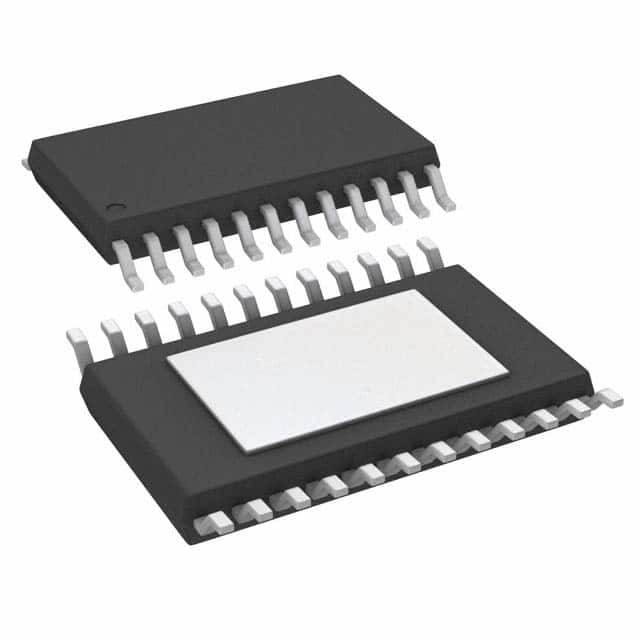
STMicroelectronics STLUX385ATR
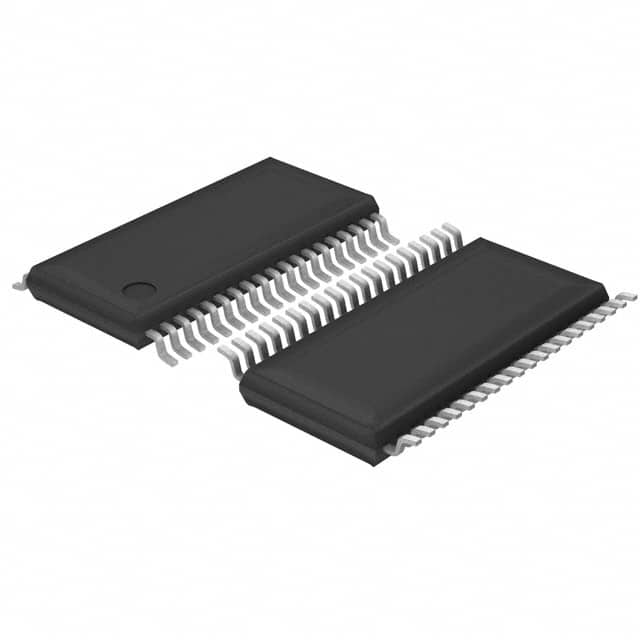
- Part No.:
- STLUX385ATR
- Manufacturer:
- STMicroelectronics
- Category:
- Power Management - Specialized
- Package:
- 38-TFSOP (0.173", 4.40mm Width)
- Datasheet:
-
 STLUX385ATR.pdf
- Description:
- IC DIGITAL CTLR 38TSSOP
- Quantity:
- Payment:

- Shipping:

Inventory:3,779
Please send an inquiry. Send us your inquiry, and we will respond immediately.
Product details
Overview
STLUX385ATR from STMicroelectronics is a digital lighting and power conversion controller integrating an STM8® core, six autonomous SMED PWM generators (1.3 ns resolution), DALI 2.0-compliant interface, 4× analog comparators (<50 ns propagation), and 10-bit ADC with op-amp gain (x1/x4). It targets high-precision LED/HID ballast control and resonant SMPS topologies requiring sub-10 ns event response.
For engineers reviewing the STLUX385ATR datasheet, STLUX385ATR pinout, STLUX385ATR application, or STLUX385ATR equivalent, this page delivers verified technical context on SMED coupling modes, DALI noise rejection configuration, comparator reference sourcing, and flash/ECC retention specs under thermal stress - all critical for lighting firmware development and power stage timing validation.
Technical Context
The STLUX385ATR implements six independent SMEDs-hardware state machines triggered by internal timers or external events (DIGIN, comparator outputs, PWM feedback)-with configurable transitions between S0–S3 states plus HOLD, enabling deterministic <10.4 ns reaction time without CPU intervention. Each SMED supports single, synchronous/asynchronous coupled, or two-coupled operational modes via MSC_SMEDCFGxy registers.
Its DALI peripheral provides interrupt-driven hardware encoding compliant with IEC 62386-102 (24-bit frame extension) and IEC 60929, with programmable noise rejection filter and reverse-polarity tolerant Tx/Rx lines operating at 1.2/2.4/4.8 kHz. The integrated 96 MHz PLL feeds SMED timing while the 16 MHz RC oscillator (user-trimmable ±1%) serves as system clock source.
Key Specifications
| Parameter | Value and Actual Design Meaning |
|---|---|
| SMED count | 6 autonomous state machines; enables concurrent control of multi-channel LED strings or interleaved LLC/PFC stages without software overhead. |
| PWM resolution | 1.3 ns with dithering; achieves precise phase-shifted gate drive timing for zero-voltage switching in resonant converters. |
| DALI compliance | IEC 62386-102 + 24-bit extension; supports bidirectional lamp diagnostics, group addressing, and scene recall in smart building systems. |
| ADC resolution | 10-bit with x4 gain op-amp; extends effective resolution to ~12-bit for accurate current sensing in dimming feedback loops. |
| Comparator propagation | <50 ns; enables real-time overcurrent detection and ZCD for synchronous rectification control in buck/boost SMPS. |
| Flash memory | 32 Kbytes with ECC and RWW; allows live firmware updates during operation while maintaining data integrity over 15 years at 85 °C. |
| Operating temp | −40 °C to +105 °C; qualified for enclosed LED drivers and industrial power supplies with minimal derating. |
Pinout & Package
TSSOP38 package: 38-pin thermally enhanced thin shrink small outline package with exposed pad for improved thermal dissipation in lighting driver PCB layouts.
| Pin/Terminal | Circuit Role | Design Meaning |
|---|---|---|
| PWM0–PWM5 | SMED output signals | Dedicated gate drive outputs; each configurable for single/coupled mode with independent dead-time insertion and fault shutdown. |
| DIGIN0–DIGIN5 | Fast digital inputs | Sub-10 ns edge-detecting inputs; used for zero-crossing detection, external sync pulses, or emergency stop signals. |
| CMPIN0–CMPIN3 | Positive comparator inputs | High-impedance analog inputs; accept voltage feedback from current-sense resistors or photodiode amplifiers. |
| CMPN | Shared negative comparator input | Common reference node for all 4 comparators; simplifies layout for differential sensing across multiple channels. |
| DALI_TX / DALI_RX | DALI bus transceiver terminals | Open-drain outputs with built-in reverse polarity protection; eliminate need for external diodes in 2-wire bus design. |
| SWIM | Single-wire debug interface | Enables non-intrusive in-circuit programming and real-time register inspection without halting SMED operation. |
Key Features
| Feature | Design Value |
|---|---|
| SMED coupling flexibility | Supports synchronous/asynchronous dual-SMED pairing to generate interleaved 4-phase PWM for reduced EMI in multi-phase PFC. |
| DALI hardware encoder | Offloads full frame generation (start/stop bits, parity, address/data fields) from CPU, freeing 95% of MCU cycles for closed-loop control. |
| ADC sequencer | Automatically cycles through up to 8 channels with configurable sampling order; eliminates software polling overhead in multi-sensor lighting systems. |
| Comparator reference sources | Four internal 4-bit DACs + one external reference pin; enables adaptive thresholding for ambient-light-compensated dimming algorithms. |
| Flash ECC & RWW | Detects/corrects single-bit errors and permits concurrent execution and firmware update; essential for field-upgradable streetlight controllers. |
Applications
| LED Streetlight Driver | HID Electronic Ballast |
|---|---|
|
Use Scenario: Outdoor LED luminaire with 0–10 V dimming, thermal foldback, and DALI-based remote monitoring. IC Role / Device Role / Timing Role: Primary controller managing six independent SMEDs for multi-string current regulation, DALI slave communication, and ADC-based temperature/current feedback. Use Value: Sub-10 ns event detection enables precise PWM synchronization across strings, reducing flicker and improving lumen maintenance over 50,000-hour lifetime. |
Use Scenario: High-intensity discharge lamp ballast with resonant ignition, acoustic resonance avoidance, and end-of-life detection. IC Role / Device Role / Timing Role: Digital ballast controller using coupled SMEDs to generate phase-shifted half-bridge drive signals and comparator-based arc voltage monitoring. Use Value: 1.3 ns PWM resolution ensures stable frequency sweeping during warm-up, preventing acoustic resonance in metal halide lamps. |
| PFC + LLC Combo Controller | Smart Fluorescent Dimmer |
|
Use Scenario: 150 W industrial power supply with active PFC front-end and LLC resonant DC-DC stage for constant-current LED loads. IC Role / Device Role / Timing Role: Dual-stage controller where SMED0–SMED2 manage PFC MOSFETs and SMED3–SMED5 drive LLC half-bridge with variable frequency modulation. Use Value: Independent SMED timing allows simultaneous optimization of PFC conduction loss and LLC ZVS window, achieving >94% system efficiency. |
Use Scenario: DALI-compatible fluorescent dimming module supporting T5/T8 lamps with linear and PWM dimming modes. IC Role / Device Role / Timing Role: DALI slave interface processor with analog comparator-based filament preheat monitoring and SMED-generated lamp current waveform shaping. Use Value: Hardware DALI encoder reduces BOM cost by eliminating external UART-to-DALI transceivers while ensuring strict IEC 62386 timing compliance. |
Equivalent & Alternatives
The following parts are listed as comparable options for similar digital lighting controller applications.
| Alternative Part | Technical Difference | Application Difference | Selection Advice |
|---|---|---|---|
| STLUX325A | 32-pin VFQFPN package; 5 SMED PWM outputs; DIGIN2/DIGIN3 share one pin; no PWM5 output. | Suitable for simpler 3–4 channel LED drivers or compact HID ballasts where space constraints outweigh multi-phase capability. | Select when board area is critical and full 6-SMED concurrency is unnecessary; identical SMED/DALI/ADC specs otherwise. |
| NCP1654 | Analog PFC controller only; no SMED, DALI, or microcontroller; fixed-frequency CCM operation; no digital communication. | Limited to basic boost PFC stages without dimming, diagnostics, or system-level networking. | Choose only for cost-sensitive, single-function PFC-only designs lacking smart features or future firmware updates. |
Compared with STLUX325A, the STLUX385ATR adds a sixth SMED output and dedicated DIGIN pins for higher channel count and deterministic timing; versus NCP1654, it replaces analog-only control with full digital programmability, DALI integration, and embedded firmware extensibility.
Availability
STLUX385ATR is available at Aetrix Electronics and suitable for LED streetlight drivers, HID electronic ballasts, PFC+LLC combo power supplies, and smart fluorescent dimmers requiring stable component supply across extended product lifecycles.
Supply support for STLUX385ATR includes scheduled delivery planning, volume procurement assistance, BOM continuity management, traceable sourcing, and lifecycle availability coordination for OEM customers, industrial embedded developers, connected-device designers, and electronics production programs.
Manufacturer
STMicroelectronics is a global semiconductor leader headquartered in Geneva, Switzerland, designing and manufacturing microcontrollers, power ICs, sensors, and analog devices for automotive, industrial, and consumer markets.
The STLUX family targets digitally controlled lighting and power conversion systems, emphasizing deterministic real-time PWM generation, DALI interoperability, and long-term reliability in thermally demanding environments.
FAQ
What is the maximum achievable PWM frequency using SMED dithering?
The STLUX385ATR's SMEDs achieve up to 768 MHz effective PWM frequency when using dithering with the 96 MHz PLL base clock, enabling sub-nanosecond edge placement for ultra-precise timing in resonant converters. This is derived from 96 MHz × 8-phase dithering, not a continuous carrier frequency.
How does the DALI peripheral handle bus collisions during multi-master communication?
The STLUX385ATR DALI interface operates exclusively as a slave per IEC 62386-102; it does not implement master arbitration logic. Collision handling is managed externally by the DALI master controller, while the STLUX385ATR ensures strict timing compliance on RX/TX edges and automatic noise filtering during frame reception.
Can the 4 analog comparators operate simultaneously during SMED autonomous execution?
Yes - all four comparators run continuously and independently of CPU or SMED activity, with outputs directly routable to SMED inputs via the connection matrix. Their <50 ns propagation delay ensures real-time zero-current detection triggers SMED state transitions without software latency.
Is the 1 Kbyte EEPROM truly wear-levelled or emulated in Flash?
The STLUX385ATR integrates 1 Kbyte of true hardware EEPROM - not Flash-emulated - with guaranteed 100,000 write cycles at 85 °C and 15-year data retention. It uses dedicated silicon cells with built-in ECC, eliminating need for external wear-leveling firmware or backup RAM shadowing.
STLUX385ATR Specifications
- Product attributes
- Attribute value
- Manufacturer:
- STMicroelectronics
- Series:
- -
- Package/Case:
- 38-TFSOP (0.173", 4.40mm Width)
- Packaging:
- Tape & Reel (TR)
- Product Status:
- Active
- Applications:
- Lighting
- Current - Supply:
- -
- Voltage - Supply:
- 3V ~ 5.5V
- Operating Temperature:
- -40°C ~ 105°C
- Grade:
- -
- Qualification:
- -
- Mounting Type:
- Surface Mount
- Supplier Device Package:
- 38-TSSOP
STLUX385ATR FAQ
1.How can I place an order for STLUX385ATR through Aetrix?
Please submit a Request for Quotation (RFQ) for STLUX385ATR on Aetrix. Our sales agent will provide a competitive quotation and guide you through the order confirmation once you accept the terms.
2.Are the price and stock information for STLUX385ATR reliable?
The price and inventory of STLUX385ATR are updated periodically and may fluctuate due to market conditions. Stock and pricing data are typically refreshed every 24 hours. Quotation validity for STLUX385ATR is usually 5 days.
3.What payment methods are accepted for STLUX385ATR?
We accept Wire Transfer, PayPal, Credit Card, Western Union, MoneyGram, and Escrow for STLUX385ATR transactions.
Note: Certain payment methods may incur a processing fee.
4.How is shipping managed for STLUX385ATR?
STLUX385ATR orders can be shipped via leading logistics carriers, including DHL, UPS, FedEx, TNT, or Registered Mail.
Once your STLUX385ATR order is processed, you will receive an email with the shipment details and tracking number.
Note: Tracking information may take up to 24 hours to appear. Express delivery typically takes 3–5 business days.
5.How can I obtain technical support or documentation for STLUX385ATR?
For technical support, including STLUX385ATR datasheets, pinout diagrams, or application guidance, please contact our engineering support team. They can provide detailed documentation and assistance for your STLUX385ATR requirements.
6.How does Aetrix verify that STLUX385ATR is sourced from the original manufacturer or authorized distributors?
All STLUX385ATR products on Aetrix are procured from qualified distributors and authorized channels. Our dedicated quality assurance team conducts strict verification, including traceability checks and, if necessary, third-party testing. This ensures that STLUX385ATR meets industry standards.
7.What is the process for return or replacement of STLUX385ATR?
All STLUX385ATR units undergo pre-shipment inspection (PSI). If there is an issue with STLUX385ATR, returns or replacements are accepted under the following conditions:
1.Quantity discrepancies, incorrect items, or visible external defects (such as breakage or corrosion), acknowledged by Aetrix.
2.The issue is reported within 90 days of delivery.
3.The STLUX385ATR part is unused and in its original packaging.
Return procedure for STLUX385ATR:
1.Submit a request within 90 days.
2.Obtain a Return Material Authorization (RMA) from Aetrix.
STLUX385ATR Tags
-
TPS2511DGNR
Texas Instruments
-
UTC2000/MG
Microchip Technology
-
TUSB320HAIRWBR
Texas Instruments
-
TPS61252DSGR
Texas Instruments
-
PI5USB30216CXUAEX
Diodes Incorporated

-
SN6501DBVR
Texas Instruments
-
CYPD3177-24LQXQT
Infineon Technologies
-
SN6501QDBVRQ1
Texas Instruments
-
STUSB1600AQTR
STMicroelectronics

-
SN6505BDBVR
Texas Instruments
-
SN6501DBVT
Texas Instruments
-
TPS65150PWPR
Texas Instruments
Tech Hub

A practical engineering guide to 3.3V and 5V logic compatibility, input thresholds, resistor dividers, translator ICs, MOSFET level shifting, I2C pull-ups, timing limits and power-sequencing risks.

The 74HC595 uses push-pull logic outputs, while the TPIC6B595 uses 50 V open-drain DMOS sinks for higher-power loads. This guide compares timing, current limits, 3.3 V interfacing, load wiring, thermal…

The 74HC595 converts serial data into eight stable parallel outputs. This guide covers pin functions, shift and storage timing, OE and MR behavior, drive-current limits, cascading, voltage compatibilit…

A technical comparison of level-sensitive latches and edge-triggered flip-flops, covering timing windows, setup and hold limits, master–slave operation, time borrowing, race-through, HDL inference and…

A D latch stores one bit while Enable controls when data can pass. This reference covers gate-level operation, truth tables, transparency, setup and hold timing, LE versus OE, common ICs and practical …

An SR latch stores one bit through cross-coupled feedback. This engineering reference covers NOR and NAND implementations, truth tables, forbidden-state recovery, gated operation, switch debouncing, fa…

Latch circuits retain one bit through feedback. This technical reference covers SR and D latches, truth tables, transparency, timing limits, latch-versus-flip-flop behavior, applications and common log…

An engineering guide to LED driver operation, constant-current and constant-voltage outputs, linear and switching topologies, dimming, IC selection, calculations, replacement compatibility, and fault c…

Operational amplifier guide covering op amp basics, feedback, ideal vs real op amps, common configurations, buffer circuits, offset, bias current, gain-bandwidth, slew rate, rail-to-rail limits and sel…

Jumper cables guide covering safe connection order, red and black clamp placement, final ground connection, cable gauge, length, clamp quality, copper vs CCA cables, jump starter comparison and battery…


