
 My Inquiry
 My Account


STMicroelectronics STNRG388A
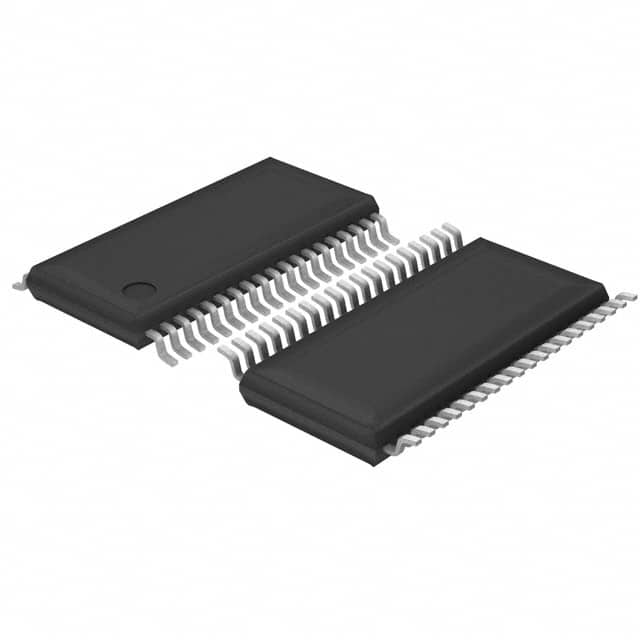
- Part No.:
- STNRG388A
- Manufacturer:
- STMicroelectronics
- Category:
- Power Management - Specialized
- Package:
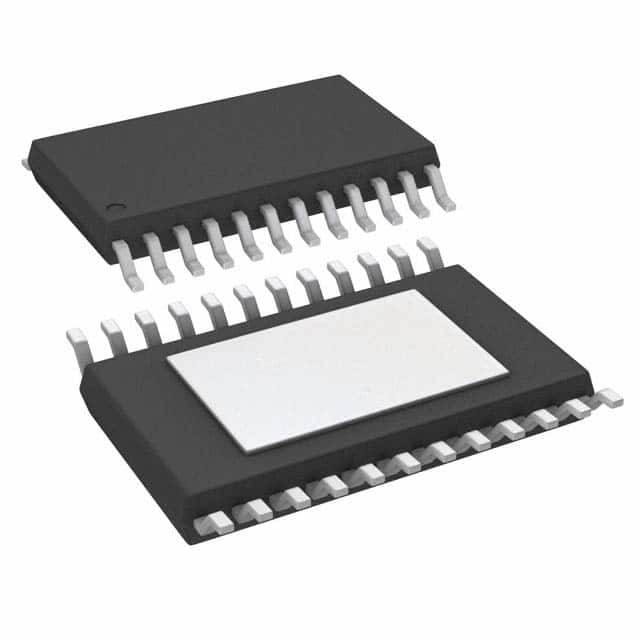
- 38-TFSOP (0.173", 4.40mm Width)
- Datasheet:
-
 STNRG388A.pdf
- Description:
- IC PWM DGTL CTLR 38TSSOP
- Quantity:
- Payment:

- Shipping:

Inventory:967
Please send an inquiry. Send us your inquiry, and we will respond immediately.
Product details
Overview
STNRG388A from STMicroelectronics is a digital controller IC for AC-DC and isolated DC-DC power conversion, integrating an STM8® microcontroller core, six SMED-based PWM generators (10 ns event response, 1.3 ns resolution), four analog comparators (<50 ns propagation), and a 10-bit ADC with 12-bit equivalent resolution via programmable gain. It operates across –40 °C to +105 °C and targets high-efficiency server PSUs and telecom rectifiers.
For engineers reviewing the STNRG388A datasheet, STNRG388A pinout, STNRG388A application, or STNRG388A equivalent, this page delivers verified technical context on SMED timing control, analog sensing integration, multi-mode PWM coupling, and embedded firmware execution capability - all critical for digital power loop design and real-time fault response.
Technical Context
The STNRG388A implements a dual-domain architecture: a deterministic real-time SMED subsystem handles ultra-fast PWM generation and event-driven state transitions independent of CPU load, while the 16 MHz STM8® core manages higher-layer control, communication, and configuration. Its 96 MHz PLL feeds both domains with precise clocking.
SMED supports single, coupled, and two-coupled operational modes with up to three internal/external events per SMED unit; analog comparators provide continuous cycle comparison with configurable hysteresis and four reference options; the ADC includes sequencer functionality, 1 MΩ input impedance, and x1/x4 programmable gain.
Key Specifications
| Parameter | Value and Actual Design Meaning |
|---|---|
| PWM Resolution | 1.3 ns - enables sub-nanosecond dead-time control and fine-grained duty-cycle tuning for GaN/SiC gate drivers. |
| Event Response Time | 10 ns - guarantees immediate reaction to overcurrent or overvoltage faults without CPU intervention. |
| CPU Core | STM8® Harvard architecture, 16 MHz max - provides deterministic interrupt latency and low-overhead firmware execution. |
| ADC Resolution | 10-bit native, 12-bit equivalent with op-amp gain - supports accurate voltage/current feedback in high-dynamic-range power stages. |
| Operating Temp | –40 °C to +105 °C - qualified for industrial and telecom power supply environments with extended thermal margins. |
| Flash Memory | 32 Kbytes with RWW and ECC - allows safe field firmware updates and robust code storage under EMI stress. |
| Comparators | 4 units, <50 ns propagation - enables cycle-by-cycle current limiting and fast line-voltage monitoring. |
Pinout & Package
TSSOP38 package: 38-pin thin shrink small outline package with 0.65 mm pitch, optimized for compact power supply PCB layouts and thermal dissipation in enclosed enclosures.
| Pin/Terminal | Circuit Role | Design Meaning |
|---|---|---|
| VDD | Core Power Supply | 3.3 V ±5 % main supply for digital logic and SMED subsystem; requires local 100 nF decoupling. |
| VSS | Digital Ground | Reference return for all digital I/O and internal logic; must be star-connected to minimize noise coupling. |
| PA0–PA7 | GPIO / SMED Inputs | Programmable digital inputs supporting SMED event capture; configurable pull-up and fast edge detection. |
| PB0–PB7 | GPIO / PWM Outputs | Direct SMED PWM output pins; support complementary drive with programmable dead time and fault masking. |
| PC0–PC7 | ADC Inputs / Comparators | Analog input channels with 1 MΩ impedance; accept direct connection to current-sense resistors or voltage dividers. |
| PD0–PD7 | I²C / UART / DALI | Multifunction port supporting I²C master/slave, UART bootloader, and DALI lighting interface protocols. |
Key Features
| Feature | Design Value |
|---|---|
| SMED PWM Architecture | Six independent state-machine event-driven units enabling hardware-level timing control without CPU scheduling overhead. |
| Comparator Hysteresis | Configurable voltage levels prevent false triggering during noisy transients in high-dV/dt power circuits. |
| ADC Sequencer | Automatically cycles through up to eight channels, reducing firmware polling burden and improving sampling consistency. |
| Embedded Clock Security | Dedicated clock monitor detects HSE/HSI/PLL failure and triggers safe shutdown before timing-related instability occurs. |
| Low-Power Modes | Wait, slow, auto-wakeup, and Halt modes reduce active current to <1 µA, extending standby runtime in energy-sensitive systems. |
Applications
| Server PSU Control | Telecom Rectifier |
|---|---|
|
Use Scenario: Digital control of resonant LLC converters in 1U/2U rack-mounted server power supplies. IC Role / Device Role / Timing Role: Real-time PWM generation, adaptive frequency modulation, and overtemperature protection via integrated comparators and ADC. Use Value: Enables >96 % efficiency at full load and dynamic load step response within 10 µs using SMED-triggered dead-time adjustment. |
Use Scenario: High-density 48 V telecom rectifier modules requiring tight output regulation and hot-swap capability. IC Role / Device Role / Timing Role: Dual-phase interleaved PWM control with phase-shift synchronization and bus voltage feedforward compensation. Use Value: Reduces output ripple by 40 % versus fixed-frequency controllers and supports seamless redundancy switching via I²C coordination. |
| Industrial AC-DC Adapter | DALI Lighting Driver |
|
Use Scenario: Compact 150 W industrial AC-DC adapter with universal input (90–264 VAC) and PFC + LLC topology. IC Role / Device Role / Timing Role: Integrated PFC stage control and isolated LLC secondary-side regulation using single-chip SMED resources. Use Value: Eliminates external timing ICs and reduces BOM count by 3 components while maintaining EN61000-3-2 compliance. |
Use Scenario: Programmable LED driver for smart building DALI-2 compliant luminaires with dimming and diagnostics. IC Role / Device Role / Timing Role: DALI physical layer interface + analog current regulation via PWM-controlled buck converter. Use Value: Integrates DALI transceiver, current sense ADC, and thermal foldback in one die-reducing footprint by 35 % vs discrete solutions. |
Equivalent & Alternatives
The following parts are listed as comparable options for similar digital power controller applications.
| Alternative Part | Technical Difference | Application Difference | Selection Advice |
|---|---|---|---|
| UCC28950 | Analog-based phase-shifted PWM controller with no embedded MCU or ADC; relies on external op-amps and comparators. | Limited to fixed-topology phase-shifted full-bridge; lacks programmability for LLC or PFC+LLC hybrid control. | Choose UCC28950 only when cost-sensitive, non-programmable, and legacy analog design reuse is required. |
| ICE2PCS01 | Fixed-function PFC controller with no isolation or secondary-side regulation capability; no SMED or event-driven timing. | Restricted to boost PFC front-end only; cannot replace STNRG388A in complete AC-DC system control. | Select ICE2PCS01 solely for standalone PFC stage where secondary regulation is handled by separate IC. |
Compared with UCC28950 and ICE2PCS01, the STNRG388A uniquely combines embedded firmware execution, hardware-accelerated PWM, and integrated analog sensing - enabling single-chip control of complex topologies like PFC+LLC without external signal conditioning or timing ICs.
Availability
STNRG388A is available at Aetrix Electronics and suitable for server PSUs, telecom rectifiers, and industrial AC-DC adapters requiring stable component supply, long-term lifecycle assurance, and production-ready qualification.
Supply support for STNRG388A includes scheduled delivery planning, volume procurement assistance, BOM continuity management, traceable sourcing, and lifecycle availability coordination for OEM customers, industrial embedded developers, connected-device designers, and electronics production programs.
Manufacturer
STMicroelectronics is a global semiconductor leader headquartered in Geneva, Switzerland, specializing in microcontrollers, power management, and automotive-grade ICs with broad industrial certification coverage.
The STNRGxxx series is designed specifically for digitally controlled AC-DC and isolated DC-DC conversion, emphasizing real-time responsiveness, analog integration, and firmware flexibility in high-efficiency power systems.
FAQ
Does STNRG388A support synchronous rectification control?
Yes, STNRG388A provides dedicated SMED outputs with programmable dead-time insertion and adaptive gate timing for synchronous rectifier MOSFETs in LLC and flyback topologies. Its comparator-based zero-current detection (ZCD) input enables precise turn-on timing without external circuitry.
What development tools are officially supported for STNRG388A firmware programming?
STMicroelectronics supports STNRG388A firmware development via the STSW-STNRG001 GUI-based digital power designer tool, STVP programming software, and the ST-LINK/V2 debugger interface. Hardware evaluation is enabled by the STEVAL-IPFC15V1 reference board.
Can STNRG388A operate without an external crystal oscillator?
Yes - STNRG388A includes internal 16 MHz RC (HSI) and 153.6 kHz RC (LSI) oscillators, allowing full operation without external crystals. The 96 MHz PLL can be driven from either internal or external sources, and the clock security system monitors oscillator integrity.
Is the STNRG388A pinout compatible with other STNRGxxx family members?
No - STNRG388A uses a unique TSSOP38 pinout optimized for its six SMED PWM outputs and eight ADC channels. Pin compatibility does not exist with STNRG328A (TSSOP20) or STNRG011 (SO8); each variant has distinct signal mapping and peripheral allocation.
STNRG388A Specifications
- Product attributes
- Attribute value
- Manufacturer:
- STMicroelectronics
- Series:
- -
- Package/Case:
- 38-TFSOP (0.173", 4.40mm Width)
- Packaging:
- Tube
- Product Status:
- Active
- Applications:
- PWM Generator
- Current - Supply:
- 100mA
- Voltage - Supply:
- 3V ~ 5.5V
- Operating Temperature:
- -40°C ~ 105°C
- Grade:
- -
- Qualification:
- -
- Mounting Type:
- Surface Mount
- Supplier Device Package:
- 38-TSSOP
STNRG388A FAQ
1.How can I place an order for STNRG388A through Aetrix?
Please submit a Request for Quotation (RFQ) for STNRG388A on Aetrix. Our sales agent will provide a competitive quotation and guide you through the order confirmation once you accept the terms.
2.Are the price and stock information for STNRG388A reliable?
The price and inventory of STNRG388A are updated periodically and may fluctuate due to market conditions. Stock and pricing data are typically refreshed every 24 hours. Quotation validity for STNRG388A is usually 5 days.
3.What payment methods are accepted for STNRG388A?
We accept Wire Transfer, PayPal, Credit Card, Western Union, MoneyGram, and Escrow for STNRG388A transactions.
Note: Certain payment methods may incur a processing fee.
4.How is shipping managed for STNRG388A?
STNRG388A orders can be shipped via leading logistics carriers, including DHL, UPS, FedEx, TNT, or Registered Mail.
Once your STNRG388A order is processed, you will receive an email with the shipment details and tracking number.
Note: Tracking information may take up to 24 hours to appear. Express delivery typically takes 3–5 business days.
5.How can I obtain technical support or documentation for STNRG388A?
For technical support, including STNRG388A datasheets, pinout diagrams, or application guidance, please contact our engineering support team. They can provide detailed documentation and assistance for your STNRG388A requirements.
6.How does Aetrix verify that STNRG388A is sourced from the original manufacturer or authorized distributors?
All STNRG388A products on Aetrix are procured from qualified distributors and authorized channels. Our dedicated quality assurance team conducts strict verification, including traceability checks and, if necessary, third-party testing. This ensures that STNRG388A meets industry standards.
7.What is the process for return or replacement of STNRG388A?
All STNRG388A units undergo pre-shipment inspection (PSI). If there is an issue with STNRG388A, returns or replacements are accepted under the following conditions:
1.Quantity discrepancies, incorrect items, or visible external defects (such as breakage or corrosion), acknowledged by Aetrix.
2.The issue is reported within 90 days of delivery.
3.The STNRG388A part is unused and in its original packaging.
Return procedure for STNRG388A:
1.Submit a request within 90 days.
2.Obtain a Return Material Authorization (RMA) from Aetrix.
STNRG388A Tags
-
TPS2511DGNR
Texas Instruments
-
UTC2000/MG
Microchip Technology
-
TUSB320HAIRWBR
Texas Instruments
-
TPS61252DSGR
Texas Instruments
-
PI5USB30216CXUAEX
Diodes Incorporated

-
SN6501DBVR
Texas Instruments
-
CYPD3177-24LQXQT
Infineon Technologies
-
SN6501QDBVRQ1
Texas Instruments
-
STUSB1600AQTR
STMicroelectronics

-
SN6505BDBVR
Texas Instruments
-
SN6501DBVT
Texas Instruments
-
TPS65150PWPR
Texas Instruments
Tech Hub

A practical engineering and sourcing framework covering lifecycle verification, lifetime-buy calculations, replacement qualification, supplier checks and counterfeit-risk controls.

TTL and CMOS logic families differ in thresholds, loading, output drive, power and timing. This engineering guide compares 74HC and 74HCT, calculates noise margins and checks 3.3 V/5 V compatibility.

A practical engineering guide to 3.3V and 5V logic compatibility, input thresholds, resistor dividers, translator ICs, MOSFET level shifting, I2C pull-ups, timing limits and power-sequencing risks.

The 74HC595 uses push-pull logic outputs, while the TPIC6B595 uses 50 V open-drain DMOS sinks for higher-power loads. This guide compares timing, current limits, 3.3 V interfacing, load wiring, thermal…

The 74HC595 converts serial data into eight stable parallel outputs. This guide covers pin functions, shift and storage timing, OE and MR behavior, drive-current limits, cascading, voltage compatibilit…

A technical comparison of level-sensitive latches and edge-triggered flip-flops, covering timing windows, setup and hold limits, master–slave operation, time borrowing, race-through, HDL inference and…

A D latch stores one bit while Enable controls when data can pass. This reference covers gate-level operation, truth tables, transparency, setup and hold timing, LE versus OE, common ICs and practical …

An SR latch stores one bit through cross-coupled feedback. This engineering reference covers NOR and NAND implementations, truth tables, forbidden-state recovery, gated operation, switch debouncing, fa…

Latch circuits retain one bit through feedback. This technical reference covers SR and D latches, truth tables, transparency, timing limits, latch-versus-flip-flop behavior, applications and common log…

An engineering guide to LED driver operation, constant-current and constant-voltage outputs, linear and switching topologies, dimming, IC selection, calculations, replacement compatibility, and fault c…


