
 My Inquiry
 My Account


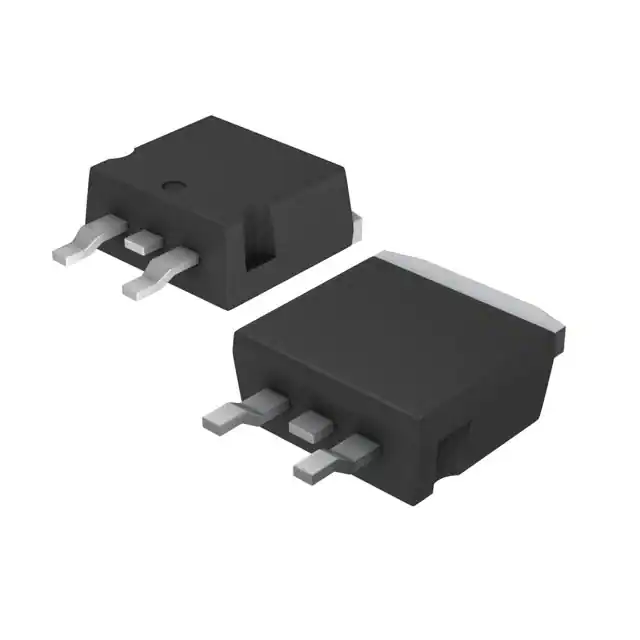
STMicroelectronics STPS20L15G-TR
- Part No.:
- STPS20L15G-TR
- Manufacturer:
- STMicroelectronics
- Category:
- Single Diodes
- Package:
- TO-263-3, D2PAK (2 Leads + Tab), TO-263AB
- Datasheet:
-
 STPS20L15G-TR.pdf
- Description:
- DIODE SCHOTTKY 15V 20A D2PAK
- Quantity:
- Payment:

- Shipping:

Inventory:180
Please send an inquiry. Send us your inquiry, and we will respond immediately.
Product details
Overview
STPS20L15G-TR from STMicroelectronics is a low-drop OR-ing Schottky diode in D²PAK package, rated for 20 A average forward current, 15 V repetitive peak reverse voltage, and 0.28 V typical forward voltage at 19 A and 125 °C. It features avalanche capability (970 W at 10 µs), junction-to-case thermal resistance of 1.6 °C/W, and is designed for fault-tolerant 3 V/5 V/12 V rail OR-ing in redundant power supplies.
For engineers reviewing the STPS20L15G-TR datasheet, STPS20L15G-TR pinout, STPS20L15G-TR application, or STPS20L15G-TR equivalent, key selection criteria include forward voltage drop at high temperature, avalanche energy rating, thermal resistance under conduction cooling, and D²PAK mounting compatibility with FR4 PCB copper area.
Technical Context
This device operates as a unidirectional power path selector in redundant DC power architectures, where two or more supplies feed a common load via discrete OR-ing diodes to prevent backfeed and enable seamless failover. Its Schottky structure eliminates minority-carrier storage delay, enabling fast turn-off during supply loss events.
Thermal design relies on case-to-heatsink conduction: the D²PAK tab serves as both electrical cathode terminal and primary thermal interface, requiring controlled torque (0.55 N·m recommended) and ≥8.1 cm² copper surface for Rth(j-a) ≤ 35 °C/W per Figure 9. Avalanche rating supports transient overvoltage survival without clamping circuitry.
Key Specifications
| Parameter | Value and Actual Design Meaning |
|---|---|
| VRRM | 15 V - Supports OR-ing of 3 V, 5 V, and 12 V rails with margin against ripple and transients |
| IF(AV) | 20 A at TC = 115 °C - Sustains continuous load current with standard heatsinking |
| VF (typ.) | 0.28 V at IF = 19 A, Tj = 125 °C - Minimizes conduction loss (≈5.3 W) and heatsink size |
| Rth(j-c) | 1.6 °C/W - Enables direct thermal coupling to heatsink; requires mechanical mounting per spec |
| PARM | 970 W at tp = 10 µs, Tj = 125 °C - Withstands single-event avalanche stress without failure |
| IR | ≤500 µA at VR = 15 V, Tj = 100 °C - Low leakage preserves efficiency in standby and hot-swap scenarios |
Pinout & Package
D²PAK (TO-263) package with isolated tab: single cathode terminal on tab, anode on lead frame. Requires soldered tab connection for thermal and electrical performance.
| Pin/Terminal | Circuit Role | Design Meaning |
|---|---|---|
| Tab (exposed metal) | Cathode | Primary thermal path and high-current return node; must be electrically connected to system ground or negative rail |
| Lead 1 (left) | Anode | Input power source connection; carries full forward current into load |
| Lead 2 (right) | No Connect | Internal die isolation; not bonded; must remain unconnected and un-soldered |
Key Features
| Feature | Design Value |
|---|---|
| Low VF at high Tj | 0.28 V typ. at 125 °C enables <5.5 W conduction loss at 20 A, reducing heatsink mass by >40% vs. standard Schottkys |
| Avalanche-rated operation | 970 W peak power survivability at 10 µs allows use without external TVS in 12 V rail OR-ing with inductive load switching |
| ECOPACK®2 compliance | Halogen-free, RoHS-compliant epoxy meets UL 94 V0; suitable for industrial and telecom equipment certifications |
| Conduction-cooled thermal design | 1.6 °C/W Rth(j-c) supports direct mounting to aluminum heatsink with thermal interface material, eliminating forced-air dependency |
Applications
| Telecom Power Shelf OR-ing | Industrial PLC Redundant PSU |
|---|---|
Use Scenario: Dual 12 V hot-swap power modules feeding shared backplane bus with automatic switchover on failure. IC Role / Device Role / Timing Role: Unidirectional power path controller; blocks reverse current while conducting forward load current with minimal voltage drop. Use Value: Prevents cross-conduction between supplies and maintains <0.3 V rail drop during 20 A load, avoiding brownout on downstream logic. | Use Scenario: Dual 5 V DC inputs powering I/O modules in programmable logic controllers with zero-downtime redundancy. IC Role / Device Role / Timing Role: Fault-isolating OR-ing element; conducts only when upstream voltage exceeds load rail by >0.3 V. Use Value: Enables sub-100 µs failover without software intervention and eliminates need for active MOSFET controllers in cost-sensitive designs. |
| Server Midplane Power Distribution | Medical Diagnostic Equipment Backup Supply |
Use Scenario: Parallel 3.3 V and 5 V outputs from separate AC/DC converters feeding midplane with shared load sharing. IC Role / Device Role / Timing Role: Passive rail selector; prevents backfeed from higher-voltage rail into lower-voltage rail during startup sequencing. Use Value: Eliminates sequencing complexity and ensures stable 3.3 V rail even if 5 V converter starts first, using inherent VF offset. | Use Scenario: Battery-backed 12 V auxiliary supply OR-ed with main AC/DC output in MRI subsystems requiring uninterrupted operation. IC Role / Device Role / Timing Role: Seamless transition switch; conducts from battery only when main supply drops below 11.5 V. Use Value: Sustains critical timing circuits for >200 ms during AC loss, leveraging low VF to minimize battery drain at 15 A peak. |
Equivalent & Alternatives
The following parts are listed as comparable options for similar OR-ing diode applications.
| Alternative Part | Technical Difference | Application Difference | Selection Advice |
|---|---|---|---|
| STPS20L15D | Same die in TO-220AC package; Rth(j-c) = 1.6 °C/W but higher Rth(j-a) due to smaller tab area and no surface-mount footprint | Preferred for prototyping or low-volume through-hole assembly; unsuitable for automated SMT lines | Select when manual assembly or heatsink bolt-down is required; avoid for high-density PCB layouts |
| Vishay VSKT2015 | 20 A/15 V Schottky in D²PAK; VF = 0.32 V typ. at 19 A/125 °C; no specified avalanche rating | Lacks documented avalanche capability; requires external TVS for surge-prone 12 V systems | Acceptable for non-critical 5 V OR-ing where transient immunity is managed externally |
Compared with STPS20L15G-TR, STPS20L15D offers identical electrical specs but inferior thermal integration in SMT volume production, while VSKT2015 trades 0.04 V higher VF and missing avalanche rating for second-source availability in non-mission-critical applications.
Availability
STPS20L15G-TR is available at Aetrix Electronics and suitable for telecom power shelf OR-ing, industrial PLC redundant PSU, and medical diagnostic equipment backup supply requiring stable component supply across multi-year production cycles.
Supply support for STPS20L15G-TR includes scheduled delivery planning, volume procurement assistance, BOM continuity management, traceable sourcing, and lifecycle availability coordination for OEM customers, industrial embedded developers, connected-device designers, and electronics production programs.
Manufacturer
STMicroelectronics is a global semiconductor leader headquartered in Geneva, designing and manufacturing analog, microcontroller, power, and sensor solutions for automotive, industrial, and consumer markets.
The STPS series targets high-efficiency, high-reliability power path management in redundant DC systems, with emphasis on low-loss Schottky technology optimized for conduction-cooled thermal environments.
FAQ
What is the maximum allowable junction temperature for continuous operation?
The absolute maximum operating junction temperature is 125 °C, as defined in Table 2. Operation above this limit risks thermal runaway due to positive temperature coefficient of forward voltage. Derating is required above 115 °C case temperature per the IF(AV) specification.
Can STPS20L15G-TR be used without a heatsink in free-air conditions?
No. With Rth(j-a) exceeding 60 °C/W in free air (per Figure 9), even 5 A load would exceed 125 °C junction temperature. Minimum 8.1 cm² copper area on FR4 is required for Rth(j-a) ≤ 35 °C/W; active heatsinking is mandatory for 20 A operation.
Is the D²PAK tab electrically isolated from the leads?
No. The exposed tab is the cathode terminal and is electrically connected to the internal die cathode. It must be tied to the same potential as the cathode net-typically system ground or negative rail-and cannot be floated or insulated without breaking the circuit path.
Does STPS20L15G-TR support bidirectional current flow?
No. It is a unidirectional Schottky diode. Forward conduction occurs only from anode to cathode (lead to tab). Reverse current is blocked up to 15 V, and avalanche breakdown is non-destructive only for single-pulse events within the specified PARM limit.
STPS20L15G-TR Specifications
- Product attributes
- Attribute value
- Manufacturer:
- STMicroelectronics
- Series:
- -
- Package/Case:
- TO-263-3, D2PAK (2 Leads + Tab), TO-263AB
- Packaging:
- Tape & Reel (TR)
- Product Status:
- Active
- Technology:
- Schottky
- Voltage - DC Reverse (Vr) (Max):
- 15 V
- Current - Average Rectified (Io):
- 20A
- Voltage - Forward (Vf) (Max) @ If:
- 410 mV @ 19 A
- Speed:
- Fast Recovery =< 500ns, > 200mA (Io)
- Reverse Recovery Time (trr):
- -
- Current - Reverse Leakage @ Vr:
- 6 mA @ 15 V
- Capacitance @ Vr, F:
- -
- Grade:
- -
- Qualification:
- -
- Mounting Type:
- Surface Mount
- Supplier Device Package:
- D2PAK
- Operating Temperature - Junction:
- 125°C (Max)
STPS20L15G-TR FAQ
1.How can I place an order for STPS20L15G-TR through Aetrix?
Please submit a Request for Quotation (RFQ) for STPS20L15G-TR on Aetrix. Our sales agent will provide a competitive quotation and guide you through the order confirmation once you accept the terms.
2.Are the price and stock information for STPS20L15G-TR reliable?
The price and inventory of STPS20L15G-TR are updated periodically and may fluctuate due to market conditions. Stock and pricing data are typically refreshed every 24 hours. Quotation validity for STPS20L15G-TR is usually 5 days.
3.What payment methods are accepted for STPS20L15G-TR?
We accept Wire Transfer, PayPal, Credit Card, Western Union, MoneyGram, and Escrow for STPS20L15G-TR transactions.
Note: Certain payment methods may incur a processing fee.
4.How is shipping managed for STPS20L15G-TR?
STPS20L15G-TR orders can be shipped via leading logistics carriers, including DHL, UPS, FedEx, TNT, or Registered Mail.
Once your STPS20L15G-TR order is processed, you will receive an email with the shipment details and tracking number.
Note: Tracking information may take up to 24 hours to appear. Express delivery typically takes 3–5 business days.
5.How can I obtain technical support or documentation for STPS20L15G-TR?
For technical support, including STPS20L15G-TR datasheets, pinout diagrams, or application guidance, please contact our engineering support team. They can provide detailed documentation and assistance for your STPS20L15G-TR requirements.
6.How does Aetrix verify that STPS20L15G-TR is sourced from the original manufacturer or authorized distributors?
All STPS20L15G-TR products on Aetrix are procured from qualified distributors and authorized channels. Our dedicated quality assurance team conducts strict verification, including traceability checks and, if necessary, third-party testing. This ensures that STPS20L15G-TR meets industry standards.
7.What is the process for return or replacement of STPS20L15G-TR?
All STPS20L15G-TR units undergo pre-shipment inspection (PSI). If there is an issue with STPS20L15G-TR, returns or replacements are accepted under the following conditions:
1.Quantity discrepancies, incorrect items, or visible external defects (such as breakage or corrosion), acknowledged by Aetrix.
2.The issue is reported within 90 days of delivery.
3.The STPS20L15G-TR part is unused and in its original packaging.
Return procedure for STPS20L15G-TR:
1.Submit a request within 90 days.
2.Obtain a Return Material Authorization (RMA) from Aetrix.
STPS20L15G-TR Tags
-
1N4448X-TP
Micro Commercial Co
-
1N4148WX-TP
Micro Commercial Co

-
1N4148TR
onsemi
-
MMSD4148T1G
onsemi
-
MMBD914LT3G
onsemi
-
BAS16HT1G
onsemi
-
1N914BWT
onsemi
-
BAS21LT1G
onsemi
-
LL4148
onsemi
-
BAS16LT1G
onsemi
-
MMSD914T1G
onsemi
-
BAV21W-7-F
Diodes Incorporated
Tech Hub
Schmitt triggers use separate rising and falling thresholds to stabilize slow or noisy signals. This guide covers hysteresis, 74HC14 and 74HCT14 selection, comparator calculations, RC oscillators and p…

Counterfeit components can hide behind convincing markings and passing basic function tests. This engineering reference covers source traceability, external inspection, X-ray, XRF, electrical testing, …

A practical engineering and sourcing framework covering lifecycle verification, lifetime-buy calculations, replacement qualification, supplier checks and counterfeit-risk controls.

TTL and CMOS logic families differ in thresholds, loading, output drive, power and timing. This engineering guide compares 74HC and 74HCT, calculates noise margins and checks 3.3 V/5 V compatibility.

A practical engineering guide to 3.3V and 5V logic compatibility, input thresholds, resistor dividers, translator ICs, MOSFET level shifting, I2C pull-ups, timing limits and power-sequencing risks.

The 74HC595 uses push-pull logic outputs, while the TPIC6B595 uses 50 V open-drain DMOS sinks for higher-power loads. This guide compares timing, current limits, 3.3 V interfacing, load wiring, thermal…

The 74HC595 converts serial data into eight stable parallel outputs. This guide covers pin functions, shift and storage timing, OE and MR behavior, drive-current limits, cascading, voltage compatibilit…

A technical comparison of level-sensitive latches and edge-triggered flip-flops, covering timing windows, setup and hold limits, master–slave operation, time borrowing, race-through, HDL inference and…

A D latch stores one bit while Enable controls when data can pass. This reference covers gate-level operation, truth tables, transparency, setup and hold timing, LE versus OE, common ICs and practical …

An SR latch stores one bit through cross-coupled feedback. This engineering reference covers NOR and NAND implementations, truth tables, forbidden-state recovery, gated operation, switch debouncing, fa…


