
 My Inquiry
 My Account


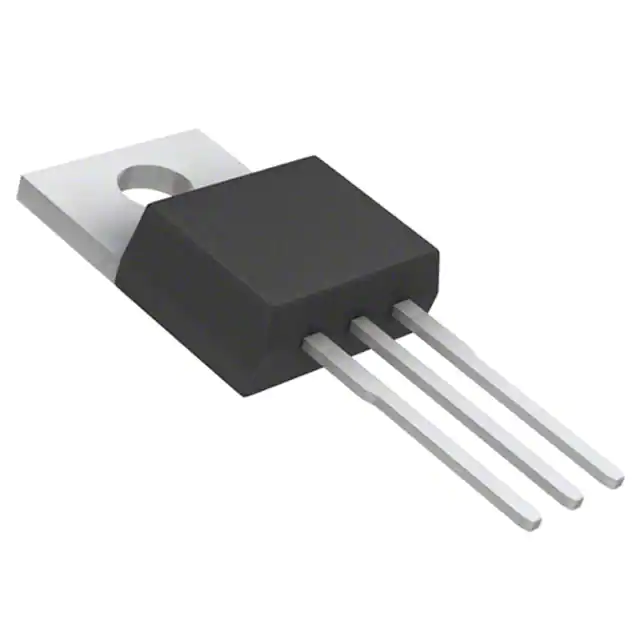
STMicroelectronics T1605G-6I
- Part No.:
- T1605G-6I
- Manufacturer:
- STMicroelectronics
- Category:
- TRIACs
- Package:
- TO-220-3
- Datasheet:
-
 T1605G-6I.pdf
- Description:
- TRIAC SENS GATE 600V 16A TO220AB
- Quantity:
- Payment:

- Shipping:

Inventory:1,974
Please send an inquiry. Send us your inquiry, and we will respond immediately.
Product details
Overview
T1605G-6I from STMicroelectronics is a 16 A, 600 V RMS insulated triac in TO-220AB package, designed for phase-angle and on/off AC switching in LED dimmers, heating controls, and overvoltage crowbar protection. It features logic-level gate triggering (IGT ≤ 5 mA), ultra-low holding current (IH = 5 mA), and optimized commutation for flicker-free dimming of LED loads.
For engineers reviewing the T1605G-6I datasheet, T1605G-6I pinout, T1605G-6I application, or T1605G-6I equivalent, key selection criteria include its 600 V blocking voltage, 16 A RMS current rating, 2.1 °C/W junction-to-case thermal resistance, UL-recognized insulation (2500 VRMS), and three-quadrant operation with low IGT for microcontroller-compatible drive.
Technical Context
This triac operates across all three quadrants (I, II, III) with symmetrical gate trigger characteristics, enabling robust turn-on under both polarities of A2 relative to A1. Its 5 mA maximum gate trigger current and 5 mA holding current support direct interfacing with low-power logic outputs and deep-phase dimming without jitter.
The device delivers high commutation robustness via a minimum critical rate of rise of off-state voltage (dV/dt ≥ 10 V/µs at 125 °C) and critical rate of decrease of main current (dl/dt ≥ 2.5 A/ms), essential for reliable switching into inductive or capacitive lighting loads.
Key Specifications
| Parameter | Value and Actual Design Meaning |
|---|---|
| VDRM / VRRM | 600 V - Sustains repetitive peak off-state voltage up to 600 V, suitable for 230 VAC mains with safety margin |
| IT(RMS) | 16 A - Continuous RMS on-state current at 85 °C case temperature, supports medium-power lighting/heating loads |
| IGT | ≤ 5 mA - Logic-level gate drive compatible with MCU GPIO or optocoupler outputs without external amplification |
| IH | 5 mA - Ultra-low holding current enables stable conduction at very low load currents, eliminating LED flicker in deep dimming |
| Rth(j-c) | 2.1 °C/W - Low thermal resistance allows efficient heat transfer to heatsink, limiting junction rise under full load |
| VTM | ≤ 1.55 V - Low on-state voltage drop at 22.5 A reduces power dissipation and self-heating during conduction |
| Insulation | 2500 VRMS - UL 1557-certified isolation (File 81734) ensures safe separation between main terminals and heatsink mounting surface |
Pinout & Package
TO-220AB insulated package with epoxy housing rated UL 94 V0, 2.3 g mass, and mechanical dimensions per DS13499 Rev 4 (A = 15.2–15.9 mm, B = 10.0–10.4 mm, e = 2.4–2.7 mm). Mounting torque: 0.55 N·m recommended, max 0.70 N·m.
| Pin/Terminal | Circuit Role | Design Meaning |
|---|---|---|
| A1 | Main Terminal 1 | Anode 1 - Primary current path terminal; referenced as common return for gate drive in standard triac configurations |
| A2 | Main Terminal 2 | Anode 2 - Second main current path terminal; polarity reversal relative to A1 defines quadrant behavior |
| G | Gate | Control input - Triggers conduction when voltage exceeds VGT (≤1.3 V) and current exceeds IGT (≤5 mA) |
Key Features
| Feature | Design Value |
|---|---|
| Three-quadrant operation | Enables gate-triggered turn-on in quadrants I, II, and III without requiring negative gate pulses, simplifying driver design |
| Super low holding current | IH = 5 mA ensures stable conduction down to very low load currents, critical for smooth LED dimming below 5% brightness |
| Optimized turn-off commutation | Guaranteed (dl/dt)c ≥ 2.5 A/ms and dV/dt ≥ 10 V/µs prevent false re-triggering during rapid current decay in lighting circuits |
| UL-recognized insulation | 2500 VRMS isolation meets UL 1557 (File 81734), allowing direct heatsink mounting without additional insulating hardware |
Applications
| Universal Light Dimmers | LED Light Dimmers |
|---|---|
Use Scenario: Phase-angle control of incandescent/halogen lamps in residential and commercial wall-mounted dimmer switches. IC Role / Device Role / Timing Role: Main AC switching element controlling power delivery by delaying conduction angle within each half-cycle. Use Value: 16 A RMS rating and 600 V blocking support 230 VAC systems up to ~3.7 kW; low IGT enables direct MCU control. | Use Scenario: Leading-edge dimming of mains-powered LED drivers in smart lighting fixtures and retrofit bulbs. IC Role / Device Role / Timing Role: High-commutation triac delivering precise phase-cut waveforms to downstream LED driver ICs. Use Value: IH = 5 mA eliminates flicker at low dim levels; optimized (dl/dt)c prevents misfiring into capacitive LED input stages. |
| Heating Control | Overvoltage Crowbar Protection |
Use Scenario: On/off or burst-fire control of resistive heating elements in appliances like ovens, water heaters, and soldering stations. IC Role / Device Role / Timing Role: Power switch regulating average power delivered to heater coil via duty cycling or zero-cross switching. Use Value: 140 A non-repetitive surge rating handles inrush currents; TO-220AB insulation isolates heater circuit from control PCB ground. | Use Scenario: Fast-acting crowbar circuit that shorts AC line upon detection of overvoltage transients (e.g., lightning-induced surges). IC Role / Device Role / Timing Role: Triggered fail-safe shunt device activated by transient detector to clamp overvoltage before downstream damage. Use Value: 700 V non-repetitive surge rating (VRSM) and 50 A/µs dl/dt capability ensure reliable triggering and survival during fast-rising transients. |
Equivalent & Alternatives
The following parts are listed as comparable options for similar triac-based AC switching applications.
| Alternative Part | Technical Difference | Application Difference | Selection Advice |
|---|---|---|---|
| BT139-600E | 16 A RMS, 600 V, but higher IGT (max 15 mA) and no UL-insulated package | Lacks 2500 VRMS isolation; requires separate insulator for heatsink mounting | Select when cost sensitivity outweighs safety certification needs and board layout permits external insulation |
| MAC15A6YG | 15 A RMS, 600 V, TO-220AB insulated, but IH = 50 mA (10× higher) | Higher holding current limits dimming depth and risks LED flicker below ~15% brightness | Prefer only where deep dimming is not required and legacy compatibility with MAC-series footprint is mandatory |
Compared with BT139-600E and MAC15A6YG, the T1605G-6I uniquely combines UL-recognized insulation, logic-level gate drive, and ultra-low holding current-enabling compact, certified, flicker-free dimmer designs without gate buffers or external isolation.
Availability
T1605G-6I is available at Aetrix Electronics and suitable for universal light dimmers, LED light dimmers, and heating control systems requiring stable component supply, long-term lifecycle assurance, and UL-compliant insulation.
Supply support for T1605G-6I includes scheduled delivery planning, volume procurement assistance, BOM continuity management, traceable sourcing, and lifecycle availability coordination for OEM customers, industrial embedded developers, connected-device designers, and electronics production programs.
Manufacturer
STMicroelectronics is a global semiconductor leader headquartered in Geneva, Switzerland, designing and manufacturing analog, mixed-signal, power, and microcontroller solutions for industrial, automotive, and consumer markets.
The T1605G-6I belongs to ST's "Light Dimmer Triacs" product line, engineered specifically for high-reliability, low-flicker AC phase-control in energy-efficient lighting and thermal regulation systems.
FAQ
What is the maximum junction temperature for continuous operation?
The T1605G-6I has an operating junction temperature range of –40 °C to +125 °C. For sustained 16 A RMS conduction, case temperature must be maintained ≤85 °C per absolute maximum ratings, requiring adequate heatsinking based on its 2.1 °C/W Rth(j-c) and ambient conditions.
Does this triac require a snubber circuit in LED dimmer applications?
A snubber is not mandatory due to the device's high dV/dt immunity (≥10 V/µs at 125 °C) and optimized commutation, but may still be recommended for EMI suppression or to protect against voltage spikes from highly reactive LED driver inputs-especially in non-zero-crossing dimming topologies.
Can the T1605G-6I replace non-insulated triacs in existing designs?
Yes, but only if the mechanical layout accommodates the TO-220AB insulated package's dimensions and mounting requirements. The insulated tab eliminates need for mica washers, but thermal interface material must still be applied, and PCB clearance to adjacent traces must respect 2500 VRMS creepage/clearance rules.
Is the T1605G-6I compliant with RoHS and halogen-free standards?
Yes-the device carries ECOPACK2 environmental compliance, meeting RoHS Directive 2011/65/EU and halogen-free requirements. Its epoxy housing also complies with UL 94 V0 flammability standard, confirmed in ST's official documentation (DS13499 Rev 4).
T1605G-6I Specifications
- Product attributes
- Attribute value
- Manufacturer:
- STMicroelectronics
- Series:
- -
- Package/Case:
- TO-220-3
- Packaging:
- Tube
- Product Status:
- Active
- Triac Type:
- Logic - Sensitive Gate
- Voltage - Off State:
- 600 V
- Current - On State (It (RMS)) (Max):
- 16 A
- Voltage - Gate Trigger (Vgt) (Max):
- 1.3 V
- Current - Non Rep. Surge 50, 60Hz (Itsm):
- 140A @ 50Hz
- Current - Gate Trigger (Igt) (Max):
- 5 mA
- Current - Hold (Ih) (Max):
- 5 mA
- Configuration:
- Single
- Operating Temperature:
- -40°C ~ 125°C (TJ)
- Grade:
- -
- Qualification:
- -
- Mounting Type:
- Through Hole
- Supplier Device Package:
- TO-220AB Insulated
T1605G-6I FAQ
1.How can I place an order for T1605G-6I through Aetrix?
Please submit a Request for Quotation (RFQ) for T1605G-6I on Aetrix. Our sales agent will provide a competitive quotation and guide you through the order confirmation once you accept the terms.
2.Are the price and stock information for T1605G-6I reliable?
The price and inventory of T1605G-6I are updated periodically and may fluctuate due to market conditions. Stock and pricing data are typically refreshed every 24 hours. Quotation validity for T1605G-6I is usually 5 days.
3.What payment methods are accepted for T1605G-6I?
We accept Wire Transfer, PayPal, Credit Card, Western Union, MoneyGram, and Escrow for T1605G-6I transactions.
Note: Certain payment methods may incur a processing fee.
4.How is shipping managed for T1605G-6I?
T1605G-6I orders can be shipped via leading logistics carriers, including DHL, UPS, FedEx, TNT, or Registered Mail.
Once your T1605G-6I order is processed, you will receive an email with the shipment details and tracking number.
Note: Tracking information may take up to 24 hours to appear. Express delivery typically takes 3–5 business days.
5.How can I obtain technical support or documentation for T1605G-6I?
For technical support, including T1605G-6I datasheets, pinout diagrams, or application guidance, please contact our engineering support team. They can provide detailed documentation and assistance for your T1605G-6I requirements.
6.How does Aetrix verify that T1605G-6I is sourced from the original manufacturer or authorized distributors?
All T1605G-6I products on Aetrix are procured from qualified distributors and authorized channels. Our dedicated quality assurance team conducts strict verification, including traceability checks and, if necessary, third-party testing. This ensures that T1605G-6I meets industry standards.
7.What is the process for return or replacement of T1605G-6I?
All T1605G-6I units undergo pre-shipment inspection (PSI). If there is an issue with T1605G-6I, returns or replacements are accepted under the following conditions:
1.Quantity discrepancies, incorrect items, or visible external defects (such as breakage or corrosion), acknowledged by Aetrix.
2.The issue is reported within 90 days of delivery.
3.The T1605G-6I part is unused and in its original packaging.
Return procedure for T1605G-6I:
1.Submit a request within 90 days.
2.Obtain a Return Material Authorization (RMA) from Aetrix.
T1605G-6I Tags
-
Z0103NN5AA4
STMicroelectronics
-
Z0107MNT1G
Littelfuse Inc.
-
Z0103MNT1G
Littelfuse Inc.
;;2.jpg)
-
T405-800B-TR
STMicroelectronics
-
T835-600B-TR
STMicroelectronics
.JPG)
-
2N6073BG
Littelfuse Inc.
-
2N6075BG
Littelfuse Inc.
-
BTA08-600CWRG
STMicroelectronics

-
T835H-6G-TR
STMicroelectronics
-
BTA16-800BRG
STMicroelectronics
-
T1210-800G-TR
STMicroelectronics
-
MAC4DHMT4G
Littelfuse Inc.
Tech Hub

A practical engineering guide to 3.3V and 5V logic compatibility, input thresholds, resistor dividers, translator ICs, MOSFET level shifting, I2C pull-ups, timing limits and power-sequencing risks.

The 74HC595 uses push-pull logic outputs, while the TPIC6B595 uses 50 V open-drain DMOS sinks for higher-power loads. This guide compares timing, current limits, 3.3 V interfacing, load wiring, thermal…

The 74HC595 converts serial data into eight stable parallel outputs. This guide covers pin functions, shift and storage timing, OE and MR behavior, drive-current limits, cascading, voltage compatibilit…

A technical comparison of level-sensitive latches and edge-triggered flip-flops, covering timing windows, setup and hold limits, master–slave operation, time borrowing, race-through, HDL inference and…

A D latch stores one bit while Enable controls when data can pass. This reference covers gate-level operation, truth tables, transparency, setup and hold timing, LE versus OE, common ICs and practical …

An SR latch stores one bit through cross-coupled feedback. This engineering reference covers NOR and NAND implementations, truth tables, forbidden-state recovery, gated operation, switch debouncing, fa…

Latch circuits retain one bit through feedback. This technical reference covers SR and D latches, truth tables, transparency, timing limits, latch-versus-flip-flop behavior, applications and common log…

An engineering guide to LED driver operation, constant-current and constant-voltage outputs, linear and switching topologies, dimming, IC selection, calculations, replacement compatibility, and fault c…

Operational amplifier guide covering op amp basics, feedback, ideal vs real op amps, common configurations, buffer circuits, offset, bias current, gain-bandwidth, slew rate, rail-to-rail limits and sel…

Jumper cables guide covering safe connection order, red and black clamp placement, final ground connection, cable gauge, length, clamp quality, copper vs CCA cables, jump starter comparison and battery…


