
 My Inquiry
 My Account


Diodes Incorporated TB1800L-13
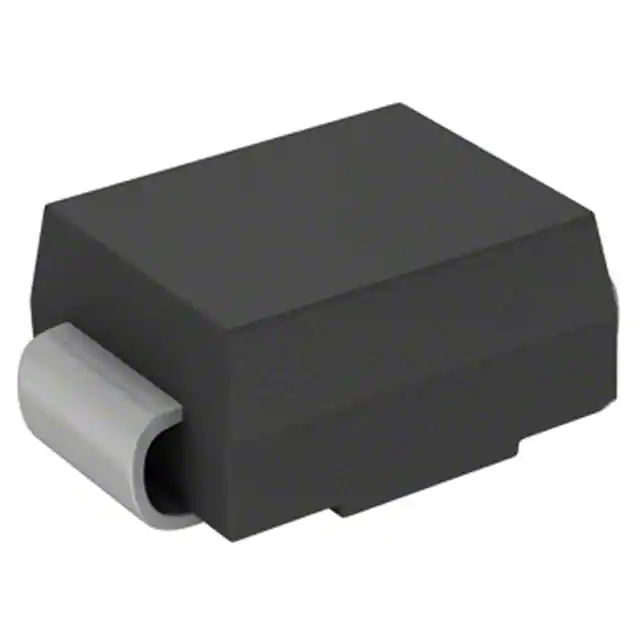
- Part No.:
- TB1800L-13
- Manufacturer:
- Diodes Incorporated
- Category:
- Thyristors
- Package:
- DO-214AA, SMB
- Datasheet:
-
 TB1800L-13.pdf
- Description:
- THYRISTOR 160V 150A DO-214AA
- Quantity:
- Payment:

- Shipping:

Inventory:2,281
Please send an inquiry. Send us your inquiry, and we will respond immediately.
Product details
Overview
TB1800L-13 from Diodes Incorporated is a bi-directional surface-mount thyristor surge protective device (TSPD) rated for 160V stand-off voltage, 30A peak pulse current (10/1000μs), and 150A peak pulse current (8/20μs), with 3.5V on-state voltage at 1A and 60pF off-state capacitance - deployed in telecom line interface protection against lightning-induced transients.
For engineers reviewing the TB1800L-13 datasheet, TB1800L-13 pinout, TB1800L-13 application, or TB1800L-13 equivalent, key selection factors include verified bi-directional clamping behavior, junction temperature derating up to +150°C, SMB package thermal resistance (RθJL = 30°C/W), and compliance with IEC 61000-4-5 and GR-1089-CORE surge standards.
Technical Context
This TSPD operates as a voltage-triggered crowbar device: it remains high-impedance below 160V (VDRM), breaks over at 220V (VBO) with ≤800mA breakover current (IBO), then latches low-impedance conduction until current falls below 150–800mA holding current (IH). Its oxide-glass passivated junction ensures stable triggering across -40°C to +150°C.
Unlike unidirectional TVS diodes, TB1800L-13 provides symmetrical clamping for AC-coupled lines without polarity constraints; its 60pF off-state capacitance at 2V bias minimizes signal distortion in <10MHz telecom interfaces, while RθJA = 120°C/W supports PCB-level thermal management in compact SMB layouts.
Key Specifications
| Parameter | Value and Actual Design Meaning |
|---|---|
| VDRM | 160 V - Maximum continuous reverse/forward voltage before leakage exceeds 5 μA; defines safe operating window for protected line. |
| IPP (10/1000μs) | 30 A - Peak surge current capability per GR-1089-CORE; determines survivability against long-duration lightning surges. |
| IPP (8/20μs) | 150 A - Peak surge current per IEC 61000-4-5; validates protection against fast-rising induced transients. |
| VBO | 220 V - Breakover voltage threshold; triggers conduction when transient exceeds this level, initiating crowbar action. |
| CO | 60 pF - Off-state capacitance at 1 MHz / 2 V bias; limits insertion loss and phase shift in analog/DSL line interfaces. |
| RθJL | 30 °C/W - Junction-to-lead thermal resistance; enables direct PCB copper pour heat sinking without external heatsink. |
| Tj Range | -40°C to +150°C - Validated operating junction temperature range; supports deployment in outdoor telecom cabinets and industrial gateways. |
Pinout & Package
Package: SMB (DO-214AA), surface-mount, bi-directional, polarity-free case with solderable matte tin-plated terminals per MIL-STD-202 Method 208.
| Pin/Terminal | Circuit Role | Design Meaning |
|---|---|---|
| Anode/Cathode (A/K) | Bi-directional main terminals | No polarity marking; either terminal serves as anode or cathode depending on instantaneous voltage polarity - enables single-device AC protection. |
| Case | Non-electrical mechanical body | UL 94V-0 molded plastic housing; no electrical connection - provides creepage/clearance isolation and flammability safety. |
Key Features
| Feature | Design Value |
|---|---|
| Oxide-glass passivated junction | Ensures consistent VBO tolerance and long-term stability under repeated surge stress without parameter drift. |
| Bi-directional protection in single device | Eliminates need for back-to-back diode or dual-TSPD layout; reduces BOM count and PCB area by >40% vs. discrete solutions. |
| High off-state impedance (>1 GΩ typical) | Minimizes standby power loss and signal loading on protected lines during normal operation. |
| Low on-state voltage (3.5 V @ 1 A) | Reduces power dissipation during clamping (P = VT × IPP), limiting thermal runaway risk during sustained surges. |
Applications
| DSL Line Interface Protection | Industrial Ethernet Port Protection |
|---|---|
Use Scenario: Protecting ADSL/VDSL line drivers and receivers from lightning-induced common-mode surges on twisted-pair copper lines. IC Role / Device Role: Primary crowbar clamping element placed between line pair and PHY interface, triggered before downstream ICs exceed absolute maximum ratings. Use Value: 60pF capacitance preserves signal integrity up to 10 MHz; 160V VDRM accommodates ±120V AC ringing without false triggering. | Use Scenario: Safeguarding 10/100BASE-TX Ethernet PHYs in programmable logic controllers (PLCs) exposed to factory floor ESD and inductive switching noise. IC Role / Device Role: Bi-directional transient suppressor on differential pairs, absorbing 8/20μs surges up to 150A without latch-up or degradation. Use Value: SMB footprint integrates directly into standard Ethernet magnetics layout; -40°C to +150°C rating supports operation inside sealed industrial enclosures. |
| AC Power Input Surge Suppression | Telecom Central Office Line Card Protection |
Use Scenario: Secondary surge protection stage after MOVs on AC input of medical power supplies, handling residual ringwave transients. IC Role / Device Role: Fast-acting thyristor clamp that fires within nanoseconds upon overvoltage, diverting energy away from bridge rectifier and bulk capacitor. Use Value: 30°C/W RθJL allows direct thermal coupling to copper pour; 30A 10/1000μs rating meets IEC 61000-4-5 Level 4 requirements. | Use Scenario: Protecting subscriber line interface circuits (SLICs) in carrier-grade DSLAM line cards from repeated lightning strikes in overhead cable plant. IC Role / Device Role: Standoff-rated TSPD placed at line entry point, providing repeatable, non-degrading clamping over >1000 surge events. Use Value: Oxide-glass passivation prevents parameter shift after 100+ 150A surges; UL 94V-0 housing meets telecom fire-safety mandates. |
Equivalent & Alternatives
The following parts are listed as comparable options for similar bi-directional thyristor surge protection applications.
| Alternative Part | Technical Difference | Application Difference | Selection Advice |
|---|---|---|---|
| SMBJ160CA | Unidirectional TVS diode array; 160V standoff, 30A 10/1000μs, but lacks latching behavior and has higher capacitance (150pF). | Requires dual-device configuration for AC lines; unsuitable for high-reliability crowbar applications needing guaranteed hold-off. | Select only if cost sensitivity outweighs clamping speed and surge endurance requirements. |
| P6SMB160CA | Bi-directional TVS diode; same 160V standoff and SMB package, but lower IPP (24.7A @ 10/1000μs) and no holding current specification. | Limited to lower-energy transients; cannot sustain conduction during prolonged overcurrent, risking thermal failure. | Acceptable for consumer-grade equipment with infrequent surge exposure, not for telecom infrastructure. |
Compared with SMBJ160CA and P6SMB160CA, TB1800L-13 delivers true latching crowbar action, superior surge endurance (30A/150A), and lower capacitance - making it the only choice for mission-critical AC line protection where fail-safe clamping and parameter stability are mandatory.
Availability
TB1800L-13 is available at Aetrix Electronics and suitable for DSL line interface protection, industrial Ethernet port hardening, and telecom central office line card surge suppression requiring stable component supply across multi-year production cycles.
Supply support for TB1800L-13 includes scheduled delivery planning, volume procurement assistance, BOM continuity management, traceable sourcing, and lifecycle availability coordination for OEM customers, industrial embedded developers, connected-device designers, and electronics production programs.
Manufacturer
Diodes Incorporated is a global manufacturer of discrete semiconductors and analog ICs, headquartered in Plano, Texas, with design centers across Asia and manufacturing in Taiwan and China.
TB1800L-13 belongs to the TBxxx0L series of bi-directional TSPDs, engineered specifically for robust, repeatable surge protection in telecom, industrial, and automotive communication interfaces where reliability under repeated transient stress is critical.
FAQ
What is the minimum breakover current required to trigger TB1800L-13?
The breakover current (IBO) is specified from 50 mA minimum to 800 mA maximum at 25°C. This means the device will reliably trigger once current through it reaches at least 50 mA while voltage exceeds 220V, ensuring predictable activation even under low-impedance surge sources.
Does TB1800L-13 require a gate drive or external trigger circuit?
No - TB1800L-13 is a three-layer, gateless thyristor structure. It triggers autonomously when applied voltage exceeds its breakover voltage (VBO = 220V) and sufficient current flows to reach the latching threshold. No external control signals or biasing are needed.
How does TB1800L-13 recover after conducting a surge?
After clamping, TB1800L-13 returns to high-impedance state only when current falls below its holding current (IH = 150–800 mA). Recovery time is ≤30 ms under resistive load conditions, and the device remains fully functional for subsequent surges without parameter degradation.
Can TB1800L-13 be used in DC applications?
Yes - although optimized for AC line protection, TB1800L-13 functions identically on DC lines. Its bi-directional symmetry means it clamps both positive and negative overvoltages, making it suitable for protecting bidirectional data buses or DC power rails subject to reverse-polarity faults or ESD.
TB1800L-13 Specifications
- Product attributes
- Attribute value
- Manufacturer:
- Diodes Incorporated
- Package/Case:
- DO-214AA, SMB
- Series:
- -
- Packaging:
- Cut Tape (CT)
- Product Status:
- Active
- Voltage - Breakover:
- 220V
- Voltage - Off State:
- 160V
- Voltage - On State:
- 3.5 V
- Current - Peak Pulse (8/20µs):
- 150 A
- Current - Peak Pulse (10/1000µs):
- 30 A
- Current - Hold (Ih):
- 150 mA
- Number of Elements:
- 1
- Capacitance:
- 60pF
- Grade:
- -
- Qualification:
- -
- Mounting Type:
- Surface Mount
- Supplier Device Package:
- SMB
TB1800L-13 FAQ
1.How can I place an order for TB1800L-13 through Aetrix?
Please submit a Request for Quotation (RFQ) for TB1800L-13 on Aetrix. Our sales agent will provide a competitive quotation and guide you through the order confirmation once you accept the terms.
2.Are the price and stock information for TB1800L-13 reliable?
The price and inventory of TB1800L-13 are updated periodically and may fluctuate due to market conditions. Stock and pricing data are typically refreshed every 24 hours. Quotation validity for TB1800L-13 is usually 5 days.
3.What payment methods are accepted for TB1800L-13?
We accept Wire Transfer, PayPal, Credit Card, Western Union, MoneyGram, and Escrow for TB1800L-13 transactions.
Note: Certain payment methods may incur a processing fee.
4.How is shipping managed for TB1800L-13?
TB1800L-13 orders can be shipped via leading logistics carriers, including DHL, UPS, FedEx, TNT, or Registered Mail.
Once your TB1800L-13 order is processed, you will receive an email with the shipment details and tracking number.
Note: Tracking information may take up to 24 hours to appear. Express delivery typically takes 3–5 business days.
5.How can I obtain technical support or documentation for TB1800L-13?
For technical support, including TB1800L-13 datasheets, pinout diagrams, or application guidance, please contact our engineering support team. They can provide detailed documentation and assistance for your TB1800L-13 requirements.
6.How does Aetrix verify that TB1800L-13 is sourced from the original manufacturer or authorized distributors?
All TB1800L-13 products on Aetrix are procured from qualified distributors and authorized channels. Our dedicated quality assurance team conducts strict verification, including traceability checks and, if necessary, third-party testing. This ensures that TB1800L-13 meets industry standards.
7.What is the process for return or replacement of TB1800L-13?
All TB1800L-13 units undergo pre-shipment inspection (PSI). If there is an issue with TB1800L-13, returns or replacements are accepted under the following conditions:
1.Quantity discrepancies, incorrect items, or visible external defects (such as breakage or corrosion), acknowledged by Aetrix.
2.The issue is reported within 90 days of delivery.
3.The TB1800L-13 part is unused and in its original packaging.
Return procedure for TB1800L-13:
1.Submit a request within 90 days.
2.Obtain a Return Material Authorization (RMA) from Aetrix.
TB1800L-13 Tags
-
TISP4015L1AJR-S
Bourns Inc.
-
TISP4015L1BJR-S
Bourns Inc.
-
SMP100LC-270
STMicroelectronics
-
TISP4240M3BJR-S
Bourns Inc.
-
SMP100LC-35
STMicroelectronics
-
SMP100LC-65
STMicroelectronics
-
SMP100LC-8
STMicroelectronics
-
TISP4P035L1NR-S
Bourns Inc.
-
TISP4350H3BJR-S
Bourns Inc.
-
TISP4011H1BJR-S
Bourns Inc.
-
SMP100LC-400
STMicroelectronics
-
P0300SALRP
Littelfuse Inc.
Tech Hub

Operational amplifier guide covering op amp basics, feedback, ideal vs real op amps, common configurations, buffer circuits, offset, bias current, gain-bandwidth, slew rate, rail-to-rail limits and sel…

Jumper cables guide covering safe connection order, red and black clamp placement, final ground connection, cable gauge, length, clamp quality, copper vs CCA cables, jump starter comparison and battery…

LDO regulator guide covering low dropout voltage, power dissipation, thermal design, PSRR, output noise, capacitor stability, adjustable LDO circuits, LDO vs buck converter and datasheet selection chec…

Conditional Access Module guide covering CAM meaning, CI/CI+ interface, smart card authorization, DVB security workflow, TV and set-top box compatibility, internal electronics, ESD protection, connecto…

Guide to electronic component obsolescence covering EOL risk, PCN/PDN notices, last-time buy planning, replacement options, form-fit-function validation, counterfeit risk and BOM lifecycle management.

18650 battery guide covering lithium-ion cell basics, 3.6V/3.7V voltage, 4.2V charging, mAh and Wh capacity, protected cells, chargers, BMS, series-parallel packs, holders, welding and sourcing checks.…

Hall effect sensor guide covering working principle, linear and digital sensors, Arduino circuits, current sensing, speed detection, automotive applications, A3144 examples, signal filtering and datash…

Product Change Notification guide for electronic components, covering PCN meaning, PCN vs PDN/EOL, common change types, risk levels, form-fit-function review, engineering validation, BOM control, LTB/L…

A practical guide to blend door actuators, covering HVAC function, symptoms, location, AC and heater issues, reset and calibration, replacement cost, electrical diagnosis, compatibility checks, and rep…

Engineering guide to Raspberry Pi alternatives, covering chip-level differences, Orange Pi, ROCK, Jetson, Banana Pi, NanoPi, Compute Module, Pico, GPIO, camera, HAT compatibility, and replacement risks…


