
 My Inquiry
 My Account


Diodes Incorporated TB2300M-13-F
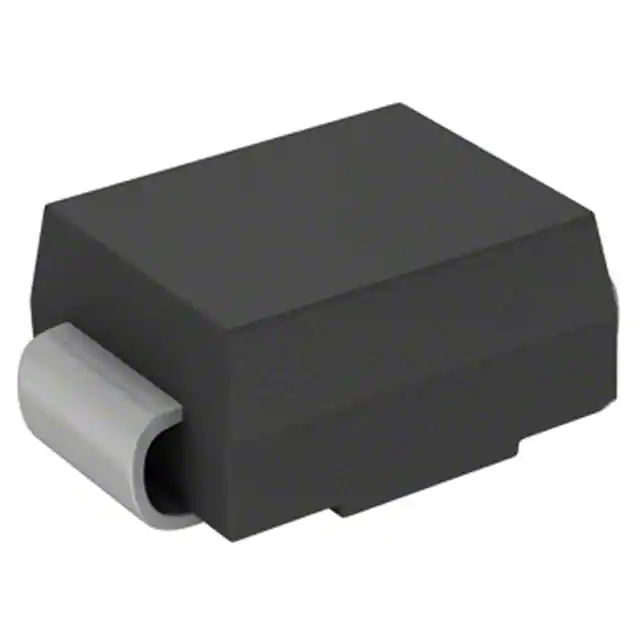
- Part No.:
- TB2300M-13-F
- Manufacturer:
- Diodes Incorporated
- Category:
- Thyristors
- Package:
- DO-214AA, SMB
- Datasheet:
-
 TB2300M-13-F.pdf
- Description:
- THYRISTOR 190V 250A DO-214AA
- Quantity:
- Payment:

- Shipping:

Inventory:6,000
Please send an inquiry. Send us your inquiry, and we will respond immediately.
Product details
Overview
TB2300M-13-F from Diodes Incorporated is a bidirectional surface-mount thyristor surge protection device (TSPD) designed for telecom and data line transient suppression. It features a 190V maximum repetitive off-state voltage (VDRM), 50A peak pulse current (10/1000μs), 265V breakover voltage (VBO), 3.5V on-state voltage at 1A, and 60pF off-state capacitance - enabling robust GR-1089-CORE and IEC 61000-4-5 compliance in DSL, T1/E1, and PoE interface protection.
For engineers reviewing the TB2300M-13-F datasheet, TB2300M-13-F pinout, TB2300M-13-F application, or TB2300M-13-F equivalent, key selection criteria include stand-off voltage margin vs. line operating voltage, bidirectional clamping symmetry, low capacitance for high-speed signal integrity, thermal resistance (RθJL = 20°C/W), and UL 156346 recognition for telecom safety certification.
Technical Context
This TSPD operates as a voltage-triggered, self-resetting crowbar device with oxide-glass passivated junction. Its bidirectional structure eliminates polarity concerns and supports AC-coupled lines without external diode bridging. The 0.1%/°C positive temperature coefficient of VBR ensures stable breakdown across -40°C to +150°C junction range.
Triggering occurs when applied voltage exceeds VBO (265V typ.), transitioning from high-impedance off-state to low-voltage on-state (VT ≤ 3.5V @ 1A). Recovery to off-state requires current decay below IH (150–800mA), with surge recovery time ≤30ms - critical for repeated lightning-induced transients in central office equipment.
Key Specifications
| Parameter | Value and Actual Design Meaning |
|---|---|
| VDRM | 190V - Maximum continuous AC/DC line voltage the device blocks without conduction; sets minimum operating margin for 170V RMS telecom lines. |
| IPP (10/1000μs) | 50A - Peak surge current handling per GR-1089-CORE; defines clamping energy capacity for multi-strike lightning events. |
| VBO | 265V (typ.) - Voltage threshold initiating conduction; determines clamping level relative to VDRM for overvoltage margin control. |
| CO | 60pF - Off-state capacitance at 2V DC bias & 1MHz; enables <1% signal attenuation up to 100MHz in xDSL line interfaces. |
| RθJL | 20°C/W - Junction-to-lead thermal resistance; allows direct PCB copper pour heatsinking to sustain 30A non-repetitive on-state surges. |
| IH | 150–800mA - Holding current range; defines minimum line current required to maintain on-state after triggering, preventing false turn-off during sustained faults. |
Pinout & Package
Package: SMB (Surface Mount Body), molded plastic case per UL 94V-0, 6.8mm × 4.3mm × 2.3mm footprint, lead-free matte tin plating, moisture sensitivity level 1.
| Pin/Terminal | Circuit Role | Design Meaning |
|---|---|---|
| Anode/Cathode (Bidirectional) | Surge current path terminal | No polarity marking; either terminal serves as anode or cathode depending on transient polarity - simplifies PCB layout for AC lines. |
| Case (Cathode-side metal slug) | Thermal and electrical reference | Exposed cathode-side metal pad provides low-inductance surge return path and direct thermal conduction to PCB copper. |
Key Features
| Feature | Design Value |
|---|---|
| Bidirectional clamping | Enables single-device protection of AC-coupled telecom lines (e.g., T1, ISDN, xDSL) without external bridge rectification. |
| Oxide-glass passivated junction | Ensures stable VBO and low leakage (<5μA at 190V) over 150°C junction temperature and 10+ year field life. |
| UL Recognized Component (File E156346) | Validates compliance with UL497B for telecom primary protector applications - reduces end-equipment certification burden. |
| Green molding compound (halogen-free) | Meets IPC-4101D/21 and JEDEC J-STD-020 moisture sensitivity Level 1 - supports lead-free reflow without popcorn cracking. |
Applications
| DSL Line Protection | T1/E1 Interface Protection |
|---|---|
Use Scenario: Protects ADSL/VDSL line cards from induced lightning surges on twisted-pair copper loops. IC Role / Device Role / Timing Role: Bidirectional crowbar device that clamps transients above 265V while maintaining <60pF capacitance for signal fidelity up to 30MHz. Use Value: Prevents damage to downstream SLIC and codec ICs without degrading high-frequency line impedance or echo cancellation performance. | Use Scenario: Shields T1/E1 framer and line driver ICs in telecom access equipment from GR-1089-CORE Level 3 surges. IC Role / Device Role / Timing Role: Fast-triggering (sub-ns response) thyristor that limits transient voltage to ≤3.5V during 50A 10/1000μs events. Use Value: Maintains bit error rate (BER) integrity by limiting overshoot to <10% of 3.3V logic rails during repeated surge exposure. |
| PoE Power Sourcing Equipment | Industrial Ethernet Port Protection |
Use Scenario: Safeguards IEEE 802.3af/at PSE controllers and transformers against cable discharge events and lightning coupling. IC Role / Device Role / Timing Role: High-energy (50A) bidirectional clamp placed across Ethernet pairs before magnetics, with self-resetting behavior. Use Value: Enables >100,000 surge cycles without degradation, eliminating need for fuse replacement or manual reset in outdoor PSE units. | Use Scenario: Protects 10/100BASE-TX ports in industrial PLCs and HMIs exposed to EFT and surge in factory environments. IC Role / Device Role / Timing Role: Low-capacitance (60pF), high-VDRM (190V) TSPD integrated into RJ45 connector PCB layout. Use Value: Passes IEC 61000-4-5 Level 4 (4kV) and IEC 61000-4-4 Level 4 (2kV) without signal jitter or link dropouts. |
Equivalent & Alternatives
The following parts are listed as comparable options for similar bidirectional thyristor surge protection applications.
| Alternative Part | Technical Difference | Application Difference | Selection Advice |
|---|---|---|---|
| Littelfuse SP1003-01WTG | VDRM = 180V, IPP = 40A (10/1000μs), CO = 65pF, SMB package | Lower stand-off voltage and surge rating; suited for 120VAC-powered equipment rather than telecom line voltages. | Select when lower cost and UL497B compliance are prioritized over 190V margin and 50A surge headroom. |
| Bourns TBU-CA085-200-WH | Active current-limiting protector (not thyristor), VDRM = 85V, IPP = 100A, but unidirectional and higher capacitance (120pF) | Requires external diode bridge for bidirectional operation; better for power rail protection than high-speed data lines. | Choose only if precise current-limiting timing (nanosecond response) is required and bidirectionality can be implemented externally. |
Compared with SP1003-01WTG and TBU-CA085-200-WH, TB2300M-13-F delivers superior voltage margin for 170V RMS telecom lines, higher 50A surge capability, and lower 60pF capacitance - making it optimal for high-fidelity DSL/T1 line protection where signal integrity and regulatory compliance are co-constrained.
Availability
TB2300M-13-F is available at Aetrix Electronics and suitable for DSL line cards, T1/E1 interface modules, PoE power sourcing equipment, and industrial Ethernet port designs requiring stable component supply and long-term lifecycle support.
Supply support for TB2300M-13-F includes scheduled delivery planning, volume procurement assistance, BOM continuity management, traceable sourcing, and lifecycle availability coordination for OEM customers, industrial embedded developers, connected-device designers, and electronics production programs.
Manufacturer
Diodes Incorporated is a global manufacturer of discrete semiconductors and analog ICs, headquartered in Plano, Texas, with design and manufacturing operations across Asia and the Americas.
TB2300M-13-F belongs to Diodes' TB-series bidirectional TSPDs, engineered specifically for telecom-grade transient immunity in GR-1089-CORE, IEC 61000-4-5, and ITU-T K.20/K.21 compliant infrastructure equipment.
FAQ
What is the maximum operating temperature for TB2300M-13-F?
The junction temperature range is -40°C to +150°C, with thermal resistance RθJL = 20°C/W enabling reliable operation at full 50A surge rating when mounted on ≥100mm² 2oz copper. Derating is not required up to 125°C ambient if PCB thermal design meets datasheet layout guidelines.
Does TB2300M-13-F require a series current-limiting resistor?
No - unlike MOVs or TVS diodes, this thyristor operates as a crowbar and relies on system impedance to limit on-state current. External resistors are unnecessary and would degrade clamping speed; proper PCB trace inductance and upstream fusing are the recommended coordination methods.
How does TB2300M-13-F compare to standard TVS diodes for telecom surge protection?
It offers higher surge current (50A vs. typical 30A for SMB TVS), lower clamping voltage under high-current transients (≤3.5V vs. >10V for 50A), and inherent bidirectionality without stacking. However, its ~265V VBO is less precise than TVS breakdown voltage, making it better suited for coarse overvoltage blocking than fine voltage regulation.
Is TB2300M-13-F compatible with lead-free reflow processes?
Yes - it uses matte tin-plated terminals and green halogen-free molding compound, qualified for JEDEC J-STD-020 Level 1 moisture sensitivity and compatible with standard SnAgCu reflow profiles peaking at 260°C, with no popcorn risk or solderability degradation.
TB2300M-13-F Specifications
- Product attributes
- Attribute value
- Manufacturer:
- Diodes Incorporated
- Package/Case:
- DO-214AA, SMB
- Series:
- -
- Packaging:
- Tape & Reel (TR)
- Product Status:
- Active
- Voltage - Breakover:
- 265V
- Voltage - Off State:
- 190V
- Voltage - On State:
- 3.5 V
- Current - Peak Pulse (8/20µs):
- 250 A
- Current - Peak Pulse (10/1000µs):
- 50 A
- Current - Hold (Ih):
- 150 mA
- Number of Elements:
- 1
- Capacitance:
- 60pF
- Grade:
- Automotive
- Qualification:
- AEC-Q101
- Mounting Type:
- Surface Mount
- Supplier Device Package:
- SMB
TB2300M-13-F FAQ
1.How can I place an order for TB2300M-13-F through Aetrix?
Please submit a Request for Quotation (RFQ) for TB2300M-13-F on Aetrix. Our sales agent will provide a competitive quotation and guide you through the order confirmation once you accept the terms.
2.Are the price and stock information for TB2300M-13-F reliable?
The price and inventory of TB2300M-13-F are updated periodically and may fluctuate due to market conditions. Stock and pricing data are typically refreshed every 24 hours. Quotation validity for TB2300M-13-F is usually 5 days.
3.What payment methods are accepted for TB2300M-13-F?
We accept Wire Transfer, PayPal, Credit Card, Western Union, MoneyGram, and Escrow for TB2300M-13-F transactions.
Note: Certain payment methods may incur a processing fee.
4.How is shipping managed for TB2300M-13-F?
TB2300M-13-F orders can be shipped via leading logistics carriers, including DHL, UPS, FedEx, TNT, or Registered Mail.
Once your TB2300M-13-F order is processed, you will receive an email with the shipment details and tracking number.
Note: Tracking information may take up to 24 hours to appear. Express delivery typically takes 3–5 business days.
5.How can I obtain technical support or documentation for TB2300M-13-F?
For technical support, including TB2300M-13-F datasheets, pinout diagrams, or application guidance, please contact our engineering support team. They can provide detailed documentation and assistance for your TB2300M-13-F requirements.
6.How does Aetrix verify that TB2300M-13-F is sourced from the original manufacturer or authorized distributors?
All TB2300M-13-F products on Aetrix are procured from qualified distributors and authorized channels. Our dedicated quality assurance team conducts strict verification, including traceability checks and, if necessary, third-party testing. This ensures that TB2300M-13-F meets industry standards.
7.What is the process for return or replacement of TB2300M-13-F?
All TB2300M-13-F units undergo pre-shipment inspection (PSI). If there is an issue with TB2300M-13-F, returns or replacements are accepted under the following conditions:
1.Quantity discrepancies, incorrect items, or visible external defects (such as breakage or corrosion), acknowledged by Aetrix.
2.The issue is reported within 90 days of delivery.
3.The TB2300M-13-F part is unused and in its original packaging.
Return procedure for TB2300M-13-F:
1.Submit a request within 90 days.
2.Obtain a Return Material Authorization (RMA) from Aetrix.
TB2300M-13-F Tags
-
TISP4015L1AJR-S
Bourns Inc.
-
TISP4015L1BJR-S
Bourns Inc.
-
SMP100LC-270
STMicroelectronics
-
TISP4240M3BJR-S
Bourns Inc.
-
SMP100LC-35
STMicroelectronics
-
SMP100LC-65
STMicroelectronics
-
SMP100LC-8
STMicroelectronics
-
TISP4P035L1NR-S
Bourns Inc.
-
TISP4350H3BJR-S
Bourns Inc.
-
TISP4011H1BJR-S
Bourns Inc.
-
SMP100LC-400
STMicroelectronics
-
P0300SALRP
Littelfuse Inc.
Tech Hub

A practical engineering guide to 3.3V and 5V logic compatibility, input thresholds, resistor dividers, translator ICs, MOSFET level shifting, I2C pull-ups, timing limits and power-sequencing risks.

The 74HC595 uses push-pull logic outputs, while the TPIC6B595 uses 50 V open-drain DMOS sinks for higher-power loads. This guide compares timing, current limits, 3.3 V interfacing, load wiring, thermal…

The 74HC595 converts serial data into eight stable parallel outputs. This guide covers pin functions, shift and storage timing, OE and MR behavior, drive-current limits, cascading, voltage compatibilit…

A technical comparison of level-sensitive latches and edge-triggered flip-flops, covering timing windows, setup and hold limits, master–slave operation, time borrowing, race-through, HDL inference and…

A D latch stores one bit while Enable controls when data can pass. This reference covers gate-level operation, truth tables, transparency, setup and hold timing, LE versus OE, common ICs and practical …

An SR latch stores one bit through cross-coupled feedback. This engineering reference covers NOR and NAND implementations, truth tables, forbidden-state recovery, gated operation, switch debouncing, fa…

Latch circuits retain one bit through feedback. This technical reference covers SR and D latches, truth tables, transparency, timing limits, latch-versus-flip-flop behavior, applications and common log…

An engineering guide to LED driver operation, constant-current and constant-voltage outputs, linear and switching topologies, dimming, IC selection, calculations, replacement compatibility, and fault c…

Operational amplifier guide covering op amp basics, feedback, ideal vs real op amps, common configurations, buffer circuits, offset, bias current, gain-bandwidth, slew rate, rail-to-rail limits and sel…

Jumper cables guide covering safe connection order, red and black clamp placement, final ground connection, cable gauge, length, clamp quality, copper vs CCA cables, jump starter comparison and battery…


