
 My Inquiry
 My Account


STMicroelectronics TDA1910
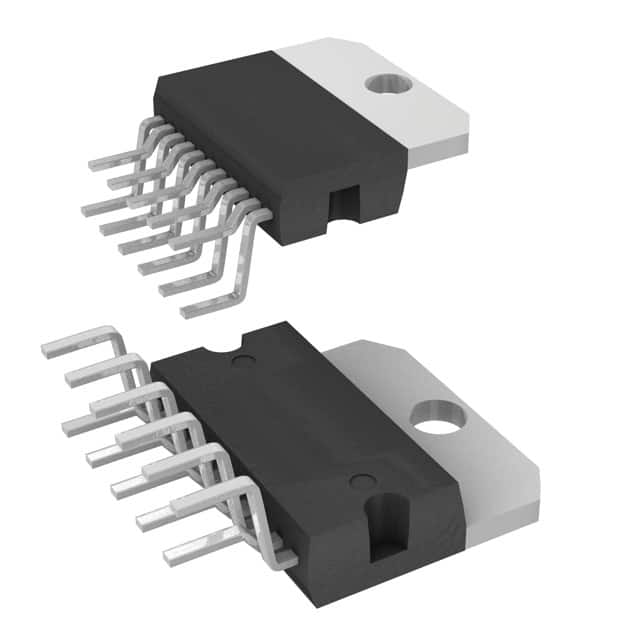
- Part No.:
- TDA1910
- Manufacturer:
- STMicroelectronics
- Category:
- Audio Amplifiers
- Package:
- Multiwatt-11 (Vertical, Bent and Staggered Leads)
- Datasheet:
-
 TDA1910.pdf
- Description:
- IC AMP AB MONO 17W 11MULTIWATT
- Quantity:
- Payment:

- Shipping:

Inventory:1,452
Please send an inquiry. Send us your inquiry, and we will respond immediately.
Product details
Overview
TDA1910 from STMicroelectronics is a monolithic 10W Class-AB audio power amplifier in Multiwatt11 vertical package, designed for high-fidelity TV and Hi-Fi applications. It delivers 10W output at 24V/4Ω with ≤0.5% THD per DIN 45500, features integrated muting, thermal shutdown, and achieves 65% efficiency at 12W output.
For engineers reviewing the TDA1910 datasheet, TDA1910 pinout, TDA1910 application, or TDA1910 equivalent, this page provides verified electrical specs, muting circuit behavior, thermal resistance (3°C/W junction-to-case), and real-world design values including input sensitivity (220mV @ 24V/4Ω), SVR (60dB), and S/N ratio (103dB).
Technical Context
The TDA1910 employs a fully complementary Class-AB output stage with internal bias stabilization and direct-coupled feedback architecture. Its open-loop gain is 75dB, closed-loop gain fixed at 30dB (±0.5dB), and small-signal bandwidth spans 10Hz–120kHz with power bandwidth of 40Hz–15kHz at ≤5% distortion.
Muting is implemented via voltage-controlled impedance switching at Pin 11: applying 0–1.3V enables >60dB attenuation by reducing Pin 1 input resistance to ~10Ω; 1.9–4.7V disables muting with Pin 1 resistance rising to ~200kΩ. Thermal shutdown activates at 110–125°C case temperature, limiting junction temperature to 150°C.
Key Specifications
| Parameter | Value and Actual Design Meaning |
|---|---|
| Output Power | 10W @ 24V/4Ω, d ≤ 0.5% (DIN 45500 compliant) |
| Supply Voltage Range | 8–30V - supports 24V nominal TV/HDTV rails with 30V transient tolerance |
| THD+N | 0.2% @ 10W/4Ω - ensures low audible distortion in mid-power Hi-Fi output |
| Supply Rejection | 60dB @ 100Hz ripple - suppresses power supply noise without external regulation |
| Input Sensitivity | 220mV RMS @ 24V/4Ω/12W - matches standard line-level preamp outputs |
| Thermal Resistance | 3°C/W junction-to-case - enables heatsink sizing for 20W max dissipation at 90°C case |
| Signal-to-Noise Ratio | 103dB @ 10KΩ source, A-weighted - exceeds broadcast-grade audio requirements |
Pinout & Package
Package: Multiwatt11 Vertical (11-pin single-in-line, screw-mount compatible, thermally enhanced metal tab). Mounting requires silicon grease interface to heatsink; no electrical isolation needed.
| Pin/Terminal | Circuit Role | Design Meaning |
|---|---|---|
| 1 | Input (Inverting) | High-impedance node (60–100kΩ) whose resistance varies with muting state - used for tone control or signal gating |
| 2 | Ground | Power ground reference for all internal stages and output coupling |
| 3 | Bootstrap | Connects to C7 (47µF) to extend positive swing headroom and reduce crossover distortion |
| 4 | Non-inverting Input | DC-biased at Vs/2 via internal divider; accepts AC-coupled line-level signals |
| 5 | Feedback | Connects to R2/R3 network to set closed-loop gain (30dB typical) |
| 6 | Output | Class-AB push-pull output capable of ±3A peak into 4Ω; requires DC-blocking capacitor (C9 = 2200µF) |
| 7 | VCC | Main supply input (8–30V); bypassed externally with C5 (0.1µF) and C6 (10µF) |
| 8 | Muting Control | Threshold input (Pin 11): 0–1.3V = mute-on (60dB attenuation); 1.9–4.7V = mute-off |
| 9 | Heatsink Tab | Internally connected to ground; serves as primary thermal path and mechanical mounting point |
| 10 | Not Connected | No internal connection - left floating or tied to ground per layout best practice |
| 11 | Muting Threshold | High-impedance (≥150kΩ) control input that sets muting state; drives <10µA current |
Key Features
| Feature | Design Value |
|---|---|
| Muting Function | 60dB signal attenuation via Pin 11 voltage threshold; eliminates switch-on thumps and tuning transients |
| Thermal Shutdown | Active protection at 110–125°C case temperature; prevents permanent damage during sustained overload |
| Low Noise Performance | 1.3µV input-referred noise (Rg=1kΩ) and 103dB S/N ratio enable clean audio in unshielded TV chassis |
| High PSRR | 60dB supply rejection at 100Hz allows direct use with switched-mode TV power supplies without LDO pre-regulation |
| Robust Output Stage | 3.5A non-repetitive peak current capability supports dynamic bass transients into 4Ω loads |
Applications
| TV Audio Amplification | Hi-Fi Monitor Speaker Driver |
|---|---|
|
Use Scenario: Integrated audio amplification in 24V-powered flat-panel TVs requiring compact, cost-effective 10W output. IC Role / Device Role / Timing Role: Final-stage Class-AB power amplifier driving 4Ω speaker loads with muting synchronized to tuner lock detection. Use Value: Eliminates external muting relays and reduces BOM count by integrating thermal protection and DC offset control. |
Use Scenario: Compact desktop or studio near-field monitor with passive crossover and 4Ω woofer integration. IC Role / Device Role / Timing Role: Single-chip power stage delivering full-range analog audio with minimal external components and no heat sink fan. Use Value: Achieves 10W clean output with <0.2% THD up to 15kHz, meeting IEC 60268-3 fidelity thresholds for critical listening. |
| Set-Top Box Audio Output | Legacy CRT Television Upgrade |
|
Use Scenario: Audio output stage in digital cable/satellite receivers where space and EMI are constrained. IC Role / Device Role / Timing Role: Muted amplifier activated only after HDMI handshake completion to prevent burst noise on display wake-up. Use Value: Uses Pin 11 threshold logic to interface directly with microcontroller GPIO, avoiding level-shifter components. |
Use Scenario: Replacement audio amplifier in aging CRT TVs with degraded original output stages and 24V flyback-derived rails. IC Role / Device Role / Timing Role: Drop-in functional replacement for obsolete discrete transistor amplifiers, retaining existing heatsink footprint. Use Value: Restores 10W output with modern thermal safety and lower background hiss compared to vintage designs. |
Equivalent & Alternatives
The following parts are listed as comparable options for similar audio power amplifier applications.
| Alternative Part | Technical Difference | Application Difference | Selection Advice |
|---|---|---|---|
| TDA2030A | Lower 14W max output (24V/4Ω), no integrated muting, higher 0.5% THD at full power | Suitable for non-muting applications like basic speaker drivers where cost is prioritized over transient suppression | Select when muting is handled externally and thermal margin is less critical |
| LM1875 | Higher 20W output but requires ±15V dual supply; no muting or thermal shutdown; TO-220 package demands larger heatsink | Better for high-fidelity stereo amplifiers using split-rail supplies, not 24V single-rail TV systems | Select only if redesigning power supply topology and board layout to accommodate dual rails |
Compared with TDA1910, TDA2030A offers lower cost but lacks muting and tighter THD control, while LM1875 delivers more power at the expense of supply complexity and missing protection features essential for consumer TV integration.
Availability
TDA1910 is available at Aetrix Electronics and suitable for TV audio subsystems, Hi-Fi monitor drivers, set-top box output stages, and legacy CRT television upgrades requiring stable component supply and long-lifecycle support.
Supply support for TDA1910 includes scheduled delivery planning, volume procurement assistance, BOM continuity management, traceable sourcing, and lifecycle availability coordination for OEM customers, industrial embedded developers, connected-device designers, and electronics production programs.
Manufacturer
STMicroelectronics is a global semiconductor leader headquartered in Geneva, Switzerland, specializing in analog, power, and automotive ICs with strong European manufacturing heritage.
The TDA1910 belongs to ST's legacy audio power amplifier product line, engineered specifically for cost-sensitive, high-reliability consumer video equipment where single-supply operation, thermal robustness, and muting integration are mandatory.
FAQ
What is the minimum supply voltage required for full 10W output?
The TDA1910 requires ≥24V supply to deliver its rated 10W output into 4Ω at ≤0.5% THD. At 18V, maximum output drops to 6.5W under identical conditions. Operation below 8V is prohibited per absolute maximum ratings and will disable internal biasing.
How does the muting function interface with a microcontroller GPIO?
A microcontroller GPIO can drive Pin 11 directly: outputting 0–1.3V mutes the amplifier (>60dB attenuation), while 1.9–4.7V unmutes it. Since Pin 11 draws <10µA, no buffer or level shifter is needed - even 3.3V GPIOs can achieve muting via resistor divider to meet threshold ranges.
Can TDA1910 drive an 8Ω speaker, and what is the expected output power?
Yes - at 24V supply, the TDA1910 delivers 7.5W into 8Ω with ≤0.5% THD (40–15kHz). Efficiency drops slightly to ~62%, and quiescent drain current decreases to 475mA. No circuit changes are needed beyond adjusting C9 to 1000µF for extended low-frequency response.
Is heatsinking mandatory, and what thermal resistance is recommended?
Yes - the TDA1910 dissipates up to 20W at 90°C case temperature. With Rth(j-case) = 3°C/W, a heatsink with ≤4°C/W thermal resistance (including interface grease) is required to maintain Tj ≤150°C at full load. ST recommends mounting via screw or clip directly to the metal tab (Pin 9).
TDA1910 Specifications
- Product attributes
- Attribute value
- Manufacturer:
- STMicroelectronics
- Series:
- -
- Package/Case:
- Multiwatt-11 (Vertical, Bent and Staggered Leads)
- Packaging:
- Tube
- Product Status:
- Obsolete
- Type:
- Class AB
- Output Type:
- 1-Channel (Mono)
- Max Output Power x Channels @ Load:
- 17W x 1 @ 4Ohm
- Voltage - Supply:
- 8V ~ 30V
- Features:
- Depop, Mute, Thermal Protection
- Mounting Type:
- Through Hole
- Operating Temperature:
- -40°C ~ 150°C (TJ)
- Grade:
- -
- Qualification:
- -
- Supplier Device Package:
- 11-Multiwatt
TDA1910 FAQ
1.How can I place an order for TDA1910 through Aetrix?
Please submit a Request for Quotation (RFQ) for TDA1910 on Aetrix. Our sales agent will provide a competitive quotation and guide you through the order confirmation once you accept the terms.
2.Are the price and stock information for TDA1910 reliable?
The price and inventory of TDA1910 are updated periodically and may fluctuate due to market conditions. Stock and pricing data are typically refreshed every 24 hours. Quotation validity for TDA1910 is usually 5 days.
3.What payment methods are accepted for TDA1910?
We accept Wire Transfer, PayPal, Credit Card, Western Union, MoneyGram, and Escrow for TDA1910 transactions.
Note: Certain payment methods may incur a processing fee.
4.How is shipping managed for TDA1910?
TDA1910 orders can be shipped via leading logistics carriers, including DHL, UPS, FedEx, TNT, or Registered Mail.
Once your TDA1910 order is processed, you will receive an email with the shipment details and tracking number.
Note: Tracking information may take up to 24 hours to appear. Express delivery typically takes 3–5 business days.
5.How can I obtain technical support or documentation for TDA1910?
For technical support, including TDA1910 datasheets, pinout diagrams, or application guidance, please contact our engineering support team. They can provide detailed documentation and assistance for your TDA1910 requirements.
6.How does Aetrix verify that TDA1910 is sourced from the original manufacturer or authorized distributors?
All TDA1910 products on Aetrix are procured from qualified distributors and authorized channels. Our dedicated quality assurance team conducts strict verification, including traceability checks and, if necessary, third-party testing. This ensures that TDA1910 meets industry standards.
7.What is the process for return or replacement of TDA1910?
All TDA1910 units undergo pre-shipment inspection (PSI). If there is an issue with TDA1910, returns or replacements are accepted under the following conditions:
1.Quantity discrepancies, incorrect items, or visible external defects (such as breakage or corrosion), acknowledged by Aetrix.
2.The issue is reported within 90 days of delivery.
3.The TDA1910 part is unused and in its original packaging.
Return procedure for TDA1910:
1.Submit a request within 90 days.
2.Obtain a Return Material Authorization (RMA) from Aetrix.
TDA1910 Tags
-Exposed-Pad.jpg)
-
TS34119CS RLG
Taiwan Semiconductor Corporation

-
LM386MX-1/NOPB
Texas Instruments
-
TPA711DGNR
Texas Instruments
-
LM386N-4/NOPB
Texas Instruments
-
TS4990IST
STMicroelectronics
-
PAM8302AASCR
Diodes Incorporated
-
TPA6130A2RTJR
Texas Instruments
-
TPA6111A2DGNR
Texas Instruments
-
LM4861MX/NOPB
Texas Instruments
-
LM386M-1/NOPB
Texas Instruments
-
NCS2211DR2G
onsemi
-
IS31AP2005-DLS2-TR
Lumissil Microsystems
Tech Hub

An engineering guide to LED driver operation, constant-current and constant-voltage outputs, linear and switching topologies, dimming, IC selection, calculations, replacement compatibility, and fault c…

Operational amplifier guide covering op amp basics, feedback, ideal vs real op amps, common configurations, buffer circuits, offset, bias current, gain-bandwidth, slew rate, rail-to-rail limits and sel…

Jumper cables guide covering safe connection order, red and black clamp placement, final ground connection, cable gauge, length, clamp quality, copper vs CCA cables, jump starter comparison and battery…

LDO regulator guide covering low dropout voltage, power dissipation, thermal design, PSRR, output noise, capacitor stability, adjustable LDO circuits, LDO vs buck converter and datasheet selection chec…

Conditional Access Module guide covering CAM meaning, CI/CI+ interface, smart card authorization, DVB security workflow, TV and set-top box compatibility, internal electronics, ESD protection, connecto…

Guide to electronic component obsolescence covering EOL risk, PCN/PDN notices, last-time buy planning, replacement options, form-fit-function validation, counterfeit risk and BOM lifecycle management.

18650 battery guide covering lithium-ion cell basics, 3.6V/3.7V voltage, 4.2V charging, mAh and Wh capacity, protected cells, chargers, BMS, series-parallel packs, holders, welding and sourcing checks.…

Hall effect sensor guide covering working principle, linear and digital sensors, Arduino circuits, current sensing, speed detection, automotive applications, A3144 examples, signal filtering and datash…

Product Change Notification guide for electronic components, covering PCN meaning, PCN vs PDN/EOL, common change types, risk levels, form-fit-function review, engineering validation, BOM control, LTB/L…

A practical guide to blend door actuators, covering HVAC function, symptoms, location, AC and heater issues, reset and calibration, replacement cost, electrical diagnosis, compatibility checks, and rep…


