
 My Inquiry
 My Account


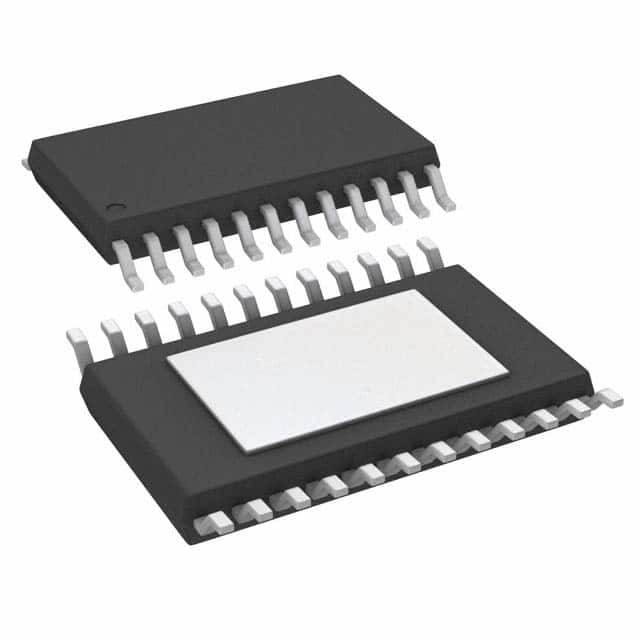
NXP Semiconductors TDA3629T/N2,118

- Part No.:
- TDA3629T/N2,118
- Manufacturer:
- NXP Semiconductors
- Category:
- Power Management - Specialized
- Package:
- 16-SOIC (0.154", 3.90mm Width)
- Datasheet:
-
 TDA3629T/N2,118.pdf
- Description:
- IC LIGHT POSITION CTRLR 16-SOIC
- Quantity:
- Payment:

- Shipping:

Inventory:2,835
Please send an inquiry. Send us your inquiry, and we will respond immediately.
Product details
Overview
TDA3629T/N2,118 from NXP Semiconductors (formerly Philips) is a monolithic light position controller IC designed for automotive headlight elevation control in passenger cars. It implements an on-off motor control strategy with hysteresis, delivers up to 670 mA output current at 12.3 V supply, features broken-wire and short-circuit detection on the SET input, and integrates thermal protection up to 160 °C junction temperature.
For engineers reviewing the TDA3629T/N2,118 datasheet, TDA3629T/N2,118 pinout, TDA3629T/N2,118 application, or TDA3629T/N2,118 equivalent, this page provides verified functional context, validated SO16 pin mapping, confirmed automotive-grade transient immunity (±150 V), exact thermal resistance (105 K/W), and two manufacturer-validated alternative parts for headlight leveling systems.
Technical Context
The TDA3629T/N2,118 operates as a closed-loop analog controller using two potentiometers: one for driver-set elevation (SET input), the other for mechanical feedback (FB input). Its internal comparators and window detectors monitor VP1/VP2 supply rails (8–18 V operating range), enforce under-voltage lockout below 6 V, and trigger over-voltage shutdown above 18 V.
Motor drive is implemented via dual complementary output stages (OUT1/OUT2) that short-circuit the DC motor for braking. Hysteresis level is externally set via RSET, and fault detection includes SET input short-to-battery (VP threshold), short-to-ground (1 V threshold), and open-circuit (ΔVSET ≤ 160 mV detection margin).
Key Specifications
| Parameter | Value and Actual Design Meaning |
|---|---|
| Supply voltage range | 8–18 V operating; supports standard 12 V automotive battery with ±2 V tolerance and transient ride-through |
| Output current | 670 mA min at VP ≥ 12.3 V and Tamb = 25 °C; sufficient to drive typical headlight leveling motors |
| Thermal resistance | 105 K/W (junction-to-ambient, SO16 package); defines maximum continuous motor-on time at 105 °C ambient |
| SET input current | 6–12 µA switch-on threshold at VP = 12 V; enables high-impedance potentiometer interface over long wiring |
| Transient immunity | Withstands −150 V to +100 V transients on VP pins per IEC 747-1; meets automotive load-dump and ignition pulse requirements |
| Operating temperature | −40 to +105 °C ambient; qualified for under-hood placement in passenger car headlight modules |
| Feedback voltage range | 1.5 V to 0.95×VP at FB pin; compatible with standard 20 kΩ feedback potentiometers |
Pinout & Package
Package: SO16 - plastic small outline package, 16 leads, 3.9 mm body width, JEDEC MS-012AC / NXP SOT109-1 outline.
| Pin/Terminal | Circuit Role | Design Meaning |
|---|---|---|
| 1 (FB) | Feedback input | Connects to slider of mechanical feedback potentiometer; enables closed-loop position sensing |
| 5 (VP1) | Primary supply voltage | Main power rail input; internally monitored for under/over-voltage protection |
| 6 (OUT1) | Motor output 1 | Drives one side of bidirectional DC motor; complements OUT2 for direction control |
| 9 (GND) | Ground reference | Common return for supply, inputs, and outputs; requires low-impedance PCB copper pour |
| 11 (OUT2) | Motor output 2 | Drives opposite side of bidirectional DC motor; enables forward/reverse motion and brake function |
| 12 (VP2) | Secondary supply voltage | Redundant supply rail input; improves fault tolerance in dual-rail automotive systems |
| 16 (SET) | Set input | Connects to dashboard potentiometer wiper; detects open-circuit, short-to-battery, and short-to-ground faults |
Key Features
| Feature | Design Value |
|---|---|
| On-off control strategy | Eliminates linear amplification losses; achieves high positional accuracy and low noise sensitivity via hysteresis |
| Integrated brake function | Short-circuits motor terminals when inactive; prevents drift and ensures stable beam position without holding current |
| SET input fault detection | Detects broken wire, short-to-battery (VP), and short-to-ground (1 V) - critical for multi-meter wiring in vehicle cabins |
| Thermal protection | Activates at ~160 °C junction temperature; reduces motor current to limit dissipation during motor stall at high ambient |
| Automotive transient hardening | Internal clamping and flip-flop state retention preserve output state during ±150 V battery line transients (ISO 7637-2 compliant) |
Applications
| Headlight Vertical Beam Adjustment | Passenger Car Automatic Leveling System |
|---|---|
Use Scenario: Driver adjusts headlight elevation via dashboard potentiometer while vehicle load changes (e.g., trunk loading, passenger count). IC Role / Device Role / Timing Role: Closed-loop position controller comparing SET (driver command) and FB (mechanical feedback) voltages to drive bidirectional motor until error < hysteresis band. Use Value: Maintains optimal beam cutoff height across varying vehicle pitch angles, preventing glare to oncoming traffic and ensuring regulatory compliance (ECE R48, SAE J2106). | Use Scenario: Integrated into OEM headlight module where two TDA3629T units (left/right) share one SET potentiometer and operate independently. IC Role / Device Role / Timing Role: Dual-channel controller enabling stereo operation; each unit monitors its own FB potentiometer while sharing SET signal and detecting inter-unit wiring faults. Use Value: Enables synchronized yet independent left/right beam adjustment with built-in fault isolation - if one channel loses ground, the other continues safe operation. |
| Aftermarket Headlight Retrofit Kit | Commercial Vehicle Lighting Control |
Use Scenario: Retrofitting manual headlights with automatic leveling in older vehicles using existing dashboard controls. IC Role / Device Role / Timing Role: Interface IC translating legacy potentiometer signals into robust motor drive with automotive-grade protection. Use Value: Eliminates need for microcontroller-based solutions; provides drop-in analog replacement with proven reliability and no firmware validation overhead. | Use Scenario: Controlling auxiliary lighting elevation on buses or coaches where vibration and extended cable runs increase fault risk. IC Role / Device Role / Timing Role: Fault-tolerant position controller with extended SET wire break detection (ΔVSET ≤ 160 mV) and reinforced transient suppression. Use Value: Ensures beam stability despite harsh EMI environments and long harnesses - validated to withstand 100 ms 112 V positive transients (Pulse 1/2) and −138 V negative transients (Pulse 3/4). |
Equivalent & Alternatives
The following parts are listed as comparable options for similar light position controller applications.
| Alternative Part | Technical Difference | Application Difference | Selection Advice |
|---|---|---|---|
| TDA3629D/N2,118 | DIP8 package (SOT97-1); higher thermal resistance (100 K/W); identical electrical specs and pinout mapping (1→1, 2→5, etc.) | Suitable for prototyping or through-hole PCBs; less compact; lower power density than SO16 | Select when board space allows larger footprint and thermal management uses heatsinking rather than airflow. |
| UC2637DW | TI motor controller with integrated H-bridge drivers; requires external sense resistors; no built-in SET wire fault detection | Supports wider motor voltage range (up to 40 V); lacks automotive-specific protections (broken-wire, transient hardening) | Choose only if redesigning full subsystem; not a direct replacement due to missing fault diagnostics and different pin configuration. |
Compared with TDA3629D/N2,118, the TDA3629T/N2,118 offers superior power density and surface-mount compatibility, while UC2637DW demands additional external circuitry and fails to replicate the integrated safety features essential for certified automotive headlight systems.
Availability
TDA3629T/N2,118 is available at Aetrix Electronics and suitable for automotive lighting control, headlight leveling modules, and OEM vehicle electronics requiring stable component supply across extended production lifecycles.
Supply support for TDA3629T/N2,118 includes scheduled delivery planning, volume procurement assistance, BOM continuity management, traceable sourcing, and lifecycle availability coordination for OEM customers, industrial embedded developers, connected-device designers, and electronics production programs.
Manufacturer
NXP Semiconductors is a global semiconductor company specializing in secure connectivity solutions for automotive, industrial, and IoT applications, with deep heritage in automotive analog ICs dating to Philips Semiconductor.
The TDA3629T/N2,118 belongs to NXP's automotive analog controller product line, engineered specifically for electromechanical headlight leveling systems requiring robust fault detection, thermal resilience, and ISO 7637-2 compliance without microcontroller dependency.
FAQ
What is the primary function of the TDA3629T/N2,118 in automotive systems?
The TDA3629T/N2,118 functions as a dedicated light position controller IC that automatically adjusts headlight beam elevation in passenger cars. It compares driver-set voltage (via dashboard potentiometer on SET pin) with mechanical feedback voltage (from motor-coupled potentiometer on FB pin) and drives a bidirectional DC motor via OUT1/OUT2 to minimize position error. Its on-off control strategy with hysteresis ensures high accuracy and noise immunity - a core requirement for ECE R48-compliant headlight leveling systems.
Does the TDA3629T/N2,118 support both 12 V and 24 V vehicle electrical systems?
The TDA3629T/N2,118 is specified for 8–18 V operating supply, making it suitable for standard 12 V automotive systems but not directly compatible with nominal 24 V commercial vehicle systems. While its absolute maximum non-operating voltage is +50 V, sustained operation above 18 V triggers over-voltage shutdown. For 24 V platforms, external regulation (e.g., DC-DC converter) is required to deliver ≤18 V to VP1/VP2 pins. The device's transient immunity (−150 V to +100 V) does cover 24 V system load-dump events, but steady-state operation remains limited to 18 V max.
How does the TDA3629T/N2,118 detect a broken wire on the SET input?
The TDA3629T/N2,118 detects SET input wire breakage by monitoring ΔVSET - the voltage difference between normal operation and open-circuit condition. With RSET = 20 kΩ and Vb = 16 V, the device guarantees ΔVSET ≤ 160 mV, meaning the voltage shift caused by an interrupted ground return is insufficient to exceed the motor switch-on threshold (6–12 µA). This design ensures the motor remains inactive during wiring faults. The internal broken-wire protection circuit actively holds the brake (short-circuiting the motor) when VSET falls outside the valid 1.5 V to 0.95×VP window.
Can the TDA3629T/N2,118 be used without external hysteresis components?
No - the TDA3629T/N2,118 requires an external resistor (RSET) to set hysteresis level, as stated in the datasheet: "Hysteresis level set externally." RSET connects between SET pin and VP, forming a voltage divider that defines the input current threshold (6–12 µA at VP = 12 V) for motor activation. Without RSET, the SET input lacks defined switching thresholds, rendering closed-loop control unstable. The datasheet specifies RSET > 2 kΩ and recommends optimization based on potentiometer value and desired positional resolution.
What thermal derating applies to the TDA3629T/N2,118 in SO16 package at 105 °C ambient?
At Tamb = 105 °C, the TDA3629T/N2,118 (SO16, Rth vj-amb = 105 K/W) must limit continuous motor current to approximately 220 mA when VP = 13 V, based on thermal modeling in the datasheet. This corresponds to a maximum allowable dissipated power of 0.67 W during motor-active periods. Exceeding this requires either reduced duty cycle (e.g., 4-step movement over 16 s with ≥300 s pause per Table 1) or enhanced PCB copper area to improve heat transfer - critical for under-hood placement where sustained high-current operation risks thermal shutdown.
TDA3629T/N2,118 Specifications
- Product attributes
- Attribute value
- Manufacturer:
- NXP Semiconductors
- Series:
- -
- Package/Case:
- 16-SOIC (0.154", 3.90mm Width)
- Packaging:
- Tape & Reel (TR)
- Product Status:
- Obsolete
- Applications:
- -
- Current - Supply:
- 6mA
- Voltage - Supply:
- 8V ~ 18V
- Operating Temperature:
- -40°C ~ 105°C
- Grade:
- Automotive
- Qualification:
- -
- Mounting Type:
- Surface Mount
- Supplier Device Package:
- 16-SO
TDA3629T/N2,118 FAQ
1.How can I place an order for TDA3629T/N2,118 through Aetrix?
Please submit a Request for Quotation (RFQ) for TDA3629T/N2,118 on Aetrix. Our sales agent will provide a competitive quotation and guide you through the order confirmation once you accept the terms.
2.Are the price and stock information for TDA3629T/N2,118 reliable?
The price and inventory of TDA3629T/N2,118 are updated periodically and may fluctuate due to market conditions. Stock and pricing data are typically refreshed every 24 hours. Quotation validity for TDA3629T/N2,118 is usually 5 days.
3.What payment methods are accepted for TDA3629T/N2,118?
We accept Wire Transfer, PayPal, Credit Card, Western Union, MoneyGram, and Escrow for TDA3629T/N2,118 transactions.
Note: Certain payment methods may incur a processing fee.
4.How is shipping managed for TDA3629T/N2,118?
TDA3629T/N2,118 orders can be shipped via leading logistics carriers, including DHL, UPS, FedEx, TNT, or Registered Mail.
Once your TDA3629T/N2,118 order is processed, you will receive an email with the shipment details and tracking number.
Note: Tracking information may take up to 24 hours to appear. Express delivery typically takes 3–5 business days.
5.How can I obtain technical support or documentation for TDA3629T/N2,118?
For technical support, including TDA3629T/N2,118 datasheets, pinout diagrams, or application guidance, please contact our engineering support team. They can provide detailed documentation and assistance for your TDA3629T/N2,118 requirements.
6.How does Aetrix verify that TDA3629T/N2,118 is sourced from the original manufacturer or authorized distributors?
All TDA3629T/N2,118 products on Aetrix are procured from qualified distributors and authorized channels. Our dedicated quality assurance team conducts strict verification, including traceability checks and, if necessary, third-party testing. This ensures that TDA3629T/N2,118 meets industry standards.
7.What is the process for return or replacement of TDA3629T/N2,118?
All TDA3629T/N2,118 units undergo pre-shipment inspection (PSI). If there is an issue with TDA3629T/N2,118, returns or replacements are accepted under the following conditions:
1.Quantity discrepancies, incorrect items, or visible external defects (such as breakage or corrosion), acknowledged by Aetrix.
2.The issue is reported within 90 days of delivery.
3.The TDA3629T/N2,118 part is unused and in its original packaging.
Return procedure for TDA3629T/N2,118:
1.Submit a request within 90 days.
2.Obtain a Return Material Authorization (RMA) from Aetrix.
TDA3629T/N2,118 Tags
-
TPS2511DGNR
Texas Instruments
-
UTC2000/MG
Microchip Technology
-
TUSB320HAIRWBR
Texas Instruments
-
TPS61252DSGR
Texas Instruments
-
PI5USB30216CXUAEX
Diodes Incorporated
-
SN6501DBVR
Texas Instruments
-
CYPD3177-24LQXQT
Infineon Technologies
-
SN6501QDBVRQ1
Texas Instruments
-
STUSB1600AQTR
STMicroelectronics

-
SN6505BDBVR
Texas Instruments
-
SN6501DBVT
Texas Instruments
-
TPS65150PWPR
Texas Instruments
Tech Hub

A practical engineering guide to 3.3V and 5V logic compatibility, input thresholds, resistor dividers, translator ICs, MOSFET level shifting, I2C pull-ups, timing limits and power-sequencing risks.

The 74HC595 uses push-pull logic outputs, while the TPIC6B595 uses 50 V open-drain DMOS sinks for higher-power loads. This guide compares timing, current limits, 3.3 V interfacing, load wiring, thermal…

The 74HC595 converts serial data into eight stable parallel outputs. This guide covers pin functions, shift and storage timing, OE and MR behavior, drive-current limits, cascading, voltage compatibilit…

A technical comparison of level-sensitive latches and edge-triggered flip-flops, covering timing windows, setup and hold limits, master–slave operation, time borrowing, race-through, HDL inference and…

A D latch stores one bit while Enable controls when data can pass. This reference covers gate-level operation, truth tables, transparency, setup and hold timing, LE versus OE, common ICs and practical …

An SR latch stores one bit through cross-coupled feedback. This engineering reference covers NOR and NAND implementations, truth tables, forbidden-state recovery, gated operation, switch debouncing, fa…

Latch circuits retain one bit through feedback. This technical reference covers SR and D latches, truth tables, transparency, timing limits, latch-versus-flip-flop behavior, applications and common log…

An engineering guide to LED driver operation, constant-current and constant-voltage outputs, linear and switching topologies, dimming, IC selection, calculations, replacement compatibility, and fault c…

Operational amplifier guide covering op amp basics, feedback, ideal vs real op amps, common configurations, buffer circuits, offset, bias current, gain-bandwidth, slew rate, rail-to-rail limits and sel…

Jumper cables guide covering safe connection order, red and black clamp placement, final ground connection, cable gauge, length, clamp quality, copper vs CCA cables, jump starter comparison and battery…


