
 My Inquiry
 My Account


Infineon Technologies TLE9832QXXUMA2
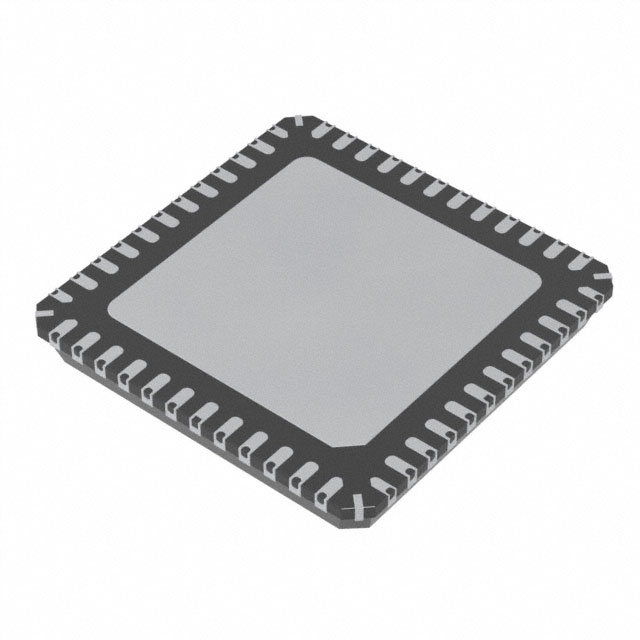
- Part No.:
- TLE9832QXXUMA2
- Manufacturer:
- Infineon Technologies
- Category:
- Application Specific Microcontrollers
- Package:
- 48-VFQFN Exposed Pad
- Datasheet:
-
 TLE9832QXXUMA2.pdf
- Description:
- IC MOTOR DRIVER 48VQFN
- Quantity:
- Payment:

- Shipping:

Inventory:1,578
Please send an inquiry. Send us your inquiry, and we will respond immediately.
Product details
Overview
TLE9832QXXUMA2 from Infineon Technologies is an automotive-qualified 8-bit microcontroller integrating LIN transceiver, high-side and dual low-side power switches, 32 kB Flash + 4 kB emulated EEPROM, XC800 core (40 MHz), and on-chip 1.5 V/5.0 V regulators - designed for body control modules, seat/mirror actuators, and LIN-based smart sensors in 12 V vehicle systems.
For engineers reviewing the TLE9832QXXUMA2 datasheet, TLE9832QXXUMA2 pinout, TLE9832QXXUMA2 application, or TLE9832QXXUMA2 equivalent, this device delivers integrated power switching, LIN physical layer compliance (LIN 1.3/2.0/2.1), real-time PWM generation via CCU6, hardware watchdog with windowing, and bootROM-enabled firmware updates over LIN bus.
Technical Context
The TLE9832QXXUMA2 integrates a fully functional XC800 8051-compatible core operating at up to 40 MHz with two clocks per machine cycle, paired with dedicated power management (VDDC = 1.5 V core supply, VDDP = 5.0 V I/O supply) and loss-of-clock detection triggering fail-safe shutdown of integrated power switches. Its system clock architecture combines internal RC oscillator, external crystal (XTAL1/XTAL2), and PLL for flexible timing configuration.
Functional integration includes a LIN 2.1-compliant transceiver with bus wake-up capability, five 16-bit timers (Timer 0–3, Timer 21), CCU6 capture/compare unit for three-phase PWM, UART with LIN bootloader support, and analog measurement subsystem comprising dual ADCs (8-bit ADC2 + 10-bit ADC1), high-voltage monitor input (VBAT_SENSE), and on-die temperature sensor.
Key Specifications
| Parameter | Value and Actual Design Meaning |
|---|---|
| Core Architecture | XC800 8051-compatible, 40 MHz max frequency, 2-clock-per-cycle execution - enables deterministic real-time control with reduced instruction latency. |
| Memory | 32 kB Flash + 4 kB emulated EEPROM, 256 B RAM, 3 kB XRAM, 512 B OTP, 512 B 100TP - supports field firmware updates and parameter storage without external memory. |
| LIN Compliance | LIN 1.3 / 2.0 / 2.1 physical layer transceiver with wake-up detection and bus short-circuit protection - eliminates need for discrete LIN PHY in node designs. |
| Power Switches | 1 high-side switch (420 mA typical load current, 0.7 Ω RDS(on)), 2 low-side switches (1.2 A each, clamped output, PWM-capable) - drives relays, solenoids, and LEDs directly from MCU pins. |
| Analog Peripherals | 10-bit ADC1 (11 channels, 10 µs conversion), 8-bit ADC2 (4 channels), VBAT_SENSE attenuator (1:10), on-die temperature sensor (±2.5°C accuracy) - enables battery monitoring, thermal supervision, and sensor interfacing. |
| Timing & Safety | Dual watchdog timers (WDT1 + WDT), programmable window refresh, clock failure detection with automatic power switch disable - meets ASIL-B functional safety requirements for non-safety-critical automotive nodes. |
| Debug Interface | 2-wire Device Access Port (DAP) supporting flash programming, breakpoint debugging, and real-time variable inspection - enables in-system development without JTAG header footprint. |
Pinout & Package
Package: PG-VQFN-48-77 (7 mm × 7 mm, 0.5 mm pitch, exposed thermal pad). Pin count: 48 terminals. Thermal pad must be soldered to PCB ground plane for safe operation at full load.
| Pin/Terminal | Circuit Role | Design Meaning |
|---|---|---|
| VDDP | I/O Supply Voltage | 5.0 V regulated supply for GPIO, LIN transceiver, and analog peripherals - requires local 100 nF + 10 µF decoupling. |
| VDDC | Core Supply Voltage | 1.5 V regulated supply for XC800 core - generated internally from VDDP; no external regulator needed. |
| HSW | High-Side Switch Output | Drives loads between battery (VBAT) and HSW pin - supports 420 mA continuous, integrated current sense and thermal shutdown. |
| LSW1 / LSW2 | Low-Side Switch Outputs | Ground-switched outputs with clamp diodes and PWM capability - drive relays, bulbs, or motors with 1.2 A peak current each. |
| TXD / RXD | LIN Bus Interface | Direct connection to LIN bus (single-wire); TXD drives bus low, RXD senses bus state - compliant with LIN spec for node addressing and diagnostics. |
| XTAL1 / XTAL2 | Crystal Oscillator Inputs | Supports 1–20 MHz external crystal for precise clock source - used by PLL to generate 40 MHz core clock. |
| ADCGND | Analog Ground Reference | Separate analog ground pin for ADC and voltage monitor - must be connected to clean ground plane, isolated from digital return paths. |
Key Features
| Feature | Design Value |
|---|---|
| LIN Bootstrap Loader (LIN BSL) | Enables firmware updates over LIN bus without external programmer - reduces production test time and supports field upgrades. |
| CCU6 PWM Generator | Hardware-accelerated 3-phase PWM with dead-time insertion and fault input - suitable for BLDC motor commutation in seat/mirror actuators. |
| Integrated Power Switches | Eliminates 3 external drivers (1 HS + 2 LS), reducing BOM count, PCB area, and failure points in cost-sensitive body electronics. |
| On-Chip Temperature Sensor | Monitors die temperature with ±2.5°C accuracy - triggers thermal derating or shutdown before junction exceeds 150°C. |
| BootROM Firmware | Contains factory-programmed startup code and Flash programming routines - ensures reliable initialization and secure in-field reprogramming. |
Applications
| Automotive Seat Control | Door Mirror Adjustment |
|---|---|
Use Scenario: Motorized seat position memory with LIN interface to body control module. IC Role / Device Role / Timing Role: System-on-chip controller managing dual DC motor direction/speed, LIN communication, and position feedback via ADC. Use Value: Integrates motor drivers, LIN PHY, and 10-bit ADC in single package - reduces component count by ≥7 vs. discrete MCU + driver + transceiver solution. |
Use Scenario: Electric mirror folding/unfolding with anti-pinch detection. IC Role / Device Role / Timing Role: Real-time current sensing (via LSW current sense), PWM-controlled H-bridge drive, and LIN status reporting. Use Value: Uses built-in low-side switches with clamping and CCU6 PWM to implement bidirectional motor control without external H-bridge IC. |
| Smart LIN Sensor Node | Body Control Module Subnode |
Use Scenario: Tire pressure monitoring system (TPMS) receiver node with LIN interface. IC Role / Device Role / Timing Role: LIN slave node receiving commands, measuring VBAT and temperature, and reporting via LIN frame. Use Value: Leverages on-chip 10-bit ADC1, VBAT_SENSE attenuator, and temperature sensor - avoids external analog front-end components. |
Use Scenario: Interior lighting control subnode managing LED dimming and switch inputs. IC Role / Device Role / Timing Role: High-side switch driving LED strings, GPIO reading pushbuttons, and LIN status polling. Use Value: Single-chip replaces MCU + LED driver + LIN transceiver - simplifies layout and improves EMI performance with integrated routing. |
Equivalent & Alternatives
The following parts are listed as comparable options for similar automotive LIN node controller applications.
| Alternative Part | Technical Difference | Application Difference | Selection Advice |
|---|---|---|---|
| TLE9833QXXUMA2 | Same pinout, adds second LIN channel and enhanced PWM resolution (16-bit CCU6 vs. 12-bit in TLE9832). | Suitable for dual-LIN nodes (e.g., multi-zone climate control) requiring independent bus domains. | Select when dual-LIN or higher-resolution PWM is required; otherwise TLE9832 offers lower cost and identical footprint. |
| SPC560B50L5 | 32-bit Power Architecture MCU, no integrated power switches, requires external LIN transceiver and drivers. | Targeted at higher-performance body domain controllers needing CAN + LIN + more memory. | Choose only if migrating to 32-bit platform or requiring CAN interface; not drop-in compatible due to different architecture and peripheral set. |
Compared with TLE9833QXXUMA2, the TLE9832QXXUMA2 provides sufficient PWM resolution and single-LIN capability at lower cost and power; versus SPC560B50L5, it delivers higher integration density and lower BOM for simple LIN-actuated nodes but lacks CAN and 32-bit processing.
Availability
TLE9832QXXUMA2 is available at Aetrix Electronics and suitable for automotive body electronics, LIN-based sensor nodes, and actuator control systems requiring stable component supply across extended temperature ranges (−40 °C to +125 °C) and AEC-Q100 qualification.
Supply support for TLE9832QXXUMA2 includes scheduled delivery planning, volume procurement assistance, BOM continuity management, traceable sourcing, and lifecycle availability coordination for OEM customers, industrial embedded developers, connected-device designers, and electronics production programs.
Manufacturer
Infineon Technologies AG is a German semiconductor manufacturer specializing in power management, automotive ICs, and security solutions, with global R&D and manufacturing infrastructure.
The TLE9832 belongs to Infineon's TLE98xx family of automotive LIN system basis chips (SBCs), engineered to consolidate microcontroller, LIN transceiver, and power switches into single-package solutions for cost-sensitive, space-constrained body electronics.
FAQ
Is the TLE9832QXXUMA2 qualified for automotive use?
Yes. The TLE9832QXXUMA2 is AEC-Q100 qualified (Grade 1: −40 °C to +125 °C ambient), features integrated watchdog timers with windowing, clock failure detection, and fail-safe power switch disable - meeting functional safety requirements for non-safety-critical automotive applications such as seat/mirror controls and LIN sensor nodes.
Does it support in-system programming over LIN?
Yes. The device includes a LIN Bootstrap Loader (LIN BSL) stored in BootROM, enabling firmware updates via standard LIN frames without external debug hardware. This allows field reprogramming using existing vehicle LIN infrastructure and supports secure authentication via configurable password protection.
What is the maximum load current supported by the integrated high-side switch?
The integrated high-side switch supports 420 mA continuous current at 25 °C (derated to 280 mA at 125 °C), with typical RDS(on) of 0.7 Ω. It includes overcurrent detection, thermal shutdown, and current-sense output for closed-loop control - suitable for driving small relays, solenoids, or LED arrays.
Can the TLE9832QXXUMA2 operate without an external crystal?
Yes. The device includes an internal RC oscillator (±10% accuracy) sufficient for LIN baud rate generation in non-critical timing applications. For LIN 2.x compliance requiring ±1.5% clock accuracy, an external 1–20 MHz crystal connected to XTAL1/XTAL2 is mandatory - the internal PLL locks to this reference to generate the 40 MHz core clock.
TLE9832QXXUMA2 Specifications
- Product attributes
- Attribute value
- Manufacturer:
- Infineon Technologies
- Series:
- -
- Package/Case:
- 48-VFQFN Exposed Pad
- Packaging:
- Tape & Reel (TR)
- Product Status:
- Obsolete
- Programmable:
- Not Verified
- Applications:
- -
- Core Processor:
- XC800
- Program Memory Type:
- FLASH (36kB)
- Controller Series:
- -
- RAM Size:
- 3.25K x 8
- Interface:
- LIN, SSI, UART
- Number of I/O:
- 11
- Voltage - Supply:
- 3V ~ 27V
- Operating Temperature:
- -40°C ~ 150°C (TJ)
- Grade:
- Automotive
- Qualification:
- -
- Mounting Type:
- Surface Mount
- Supplier Device Package:
- PG-VQFN-48-31
TLE9832QXXUMA2 FAQ
1.How can I place an order for TLE9832QXXUMA2 through Aetrix?
Please submit a Request for Quotation (RFQ) for TLE9832QXXUMA2 on Aetrix. Our sales agent will provide a competitive quotation and guide you through the order confirmation once you accept the terms.
2.Are the price and stock information for TLE9832QXXUMA2 reliable?
The price and inventory of TLE9832QXXUMA2 are updated periodically and may fluctuate due to market conditions. Stock and pricing data are typically refreshed every 24 hours. Quotation validity for TLE9832QXXUMA2 is usually 5 days.
3.What payment methods are accepted for TLE9832QXXUMA2?
We accept Wire Transfer, PayPal, Credit Card, Western Union, MoneyGram, and Escrow for TLE9832QXXUMA2 transactions.
Note: Certain payment methods may incur a processing fee.
4.How is shipping managed for TLE9832QXXUMA2?
TLE9832QXXUMA2 orders can be shipped via leading logistics carriers, including DHL, UPS, FedEx, TNT, or Registered Mail.
Once your TLE9832QXXUMA2 order is processed, you will receive an email with the shipment details and tracking number.
Note: Tracking information may take up to 24 hours to appear. Express delivery typically takes 3–5 business days.
5.How can I obtain technical support or documentation for TLE9832QXXUMA2?
For technical support, including TLE9832QXXUMA2 datasheets, pinout diagrams, or application guidance, please contact our engineering support team. They can provide detailed documentation and assistance for your TLE9832QXXUMA2 requirements.
6.How does Aetrix verify that TLE9832QXXUMA2 is sourced from the original manufacturer or authorized distributors?
All TLE9832QXXUMA2 products on Aetrix are procured from qualified distributors and authorized channels. Our dedicated quality assurance team conducts strict verification, including traceability checks and, if necessary, third-party testing. This ensures that TLE9832QXXUMA2 meets industry standards.
7.What is the process for return or replacement of TLE9832QXXUMA2?
All TLE9832QXXUMA2 units undergo pre-shipment inspection (PSI). If there is an issue with TLE9832QXXUMA2, returns or replacements are accepted under the following conditions:
1.Quantity discrepancies, incorrect items, or visible external defects (such as breakage or corrosion), acknowledged by Aetrix.
2.The issue is reported within 90 days of delivery.
3.The TLE9832QXXUMA2 part is unused and in its original packaging.
Return procedure for TLE9832QXXUMA2:
1.Submit a request within 90 days.
2.Obtain a Return Material Authorization (RMA) from Aetrix.
TLE9832QXXUMA2 Tags
-
CYPD3175-24LQXQ
Infineon Technologies

-
SLB9672VU20FW1523XTMA1
Infineon Technologies
-
SLB9670VQ20FW785XTMA1
Infineon Technologies
-
SLB9672XU20FW1523XTMA1
Infineon Technologies
-
SLB9673XU20FW2613XTMA1
Infineon Technologies
-
CYPD3125-40LQXIT
Infineon Technologies
-
AT97SC3204-U2A1A-20
Microchip Technology
-
AT97SC3204-U2A1A-10
Microchip Technology
-
SLM9670AQ20FW1311XTMA1
Infineon Technologies
-
SLB9672XU20FW1613XTMA1
Infineon Technologies
-
SLB9672AU20FW1613XTMA1
Infineon Technologies
-
SLB9673AU20FW2613XTMA1
Infineon Technologies
Tech Hub

Operational amplifier guide covering op amp basics, feedback, ideal vs real op amps, common configurations, buffer circuits, offset, bias current, gain-bandwidth, slew rate, rail-to-rail limits and sel…

Jumper cables guide covering safe connection order, red and black clamp placement, final ground connection, cable gauge, length, clamp quality, copper vs CCA cables, jump starter comparison and battery…

LDO regulator guide covering low dropout voltage, power dissipation, thermal design, PSRR, output noise, capacitor stability, adjustable LDO circuits, LDO vs buck converter and datasheet selection chec…

Conditional Access Module guide covering CAM meaning, CI/CI+ interface, smart card authorization, DVB security workflow, TV and set-top box compatibility, internal electronics, ESD protection, connecto…

Guide to electronic component obsolescence covering EOL risk, PCN/PDN notices, last-time buy planning, replacement options, form-fit-function validation, counterfeit risk and BOM lifecycle management.

18650 battery guide covering lithium-ion cell basics, 3.6V/3.7V voltage, 4.2V charging, mAh and Wh capacity, protected cells, chargers, BMS, series-parallel packs, holders, welding and sourcing checks.…

Hall effect sensor guide covering working principle, linear and digital sensors, Arduino circuits, current sensing, speed detection, automotive applications, A3144 examples, signal filtering and datash…

Product Change Notification guide for electronic components, covering PCN meaning, PCN vs PDN/EOL, common change types, risk levels, form-fit-function review, engineering validation, BOM control, LTB/L…

A practical guide to blend door actuators, covering HVAC function, symptoms, location, AC and heater issues, reset and calibration, replacement cost, electrical diagnosis, compatibility checks, and rep…

Engineering guide to Raspberry Pi alternatives, covering chip-level differences, Orange Pi, ROCK, Jetson, Banana Pi, NanoPi, Compute Module, Pico, GPIO, camera, HAT compatibility, and replacement risks…


