
 My Inquiry
 My Account


Texas Instruments TPS2376PWR
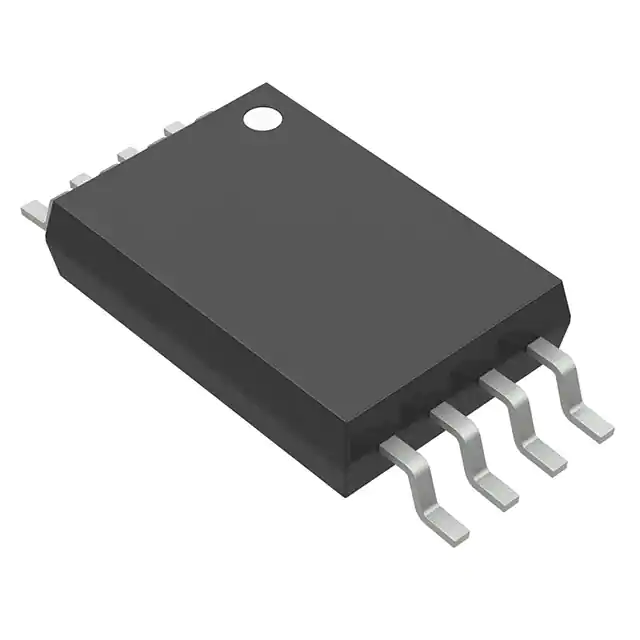
- Part No.:
- TPS2376PWR
- Manufacturer:
- Texas Instruments
- Category:
- Power Over Ethernet (PoE) Controllers
- Package:
- 8-TSSOP (0.173", 4.40mm Width)
- Datasheet:
-
 TPS2376PWR.pdf
- Description:
- IC POE CNTRL 1 CHANNEL 8TSSOP
- Quantity:
- Payment:

- Shipping:

Inventory:1,207
Please send an inquiry. Send us your inquiry, and we will respond immediately.
Product details
Overview
TPS2376PWR from Texas Instruments is an IEEE 802.3af-compliant powered device (PD) controller IC for Power over Ethernet applications, integrating a 0.58-Ω, 100-V low-side MOSFET switch, programmable UVLO via dedicated UVLO pin, fixed 450-mA operational current limit, and adjustable inrush current control via ILIM pin. It operates across –40°C to 85°C and supports Class 3 PD implementations in VoIP phones and security cameras.
For engineers reviewing the TPS2376PWR datasheet, TPS2376PWR pinout, TPS2376PWR application, or TPS2376PWR equivalent, key selection criteria include its programmable UVLO threshold (1.93 V / 2.49 V), 8-pin TSSOP package, open-drain PG reporting, thermal shutdown at 135°C, and compatibility with legacy and compliant PSEs requiring flexible undervoltage lockout tuning.
Technical Context
The TPS2376PWR implements full IEEE 802.3af detection (1.4–11.3 V), classification (13–21 V), and power-up sequencing with hysteresis-controlled UVLO thresholds set by external resistor divider on the UVLO pin. Its functional block includes detection and classification comparators, a current-limit amplifier, thermal shutdown circuitry, and a latch-controlled pass device driver.
Unlike the fixed-threshold TPS2375 and legacy-biased TPS2377, the TPS2376PWR uses a dedicated UVLO input pin to configure both upper (2.43–2.57 V) and lower (1.87–1.98 V) thresholds independently, enabling robust operation under cable voltage drop and varying PSE output characteristics while maintaining 8.8-V typical hysteresis.
Key Specifications
| Parameter | Value and Actual Design Meaning |
|---|---|
| UVLO Thresholds | Programmable: 1.93 V (falling), 2.49 V (rising); enables custom turn-on/turn-off margins for noncompliant PSEs |
| Pass Device rDS(on) | 0.58 Ω max at 300 mA; minimizes conduction loss and thermal rise in PoE load path |
| Operational Current Limit | 450 mA typical; ensures compliance with IEEE 802.3af PSE current monitoring during normal operation |
| Inrush Current Control | Adjustable via ILIM pin (62.5–500 kΩ); sets start-up surge to 100–180 mA, preventing line sag below UVLO |
| Power-Good Output | Open-drain PG with 75–225 µs deglitch; signals stable RTN voltage ≥10 V after inrush completion |
| Thermal Protection | 135°C shutdown with 20°C hysteresis; prevents damage during sustained overload or poor PCB heatsinking |
| ESD Rating | 15-kV system-level (contact/air) per EN61000-4-2; protects RJ-45 interface against field-induced surges |
Pinout & Package
TPS2376PWR is housed in an 8-pin TSSOP (PW-8) package with exposed thermal pad, rated for 251 mW power dissipation at TA = 85°C (θJA = 159°C/W high-K board). Pin 7 is UVLO (input), distinct from NC on TPS2375/TPS2377 - critical for programmable threshold configuration.
| Pin/Terminal | Circuit Role | Design Meaning |
|---|---|---|
| 1 ILIM | Inrush current programming input | Connects to VSS via resistor (62.5–500 kΩ) to set inrush limit; must not be left open or shorted |
| 2 CLASS | Classification current output | Sinks current through external R(CLASS) (255–4420 Ω) to signal IEEE 802.3af power class to PSE |
| 3 DET | Detection signature output | Pulls to VSS via R(DET) = 24.9 kΩ to generate 25-kΩ incremental resistance for PSE detection phase |
| 4 VSS | Input supply return | Local ground reference for internal comparators and bias circuits; connects to PSE negative rail |
| 5 RTN | Switched load return | Low-side output node for downstream DC/DC converter; carries full load current up to 450 mA |
| 6 PG | Open-drain power-good indicator | Asserts high-impedance state when RTN ≥10 V and inrush complete; requires external pullup for logic interface |
| 7 UVLO | Programmable UVLO threshold input | Accepts resistor divider from VDD to VSS to set custom upper/lower lockout voltages (not NC) |
| 8 VDD | Positive input supply | Connects to rectified PoE input (0–57 V); powers internal circuitry and serves as voltage monitor reference |
Key Features
| Feature | Design Value |
|---|---|
| Programmable UVLO | Enables precise turn-on/turn-off voltage tuning via external resistor divider on UVLO pin - essential for interoperability with legacy PSEs |
| Integrated 100-V low-side switch | 0.58-Ω rDS(on) MOSFET eliminates need for discrete pass device, reducing BOM count and layout complexity |
| Adjustable inrush limiting | ILIM pin allows optimization of bulk capacitor charging current to prevent false UVLO dropout during startup |
| True open-drain PG output | PG pin drives high-impedance only when RTN is stable and inrush complete - simplifies host microcontroller monitoring |
| 15-kV system-level ESD protection | Robustness against RJ-45 port surges meets industrial deployment requirements without external TVS diodes |
Applications
| VoIP Phones | WLAN Access Points |
|---|---|
Use Scenario: Powered via Category 5/6 Ethernet cabling in enterprise office deployments with mixed PSE generations. IC Role / Device Role / Timing Role: PD controller managing detection, classification, and regulated power delivery to baseband processor and codec. Use Value: Programmable UVLO ensures reliable startup even with older PSEs delivering <44 V, avoiding intermittent boot failures. |
Use Scenario: High-density wireless infrastructure where multiple APs draw power from centralized PoE switches. IC Role / Device Role / Timing Role: Primary interface between PoE input and isolated DC/DC converter powering RF transceivers and MAC controller. Use Value: Adjustable inrush current prevents upstream PSE current-limit tripping during simultaneous AP power-up events. |
| Security Cameras | POS Terminals |
Use Scenario: Outdoor IP cameras with extended cable runs (>50 m), experiencing significant voltage drop under load. IC Role / Device Role / Timing Role: Enables Class 3 power negotiation and delivers stable 450-mA current to image sensor and video encoder. Use Value: 100-V rating and thermal shutdown protect against overvoltage transients and sustained overload in unattended installations. |
Use Scenario: Retail point-of-sale terminals deployed in environments with unreliable PSE firmware or aging infrastructure. IC Role / Device Role / Timing Role: Controls PoE handshaking and provides fault-isolated power to payment processor and display subsystem. Use Value: Open-drain PG output synchronizes host MCU initialization with verified power stability, eliminating brownout resets. |
Equivalent & Alternatives
The following parts are listed as comparable options for similar powered device controller applications.
| Alternative Part | Technical Difference | Application Difference | Selection Advice |
|---|---|---|---|
| TPS2375PW | Fixed UVLO thresholds (30.5 V / 39.3 V); no UVLO pin - pin 7 is NC | Optimized for IEEE 802.3af-compliant PSEs only; lacks flexibility for legacy systems | Select when PSE voltage stability is guaranteed and design simplicity is prioritized over field interoperability |
| TPS2377PW | Legacy UVLO thresholds (30.5 V / 35.1 V); fixed hysteresis; pin 7 is NC | Targeted at pre-2003 PoE infrastructure with lower PSE output voltage capability | Choose only for brownfield deployments with known noncompliant PSEs; avoid for new designs |
Compared with TPS2375PW and TPS2377PW, the TPS2376PWR uniquely supports field-tunable UVLO via its dedicated input pin - enabling one hardware design to interoperate reliably across compliant, marginal, and legacy PSEs without PCB revision.
Availability
TPS2376PWR is available at Aetrix Electronics and suitable for VoIP phones, WLAN access points, security cameras, and POS terminals requiring stable component supply with full IEEE 802.3af compliance and legacy PSE interoperability.
Supply support for TPS2376PWR includes scheduled delivery planning, volume procurement assistance, BOM continuity management, traceable sourcing, and lifecycle availability coordination for OEM customers, industrial embedded developers, connected-device designers, and electronics production programs.
Manufacturer
Texas Instruments is a global semiconductor company headquartered in Dallas, Texas, delivering analog and embedded processing solutions for industrial, automotive, and communications markets.
The TPS237x family is Texas Instruments' second-generation IEEE 802.3af PD controller product line, designed specifically to simplify PoE-powered endpoint development with integrated pass devices, programmable thresholds, and robust system-level ESD protection.
FAQ
What is the primary function of the UVLO pin on the TPS2376PWR?
The UVLO pin on the TPS2376PWR is a dedicated input that accepts an external resistor divider from VDD to VSS to program custom upper and lower undervoltage lockout thresholds (1.87–1.98 V falling, 2.43–2.57 V rising). Unlike the TPS2375PW and TPS2377PW - where pin 7 is NC - this feature enables the TPS2376PWR to adapt to variable PSE output voltages, ensuring reliable startup across legacy and compliant infrastructure without hardware changes. This programmability is central to the TPS2376PWR's role in field-deployable PoE endpoints.
How does the TPS2376PWR implement inrush current control?
The TPS2376PWR implements inrush current control via its ILIM pin (Pin 1), which accepts an external resistor (62.5–500 kΩ) connected to VSS. This resistor sets the peak inrush current to 100–180 mA during bulk capacitor charging, preventing input voltage sag below the UVLO lower threshold. The TPS2376PWR terminates inrush when RTN current falls below 85–100% of the programmed value, then transitions to normal operation with fixed 450-mA current limiting. This behavior is confirmed in the Electrical Characteristics table and Figure 14 of the TPS2376PWR datasheet.
Is the TPS2376PWR pin-compatible with the TPS2375PW or TPS2377PW?
No, the TPS2376PWR is not pin-compatible with the TPS2375PW or TPS2377PW. While all three share the same 8-pin TSSOP (PW-8) package and identical pin assignments for Pins 1–6 and 8, Pin 7 differs functionally: it is UVLO (input) on the TPS2376PWR but NC on the TPS2375PW and TPS2377PW. Connecting a resistor divider to Pin 7 on a TPS2375PW or TPS2377PW will not yield programmable UVLO and may impair operation. Hardware redesign is required to substitute among these variants.
What is the maximum continuous current the TPS2376PWR can deliver to the load?
The TPS2376PWR delivers a fixed 450-mA operational current limit to the load via its integrated low-side MOSFET. This value is specified in the Electrical Characteristics table under "Current limit" (I(LIM)) with a typical value of 461 mA and maximum of 515 mA at TJ ≤125°C. The device enforces this limit within 2.5 µs of overload onset, satisfying IEEE 802.3af PSE monitoring requirements. Sustained current above this threshold triggers thermal shutdown at 135°C, protecting both the TPS2376PWR and downstream circuitry.
Does the TPS2376PWR support IEEE 802.3at (PoE+) or 802.3bt (PoE++) standards?
No, the TPS2376PWR is designed exclusively for IEEE 802.3af (Type 1) Power over Ethernet compliance. It supports up to Class 3 (12.95 W at the PD input) and does not implement the higher-power detection signatures, dual-signature classification, or 4-pair power delivery required by 802.3at or 802.3bt. Its 100-V absolute maximum rating, 450-mA current limit, and single-stage classification architecture are aligned with 802.3af specifications only. For PoE+ or PoE++ designs, TI recommends the TPS23753A or TPS23881 families instead of the TPS2376PWR.
TPS2376PWR Specifications
- Product attributes
- Attribute value
- Manufacturer:
- Texas Instruments
- Series:
- -
- Package/Case:
- 8-TSSOP (0.173", 4.40mm Width)
- Packaging:
- Tape & Reel (TR)
- Product Status:
- Active
- Type:
- Controller (PD)
- Number of Channels:
- 1
- Power - Max:
- 12.95 W
- Internal Switch(s):
- Yes
- Auxiliary Sense:
- No
- Standards:
- 802.3af (PoE)
- Voltage - Supply:
- 0V ~ 57V
- Current - Supply:
- 240µA
- Operating Temperature:
- -40°C ~ 85°C
- Mounting Type:
- Surface Mount
- Supplier Device Package:
- 8-TSSOP
TPS2376PWR FAQ
1.How can I place an order for TPS2376PWR through Aetrix?
Please submit a Request for Quotation (RFQ) for TPS2376PWR on Aetrix. Our sales agent will provide a competitive quotation and guide you through the order confirmation once you accept the terms.
2.Are the price and stock information for TPS2376PWR reliable?
The price and inventory of TPS2376PWR are updated periodically and may fluctuate due to market conditions. Stock and pricing data are typically refreshed every 24 hours. Quotation validity for TPS2376PWR is usually 5 days.
3.What payment methods are accepted for TPS2376PWR?
We accept Wire Transfer, PayPal, Credit Card, Western Union, MoneyGram, and Escrow for TPS2376PWR transactions.
Note: Certain payment methods may incur a processing fee.
4.How is shipping managed for TPS2376PWR?
TPS2376PWR orders can be shipped via leading logistics carriers, including DHL, UPS, FedEx, TNT, or Registered Mail.
Once your TPS2376PWR order is processed, you will receive an email with the shipment details and tracking number.
Note: Tracking information may take up to 24 hours to appear. Express delivery typically takes 3–5 business days.
5.How can I obtain technical support or documentation for TPS2376PWR?
For technical support, including TPS2376PWR datasheets, pinout diagrams, or application guidance, please contact our engineering support team. They can provide detailed documentation and assistance for your TPS2376PWR requirements.
6.How does Aetrix verify that TPS2376PWR is sourced from the original manufacturer or authorized distributors?
All TPS2376PWR products on Aetrix are procured from qualified distributors and authorized channels. Our dedicated quality assurance team conducts strict verification, including traceability checks and, if necessary, third-party testing. This ensures that TPS2376PWR meets industry standards.
7.What is the process for return or replacement of TPS2376PWR?
All TPS2376PWR units undergo pre-shipment inspection (PSI). If there is an issue with TPS2376PWR, returns or replacements are accepted under the following conditions:
1.Quantity discrepancies, incorrect items, or visible external defects (such as breakage or corrosion), acknowledged by Aetrix.
2.The issue is reported within 90 days of delivery.
3.The TPS2376PWR part is unused and in its original packaging.
Return procedure for TPS2376PWR:
1.Submit a request within 90 days.
2.Obtain a Return Material Authorization (RMA) from Aetrix.
TPS2376PWR Tags

-
TPS2378DDAR
Texas Instruments
-
TPS23753APWR
Texas Instruments
-
TPS23756PWPR
Texas Instruments
-
TPS23750PWPR
Texas Instruments
-
MP8007GV-Z
Monolithic Power Systems Inc.
-
TPS23861PWR
Texas Instruments
-
TPS23753PWR
Texas Instruments
-
PD69201ILD-TR
Microchip Technology
-
SI3402-B-GM
Skyworks Solutions Inc.
-
SI3402-B-GMR
Skyworks Solutions Inc.
-
SI34071-A01-GMR
Skyworks Solutions Inc.
-
SI3404-A-GMR
Skyworks Solutions Inc.
Tech Hub

A practical engineering guide to 3.3V and 5V logic compatibility, input thresholds, resistor dividers, translator ICs, MOSFET level shifting, I2C pull-ups, timing limits and power-sequencing risks.

The 74HC595 uses push-pull logic outputs, while the TPIC6B595 uses 50 V open-drain DMOS sinks for higher-power loads. This guide compares timing, current limits, 3.3 V interfacing, load wiring, thermal…

The 74HC595 converts serial data into eight stable parallel outputs. This guide covers pin functions, shift and storage timing, OE and MR behavior, drive-current limits, cascading, voltage compatibilit…

A technical comparison of level-sensitive latches and edge-triggered flip-flops, covering timing windows, setup and hold limits, master–slave operation, time borrowing, race-through, HDL inference and…

A D latch stores one bit while Enable controls when data can pass. This reference covers gate-level operation, truth tables, transparency, setup and hold timing, LE versus OE, common ICs and practical …

An SR latch stores one bit through cross-coupled feedback. This engineering reference covers NOR and NAND implementations, truth tables, forbidden-state recovery, gated operation, switch debouncing, fa…

Latch circuits retain one bit through feedback. This technical reference covers SR and D latches, truth tables, transparency, timing limits, latch-versus-flip-flop behavior, applications and common log…

An engineering guide to LED driver operation, constant-current and constant-voltage outputs, linear and switching topologies, dimming, IC selection, calculations, replacement compatibility, and fault c…

Operational amplifier guide covering op amp basics, feedback, ideal vs real op amps, common configurations, buffer circuits, offset, bias current, gain-bandwidth, slew rate, rail-to-rail limits and sel…

Jumper cables guide covering safe connection order, red and black clamp placement, final ground connection, cable gauge, length, clamp quality, copper vs CCA cables, jump starter comparison and battery…


