
 My Inquiry
 My Account


STMicroelectronics TS472EIJT
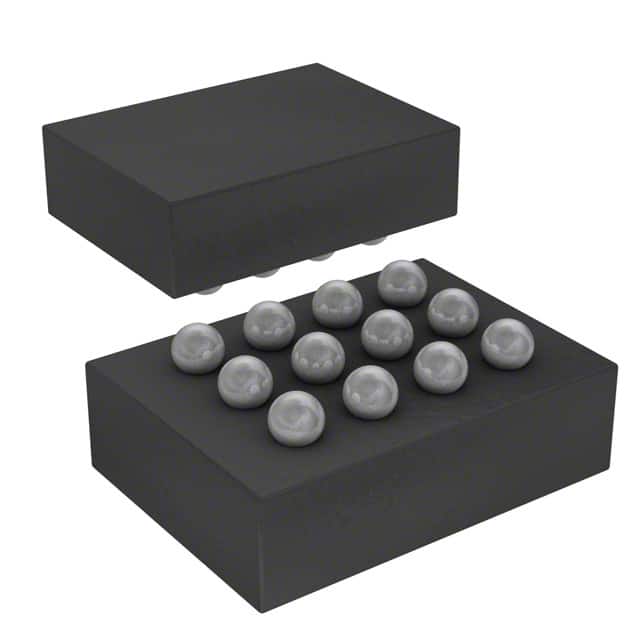
- Part No.:
- TS472EIJT
- Manufacturer:
- STMicroelectronics
- Category:
- Audio Amplifiers
- Package:
- 12-UFBGA, FCBGA
- Datasheet:
-
 TS472EIJT.pdf
- Description:
- IC AMP CLASS AB MONO 12FLIPCHIP
- Quantity:
- Payment:

- Shipping:

Inventory:4,205
Please send an inquiry. Send us your inquiry, and we will respond immediately.
Product details
Overview
TS472EIJT from STMicroelectronics is a fully-differential microphone preamplifier IC optimized for high-performance audio systems in portable devices, featuring 10 nV/√Hz input noise at 1 kHz, adjustable gain from 0 to 40 dB, and integrated 2.0 V low-noise microphone bias output with ≤1 μA standby current. It operates from 2.2–5.5 V single supply and delivers 40 kHz bandwidth independent of gain setting.
For engineers reviewing the TS472EIJT datasheet, TS472EIJT pinout, TS472EIJT application, or TS472EIJT equivalent, this device is selected for ultra-low-noise electret microphone signal conditioning in space-constrained, battery-sensitive designs requiring differential signaling, fast wake-up (5 ms typ.), and robust PSRR (>70 dB) across audio band.
Technical Context
The TS472EIJT implements a fully-differential amplifier architecture with internal common-mode feedback that centers output DC bias at VCC/2, maximizing dynamic range and enabling rail-to-rail swing capability. Its gain is set either by external resistor on GS pin (0–40 dB) or via voltage bias (20 dB default), and it integrates a dedicated low-noise 2.0 V bias generator with 100 Ω output impedance and 80 dB PSRR at 217 Hz.
It features dual low-pass filter pins (C1/C2) for configurable high-frequency roll-off up to 40 kHz, active-low STBY control for 1 μA shutdown, and built-in ESD protection (2 kV HBM). The device supports both differential and single-ended output configurations, though differential mode preserves full PSRR and CMRR performance.
Key Specifications
| Parameter | Value and Actual Design Meaning |
|---|---|
| Input Noise Density | 10 nV/√Hz @ 1 kHz - enables detection of weak acoustic signals without amplifying thermal noise floor |
| Gain Range | 0 to 40 dB - supports wide microphone sensitivity range (e.g., −44 dB/Pa) and variable source distance |
| Bias Output Voltage | 2.0 V ±0.1 V (no load) - precisely matches standard electret condenser microphone requirements |
| Bandwidth | 40 kHz (−3 dB) - covers full audible spectrum regardless of gain setting |
| Supply Current | 1.8 mA @ 20 dB gain - enables >100-hour battery life in notebook voice-recognition subsystems |
| Standby Current | ≤1 μA - allows always-on microphone monitoring with negligible quiescent drain |
| THD+N | 0.1% @ 20 dB, 20 Hz–20 kHz - ensures clean audio capture for voice recognition and conferencing |
| PSRR | 70 dB @ 217 Hz (bias), −46 dB (differential output) - rejects power rail noise in noisy digital SoC environments |
Pinout & Package
TS472EIJT is available in QFN24 4 × 4 mm lead-free package (JEDEC MO-220 variant), thermally enhanced with exposed thermal pad (pin 22 = GND). Pin assignments are validated per STMicroelectronics Doc ID 11015 Rev 6, Table 2.
| Pin/Terminal | Circuit Role | Design Meaning |
|---|---|---|
| IN+, IN− | Differential audio input | Accepts balanced electret mic signal; 100 kΩ input impedance minimizes loading on high-Z capsule |
| OUT+, OUT− | Differential audio output | Delivers rail-to-rail swing centered at VCC/2; enables noise-immune routing to ADC inputs |
| BIAS | Mic bias voltage source | Provides regulated 2.0 V with ≤100 Ω output impedance; powers electret capsule directly |
| STBY | Active-low enable | Pulls ≤0.4 V to enter 1 μA shutdown; releases to VCC for full operation within 5 ms |
| GS | Gain select control | Resistor-to-GND sets precise gain (0–40 dB); ≥1 V applied yields fixed 20 dB mode |
| C1, C2 | High-frequency filter nodes | External capacitors configure −3 dB cutoff (e.g., 220 pF → ~20 kHz) to limit aliasing or RF ingress |
| BYP | Bias reference bypass | 1 μF capacitor stabilizes internal VCC/2 reference; critical for fast wake-up and low distortion |
| VCC, GND | Power supply terminals | Support 2.2–5.5 V operation; thermal resistance 60 °C/W (QFN24) enables high-density PCB layout |
Key Features
| Feature | Design Value |
|---|---|
| Fully-differential I/O architecture | Enables 60+ dB common-mode noise rejection and eliminates need for input coupling transformers |
| Integrated 2.0 V mic bias generator | Eliminates external LDO; maintains <0.1 V drop under 2 mA load and >70 dB PSRR at 217 Hz |
| Configurable 40 kHz bandwidth | Fixed internal LPF + external C1/C2 allow system-level anti-aliasing tuning without changing IC |
| Active-low standby with 5 ms wake-up | Supports voice-triggered wake in always-listening applications while maintaining sub-μA sleep current |
| QFN24 4 × 4 mm package | Thermally efficient (60 °C/W) and footprint-optimized for thin mobile devices with tight board area constraints |
| 2 kV HBM ESD protection | Meets IEC 61000-4-2 Level 2 requirements for handheld consumer audio interfaces |
Applications
| Video Conference Systems | Notebook Computers |
|---|---|
Use Scenario: Multi-microphone array capturing speech in noisy office environments with real-time echo cancellation. IC Role / Device Role / Timing Role: Primary differential preamplifier stage for each MEMS/electret mic channel, providing matched gain and phase response. Use Value: 10 nV/√Hz noise floor and 40 dB PSRR ensure SNR >80 dB(A) even near switching power supplies, enabling reliable far-field voice pickup. | Use Scenario: Integrated stereo microphone input for Windows Hello voice authentication and Cortana activation. IC Role / Device Role / Timing Role: Low-power mic preamp with active-low STBY, synchronized to OS suspend/resume cycles. Use Value: 1 μA standby current extends battery life during idle; 5 ms wake-up meets Windows audio driver latency requirements. |
| Sound Acquisition for Voice Recognition | Photo/Video Cameras with Audio |
Use Scenario: Edge AI voice assistant using on-device keyword spotting with limited MCU resources. IC Role / Device Role / Timing Role: Front-end analog conditioner feeding 16-bit sigma-delta ADC; gain set to 30 dB for low-SNR ambient capture. Use Value: 0.1% THD+N and 40 kHz flat bandwidth preserve phoneme-level spectral fidelity required for accurate neural net inference. | Use Scenario: DSLR/mirrorless camera recording synchronized audio during video capture with minimal self-noise. IC Role / Device Role / Timing Role: Single-channel electret mic preamp with fixed 20 dB gain (GS = BIAS), minimizing BOM count. Use Value: Integrated 2.0 V bias eliminates discrete regulator; differential outputs reject motor and flash circuit noise during recording. |
Equivalent & Alternatives
The following parts are listed as comparable options for similar microphone preamplifier applications.
| Alternative Part | Technical Difference | Application Difference | Selection Advice |
|---|---|---|---|
| MAX4466ETE+ | Single-ended output only; 25 nV/√Hz noise; no integrated bias; 2.7–5.5 V supply | Lacks differential signaling and 2 V bias - requires external LDO and suffers higher EMI susceptibility | Select when cost is primary constraint and board layout permits careful single-ended routing |
| INA217AIDR | Instrumentation amp topology; 1.1 nV/√Hz noise; ±2.25–±18 V dual supply; no bias generator | Requires dual supply and external mic bias; superior noise but over-engineered for portable battery-powered use | Select only for studio-grade wired microphone interfaces where ultra-low noise justifies complexity |
Compared with MAX4466ETE+ and INA217AIDR, TS472EIJT uniquely combines differential I/O, integrated 2.0 V bias, 10 nV/√Hz noise, and sub-μA standby in a single 4×4 mm QFN-making it optimal for space- and power-constrained portable audio front-ends.
Availability
TS472EIJT is available at Aetrix Electronics and suitable for video conferencing systems, notebook computers, voice recognition edge devices, and camera audio subsystems requiring stable component supply, long-term lifecycle support, and consistent parametric performance across production batches.
Supply support for TS472EIJT includes scheduled delivery planning, volume procurement assistance, BOM continuity management, traceable sourcing, and lifecycle availability coordination for OEM customers, industrial embedded developers, connected-device designers, and electronics production programs.
Manufacturer
STMicroelectronics is a global semiconductor leader headquartered in Geneva, Switzerland, designing and manufacturing analog, mixed-signal, power, and microcontroller solutions for automotive, industrial, and consumer markets.
The TS472 belongs to ST's high-fidelity audio signal conditioning product line, engineered specifically for ultra-low-noise, low-power microphone interface applications in portable computing and communication devices.
FAQ
What is the maximum recommended load capacitance on the BIAS pin?
The BIAS pin supports up to 100 µF total capacitance, including filtering capacitor C3. STMicroelectronics specifies 1 µF (C3) as optimal for stability and noise suppression; larger values may degrade transient response during wake-up but do not cause oscillation. Load regulation remains within ±0.1 V up to 2 mA output current.
Can TS472EIJT drive a 10 kΩ differential input ADC directly?
Yes - TS472EIJT's differential outputs deliver ≥2.5 VPP swing into 10 kΩ loads at 20 dB gain and 3 V supply, with THD+N <0.1%. Output impedance is <100 Ω, ensuring minimal signal loss. For best SNR, match ADC input common-mode voltage to VCC/2 and maintain symmetric PCB trace lengths.
How does gain setting via GS pin affect power consumption?
Supply current varies linearly with gain: 1.8 mA at 20 dB, 2.4 mA at 40 dB, and 1.3 mA at 0 dB (per Table 5). This occurs because higher gain increases internal transconductance stage bias. Standby current remains ≤1 μA regardless of GS configuration, as STBY disables all active circuitry.
Is the QFN24 package RoHS and REACH compliant?
Yes - TS472EIJT QFN24 package is lead-free, RoHS Directive 2011/65/EU compliant, and REACH SVHC-free per STMicroelectronics' material declarations (Doc ID 11015 Rev 6, Section 6). The finish is matte Sn, compatible with standard Pb-free reflow profiles (peak 260°C).
TS472EIJT Specifications
- Product attributes
- Attribute value
- Manufacturer:
- STMicroelectronics
- Series:
- -
- Package/Case:
- 12-UFBGA, FCBGA
- Packaging:
- Tape & Reel (TR)
- Product Status:
- Active
- Type:
- Class AB
- Output Type:
- 1-Channel (Mono)
- Max Output Power x Channels @ Load:
- -
- Voltage - Supply:
- 2.2V ~ 5.5V
- Features:
- Differential Inputs, Microphone, Shutdown, Standby
- Mounting Type:
- Surface Mount
- Operating Temperature:
- -40°C ~ 85°C (TA)
- Grade:
- -
- Qualification:
- -
- Supplier Device Package:
- 12-FlipChip
TS472EIJT FAQ
1.How can I place an order for TS472EIJT through Aetrix?
Please submit a Request for Quotation (RFQ) for TS472EIJT on Aetrix. Our sales agent will provide a competitive quotation and guide you through the order confirmation once you accept the terms.
2.Are the price and stock information for TS472EIJT reliable?
The price and inventory of TS472EIJT are updated periodically and may fluctuate due to market conditions. Stock and pricing data are typically refreshed every 24 hours. Quotation validity for TS472EIJT is usually 5 days.
3.What payment methods are accepted for TS472EIJT?
We accept Wire Transfer, PayPal, Credit Card, Western Union, MoneyGram, and Escrow for TS472EIJT transactions.
Note: Certain payment methods may incur a processing fee.
4.How is shipping managed for TS472EIJT?
TS472EIJT orders can be shipped via leading logistics carriers, including DHL, UPS, FedEx, TNT, or Registered Mail.
Once your TS472EIJT order is processed, you will receive an email with the shipment details and tracking number.
Note: Tracking information may take up to 24 hours to appear. Express delivery typically takes 3–5 business days.
5.How can I obtain technical support or documentation for TS472EIJT?
For technical support, including TS472EIJT datasheets, pinout diagrams, or application guidance, please contact our engineering support team. They can provide detailed documentation and assistance for your TS472EIJT requirements.
6.How does Aetrix verify that TS472EIJT is sourced from the original manufacturer or authorized distributors?
All TS472EIJT products on Aetrix are procured from qualified distributors and authorized channels. Our dedicated quality assurance team conducts strict verification, including traceability checks and, if necessary, third-party testing. This ensures that TS472EIJT meets industry standards.
7.What is the process for return or replacement of TS472EIJT?
All TS472EIJT units undergo pre-shipment inspection (PSI). If there is an issue with TS472EIJT, returns or replacements are accepted under the following conditions:
1.Quantity discrepancies, incorrect items, or visible external defects (such as breakage or corrosion), acknowledged by Aetrix.
2.The issue is reported within 90 days of delivery.
3.The TS472EIJT part is unused and in its original packaging.
Return procedure for TS472EIJT:
1.Submit a request within 90 days.
2.Obtain a Return Material Authorization (RMA) from Aetrix.
TS472EIJT Tags
-Exposed-Pad.jpg)
-
TS34119CS RLG
Taiwan Semiconductor Corporation

-
LM386MX-1/NOPB
Texas Instruments
-
TPA711DGNR
Texas Instruments
-
LM386N-4/NOPB
Texas Instruments
-
TS4990IST
STMicroelectronics
-
PAM8302AASCR
Diodes Incorporated
-
TPA6130A2RTJR
Texas Instruments
-
TPA6111A2DGNR
Texas Instruments
-
LM4861MX/NOPB
Texas Instruments
-
LM386M-1/NOPB
Texas Instruments
-
NCS2211DR2G
onsemi
-
IS31AP2005-DLS2-TR
Lumissil Microsystems
Tech Hub

A practical engineering and sourcing framework covering lifecycle verification, lifetime-buy calculations, replacement qualification, supplier checks and counterfeit-risk controls.

TTL and CMOS logic families differ in thresholds, loading, output drive, power and timing. This engineering guide compares 74HC and 74HCT, calculates noise margins and checks 3.3 V/5 V compatibility.

A practical engineering guide to 3.3V and 5V logic compatibility, input thresholds, resistor dividers, translator ICs, MOSFET level shifting, I2C pull-ups, timing limits and power-sequencing risks.

The 74HC595 uses push-pull logic outputs, while the TPIC6B595 uses 50 V open-drain DMOS sinks for higher-power loads. This guide compares timing, current limits, 3.3 V interfacing, load wiring, thermal…

The 74HC595 converts serial data into eight stable parallel outputs. This guide covers pin functions, shift and storage timing, OE and MR behavior, drive-current limits, cascading, voltage compatibilit…

A technical comparison of level-sensitive latches and edge-triggered flip-flops, covering timing windows, setup and hold limits, master–slave operation, time borrowing, race-through, HDL inference and…

A D latch stores one bit while Enable controls when data can pass. This reference covers gate-level operation, truth tables, transparency, setup and hold timing, LE versus OE, common ICs and practical …

An SR latch stores one bit through cross-coupled feedback. This engineering reference covers NOR and NAND implementations, truth tables, forbidden-state recovery, gated operation, switch debouncing, fa…

Latch circuits retain one bit through feedback. This technical reference covers SR and D latches, truth tables, transparency, timing limits, latch-versus-flip-flop behavior, applications and common log…

An engineering guide to LED driver operation, constant-current and constant-voltage outputs, linear and switching topologies, dimming, IC selection, calculations, replacement compatibility, and fault c…


