
 My Inquiry
 My Account


Texas Instruments UC3907N
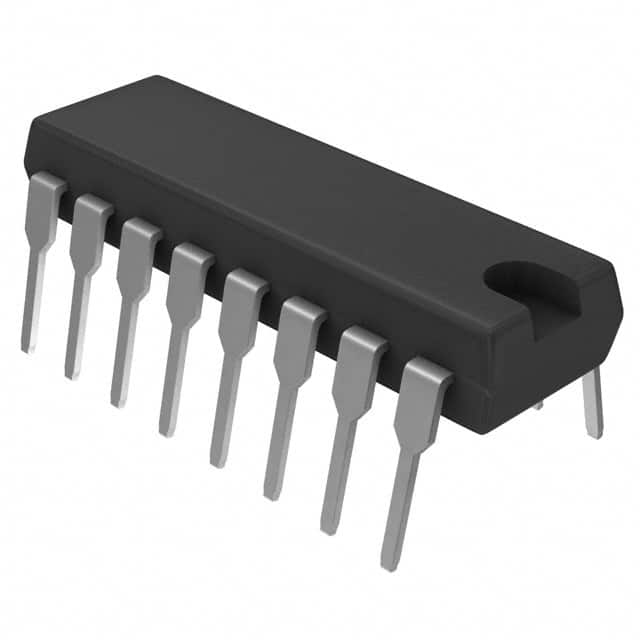
- Part No.:
- UC3907N
- Manufacturer:
- Texas Instruments
- Category:
- Power Management - Specialized
- Package:
- 16-DIP (0.300", 7.62mm)
- Datasheet:
-
 UC3907N.pdf
- Description:
- IC LOAD SHARE CONTROLLER 16-DIP
- Quantity:
- Payment:

- Shipping:

Inventory:735
Please send an inquiry. Send us your inquiry, and we will respond immediately.
Product details
Overview
UC3907N from Texas Instruments is a load share controller IC designed for parallel power module current balancing in high-reliability DC-DC systems. It provides fully differential high-impedance voltage sensing (±1.25% reference accuracy), a 20 V/V fixed-gain current amplifier, optocoupler driving capability (up to 20 mA), and master-status indication - enabling precise current sharing within ±2.5% across paralleled modules in telecom and industrial power supplies.
For engineers reviewing the UC3907N datasheet, UC3907N pinout, UC3907N application, or UC3907N equivalent, key selection criteria include its 4.5–35 V supply range, DIP-16 package with validated 16-pin terminal mapping, differential current-sense architecture, and compatibility with both isolated (optocoupler) and direct-coupled feedback topologies in redundant power systems.
Technical Context
The UC3907N implements a dual-loop control architecture: a voltage error amplifier (pins 11/12) regulates output voltage via adjustable reference, while an independent transconductance adjust amplifier (pins 13–15) compares local current sense to a shared bus signal to dynamically trim the reference by up to ±100 mV (±5%). Its buffer amplifier (pins 1/15) drives the low-impedance current-share bus unidirectionally, ensuring only the highest-current module acts as master.
Each functional block operates referenced to (–) SENSE (pin 4), with Artificial GND (pin 6) held at +250 mV above it to enable rail-to-rail biasing. The current amplifier accepts common-mode inputs from 0 V to VCC–2 V, supporting shunt placement on either side of power return, and features 60 dB PSRR and 0.4 V/µs slew rate for noise-immune operation in high-dV/dt environments.
Key Specifications
| Parameter | Value and Actual Design Meaning |
|---|---|
| Supply Voltage Range | 4.5 V to 35 V - supports unregulated DC input, auxiliary rails, or same-rail operation without external regulators. |
| Reference Accuracy | ±1.25% at 2.0 V - trimmed closed-loop at (+) SENSE (pin 11), enabling stable voltage regulation without external DAC or trimming. |
| Current Sense Gain | 20 V/V - converts 50–500 mV shunt drop into 1–10 V output, allowing flexible resistor selection for thermal and accuracy trade-offs. |
| Opto Drive Capability | 0–20 mA sink at 4–35 V - directly interfaces standard optocouplers (e.g., PC817, TLP521) without external transistor stages. |
| Current Sharing Accuracy | ±2.5% between modules - achieved via buffered current-share bus with master-selection logic and 50 mV internal offset compensation. |
| Operating Temperature | 0°C to 70°C - specified for commercial-grade applications including base station power, server PSUs, and industrial PLCs. |
| Status Output | Open-collector, 20 mA sink - pulls low when UC3907N acts as master, enabling hardware fault detection and redundancy management. |
Pinout & Package
Dual-in-line package (PDIP-16, N suffix), 0.3-inch body width, through-hole mounting. Pin 1 index located at top-left corner (notch or dot); pin numbering counterclockwise.
| Pin/Terminal | Circuit Role | Design Meaning |
|---|---|---|
| C/S OUT (1) | Current Share Bus Output | Unidirectional buffer output driving shared bus; only active when UC3907N is master - ensures single-point bus control. |
| C/S (+) (2), C/S (–) (3) | Differential Current Sense Inputs | High-CMRR inputs accepting shunt voltage across power return line; common-mode range extends to VCC–2 V. |
| (–) SENSE (4) | Remote Ground Reference | High-impedance virtual ground point - all internal voltages referenced here to eliminate PCB trace IR drop errors. |
| POWER RETURN (5) | Power Ground Return | Low-impedance return path for shunt and power stage; placed near source to isolate sense path from return current noise. |
| ARTIFICIAL GND (6) | Bias Reference Offset | Fixed +250 mV above (–) SENSE - enables full swing of ground amplifier and prevents input stage saturation. |
| VREF (7) | Internal Reference Output | 2.0 V ±1.25% bandgap reference - used as precision setpoint for voltage error amplifier and system calibration. |
| ISET (8) | Optocoupler Current Set | Sinks current to artificial GND via external resistor - sets opto LED drive current (e.g., 5–15 mA typical). |
| STATUS INDICATE (16) | Master Status Flag | Open-collector output pulled low only when UC3907N is designated master - enables hardware-level redundancy arbitration. |
Key Features
| Feature | Design Value |
|---|---|
| Fully differential voltage sensing | Eliminates common-mode noise in remote sensing applications; enables accurate regulation despite ground plane discontinuities. |
| Transconductance adjust amplifier | Bandwidth-limited via external capacitor to reject high-frequency bus noise while maintaining <100 µs response to load step imbalances. |
| Buffered current-share bus | 10 kΩ inactive impedance prevents bus contention; low-impedance drive ensures noise immunity and fast master election (<10 µs). |
| Integrated 1.25% reference | Reduces BOM count by eliminating external reference IC; trimmed at wafer level and validated over full temperature range. |
| Under-voltage lockout (UVLO) | Starts at 4.4 V ±0.7 V with 200 mV hysteresis - prevents erratic operation during brownout or soft-start conditions. |
Applications
| Telecom Rectifier Modules | Industrial Redundant PSUs |
|---|---|
Use Scenario: Multiple 48 V rectifiers operating in parallel within a central office power shelf. IC Role / Device Role / Timing Role: UC3907N resides on each rectifier board, regulating output voltage and adjusting reference to equalize current per module. Use Value: Achieves ±2.5% current balance without inter-module communication wiring - simplifies thermal management and extends mean time between failures (MTBF). | Use Scenario: Dual 24 V DC power supplies feeding critical PLC I/O backplanes in factory automation. IC Role / Device Role / Timing Role: UC3907N controls current sharing between supplies using isolated optocoupler feedback to maintain galvanic separation. Use Value: Enables hot-swappable redundancy with no single point of failure; status pin signals master unit for predictive maintenance logging. |
| Server AC-DC Front-Ends | Medical Grade Power Systems |
Use Scenario: Parallel-connected 12 V intermediate bus converters supplying CPU/GPU VRMs in data center servers. IC Role / Device Role / Timing Role: UC3907N implements analog current sharing at the intermediate bus level, decoupling load transients from individual converter control loops. Use Value: Prevents current hogging during rapid load steps (e.g., CPU burst), reducing peak stress on MOSFETs and improving overall efficiency by 0.8–1.2%. | Use Scenario: Dual-output 5 V/3.3 V medical power supplies requiring Class II isolation and fault-tolerant operation. IC Role / Device Role / Timing Role: UC3907N manages current balance while maintaining reinforced isolation barriers via optocoupler-coupled COMP and ADJ OUT signals. Use Value: Meets IEC 60601-1 creepage/clearance requirements without compromising sharing accuracy - eliminates need for digital isolators or microcontrollers. |
Equivalent & Alternatives
The following parts are listed as comparable options for similar load-sharing controller applications.
| Alternative Part | Technical Difference | Application Difference | Selection Advice |
|---|---|---|---|
| UC2907N | Wider temp range (–40°C to 85°C) but identical pinout, architecture, and electrical specs; same PDIP-16 package. | Preferred for extended-temperature industrial deployments where ambient exceeds 70°C. | Select UC2907N when operating in harsh environments; UC3907N remains optimal for cost-sensitive commercial systems. |
| LTC4370CDE#PBF | Wide-input (2.5–36 V), integrated MOSFET drivers, 0.5% current match, but requires external op-amps for voltage loop and lacks status flag. | Targets low-voltage battery-powered systems; not drop-in compatible due to different topology and pin assignment. | Choose LTC4370 only for new designs prioritizing ultra-precise matching over legacy compatibility or simplicity. |
Compared with UC2907N, UC3907N offers lower cost and tighter production binning for commercial temperature grade, while LTC4370 provides higher precision at the expense of increased design complexity and loss of master-status signaling - making UC3907N the optimal choice for established telecom and server PSU platforms requiring proven reliability and minimal layout changes.
Availability
UC3907N is available at Aetrix Electronics and suitable for telecom rectifier modules, industrial redundant PSUs, and server intermediate bus converters requiring stable component supply across multi-year production cycles.
Supply support for UC3907N includes scheduled delivery planning, volume procurement assistance, BOM continuity management, traceable sourcing, and lifecycle availability coordination for OEM customers, industrial embedded developers, connected-device designers, and electronics production programs.
Manufacturer
Texas Instruments is a global semiconductor leader specializing in analog, embedded processing, and power management technologies, with over 90 years of innovation in high-reliability electronic components.
The UCx907 family was developed specifically for analog current-sharing control in paralleled DC-DC power modules, targeting applications where digital controllers introduce latency, complexity, or certification overhead.
FAQ
What is the primary function of the UC3907N in a power system?
The UC3907N serves as an analog load share controller that enables multiple independent DC-DC power modules to operate in parallel with precise current balancing. It achieves this by monitoring each module's output current via a differential sense amplifier, comparing it to a shared bus signal, and dynamically adjusting the module's voltage reference to force equal current distribution - all without digital communication or microcontroller intervention. This function is core to the UC3907N's architecture and defines its role in redundant power architectures.
Can the UC3907N be used with non-isolated power topologies?
Yes, the UC3907N supports both isolated and non-isolated configurations. In non-isolated designs, the DRIVE amplifier output (pin 9) can deliver a 0.25–4.1 V voltage signal directly to the PWM controller's feedback node, though polarity inversion may be required. The UC3907N's voltage amplifier (pins 11/12) and adjust amplifier (pins 13–15) operate independently of isolation method, making it adaptable to buck, boost, or linear regulator implementations - a key flexibility built into the UC3907N's analog-centric design.
What does the STATUS INDICATE pin (pin 16) indicate, and how is it used?
The STATUS INDICATE pin (pin 16) is an open-collector output that pulls low exclusively when the UC3907N is acting as the master module in a paralleled configuration. It is driven by internal logic that detects the low-state output of the adjust amplifier - which occurs only in the master unit due to its 50 mV internal offset. This signal enables external hardware (e.g., LED indicators, FPGA inputs, or supervisor ICs) to identify the master for diagnostics, thermal derating, or graceful failover - a deterministic behavior confirmed in UC3907N's functional description and pin assignments.
How does the UC3907N handle fault conditions like an open or shorted current-share bus?
The UC3907N maintains safe operation during current-share bus faults: if the bus opens, all modules default to independent regulation with no reference adjustment; if shorted to ground, the buffer amplifier (pin 1) presents 10 kΩ impedance, preventing damage while allowing normal voltage regulation. The UC3907N's architecture explicitly guarantees continued functionality under these conditions - as stated in its description - because the voltage error amplifier loop remains fully operational regardless of bus state, ensuring uninterrupted power delivery.
Is the UC3907N pin-compatible with other members of the UCx907 family?
Yes, the UC3907N is fully pin-compatible with UC1907N and UC2907N across all package variants (PDIP-16 and SOIC-16), sharing identical pin functions, electrical characteristics, and block diagram architecture. Differences are limited to temperature grade (UC3907N: 0°C–70°C; UC2907N: –40°C–85°C; UC1907N: –55°C–125°C) and minor parameter tolerances - allowing direct substitution in existing layouts when environmental requirements permit. This compatibility is documented in TI's SLUS165C datasheet and packaging addendum.
UC3907N Specifications
- Product attributes
- Attribute value
- Manufacturer:
- Texas Instruments
- Series:
- -
- Package/Case:
- 16-DIP (0.300", 7.62mm)
- Packaging:
- Bulk
- Product Status:
- Active
- Applications:
- Load Share Controller
- Current - Supply:
- 6mA
- Voltage - Supply:
- 4.5V ~ 36V
- Operating Temperature:
- 0°C ~ 70°C
- Grade:
- -
- Qualification:
- -
- Mounting Type:
- Through Hole
- Supplier Device Package:
- 16-PDIP
UC3907N FAQ
1.How can I place an order for UC3907N through Aetrix?
Please submit a Request for Quotation (RFQ) for UC3907N on Aetrix. Our sales agent will provide a competitive quotation and guide you through the order confirmation once you accept the terms.
2.Are the price and stock information for UC3907N reliable?
The price and inventory of UC3907N are updated periodically and may fluctuate due to market conditions. Stock and pricing data are typically refreshed every 24 hours. Quotation validity for UC3907N is usually 5 days.
3.What payment methods are accepted for UC3907N?
We accept Wire Transfer, PayPal, Credit Card, Western Union, MoneyGram, and Escrow for UC3907N transactions.
Note: Certain payment methods may incur a processing fee.
4.How is shipping managed for UC3907N?
UC3907N orders can be shipped via leading logistics carriers, including DHL, UPS, FedEx, TNT, or Registered Mail.
Once your UC3907N order is processed, you will receive an email with the shipment details and tracking number.
Note: Tracking information may take up to 24 hours to appear. Express delivery typically takes 3–5 business days.
5.How can I obtain technical support or documentation for UC3907N?
For technical support, including UC3907N datasheets, pinout diagrams, or application guidance, please contact our engineering support team. They can provide detailed documentation and assistance for your UC3907N requirements.
6.How does Aetrix verify that UC3907N is sourced from the original manufacturer or authorized distributors?
All UC3907N products on Aetrix are procured from qualified distributors and authorized channels. Our dedicated quality assurance team conducts strict verification, including traceability checks and, if necessary, third-party testing. This ensures that UC3907N meets industry standards.
7.What is the process for return or replacement of UC3907N?
All UC3907N units undergo pre-shipment inspection (PSI). If there is an issue with UC3907N, returns or replacements are accepted under the following conditions:
1.Quantity discrepancies, incorrect items, or visible external defects (such as breakage or corrosion), acknowledged by Aetrix.
2.The issue is reported within 90 days of delivery.
3.The UC3907N part is unused and in its original packaging.
Return procedure for UC3907N:
1.Submit a request within 90 days.
2.Obtain a Return Material Authorization (RMA) from Aetrix.
UC3907N Tags
-
TPS2511DGNR
Texas Instruments
-
UTC2000/MG
Microchip Technology
-
TUSB320HAIRWBR
Texas Instruments
-
TPS61252DSGR
Texas Instruments
-
PI5USB30216CXUAEX
Diodes Incorporated
-
SN6501DBVR
Texas Instruments
-
CYPD3177-24LQXQT
Infineon Technologies
-
SN6501QDBVRQ1
Texas Instruments
-
STUSB1600AQTR
STMicroelectronics

-
SN6505BDBVR
Texas Instruments
-
SN6501DBVT
Texas Instruments
-
TPS65150PWPR
Texas Instruments
Tech Hub

A practical engineering guide to 3.3V and 5V logic compatibility, input thresholds, resistor dividers, translator ICs, MOSFET level shifting, I2C pull-ups, timing limits and power-sequencing risks.

The 74HC595 uses push-pull logic outputs, while the TPIC6B595 uses 50 V open-drain DMOS sinks for higher-power loads. This guide compares timing, current limits, 3.3 V interfacing, load wiring, thermal…

The 74HC595 converts serial data into eight stable parallel outputs. This guide covers pin functions, shift and storage timing, OE and MR behavior, drive-current limits, cascading, voltage compatibilit…

A technical comparison of level-sensitive latches and edge-triggered flip-flops, covering timing windows, setup and hold limits, master–slave operation, time borrowing, race-through, HDL inference and…

A D latch stores one bit while Enable controls when data can pass. This reference covers gate-level operation, truth tables, transparency, setup and hold timing, LE versus OE, common ICs and practical …

An SR latch stores one bit through cross-coupled feedback. This engineering reference covers NOR and NAND implementations, truth tables, forbidden-state recovery, gated operation, switch debouncing, fa…

Latch circuits retain one bit through feedback. This technical reference covers SR and D latches, truth tables, transparency, timing limits, latch-versus-flip-flop behavior, applications and common log…

An engineering guide to LED driver operation, constant-current and constant-voltage outputs, linear and switching topologies, dimming, IC selection, calculations, replacement compatibility, and fault c…

Operational amplifier guide covering op amp basics, feedback, ideal vs real op amps, common configurations, buffer circuits, offset, bias current, gain-bandwidth, slew rate, rail-to-rail limits and sel…

Jumper cables guide covering safe connection order, red and black clamp placement, final ground connection, cable gauge, length, clamp quality, copper vs CCA cables, jump starter comparison and battery…


