
 My Inquiry
 My Account


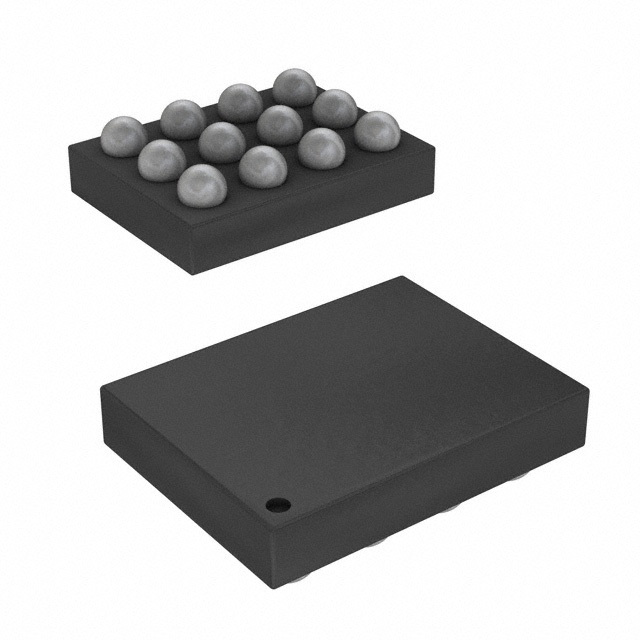
Microchip Technology ZL70590LDG1E

- Part No.:
- ZL70590LDG1E
- Manufacturer:
- Microchip Technology
- Category:
- Surge Suppression Ics
- Package:
- 28-VFQFN Exposed Pad
- Datasheet:
-
 ZL70590LDG1E.pdf
- Description:
- IMPLANTABLE SURGE PROTECT DEVICE
- Quantity:
- Payment:

- Shipping:

Inventory:3,939
Please send an inquiry. Send us your inquiry, and we will respond immediately.
Product details
Overview
ZL70590LDG1E from Microsemi is a five-branch transient surge suppression IC designed for ECG/EKG monitoring equipment protection against defibrillation surges. It integrates zener diodes and SCRs into a single RoHS-compliant QFN device, delivers 8 A maximum surge current, clamps peak voltage to ≤15 V during surge events, and achieves ≤13 µs turn-on delay. It is deployed in medical-grade patient lead interfaces requiring IEC 60601-2-25/2-27 compliance.
For engineers reviewing the ZL70590LDG1E datasheet, ZL70590LDG1E pinout, ZL70590LDG1E application, or ZL70590LDG1E equivalent, this page provides verified electrical parameters, substrate-based daisy-chaining capability, terminal-to-terminal DIAC-like behavior, on-state voltage of ≤4.1 V at 2 A, and dV/dt immunity exceeding 2300 V/µs - all critical for high-reliability electrocardiographic safety design.
Technical Context
The ZL70590LDG1E implements a self-triggering thyristor-diode architecture per branch, with each of the five terminals (T1–T5) forming a bidirectional surge path to a common internal substrate node. Its terminal-to-terminal characteristic mimics a DIAC, enabling symmetrical clamping without external bias.
It operates within 0°C to +70°C ambient, supports daisy-chaining via shared substrate connections to scale to M×5 channels, and maintains <100 nA off-state leakage at 8 V while delivering ≤2.8 V on-state voltage (terminal-to-substrate) and ≤1.8 V forward diode drop (substrate-to-terminal) under 2 A pulsed conditions.
Key Specifications
| Parameter | Value and Actual Design Meaning |
|---|---|
| Surge current rating | 8 A per IEC 60601-2-25/2-27 test waveform (1–10 ms, 25 A/µs slew rate) |
| Peak clamping voltage | ≤15 V during 8 A surge (ensures downstream analog front-end remains within safe operating area) |
| Turn-on delay | 5–13 µs (guarantees sub-cycle response to defibrillation transients) |
| On-state voltage (2 A) | ≤4.1 V (limits power dissipation to <8.2 W during surge, preventing thermal runaway) |
| dV/dt immunity | >2300 V/µs (prevents false triggering from RF interference or fast-switching noise) |
| Terminal-to-terminal capacitance | 10–50 pF (minimizes signal distortion in ECG bandwidth: 0.05–150 Hz) |
| Off-state leakage | ≤100 nA at 8 V (preserves DC accuracy and input bias integrity of instrumentation amplifiers) |
Pinout & Package
The ZL70590LDG1E is housed in a 4 mm × 5 mm × 0.9 mm, 28-pin QFN package with exposed paddle pad electrically connected to the die substrate. All pins are arranged in two rows (14 per side), with four dedicated pins per terminal (T1–T5) and eight substrate (S) pins distributed across the perimeter.
| Pin/Terminal | Circuit Role | Design Meaning |
|---|---|---|
| T1–T5 | Transient surge protection input terminals | Each group of four pins connects to one ECG lead channel; enables simultaneous protection of up to five differential inputs |
| S (Substrate) | Common internal substrate connection | Provides low-impedance return path for all branches; enables daisy-chaining multiple ZL70590LDG1E devices for >5-channel systems |
Key Features
| Feature | Design Value |
|---|---|
| Integrated SCR + Zener architecture | Eliminates need for discrete TVS + thyristor arrays, reducing BOM count and PCB footprint by >60% vs. legacy solutions |
| Five-terminal + substrate topology | Supports scalable protection for 5-, 10-, or 15-lead ECG systems via PCB-level substrate interconnection |
| Medical-grade traceability & RoHS compliance | Meets ISO 13485-aligned manufacturing controls and full lot traceability required for Class IIa/IIb medical devices |
| DIAC-like terminal-to-terminal behavior | Enables bidirectional clamping without polarity-sensitive placement - simplifies layout and eliminates orientation errors |
| Low on-state resistance | Dynamic on-resistance ≤1 Ω ensures minimal voltage drop and thermal rise during 8 A surge events |
Applications
| ECG Lead Protection | Multi-Lead Patient Monitoring |
|---|---|
|
Use Scenario: Protecting individual limb or chest leads (RA, LA, LL, RL, V1–V6) from 200–360 J defibrillation pulses in bedside monitors. IC Role / Device Role / Timing Role: Primary surge clamp placed between patient electrode and front-end instrumentation amplifier input. Use Value: Limits transient energy to <10 mJ per channel, preserving amplifier integrity and avoiding reset or latch-up during emergency resuscitation. |
Use Scenario: Safeguarding 12-lead ECG acquisition circuits in portable diagnostic devices with single-layer PCB constraints. IC Role / Device Role / Timing Role: Scalable protection node using daisy-chained ZL70590LDG1E units sharing a common substrate net. Use Value: Enables compact layout with no vias needed for substrate routing - validated in Figure 4-3 for 12-lead implementation. |
| IEC 60601-2-25 Compliance | Implantable Device Interface Protection |
|
Use Scenario: Passing differential-mode and common-mode surge tests per IEC 60601-2-25 Annex DD using 100 Ω source impedance. IC Role / Device Role / Timing Role: Frontline transient suppressor in test-configured protection network with 22 kΩ series resistors and 10 kΩ pull-downs. Use Value: Achieves pass-level clamping at ≤15 V peak, satisfying essential performance criteria for ECG waveform fidelity post-surge. |
Use Scenario: Shielding neurostimulator or pacemaker telemetry inputs from inadvertent defibrillation coupling in hybrid implantable systems. IC Role / Device Role / Timing Role: Isolation barrier between external ECG acquisition circuitry and sensitive implant communication interface. Use Value: Provides >2300 V/µs dV/dt immunity and <100 nA leakage - prevents false triggering and preserves ultra-low-power standby states. |
Equivalent & Alternatives
The following parts are listed as comparable options for similar ECG surge protection applications.
| Alternative Part | Technical Difference | Application Difference | Selection Advice |
|---|---|---|---|
| SEMTECH RCLAMP0524P.TCT | 5-line unidirectional TVS array; no integrated SCR; 12 V clamping at 1 A; 0.5 pF typical capacitance | Limited to low-energy ESD (±15 kV contact); not rated for 8 A defibrillation surges or IEC 60601-2-25 compliance | Use only for secondary ESD protection upstream of ZL70590LDG1E - never as primary defibrillation guard |
| ON SEMICONDUCTOR NUP4201MR6T1G | 4-line bidirectional TVS; 14.5 V clamping at 1 A; 30 pF capacitance; no substrate terminal or daisy-chain capability | Designed for general-purpose I/O protection; lacks medical surge rating, DIAC symmetry, or multi-channel scalability | Acceptable for non-certified wellness wearables; unsuitable for FDA-cleared ECG monitors requiring IEC 60601 validation |
Compared with RCLAMP0524P.TCT and NUP4201MR6T1G, the ZL70590LDG1E uniquely combines 8 A surge handling, substrate-enabled channel scaling, DIAC-like bidirectional symmetry, and explicit IEC 60601-2-25/2-27 qualification - making it the only qualified monolithic solution for certified ECG front-end protection.
Availability
ZL70590LDG1E is available at Aetrix Electronics and suitable for ECG monitor production, medical device OEM programs, and IEC 60601-certified diagnostic equipment requiring stable component supply, long-term lifecycle assurance, and full traceability.
Supply support for ZL70590LDG1E includes scheduled delivery planning, volume procurement assistance, BOM continuity management, traceable sourcing, and lifecycle availability coordination for OEM customers, industrial embedded developers, connected-device designers, and electronics production programs.
Manufacturer
Microsemi Corporation (now part of Microchip Technology) is a U.S.-based semiconductor company specializing in high-reliability, radiation-tolerant, and medical-grade analog and mixed-signal ICs.
The ZL70590LDG1E belongs to Microsemi's medical surge protection product line, engineered specifically to meet the stringent transient immunity, leakage, and traceability requirements of certified electrocardiographic monitoring equipment.
FAQ
What is the primary function of the ZL70590LDG1E in an ECG system?
The ZL70590LDG1E serves as a monolithic, five-channel transient surge protector for ECG patient leads, specifically engineered to clamp defibrillation-induced transients up to 8 A while maintaining ≤15 V peak voltage. Its integrated SCR-zener architecture and substrate terminal enable reliable, repeatable protection that satisfies IEC 60601-2-25 and IEC 60601-2-27 essential performance requirements - a role no generic TVS can fulfill. The ZL70590LDG1E is validated for use in certified medical ECG monitors, not consumer-grade devices.
How does the substrate (S) terminal function in the ZL70590LDG1E?
The substrate (S) terminal in the ZL70590LDG1E provides a low-impedance internal connection to the die's common reference node, enabling daisy-chaining of multiple devices to scale protection beyond five channels. When two or more ZL70590LDG1E units share a common PCB substrate net, their combined functionality emulates an M×5-channel suppressor - e.g., two devices yield 10 protected leads. The exposed paddle pad on the QFN package is electrically tied to this substrate, and may be connected to the S pins for enhanced thermal and electrical performance in multilayer layouts.
Can the ZL70590LDG1E be used for non-medical applications like industrial sensor protection?
The ZL70590LDG1E is characterized and qualified exclusively for medical ECG/EKG surge protection per IEC 60601-2-25/2-27, with parameters optimized for low-leakage (<100 nA), low-capacitance (10–50 pF), and fast turn-on (5–13 µs) in physiological signal paths. While its 8 A surge rating may appear applicable elsewhere, its DIAC-like terminal-to-terminal behavior, substrate-dependent operation, and lack of industrial-grade qualification data make it unsuitable for general-purpose industrial use. For non-medical applications, purpose-built industrial TVS or SCR arrays should be selected instead of the ZL70590LDG1E.
What is the significance of the "DIAC-like" terminal-to-terminal characteristic of the ZL70590LDG1E?
The ZL70590LDG1E exhibits a symmetric, bidirectional breakdown behavior between any two terminals (e.g., T1–T2), closely matching a DIAC's voltage-current curve - meaning it triggers identically regardless of voltage polarity. This eliminates orientation sensitivity during PCB placement and ensures consistent clamping for both positive and negative defibrillation transients. Unlike unidirectional TVS diodes, this feature guarantees identical protection performance across all lead combinations without requiring matched external components or polarity-aware routing - a critical advantage in multi-lead ECG systems where lead reversal is possible.
Does the ZL70590LDG1E require external bias or control signals to operate?
No, the ZL70590LDG1E operates entirely autonomously with zero external bias, control inputs, or enable signals. Its protection action is fully self-triggering: when a transient exceeds the breakover voltage (9–12 V) between any two terminals, the internal SCR-zener structure conducts within ≤13 µs, clamping the voltage and diverting surge current to the substrate. This passive, always-on behavior ensures fail-safe operation even during power loss or microcontroller reset - a mandatory requirement for life-critical ECG monitoring equipment where active supervision cannot be relied upon.
ZL70590LDG1E Specifications
- Product attributes
- Attribute value
- Manufacturer:
- Microchip Technology
- Package/Case:
- 28-VFQFN Exposed Pad
- Series:
- -
- Packaging:
- Tray
- Product Status:
- Obsolete
- Voltage - Clamping:
- 9 ~ 12V
- Technology:
- Internal Switch
- Number of Circuits:
- 5
- Applications:
- -
- Grade:
- -
- Qualification:
- -
- Mounting Type:
- Surface Mount
- Supplier Device Package:
- 28-QFN (4x5)
ZL70590LDG1E FAQ
1.How can I place an order for ZL70590LDG1E through Aetrix?
Please submit a Request for Quotation (RFQ) for ZL70590LDG1E on Aetrix. Our sales agent will provide a competitive quotation and guide you through the order confirmation once you accept the terms.
2.Are the price and stock information for ZL70590LDG1E reliable?
The price and inventory of ZL70590LDG1E are updated periodically and may fluctuate due to market conditions. Stock and pricing data are typically refreshed every 24 hours. Quotation validity for ZL70590LDG1E is usually 5 days.
3.What payment methods are accepted for ZL70590LDG1E?
We accept Wire Transfer, PayPal, Credit Card, Western Union, MoneyGram, and Escrow for ZL70590LDG1E transactions.
Note: Certain payment methods may incur a processing fee.
4.How is shipping managed for ZL70590LDG1E?
ZL70590LDG1E orders can be shipped via leading logistics carriers, including DHL, UPS, FedEx, TNT, or Registered Mail.
Once your ZL70590LDG1E order is processed, you will receive an email with the shipment details and tracking number.
Note: Tracking information may take up to 24 hours to appear. Express delivery typically takes 3–5 business days.
5.How can I obtain technical support or documentation for ZL70590LDG1E?
For technical support, including ZL70590LDG1E datasheets, pinout diagrams, or application guidance, please contact our engineering support team. They can provide detailed documentation and assistance for your ZL70590LDG1E requirements.
6.How does Aetrix verify that ZL70590LDG1E is sourced from the original manufacturer or authorized distributors?
All ZL70590LDG1E products on Aetrix are procured from qualified distributors and authorized channels. Our dedicated quality assurance team conducts strict verification, including traceability checks and, if necessary, third-party testing. This ensures that ZL70590LDG1E meets industry standards.
7.What is the process for return or replacement of ZL70590LDG1E?
All ZL70590LDG1E units undergo pre-shipment inspection (PSI). If there is an issue with ZL70590LDG1E, returns or replacements are accepted under the following conditions:
1.Quantity discrepancies, incorrect items, or visible external defects (such as breakage or corrosion), acknowledged by Aetrix.
2.The issue is reported within 90 days of delivery.
3.The ZL70590LDG1E part is unused and in its original packaging.
Return procedure for ZL70590LDG1E:
1.Submit a request within 90 days.
2.Obtain a Return Material Authorization (RMA) from Aetrix.
ZL70590LDG1E Tags
-
TVS3300DRVR
Texas Instruments

-
TCPP01-M12
STMicroelectronics
-
TPD4S214YFFR
Texas Instruments
-
TPD6S300ARUKR
Texas Instruments
-
TBU-CA085-300-WH
Bourns Inc.
-
TBU-CA065-500-WH
Bourns Inc.
-
TBU-CA040-100-WH
Bourns Inc.
-
TBU-CA085-500-WH
Bourns Inc.
-
TBU-CA085-200-WH
Bourns Inc.
-
NX20P0408UKZ
NXP Semiconductors
-
TBU-CA085-100-WH
Bourns Inc.
-
TBU-CA050-300-WH
Bourns Inc.
Tech Hub

TTL and CMOS logic families differ in thresholds, loading, output drive, power and timing. This engineering guide compares 74HC and 74HCT, calculates noise margins and checks 3.3 V/5 V compatibility.

A practical engineering guide to 3.3V and 5V logic compatibility, input thresholds, resistor dividers, translator ICs, MOSFET level shifting, I2C pull-ups, timing limits and power-sequencing risks.

The 74HC595 uses push-pull logic outputs, while the TPIC6B595 uses 50 V open-drain DMOS sinks for higher-power loads. This guide compares timing, current limits, 3.3 V interfacing, load wiring, thermal…

The 74HC595 converts serial data into eight stable parallel outputs. This guide covers pin functions, shift and storage timing, OE and MR behavior, drive-current limits, cascading, voltage compatibilit…

A technical comparison of level-sensitive latches and edge-triggered flip-flops, covering timing windows, setup and hold limits, master–slave operation, time borrowing, race-through, HDL inference and…

A D latch stores one bit while Enable controls when data can pass. This reference covers gate-level operation, truth tables, transparency, setup and hold timing, LE versus OE, common ICs and practical …

An SR latch stores one bit through cross-coupled feedback. This engineering reference covers NOR and NAND implementations, truth tables, forbidden-state recovery, gated operation, switch debouncing, fa…

Latch circuits retain one bit through feedback. This technical reference covers SR and D latches, truth tables, transparency, timing limits, latch-versus-flip-flop behavior, applications and common log…

An engineering guide to LED driver operation, constant-current and constant-voltage outputs, linear and switching topologies, dimming, IC selection, calculations, replacement compatibility, and fault c…

Operational amplifier guide covering op amp basics, feedback, ideal vs real op amps, common configurations, buffer circuits, offset, bias current, gain-bandwidth, slew rate, rail-to-rail limits and sel…


