
 My Inquiry
 My Account


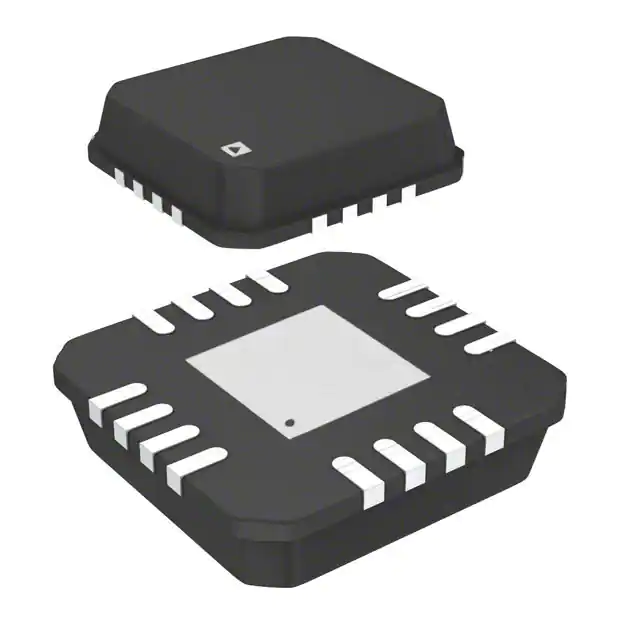
Analog Devices Inc. ADIS16220CCCZ
- Part No.:
- ADIS16220CCCZ
- Manufacturer:
- Analog Devices Inc.
- Category:
- Accelerometers
- Package:
- 16-BFLGA
- Datasheet:
-
 ADIS16220CCCZ.pdf
- Description:
- ACCELEROMETER 70G SPI 16LGA
- Quantity:
- Payment:

- Shipping:

Inventory:1,516
Please send an inquiry. Send us your inquiry, and we will respond immediately.
Product details
Overview
ADIS16220CCCZ from Analog Devices is a programmable digital vibration sensor IC integrating a ±70 g MEMS accelerometer, two 12-bit auxiliary ADCs (AIN1/AIN2), digital temperature sensor, and SPI interface in a single 9.2 mm × 9.2 mm LGA package. It delivers 100.2 kSPS sampling, 22 kHz sensor resonance, and three trigger modes (manual, automatic, event) for machine health monitoring in harsh industrial environments.
For engineers reviewing the ADIS16220CCCZ datasheet, ADIS16220CCCZ pinout, ADIS16220CCCZ application, or ADIS16220CCCZ equivalent, this page provides verified technical context, real-world use-value mapping, pin-level circuit roles, and validated alternative options for condition-based monitoring, shock capture, and embedded diagnostics systems requiring wide-bandwidth, self-contained data acquisition.
Technical Context
The ADIS16220CCCZ implements a fully autonomous sensing subsystem: its internal clock drives synchronized 100.2 kSPS sampling across three independent 1024-sample buffers (accelerometer + AIN1 + AIN2), with on-chip averaging/decimating filtering and configurable frequency response. The controller supports real-time alarm generation via peak threshold detection on all channels.
Its SPI interface operates in Mode 3 (CPOL = 1, CPHA = 1) at up to 2.25 MHz, with dual-memory architecture-volatile SRAM for runtime control and nonvolatile flash for configuration persistence. Trigger logic enables pre-event capture (64–512 samples) and automatic buffer-to-flash storage upon alarm, eliminating host processor dependency during transient events.
Key Specifications
| Parameter | Value and Actual Design Meaning |
|---|---|
| Measurement Range | ±70 g - Supports high-g shock detection and heavy machinery vibration analysis without clipping. |
| Sample Rate | 100.2 kSPS - Captures signals up to ~45 kHz bandwidth (Nyquist-limited), sufficient for bearing fault frequencies and gear mesh harmonics. |
| Sensor Resonance | 22 kHz - Enables accurate measurement of mechanical resonances and structural modes below sensor self-resonance. |
| Accelerometer Sensitivity | 19.073 mg/LSB - Provides 16-bit resolution with ±0.2% nonlinearity for precise amplitude quantification. |
| Auxiliary ADC Resolution | 12-bit (scaled to 14-bit effective) - Delivers 305.18 µV/LSB resolution for analog sensor integration (e.g., strain gauges, thermistors). |
| Operating Temperature | −40°C to +125°C - Qualified for under-hood automotive, turbine, and oil & gas downhole applications. |
| Supply Voltage | 3.15 V to 3.6 V - Single-supply operation compatible with industrial 3.3 V rails; includes on-chip voltage reference (2.5 V ±5 mV). |
| Power Consumption | 46 mA in capture mode; 230 µA in sleep - Enables battery-operated wireless condition monitoring nodes with duty-cycled acquisition. |
Pinout & Package
ADIS16220CCCZ uses a 9.2 mm × 9.2 mm × 3.9 mm 16-terminal land grid array (LGA) package compliant with JEDEC J-STD-020 Pb-free reflow profiles. Thermal resistance θJA = 250°C/W; device weight = 0.6 g.
| Pin/Terminal | Circuit Role | Design Meaning |
|---|---|---|
| SCLK | SPI Serial Clock input | Asynchronous master-controlled timing signal; supports ≤2.25 MHz; CPOL=1, CPHA=1 required. |
| DOUT | SPI Data Output (3-state) | Drives MISO line only when CS is low; high-impedance otherwise - enables multi-slave SPI bus sharing. |
| DIN | SPI Data Input | Accepts register address and command bits on SCLK rising edge; requires 24.4 ns setup time. |
| CS | SPI Chip Select input | Active-low enable; toggling wakes device from sleep mode; initiates SPI transaction framing. |
| DIO1 / DIO2 | Configurable digital I/O | Programmable as alarm indicator, external trigger input, or general-purpose GPIO - supports interrupt-driven system response. |
| RST | Hardware reset input | Active-low asynchronous reset; 1 ms pulse recovers full functionality in 23 ms - critical for fail-safe recovery. |
| AIN1 / AIN2 | Analog inputs | High-impedance (20 pF), rail-to-rail inputs referenced to VREF (2.5 V); support external sensors with 0–3.3 V range. |
| VDD / GND | Power supply terminals | 3.15–3.6 V single supply; decoupling required per recommended pad layout to maintain noise floor < 507 mg rms. |
| VREF | Reference output | Stable 2.5 V ±5 mV reference for AIN1/AIN2; used internally for ADC conversion - eliminates need for external reference. |
Key Features
| Feature | Design Value |
|---|---|
| Triple-channel programmable capture | Simultaneous 1024-sample buffers for acceleration + AIN1 + AIN2 - enables correlated multi-sensor analysis without host synchronization. |
| Event-triggered pre/post capture | Configurable pre-event depth (64–512 samples) captures causative vibration signatures before shock onset - essential for root-cause failure analysis. |
| Digitally controlled frequency response | AVG_CNT register adjusts filter cutoff from full bandwidth (100.2 kSPS) to low-noise decimated outputs - optimizes SNR vs. latency trade-off per application. |
| On-chip diagnostics & self-test | Digital activation of MEMS proof-mass excitation verifies sensor integrity and signal chain continuity - reduces field calibration burden and enables predictive maintenance. |
| Nonvolatile configuration storage | Flash memory retains CAPT_CTRL, ALM_MAGx, and offset registers across power cycles - ensures consistent behavior in unattended deployments. |
| Extended temperature operation | Full specification over −40°C to +125°C with <±5 mg/°C offset drift - maintains accuracy in engine compartments and industrial enclosures. |
Applications
| Condition Monitoring | Shock Event Capture |
|---|---|
Use Scenario: Continuous vibration logging on rotating equipment (pumps, motors, gearboxes) to detect bearing wear, misalignment, or imbalance before catastrophic failure. IC Role / Device Role / Timing Role: Autonomous sensor node performing periodic (automatic mode) or alarm-triggered (event mode) acquisition; integrates temperature and supply monitoring for health correlation. Use Value: Eliminates need for external microcontroller or FPGA; 100.2 kSPS sampling captures high-frequency fault harmonics; flash-backed alarms enable unattended operation for months. | Use Scenario: Detecting and recording impact events in transportation systems (railcar couplers, cargo containers) or safety-critical infrastructure (valve shutoff on pipeline rupture). IC Role / Device Role / Timing Role: Standalone shock detector using event-triggered capture with configurable pre-event depth; DIO1 asserts interrupt on alarm condition. Use Value: 22 kHz resonance and ±70 g range capture transient shocks >10 g; pre-event buffer reveals incipient failure signatures; low-power sleep (230 µA) extends battery life. |
| Instrumentation & Diagnostics | Security & Tamper Detection |
Use Scenario: Portable diagnostic tool for field technicians measuring vibration spectra, thermal drift, and power supply stability during commissioning or troubleshooting. IC Role / Device Role / Timing Role: Calibration-grade sensor with serial number, device ID, and traceable temperature/supply measurements - supports metrology-grade reporting. Use Value: On-chip 12-bit temperature sensor (−40°C to +125°C, ±0.47°C/LSB) and supply monitor (3.15–3.6 V, 1.22 mV/LSB) provide environmental context for vibration data - improves diagnostic confidence. | Use Scenario: Anti-tampering system detecting unauthorized physical access or enclosure breach via sudden vibration signature changes. IC Role / Device Role / Timing Role: Always-on low-power monitor using manual or periodic capture; DIO2 configured as tamper-alert output; self-test validates sensor readiness. Use Value: Digitally activated self-test confirms sensor operability prior to deployment; event-triggered capture logs tamper attempt with timestamped pre-event motion - meets security audit requirements. |
Equivalent & Alternatives
The following parts are listed as comparable options for similar digital vibration sensing applications.
| Alternative Part | Technical Difference | Application Difference | Selection Advice |
|---|---|---|---|
| ADIS16223AMLZ | Higher sensitivity (±18 g range, 100 mg/LSB), lower noise (250 µg/√Hz), integrated FFT engine, but no auxiliary ADCs. | Better for low-amplitude vibration (e.g., PCB resonance, precision instrumentation); lacks analog channel support for multi-sensor fusion. | Select ADIS16223AMLZ when spectral analysis and ultra-low noise dominate; choose ADIS16220CCCZ when analog sensor integration and high-g shock capture are required. |
| ADXL357BEZ | 3-axis ±100 g MEMS accelerometer with 20 µg/√Hz noise, but no onboard processing, buffers, or SPI interface - requires external MCU and firmware. | Suitable for custom embedded designs where host processor handles data capture, filtering, and triggering logic. | Select ADXL357BEZ for cost-sensitive, high-volume designs with existing MCU resources; ADIS16220CCCZ reduces BOM count and firmware development for turnkey sensing. |
Compared with ADIS16220CCCZ, ADIS16223AMLZ trades auxiliary inputs for superior noise performance and on-chip FFT, while ADXL357BEZ shifts processing burden to the host - making ADIS16220CCCZ uniquely balanced for integrated, self-contained condition monitoring with analog sensor support.
Availability
ADIS16220CCCZ is available at Aetrix Electronics and suitable for industrial condition monitoring, predictive maintenance systems, and embedded shock detection applications requiring stable component supply, extended temperature operation, and long-term lifecycle support.
Supply support for ADIS16220CCCZ includes scheduled delivery planning, volume procurement assistance, BOM continuity management, traceable sourcing, and lifecycle availability coordination for OEM customers, industrial embedded developers, connected-device designers, and electronics production programs.
Manufacturer
Analog Devices is a global leader in high-performance analog, mixed-signal, and digital signal processing semiconductors, serving industrial, automotive, communications, and healthcare markets with precision sensing and signal chain solutions.
The ADIS16220CCCZ belongs to the iSensor® family of intelligent MEMS sensors, designed specifically for embedded condition-based monitoring where autonomous data acquisition, environmental robustness, and system-level integration reduce design complexity and time-to-market.
FAQ
What is the maximum usable bandwidth of the ADIS16220CCCZ accelerometer?
The ADIS16220CCCZ has a sensor resonance at 22 kHz and a maximum sample rate of 100.2 kSPS. Its usable bandwidth is limited by the anti-aliasing filter and decimation settings; with AVG_CNT = 0x0000, the full Nyquist bandwidth is ~45 kHz, but practical vibration analysis typically uses ≤20 kHz to avoid resonance artifacts. The device supports programmable digital filtering to optimize bandwidth versus noise.
Does the ADIS16220CCCZ require an external microcontroller to operate?
No, the ADIS16220CCCZ operates autonomously: it contains an integrated controller, 3×1024-sample buffers, trigger logic, and nonvolatile flash memory. It can execute manual, automatic, or event-triggered capture sequences independently. An external processor is only needed for SPI communication to read data or configure registers - not for core sensing functionality.
How does the event-triggered capture mode work in the ADIS16220CCCZ?
In event mode, the ADIS16220CCCZ continuously monitors acceleration and auxiliary channel data against user-defined peak thresholds (ALM_MAGA, ALM_MAG1, ALM_MAG2). Upon threshold violation, it captures pre-event data (64–512 samples) and post-event data, stores results in buffers, and asserts DIO1/DIO2 as an interrupt. This mimics a digital oscilloscope's single-shot trigger, enabling root-cause analysis of transient events.
Can the ADIS16220CCCZ measure temperature and supply voltage simultaneously with vibration data?
Yes. During each capture event, the ADIS16220CCCZ automatically acquires 64 temperature samples (loaded into CAPT_TEMP) and a 5.12 ms power supply record (averaged into CAPT_SUPPLY), alongside the primary 1024-sample vibration and analog channel buffers. All three data streams are time-correlated and stored in dedicated output registers accessible via SPI.
What is the purpose of the VREF pin on the ADIS16220CCCZ?
The VREF pin on the ADIS16220CCCZ provides a stable 2.5 V ±5 mV reference output used internally to bias the AIN1 and AIN2 auxiliary analog inputs. It eliminates the need for an external reference and ensures consistent 12-bit ADC performance across temperature and supply variations. VREF must be decoupled with a 1 µF capacitor to GND per the recommended layout.
ADIS16220CCCZ Specifications
- Product attributes
- Attribute value
- Manufacturer:
- Analog Devices Inc.
- Series:
- iMEMS®, iSensor™
- Package/Case:
- 16-BFLGA
- Packaging:
- Tray
- Product Status:
- Obsolete
- Type:
- Digital
- Axis:
- X
- Acceleration Range:
- ±70g
- Sensitivity (LSB/g):
- 52
- Sensitivity (mV/g):
- -
- Bandwidth:
- -
- Output Type:
- SPI
- Voltage - Supply:
- 3.15V ~ 3.6V
- Features:
- Temperature Sensor
- Operating Temperature:
- -40°C ~ 125°C
- Grade:
- -
- Qualification:
- -
- Mounting Type:
- Surface Mount
- Supplier Device Package:
- 16-LGA (9.35x9.2)
ADIS16220CCCZ FAQ
1.How can I place an order for ADIS16220CCCZ through Aetrix?
Please submit a Request for Quotation (RFQ) for ADIS16220CCCZ on Aetrix. Our sales agent will provide a competitive quotation and guide you through the order confirmation once you accept the terms.
2.Are the price and stock information for ADIS16220CCCZ reliable?
The price and inventory of ADIS16220CCCZ are updated periodically and may fluctuate due to market conditions. Stock and pricing data are typically refreshed every 24 hours. Quotation validity for ADIS16220CCCZ is usually 5 days.
3.What payment methods are accepted for ADIS16220CCCZ?
We accept Wire Transfer, PayPal, Credit Card, Western Union, MoneyGram, and Escrow for ADIS16220CCCZ transactions.
Note: Certain payment methods may incur a processing fee.
4.How is shipping managed for ADIS16220CCCZ?
ADIS16220CCCZ orders can be shipped via leading logistics carriers, including DHL, UPS, FedEx, TNT, or Registered Mail.
Once your ADIS16220CCCZ order is processed, you will receive an email with the shipment details and tracking number.
Note: Tracking information may take up to 24 hours to appear. Express delivery typically takes 3–5 business days.
5.How can I obtain technical support or documentation for ADIS16220CCCZ?
For technical support, including ADIS16220CCCZ datasheets, pinout diagrams, or application guidance, please contact our engineering support team. They can provide detailed documentation and assistance for your ADIS16220CCCZ requirements.
6.How does Aetrix verify that ADIS16220CCCZ is sourced from the original manufacturer or authorized distributors?
All ADIS16220CCCZ products on Aetrix are procured from qualified distributors and authorized channels. Our dedicated quality assurance team conducts strict verification, including traceability checks and, if necessary, third-party testing. This ensures that ADIS16220CCCZ meets industry standards.
7.What is the process for return or replacement of ADIS16220CCCZ?
All ADIS16220CCCZ units undergo pre-shipment inspection (PSI). If there is an issue with ADIS16220CCCZ, returns or replacements are accepted under the following conditions:
1.Quantity discrepancies, incorrect items, or visible external defects (such as breakage or corrosion), acknowledged by Aetrix.
2.The issue is reported within 90 days of delivery.
3.The ADIS16220CCCZ part is unused and in its original packaging.
Return procedure for ADIS16220CCCZ:
1.Submit a request within 90 days.
2.Obtain a Return Material Authorization (RMA) from Aetrix.
ADIS16220CCCZ Tags

-
MXC4005XC
Memsic Inc.
-
MC3419
Memsic Inc.
-
MC3479
Memsic Inc.
-
MXC6655XA
Memsic Inc.
-
MC3630
Memsic Inc.
.jpg)
-
LIS2HH12TR
STMicroelectronics
-
KX122-1037
Kionix Inc.
-
LIS2DE12TR
STMicroelectronics
-
LIS2DH12TR
STMicroelectronics
-
MC3635
Memsic Inc.
-
LIS2DS12TR
STMicroelectronics

-
LIS3DHTR
STMicroelectronics
Tech Hub

A practical engineering guide to 3.3V and 5V logic compatibility, input thresholds, resistor dividers, translator ICs, MOSFET level shifting, I2C pull-ups, timing limits and power-sequencing risks.

The 74HC595 uses push-pull logic outputs, while the TPIC6B595 uses 50 V open-drain DMOS sinks for higher-power loads. This guide compares timing, current limits, 3.3 V interfacing, load wiring, thermal…

The 74HC595 converts serial data into eight stable parallel outputs. This guide covers pin functions, shift and storage timing, OE and MR behavior, drive-current limits, cascading, voltage compatibilit…

A technical comparison of level-sensitive latches and edge-triggered flip-flops, covering timing windows, setup and hold limits, master–slave operation, time borrowing, race-through, HDL inference and…

A D latch stores one bit while Enable controls when data can pass. This reference covers gate-level operation, truth tables, transparency, setup and hold timing, LE versus OE, common ICs and practical …

An SR latch stores one bit through cross-coupled feedback. This engineering reference covers NOR and NAND implementations, truth tables, forbidden-state recovery, gated operation, switch debouncing, fa…

Latch circuits retain one bit through feedback. This technical reference covers SR and D latches, truth tables, transparency, timing limits, latch-versus-flip-flop behavior, applications and common log…

An engineering guide to LED driver operation, constant-current and constant-voltage outputs, linear and switching topologies, dimming, IC selection, calculations, replacement compatibility, and fault c…

Operational amplifier guide covering op amp basics, feedback, ideal vs real op amps, common configurations, buffer circuits, offset, bias current, gain-bandwidth, slew rate, rail-to-rail limits and sel…

Jumper cables guide covering safe connection order, red and black clamp placement, final ground connection, cable gauge, length, clamp quality, copper vs CCA cables, jump starter comparison and battery…


