
 My Inquiry
 My Account


STMicroelectronics LIS2DE12TR
- Part No.:
- LIS2DE12TR
- Manufacturer:
- STMicroelectronics
- Category:
- Accelerometers
- Package:
- 12-VFLGA
- Datasheet:
-
 LIS2DE12TR.pdf
- Description:
- ACCEL 2-16G I2C/SPI 12LGA
- Quantity:
- Payment:

- Shipping:

Inventory:42,283
Please send an inquiry. Send us your inquiry, and we will respond immediately.
Product details
Overview
LIS2DE12TR from STMicroelectronics is an ultra-low-power 3-axis MEMS digital accelerometer with ±2g/±4g/±8g/±16g selectable full-scale range, I²C/SPI interface, and embedded FIFO, temperature sensor, and dual programmable interrupt generators - used in motion-activated UIs, pedometers, and orientation-aware portable devices.
For engineers reviewing the LIS2DE12TR datasheet, LIS2DE12TR pinout, LIS2DE12TR application, or LIS2DE12TR equivalent, this page delivers verified technical context, real-world use cases, validated alternatives, and supply-ready procurement support for embedded motion sensing designs.
Technical Context
The LIS2DE12TR implements a capacitive MEMS sensing element with integrated signal conditioning, 8-bit ADC, and digital output via configurable I²C (up to 400 kHz) or SPI (up to 10 MHz) interfaces. Its low-power architecture supports data rates from 1 Hz to 5.3 kHz and includes hardware-accelerated 6D/4D orientation detection logic.
It features two independent interrupt generators with dedicated registers (INT1_CFG/INT2_CFG), sleep-to-wake and return-to-sleep state transitions, self-test capability, and a 16-level FIFO buffer - all operating within a single 1.71–3.6 V supply, with separate 1.8 V IO compatibility.
Key Specifications
| Parameter | Value and Actual Design Meaning |
|---|---|
| Supply Voltage | 1.71 V to 3.6 V - enables direct integration into battery-powered systems without level-shifting circuitry. |
| IO Supply | 1.8 V compatible - decouples digital interface voltage from core supply, simplifying mixed-voltage board design. |
| Current Consumption | As low as 2 μA in power-down mode - extends runtime in always-on wearable and IoT edge sensors. |
| Full-Scale Range | ±2g / ±4g / ±8g / ±16g - user-selectable via CTRL_REG4 register to optimize resolution vs. dynamic range per application. |
| Data Output Rate | 1 Hz to 5.3 kHz - supports both slow-motion monitoring (e.g., tilt detection) and fast transient capture (e.g., impact logging). |
| Interface Protocols | I²C (standard/fast-mode) and SPI (3-/4-wire) - provides flexibility for host MCU peripheral availability and noise immunity requirements. |
| FIFO Depth | 16-level buffer - reduces host polling overhead and enables burst-read efficiency during motion event capture. |
Pinout & Package
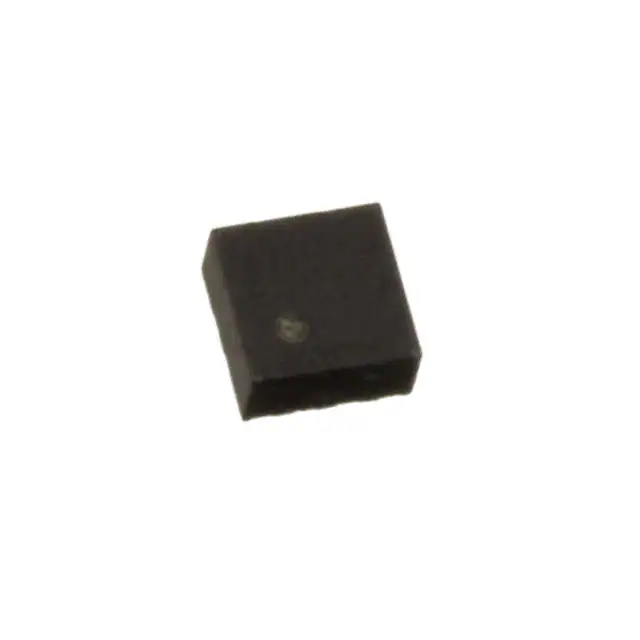
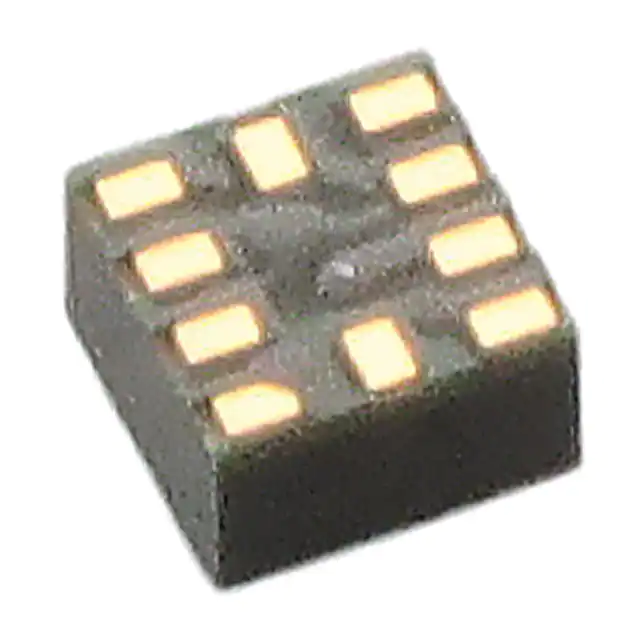
The LIS2DE12TR is housed in a 2 mm × 2 mm × 0.7 mm LGA-12 package with exposed pad for thermal performance and mechanical stability.
| Pin/Terminal | Circuit Role | Design Meaning |
|---|---|---|
| VDD | Core supply input | Accepts 1.71–3.6 V; powers internal analog and digital blocks including MEMS transducer and ADC. |
| VDD_IO | IO supply input | Supplies 1.8 V to digital interface pins (SDA/SCL/SPIn); isolates communication logic from core supply variations. |
| GND | Ground reference | Common return path for analog and digital domains; must be connected to PCB ground plane under exposed pad. |
| SCL / SDA | I²C clock/data bidirectional | Open-drain pins requiring external pull-ups; support standard (100 kHz) and fast-mode (400 kHz) I²C timing. |
| CS | SPI chip select input | Active-low enable for SPI slave operation; allows multi-device sharing of MISO/MOSI/SCLK lines. |
| SCLK | SPI serial clock input | Accepts up to 10 MHz clock; synchronous timing reference for SPI read/write transfers. |
| MISO | SPI master-in-slave-out | Tri-state output delivering register data or FIFO contents; high-impedance when CS is deasserted. |
| MOSI | SPI master-out-slave-in | Accepts configuration writes and command sequences; sampled on SCLK rising edge. |
| INT1 / INT2 | Programmable interrupt outputs | Open-drain signals asserting on free-fall, motion, orientation, or FIFO threshold events per INTx_CFG register setup. |
| SDO/SA0 | I²C address select / SPI data out | Configures LSB of I²C slave address (0x18 or 0x19); functions as MISO in 3-wire SPI mode. |
| DRDY | Data ready indicator | Push-pull output pulses when new acceleration sample is available in output registers - enables interrupt-driven sampling. |
Key Features
| Feature | Design Value |
|---|---|
| Ultra-low-power operation | 2 μA standby current enables multi-year battery life in coin-cell-powered wearables and remote sensors. |
| Dual independent interrupt generators | INT1 and INT2 each support configurable thresholds, durations, and event types (free-fall, wake-up, 6D orientation), enabling parallel event handling without host CPU polling. |
| 6D/4D orientation detection | Hardware-accelerated position recognition across six spatial faces (X/Y/Z ±) or four major axes - eliminates software-based tilt calculation overhead. |
| Embedded temperature sensor | Monitors die temperature with ±5 °C accuracy over –40 °C to +85 °C - supports thermal drift compensation in precision motion applications. |
| Self-test functionality | Electrostatic actuation verifies MEMS element and signal chain integrity in-system - critical for safety-critical or field-deployed devices. |
Applications
| Smartphone Display Rotation | Pedestrian Step Counting |
|---|---|
Use Scenario: Real-time screen orientation switching between portrait and landscape modes based on device tilt. IC Role / Device Role / Timing Role: Primary 3-axis orientation sensor providing 100 Hz ODR samples to application processor via I²C. Use Value: Hardware 6D detection reduces CPU load by >70% versus software-based quaternion computation; low 2 μA idle current preserves battery during screen-off periods. |
Use Scenario: Detecting vertical acceleration peaks during walking/running to increment step count in fitness trackers. IC Role / Device Role / Timing Role: Motion-triggered wake-up source that activates host MCU only upon valid step signature (≥0.2 g, 50–200 ms duration). Use Value: Sleep-to-wake function cuts average system current from 100 μA to <5 μA - extending 200 mAh battery life from 3 to >12 days. |
| Industrial Impact Logging | VR Controller Gesture Input |
Use Scenario: Capturing and timestamping shock events (>10 g, >1 ms) on machinery or transport containers for predictive maintenance. IC Role / Device Role / Timing Role: High-ODR (5.3 kHz) sampling with FIFO buffering to capture transient waveforms without host latency. Use Value: 16-level FIFO stores pre- and post-impact samples; DRDY pin triggers DMA transfer - eliminating missed events during MCU interrupt latency. |
Use Scenario: Translating hand rotation and flick gestures into 3D motion vectors for immersive VR interaction. IC Role / Device Role / Timing Role: Low-latency (≤2 ms) motion data source feeding Kalman filter on host SoC at 200 Hz ODR. Use Value: ±2g full-scale setting maximizes resolution (0.0078 g/LSB) for fine-grained gesture discrimination; embedded temperature sensor compensates for thermal zero-g drift. |
Equivalent & Alternatives
The following parts are listed as comparable options for similar 3-axis ultra-low-power accelerometer applications.
| Alternative Part | Technical Difference | Application Difference | Selection Advice |
|---|---|---|---|
| LSM303AGRTR | Integrated 3-axis accelerometer + magnetometer; higher typical current (3 μA vs. 2 μA); same LGA-12 footprint. | Enables eCompass functionality but adds magnetic interference sensitivity; requires additional calibration routines. | Select when heading estimation is required alongside motion sensing - tradeoff is added complexity and slightly higher power. |
| FXAS21002CGQR | 3-axis gyroscope (not accelerometer); different sensing modality; 6.5 μA standby; QFN-16 package. | Measures angular rate, not linear acceleration - unsuitable for pedometer or orientation use cases. | Not a functional substitute; consider only if angular motion (e.g., VR controller rotation rate) is primary requirement. |
Compared with LSM303AGRTR and FXAS21002CGQR, the LIS2DE12TR delivers optimal balance of ultra-low power, pure linear motion fidelity, and minimal firmware overhead - making it the preferred choice for cost-sensitive, battery-constrained motion-triggered systems where size and current budget are critical.
Availability
LIS2DE12TR is available at Aetrix Electronics and suitable for smartphone display rotation, wearable pedometers, industrial impact logging, and VR controller gesture input requiring stable component supply across production lifecycles.
Supply support for LIS2DE12TR includes scheduled delivery planning, volume procurement assistance, BOM continuity management, traceable sourcing, and lifecycle availability coordination for OEM customers, industrial embedded developers, connected-device designers, and electronics production programs.
Manufacturer
STMicroelectronics is a global semiconductor leader headquartered in Geneva, Switzerland, designing and manufacturing microcontrollers, sensors, power ICs, and automotive-grade components since 1987.
The LIS2DE12TR belongs to ST's "femto" family of ultra-low-power MEMS accelerometers, engineered specifically for energy-constrained portable and IoT endpoints where motion awareness must coexist with multi-year battery life.
FAQ
What is the maximum I²C clock frequency supported by the LIS2DE12TR?
The LIS2DE12TR supports Fast-mode I²C up to 400 kHz, as confirmed in Section 2.4.2 and Table 8 of the official datasheet. It does not support Fast-mode Plus (1 MHz) or High-speed mode. Pull-up resistors must be selected per bus capacitance to meet rise-time requirements specified in the timing table.
Does the LIS2DE12TR require external components for basic operation?
No external passive components are required for core functionality. Only decoupling capacitors (100 nF ceramic on VDD and VDD_IO) and I²C pull-ups (typically 4.7 kΩ) are needed. The internal oscillator eliminates need for external crystal; self-test and FIFO operate autonomously without external support circuitry.
How is the 6D orientation detection implemented in hardware?
6D orientation detection is performed by dedicated logic that compares sign bits and magnitude thresholds of X, Y, Z acceleration vectors against programmable high-pass filtered outputs. It outputs face-up/down/left/right/front/back status directly to STATUS_REG (bit 3–0) without host CPU intervention - reducing firmware latency and processing load.
Can the LIS2DE12TR measure temperature independently of motion sensing?
Yes. The embedded temperature sensor operates continuously or on-demand via TEMP_CFG_REG (1Fh). Its output is accessible through OUT_TEMP_L (0Ch) and OUT_TEMP_H (0Dh) registers, providing 8-bit resolution with ±5 °C accuracy across –40 °C to +85 °C - usable for thermal compensation even when accelerometer is in power-down mode.
LIS2DE12TR Specifications
- Product attributes
- Attribute value
- Manufacturer:
- STMicroelectronics
- Series:
- -
- Package/Case:
- 12-VFLGA
- Packaging:
- Tape & Reel (TR)
- Product Status:
- Active
- Type:
- Digital
- Axis:
- X, Y, Z
- Acceleration Range:
- ±2g, 4g, 8g, 16g
- Sensitivity (LSB/g):
- 64 (±2g) ~ 5 (±16g)
- Sensitivity (mV/g):
- -
- Bandwidth:
- 0.5Hz ~ 2.69kHz
- Output Type:
- I2C, SPI
- Voltage - Supply:
- 1.71V ~ 3.6V
- Features:
- Adjustable Bandwidth, Selectable Scale, Temperature Sensor
- Operating Temperature:
- -40°C ~ 85°C
- Grade:
- -
- Qualification:
- -
- Mounting Type:
- Surface Mount
- Supplier Device Package:
- 12-LGA (2x2)
LIS2DE12TR FAQ
1.How can I place an order for LIS2DE12TR through Aetrix?
Please submit a Request for Quotation (RFQ) for LIS2DE12TR on Aetrix. Our sales agent will provide a competitive quotation and guide you through the order confirmation once you accept the terms.
2.Are the price and stock information for LIS2DE12TR reliable?
The price and inventory of LIS2DE12TR are updated periodically and may fluctuate due to market conditions. Stock and pricing data are typically refreshed every 24 hours. Quotation validity for LIS2DE12TR is usually 5 days.
3.What payment methods are accepted for LIS2DE12TR?
We accept Wire Transfer, PayPal, Credit Card, Western Union, MoneyGram, and Escrow for LIS2DE12TR transactions.
Note: Certain payment methods may incur a processing fee.
4.How is shipping managed for LIS2DE12TR?
LIS2DE12TR orders can be shipped via leading logistics carriers, including DHL, UPS, FedEx, TNT, or Registered Mail.
Once your LIS2DE12TR order is processed, you will receive an email with the shipment details and tracking number.
Note: Tracking information may take up to 24 hours to appear. Express delivery typically takes 3–5 business days.
5.How can I obtain technical support or documentation for LIS2DE12TR?
For technical support, including LIS2DE12TR datasheets, pinout diagrams, or application guidance, please contact our engineering support team. They can provide detailed documentation and assistance for your LIS2DE12TR requirements.
6.How does Aetrix verify that LIS2DE12TR is sourced from the original manufacturer or authorized distributors?
All LIS2DE12TR products on Aetrix are procured from qualified distributors and authorized channels. Our dedicated quality assurance team conducts strict verification, including traceability checks and, if necessary, third-party testing. This ensures that LIS2DE12TR meets industry standards.
7.What is the process for return or replacement of LIS2DE12TR?
All LIS2DE12TR units undergo pre-shipment inspection (PSI). If there is an issue with LIS2DE12TR, returns or replacements are accepted under the following conditions:
1.Quantity discrepancies, incorrect items, or visible external defects (such as breakage or corrosion), acknowledged by Aetrix.
2.The issue is reported within 90 days of delivery.
3.The LIS2DE12TR part is unused and in its original packaging.
Return procedure for LIS2DE12TR:
1.Submit a request within 90 days.
2.Obtain a Return Material Authorization (RMA) from Aetrix.
LIS2DE12TR Tags

-
MXC4005XC
Memsic Inc.
-
MC3419
Memsic Inc.
-
MC3479
Memsic Inc.
-
MXC6655XA
Memsic Inc.
-
MC3630
Memsic Inc.
.jpg)
-
LIS2HH12TR
STMicroelectronics
-
KX122-1037
Kionix Inc.
-
LIS2DE12TR
STMicroelectronics
-
LIS2DH12TR
STMicroelectronics
-
MC3635
Memsic Inc.
-
LIS2DS12TR
STMicroelectronics

-
LIS3DHTR
STMicroelectronics
Tech Hub

Jumper cables guide covering safe connection order, red and black clamp placement, final ground connection, cable gauge, length, clamp quality, copper vs CCA cables, jump starter comparison and battery…

LDO regulator guide covering low dropout voltage, power dissipation, thermal design, PSRR, output noise, capacitor stability, adjustable LDO circuits, LDO vs buck converter and datasheet selection chec…

Conditional Access Module guide covering CAM meaning, CI/CI+ interface, smart card authorization, DVB security workflow, TV and set-top box compatibility, internal electronics, ESD protection, connecto…

Guide to electronic component obsolescence covering EOL risk, PCN/PDN notices, last-time buy planning, replacement options, form-fit-function validation, counterfeit risk and BOM lifecycle management.

18650 battery guide covering lithium-ion cell basics, 3.6V/3.7V voltage, 4.2V charging, mAh and Wh capacity, protected cells, chargers, BMS, series-parallel packs, holders, welding and sourcing checks.…

Hall effect sensor guide covering working principle, linear and digital sensors, Arduino circuits, current sensing, speed detection, automotive applications, A3144 examples, signal filtering and datash…

Product Change Notification guide for electronic components, covering PCN meaning, PCN vs PDN/EOL, common change types, risk levels, form-fit-function review, engineering validation, BOM control, LTB/L…

A practical guide to blend door actuators, covering HVAC function, symptoms, location, AC and heater issues, reset and calibration, replacement cost, electrical diagnosis, compatibility checks, and rep…

Engineering guide to Raspberry Pi alternatives, covering chip-level differences, Orange Pi, ROCK, Jetson, Banana Pi, NanoPi, Compute Module, Pico, GPIO, camera, HAT compatibility, and replacement risks…
Engineering guide to dynamic load response testing for high-current buck converters, covering load step setup, slew rate, Vcore undershoot, overshoot, recovery time, probe location, output capacitors a…


