
 My Inquiry
 My Account


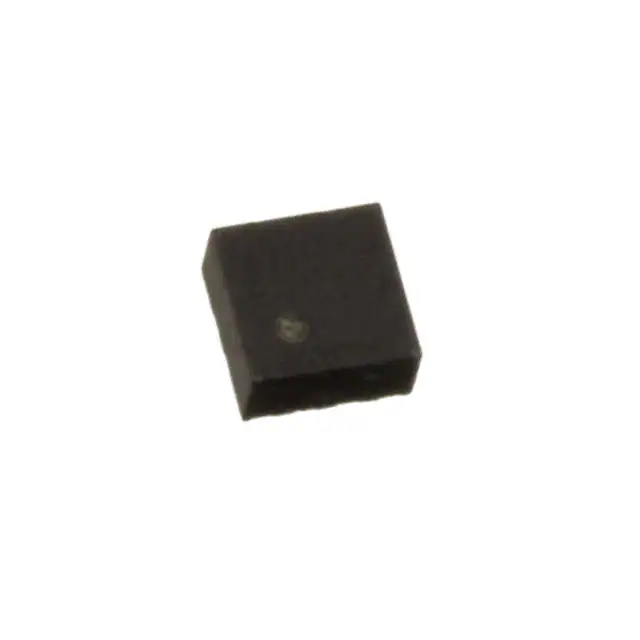
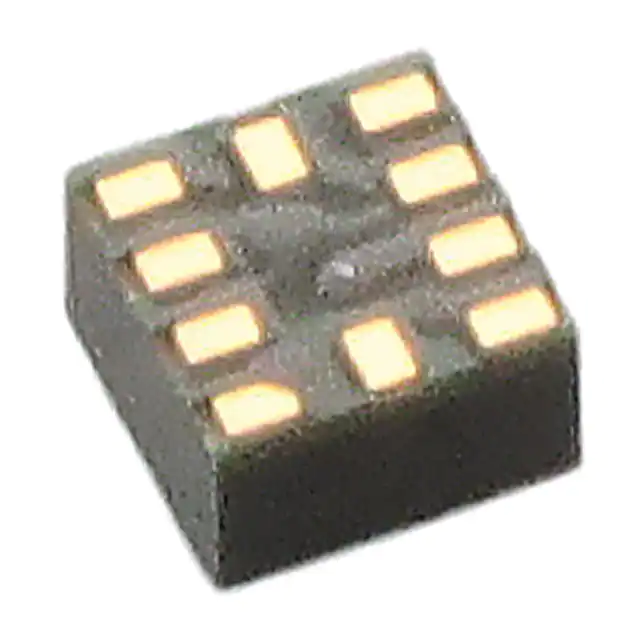
STMicroelectronics LIS3DHTR
- Part No.:
- LIS3DHTR
- Manufacturer:
- STMicroelectronics
- Category:
- Accelerometers
- Package:
- 16-VFLGA
- Datasheet:
-
 LIS3DHTR.pdf
- Description:
- ACCEL 2-16G I2C/SPI 16LGA
- Quantity:
- Payment:

- Shipping:

Inventory:71,590
Please send an inquiry. Send us your inquiry, and we will respond immediately.
Product details
Overview
LIS3DHTR from STMicroelectronics is an ultra-low-power, high-performance 3-axis MEMS digital accelerometer in the "nano" family, serving as a motion-sensing front-end for portable and battery-powered systems. It delivers 16-bit output resolution, ±2g/±4g/±8g/±16g dynamically selectable full-scale ranges, and operates from 1.71 V to 3.6 V with I²C/SPI interfaces - enabling pedometer, free-fall detection, and display orientation functions in smartphones and wearables.
For engineers reviewing the LIS3DHTR datasheet, LIS3DHTR pinout, LIS3DHTR application, or LIS3DHTR equivalent, key selection considerations include its 2 μA ultra-low-power mode, embedded 32-level FIFO, dual programmable interrupt generators, 6D/4D orientation detection, and LGA-16 package compatibility with space-constrained PCB layouts.
Technical Context
The LIS3DHTR integrates a capacitive MEMS sensing element with a low-noise signal conditioning analog front-end and a digital control block supporting multiple operating modes (high-resolution, normal, low-power). Its interrupt logic supports configurable thresholds and durations for free-fall, motion, and click/double-click events via two independent interrupt pins (INT1, INT2).
It embeds auxiliary functions including a calibrated temperature sensor, self-test capability, and FIFO buffering with bypass/stream/FIFO/stream-to-FIFO modes. Communication is handled via I²C (standard/fast mode) or 4-wire/3-wire SPI, with register-mapped configuration across 79 addressable registers including WHO_AM_I (0Fh) for device identification.
Key Specifications
| Parameter | Value and Actual Design Meaning |
|---|---|
| Supply Voltage | 1.71 V to 3.6 V - enables direct integration with Li-ion battery-powered systems without external regulation. |
| IO Supply | 1.8 V compatible - decouples digital interface voltage from core supply for mixed-voltage system interfacing. |
| Ultra-Low-Power Mode | 2 μA typical - extends battery life in always-on motion wake-up applications like smartwatch lift-to-wake. |
| Full-Scale Range | ±2g/±4g/±8g/±16g user-selectable - allows optimization of resolution vs. dynamic range per use case (e.g., ±2g for precision tilt, ±16g for shock logging). |
| Output Resolution | 16-bit digital output - provides sub-mg sensitivity (e.g., 0.98 mg/LSB at ±2g) for accurate motion vector reconstruction. |
| Data Rate | 1 Hz to 5.3 kHz - supports both slow environmental monitoring and fast impact/vibration analysis. |
| FIFO Depth | 32-level 16-bit buffer - reduces host MCU polling frequency and enables burst-read efficiency in low-duty-cycle systems. |
Pinout & Package
LGA-16 (3.0 mm × 3.0 mm × 0.85 mm), 0.5 mm pitch, exposed pad for thermal and electrical grounding - optimized for compact wearable and IoT PCB footprints.
| Pin/Terminal | Circuit Role | Design Meaning |
|---|---|---|
| VDD | Core power supply | Connects to 1.71–3.6 V main system rail; internal LDO not required. |
| VDD_IO | IO interface supply | Accepts 1.8 V for I²C/SPI logic level translation; independent of VDD. |
| GND | Ground reference | Common return for analog/digital circuits; ties to exposed thermal pad. |
| SCL/SPC | I²C clock / SPI clock | Configurable as I²C SCL or SPI SPC; requires external pull-up only in I²C mode. |
| SDA/SDI | I²C data / SPI data in | Bidirectional I²C data line or unidirectional SPI MOSI input. |
| SDO/SA0 | I²C address select / SPI data out | Configures I²C slave address (0x18/0x19) or serves as SPI MISO output. |
| CS | SPI chip select | Active-low enable for SPI communication; must be held high for I²C operation. |
| INT1 | Programmable interrupt 1 | Open-drain output for motion, free-fall, 6D orientation, or FIFO watermark events. |
| INT2 | Programmable interrupt 2 | Open-drain output for click/double-click, activity/inactivity, or boot status signals. |
Key Features
| Feature | Design Value |
|---|---|
| Dual independent interrupt generators | Enables concurrent wake-up on motion + free-fall without host CPU intervention - critical for low-power system responsiveness. |
| 6D/4D orientation detection | Identifies device position (up/down/left/right/front/back) using thresholded axis comparisons - eliminates need for external fusion algorithms in basic UI rotation. |
| Embedded 32-level FIFO | Stores up to 32 samples of X/Y/Z data (96 bytes) - allows host to read batches instead of polling, reducing bus traffic and CPU load. |
| Self-test capability | Validates MEMS structure and signal chain integrity in-system via electrostatic actuation - supports field reliability verification without mechanical stimulus. |
| Temperature sensor | Integrated calibrated sensor (±5 °C accuracy) - enables on-chip thermal compensation of offset/sensitivity drift in industrial or automotive-adjacent environments. |
Applications
| Smartphone Display Rotation | Pedometer in Fitness Tracker |
|---|---|
|
Use Scenario: Automatic screen orientation switching during handheld device rotation. IC Role / Device Role / Timing Role: Primary 3-axis orientation sensor feeding real-time acceleration vectors to system processor. Use Value: Enables seamless portrait/landscape transition using 6D detection with <100 ms latency and <2 μA background current. |
Use Scenario: Step counting during walking/running with minimal false positives from vibration or arm swing. IC Role / Device Role / Timing Role: Motion-triggered event detector with configurable activity threshold and debounce timing. Use Value: Delivers >95% step detection accuracy at 1.5 Hz–10 Hz ODR while maintaining 2 μA sleep-mode draw. |
| Free-Fall Protection in HDDs | Gaming Controller Tilt Input |
|
Use Scenario: Emergency head-parking in mechanical hard disk drives upon drop detection. IC Role / Device Role / Timing Role: Dedicated free-fall monitor generating hardware interrupt within 10 ms of onset. Use Value: Meets 30 ms total response requirement (sensor + actuator) with ±1.5 g threshold and 100 ms duration window. |
Use Scenario: Real-time tilt-based aiming and gesture control in Bluetooth gaming controllers. IC Role / Device Role / Timing Role: High-OAR (5.3 kHz) motion capture source for low-latency game engine input. Use Value: Supports <5 ms end-to-end latency from physical tilt to on-screen action using stream-mode FIFO and SPI burst reads. |
Equivalent & Alternatives
The following parts are listed as comparable options for similar 3-axis MEMS accelerometer applications.
| Alternative Part | Technical Difference | Application Difference | Selection Advice |
|---|---|---|---|
| LSM303AGRTR | Integrated 3-axis accelerometer + 3-axis magnetometer; higher current (10 μA LP mode); same LGA-16 package. | Targeted at e-compass and AHRS; lacks dedicated click/double-click logic and FIFO depth (16-level vs. 32). | Select when magnetic heading fusion is required; avoid if pure low-power motion wake-up is primary goal. |
| FXAS21002CQR1 | 3-axis gyroscope (not accelerometer); different function; 16-pin QFN, 2.0×2.0 mm; 6.5 mA active current. | Used for angular rate sensing in VR/AR motion tracking - complementary but not substitutable for LIS3DHTR's linear acceleration role. | Not a functional alternative; only relevant in multi-sensor IMU designs where LIS3DHTR handles acceleration and FXAS21002C handles rotation. |
Compared with LSM303AGRTR, LIS3DHTR offers superior power efficiency and richer motion-detection features for standalone accelerometer use; versus FXAS21002CQR1, it addresses fundamentally different sensing domains - linear acceleration vs. angular velocity - making cross-substitution invalid without system architecture changes.
Availability
LIS3DHTR is available at Aetrix Electronics and suitable for smartphone display orientation, fitness tracker pedometers, HDD free-fall protection, and gaming controller tilt input requiring stable component supply across high-volume consumer electronics production.
Supply support for LIS3DHTR includes scheduled delivery planning, volume procurement assistance, BOM continuity management, traceable sourcing, and lifecycle availability coordination for OEM customers, industrial embedded developers, connected-device designers, and electronics production programs.
Manufacturer
STMicroelectronics is a global semiconductor leader headquartered in Geneva, Switzerland, designing and manufacturing microcontrollers, sensors, power ICs, and analog components for industrial, automotive, and consumer markets.
The LIS3DHTR belongs to ST's "nano" family of ultra-low-power MEMS motion sensors, engineered specifically for battery-constrained portable devices requiring high accuracy, rich embedded intelligence, and minimal quiescent current.
FAQ
What is the absolute maximum supply voltage for LIS3DHTR?
The absolute maximum rating for VDD and VDD_IO is 4.25 V per STMicroelectronics' DocID17530 Rev 2, Section 2.5. Exceeding this may cause permanent damage. Recommended operating range remains 1.71 V to 3.6 V for guaranteed functionality and specifications compliance.
Does LIS3DHTR support both I²C and SPI simultaneously?
No - the LIS3DHTR uses shared pins (SCL/SPC, SDA/SDI, SDO/SA0, CS) and requires hardware configuration at power-up: CS low enables SPI; CS high enables I²C. Only one interface can be active per power cycle, and reconfiguration requires reset or power cycle.
How is the WHO_AM_I register used for device verification?
The WHO_AM_I register (address 0Fh) returns the fixed value 0x33, confirming genuine LIS3DHTR silicon. This read is performed after power-up and initialization to validate communication integrity and prevent firmware misconfiguration in multi-sensor systems.
Can the embedded temperature sensor be used for accelerometer calibration?
Yes - the integrated temperature sensor (±5 °C accuracy, 1°C/LSB resolution) provides real-time die temperature data. System firmware can apply pre-characterized offset and sensitivity temperature coefficients stored in non-volatile memory to correct acceleration readings across -40°C to +85°C.
LIS3DHTR Specifications
- Product attributes
- Attribute value
- Manufacturer:
- STMicroelectronics
- Series:
- -
- Package/Case:
- 16-VFLGA
- Packaging:
- Tape & Reel (TR)
- Product Status:
- Active
- Type:
- Digital
- Axis:
- X, Y, Z
- Acceleration Range:
- ±2g, 4g, 8g, 16g
- Sensitivity (LSB/g):
- 1000 (±2g) ~ 83 (±16g)
- Sensitivity (mV/g):
- -
- Bandwidth:
- 0.5Hz ~ 625Hz
- Output Type:
- I2C, SPI
- Voltage - Supply:
- 1.71V ~ 3.6V
- Features:
- Adjustable Bandwidth, Selectable Scale, Temperature Sensor
- Operating Temperature:
- -40°C ~ 85°C
- Grade:
- -
- Qualification:
- -
- Mounting Type:
- Surface Mount
- Supplier Device Package:
- 16-LGA (3x3)
LIS3DHTR FAQ
1.How can I place an order for LIS3DHTR through Aetrix?
Please submit a Request for Quotation (RFQ) for LIS3DHTR on Aetrix. Our sales agent will provide a competitive quotation and guide you through the order confirmation once you accept the terms.
2.Are the price and stock information for LIS3DHTR reliable?
The price and inventory of LIS3DHTR are updated periodically and may fluctuate due to market conditions. Stock and pricing data are typically refreshed every 24 hours. Quotation validity for LIS3DHTR is usually 5 days.
3.What payment methods are accepted for LIS3DHTR?
We accept Wire Transfer, PayPal, Credit Card, Western Union, MoneyGram, and Escrow for LIS3DHTR transactions.
Note: Certain payment methods may incur a processing fee.
4.How is shipping managed for LIS3DHTR?
LIS3DHTR orders can be shipped via leading logistics carriers, including DHL, UPS, FedEx, TNT, or Registered Mail.
Once your LIS3DHTR order is processed, you will receive an email with the shipment details and tracking number.
Note: Tracking information may take up to 24 hours to appear. Express delivery typically takes 3–5 business days.
5.How can I obtain technical support or documentation for LIS3DHTR?
For technical support, including LIS3DHTR datasheets, pinout diagrams, or application guidance, please contact our engineering support team. They can provide detailed documentation and assistance for your LIS3DHTR requirements.
6.How does Aetrix verify that LIS3DHTR is sourced from the original manufacturer or authorized distributors?
All LIS3DHTR products on Aetrix are procured from qualified distributors and authorized channels. Our dedicated quality assurance team conducts strict verification, including traceability checks and, if necessary, third-party testing. This ensures that LIS3DHTR meets industry standards.
7.What is the process for return or replacement of LIS3DHTR?
All LIS3DHTR units undergo pre-shipment inspection (PSI). If there is an issue with LIS3DHTR, returns or replacements are accepted under the following conditions:
1.Quantity discrepancies, incorrect items, or visible external defects (such as breakage or corrosion), acknowledged by Aetrix.
2.The issue is reported within 90 days of delivery.
3.The LIS3DHTR part is unused and in its original packaging.
Return procedure for LIS3DHTR:
1.Submit a request within 90 days.
2.Obtain a Return Material Authorization (RMA) from Aetrix.
LIS3DHTR Tags

-
MXC4005XC
Memsic Inc.
-
MC3419
Memsic Inc.
-
MC3479
Memsic Inc.
-
MXC6655XA
Memsic Inc.
-
MC3630
Memsic Inc.
.jpg)
-
LIS2HH12TR
STMicroelectronics
-
KX122-1037
Kionix Inc.
-
LIS2DE12TR
STMicroelectronics
-
LIS2DH12TR
STMicroelectronics
-
MC3635
Memsic Inc.
-
LIS2DS12TR
STMicroelectronics

-
LIS3DHTR
STMicroelectronics
Tech Hub

Jumper cables guide covering safe connection order, red and black clamp placement, final ground connection, cable gauge, length, clamp quality, copper vs CCA cables, jump starter comparison and battery…

LDO regulator guide covering low dropout voltage, power dissipation, thermal design, PSRR, output noise, capacitor stability, adjustable LDO circuits, LDO vs buck converter and datasheet selection chec…

Conditional Access Module guide covering CAM meaning, CI/CI+ interface, smart card authorization, DVB security workflow, TV and set-top box compatibility, internal electronics, ESD protection, connecto…

Guide to electronic component obsolescence covering EOL risk, PCN/PDN notices, last-time buy planning, replacement options, form-fit-function validation, counterfeit risk and BOM lifecycle management.

18650 battery guide covering lithium-ion cell basics, 3.6V/3.7V voltage, 4.2V charging, mAh and Wh capacity, protected cells, chargers, BMS, series-parallel packs, holders, welding and sourcing checks.…

Hall effect sensor guide covering working principle, linear and digital sensors, Arduino circuits, current sensing, speed detection, automotive applications, A3144 examples, signal filtering and datash…

Product Change Notification guide for electronic components, covering PCN meaning, PCN vs PDN/EOL, common change types, risk levels, form-fit-function review, engineering validation, BOM control, LTB/L…

A practical guide to blend door actuators, covering HVAC function, symptoms, location, AC and heater issues, reset and calibration, replacement cost, electrical diagnosis, compatibility checks, and rep…

Engineering guide to Raspberry Pi alternatives, covering chip-level differences, Orange Pi, ROCK, Jetson, Banana Pi, NanoPi, Compute Module, Pico, GPIO, camera, HAT compatibility, and replacement risks…
Engineering guide to dynamic load response testing for high-current buck converters, covering load step setup, slew rate, Vcore undershoot, overshoot, recovery time, probe location, output capacitors a…


