
 My Inquiry
 My Account


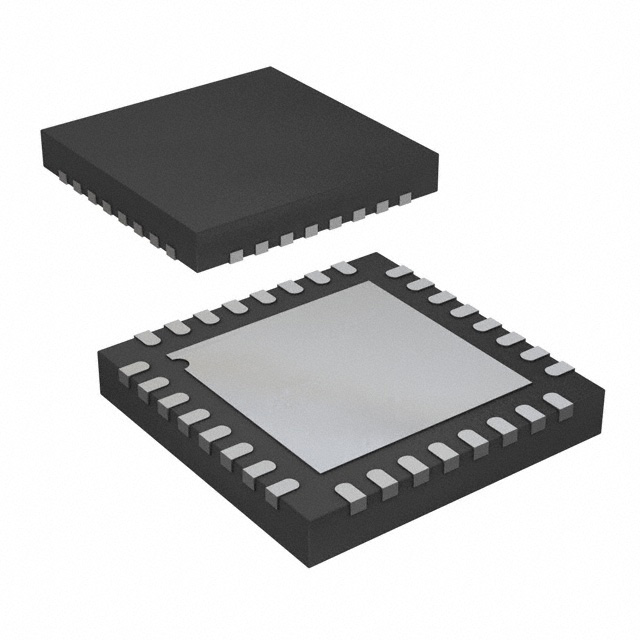
Analog Devices Inc. ADXL313WACPZ-RL
- Part No.:
- ADXL313WACPZ-RL
- Manufacturer:
- Analog Devices Inc.
- Category:
- Accelerometers
- Package:
- 32-LFQFN Exposed Pad, CSP
- Datasheet:
-
 ADXL313WACPZ-RL.pdf
- Description:
- ACCELEROMETER 0.5-4G 32LFCSP
- Quantity:
- Payment:

- Shipping:

Inventory:1,999
Please send an inquiry. Send us your inquiry, and we will respond immediately.
Product details
Overview
ADXL313WACPZ-RL from Analog Devices is a 3-axis digital accelerometer with ±0.5 g to ±4 g user-selectable measurement range, 13-bit resolution at ±4 g, and ultralow power consumption (as low as 30 µA in measurement mode, 0.1 µA in standby). It delivers 150 µg/√Hz noise density on X/Y axes and integrates FIFO, activity/inactivity detection, and SPI/I²C interfaces - enabling high-accuracy tilt sensing and motion monitoring in automotive black boxes and hill-start aid systems.
For engineers reviewing the ADXL313WACPZ-RL datasheet, ADXL313WACPZ-RL pinout, ADXL313WACPZ-RL application, or ADXL313WACPZ-RL equivalent, key selection criteria include its 5 mm × 5 mm × 1.45 mm LFCSP-32 package, −40°C to +105°C automotive-grade operating range, 1024 LSB/g fixed sensitivity, embedded FIFO for host load reduction, and dual interrupt outputs supporting motion-triggered wake-up in battery-constrained systems.
Technical Context
The ADXL313WACPZ-RL employs a polysilicon surface-micromachined capacitive sensor structure with phase-sensitive demodulation to convert acceleration into 16-bit two's complement digital output. Its internal architecture supports dynamic (shock/motion) and static (gravity/tilt) acceleration measurement with programmable bandwidth up to 1600 Hz (half the 3200 Hz ODR).
It implements three distinct low-power modes: autosleep (triggered by inactivity threshold and timer), low-power sampling (reduced internal clock rate), and standby (0.1 µA leakage). All modes preserve FIFO contents and allow full register access for configuration prior to measurement activation.
Key Specifications
| Parameter | Value and Actual Design Meaning |
|---|---|
| Measurement Range | User-selectable ±0.5 g / ±1 g / ±2 g / ±4 g via serial command - enables single-part flexibility across tilt-sensing and impact-detection applications. |
| Resolution & Sensitivity | Fixed 1024 LSB/g sensitivity; resolution scales from 10-bit (±0.5 g) to 13-bit (±4 g) - ensures consistent scaling and simplifies firmware calibration. |
| Noise Density | 150 µg/√Hz (X/Y), 250 µg/√Hz (Z) - supports <0.1° inclination resolution in static tilt sensing at 100 Hz ODR. |
| Power Consumption | 30 µA typical at 100 Hz ODR; 0.1 µA in standby - enables multi-year operation on coin-cell batteries in always-on motion monitors. |
| Digital Interfaces | SPI (3-wire/4-wire, 5 MHz max) and I²C (100/400 kHz) - provides hardware compatibility with microcontrollers lacking dedicated accelerometers peripherals. |
| Operating Temperature | −40°C to +105°C - qualified for under-hood automotive use including electronic parking brakes and hill start aid. |
| FIFO Depth | 32-level embedded FIFO - reduces host processor polling frequency and system-level power consumption during burst-acquisition scenarios. |
Pinout & Package
ADXL313WACPZ-RL is housed in a 5 mm × 5 mm × 1.45 mm, 32-lead LFCSP package with exposed thermal pad. Pin 1 is located at the top-left corner adjacent to the marking dot; the exposed pad (EP) must be soldered to ground for thermal and electrical performance.
| Pin/Terminal | Circuit Role | Design Meaning |
|---|---|---|
| GND (Pins 1, 3, 4) | Ground reference | Three dedicated ground pins minimize impedance and improve noise immunity for analog and digital sections. |
| VS (Pin 5) | Analog supply input | 2.0 V–3.6 V main supply; powers internal sensor and signal chain - independent of interface voltage. |
| CS (Pin 6) | Chip select / I²C enable | Drives SPI mode when controlled by master; ties high to VDD I/O to enable I²C - no floating state allowed. |
| INT1 / INT2 (Pins 20, 21) | Configurable interrupt outputs | Open-drain outputs mappable to activity, inactivity, DATA_READY, watermark, or overrun events - enable autonomous wake-up without host polling. |
| SDO/ALT ADDRESS (Pin 23) | Data output / I²C address select | Provides SPI 3-wire data output; selects I²C address 0x1D (pull-high) or 0x53 (pull-low) - eliminates address conflicts on shared buses. |
| SDA/SDI/SDIO (Pin 24) | Bi-directional serial data | Shared pin for I²C SDA, SPI 4-wire SDI, or SPI 3-wire SDIO - reduces PCB routing complexity. |
| SCL/SCLK (Pin 26) | Clock input | Accepts I²C SCL or SPI SCLK - supports both protocols with identical timing constraints (CPOL=1, CPHA=1 for SPI). |
| VDD I/O (Pin 31) | Digital interface supply | 1.7 V–VS range; decouples logic-level compatibility from analog supply - allows interfacing with 1.8 V or 3.3 V controllers. |
Key Features
| Feature | Design Value |
|---|---|
| Ultralow power scaling | Current automatically adjusts with output data rate (30 µA at 100 Hz, 0.1 µA standby) - eliminates manual power-state management in firmware. |
| Embedded 32-level FIFO | Stores sequential acceleration samples without host intervention - enables burst-mode acquisition and reduces CPU wake-ups by >90% in event-driven logging. |
| User-selectable resolution | 10-bit to 13-bit resolution tied to g-range selection - maintains optimal SNR across full scale without software gain compensation. |
| Activity/inactivity detection | Dual independent thresholds per axis with programmable time windows - detects vehicle motion or stationary state for automatic system sleep/wake transitions. |
| Automotive qualification | AEC-Q100 Grade 2 (−40°C to +105°C) and 10,000 g shock survival - meets reliability requirements for safety-critical chassis control subsystems. |
Applications
| Car Alarm Motion Trigger | Hill Start Aid (HSA) |
|---|---|
Use Scenario: Detects unauthorized vehicle movement (e.g., towing or jacking) while parked and armed. IC Role / Device Role / Timing Role: Primary motion trigger sensor; generates INT1 pulse upon exceeding configurable activity threshold for immediate MCU wake-up. Use Value: 0.1 µA standby current extends battery life beyond 5 years; 150 µg/√Hz noise floor prevents false alarms from road vibration or wind. | Use Scenario: Monitors longitudinal acceleration during hill departure to prevent rollback before engine torque builds. IC Role / Device Role / Timing Role: Tilt and motion sensor feeding real-time pitch/acceleration data to ESC ECU; operates continuously at 200 Hz ODR. Use Value: ±0.5 g range + 13-bit resolution enables <0.025° inclination resolution using oversampling; −40°C to +105°C rating ensures operation in extreme ambient conditions. |
| Electronic Parking Brake (EPB) | Automotive Data Recorder ("Black Box") |
Use Scenario: Confirms vehicle incline and motion status to engage/disengage brake calipers automatically on slopes. IC Role / Device Role / Timing Role: Static gravity reference for pitch estimation; combined with wheel speed sensors to validate brake hold state. Use Value: 1024 LSB/g fixed sensitivity eliminates per-unit calibration; built-in self-test verifies sensor integrity at power-on per ISO 26262 ASIL-B requirements. | Use Scenario: Captures pre-crash acceleration profiles (X/Y/Z) for accident reconstruction and driver behavior analysis. IC Role / Device Role / Timing Role: High-bandwidth (3200 Hz ODR) event logger; stores triggered bursts in FIFO before writing to nonvolatile memory. Use Value: 32-level FIFO buffers 32×16-bit samples per axis; SPI interface supports >2 Mbps transfer to microSD - avoids data loss during crash transients. |
Equivalent & Alternatives
The following parts are listed as comparable options for similar 3-axis digital accelerometer applications.
| Alternative Part | Technical Difference | Application Difference | Selection Advice |
|---|---|---|---|
| ADXL312WACPZ-RL | Pin-compatible predecessor; identical 32-lead LFCSP package and register map but lacks ±0.5 g range and 13-bit resolution at ±4 g. | Lower resolution (max 12-bit) and higher noise (200 µg/√Hz) limit tilt accuracy to ~0.2° - suitable only where cost is prioritized over precision. | Select ADXL312WACPZ-RL only if legacy design reuse or lower BOM cost outweighs need for sub-0.1° inclination resolution. |
| LSM6DSOXTR | 6-axis IMU (3-axis accel + 3-axis gyro); 2.5 V–3.6 V supply; 1.7 mA active current vs. 30 µA for ADXL313WACPZ-RL. | Integrated gyroscope enables full attitude estimation but increases power and complexity - unnecessary for pure tilt/motion detection. | Choose LSM6DSOXTR only when angular rate data is required alongside acceleration; otherwise ADXL313WACPZ-RL offers superior power efficiency and simpler integration. |
Compared with ADXL312WACPZ-RL, ADXL313WACPZ-RL adds ±0.5 g range and 13-bit resolution for enhanced low-g sensitivity, while versus LSM6DSOXTR it delivers 57× lower active current and eliminates gyro-related calibration overhead - making it optimal for battery-powered automotive motion triggers and static tilt sensing.
Availability
ADXL313WACPZ-RL is available at Aetrix Electronics and suitable for automotive data recorders, hill start aid systems, and electronic parking brake modules requiring stable component supply, AEC-Q100 compliance, and long-term lifecycle support.
Supply support for ADXL313WACPZ-RL includes scheduled delivery planning, volume procurement assistance, BOM continuity management, traceable sourcing, and lifecycle availability coordination for OEM customers, industrial embedded developers, connected-device designers, and electronics production programs.
Manufacturer
Analog Devices is a global leader in high-performance analog, mixed-signal, and digital signal processing semiconductors, serving industrial, automotive, communications, and healthcare markets.
The ADXL313WACPZ-RL belongs to Analog Devices' automotive-qualified MEMS accelerometer product line, designed specifically for reliable, low-power motion sensing in chassis control, safety, and driver assistance systems.
FAQ
What is the operating temperature range of the ADXL313WACPZ-RL?
The ADXL313WACPZ-RL is rated for −40°C to +105°C operation and qualified to AEC-Q100 Grade 2 standards. This range covers under-hood and cabin-mounted automotive applications including hill start aid and electronic parking brake control units. The device maintains specified bias drift (±125 mg over temperature) and noise performance across this full range, ensuring consistent tilt and motion detection accuracy.
Does the ADXL313WACPZ-RL support both SPI and I²C interfaces simultaneously?
No, the ADXL313WACPZ-RL supports SPI and I²C interfaces separately - interface selection is determined by the CS pin state. When CS is driven low by the host, SPI mode is active; when CS is tied high to VDD I/O, I²C mode is enabled. Both protocols share pins SDA/SDI/SDIO (Pin 24) and SCL/SCLK (Pin 26), so hardware design must isolate bus contention by ensuring only one interface is enabled per system configuration.
How does the FIFO function in the ADXL313WACPZ-RL reduce host processor load?
The ADXL313WACPZ-RL features a 32-level FIFO that autonomously stores X/Y/Z acceleration samples without host intervention. Instead of polling registers at high frequency, the host reads multiple samples in one SPI or I²C transaction after FIFO watermark or DATA_READY interrupt triggers. This cuts communication overhead by up to 90%, lowers average system power, and simplifies firmware - especially valuable in battery-powered automotive event loggers and alarm systems.
What is the significance of the 1024 LSB/g sensitivity specification for the ADXL313WACPZ-RL?
The 1024 LSB/g sensitivity is a fixed, g-range-independent scaling factor in the ADXL313WACPZ-RL's full-resolution mode. It means each g of acceleration produces exactly 1024 digital counts regardless of whether the range is set to ±0.5 g, ±1 g, ±2 g, or ±4 g. This eliminates per-range gain recalibration in firmware and enables consistent data interpretation across dynamic operating conditions - critical for automotive applications like hill start aid where range switching occurs during operation.
Can the ADXL313WACPZ-RL detect both static tilt and dynamic shock events?
Yes, the ADXL313WACPZ-RL measures both static acceleration (e.g., gravity for tilt sensing) and dynamic acceleration (e.g., vehicle crash or pothole impact) within its ±0.5 g to ±4 g selectable ranges. Its 3200 Hz maximum output data rate and 1600 Hz bandwidth support high-frequency shock capture, while its low noise (150 µg/√Hz) and high resolution (13-bit at ±4 g) enable detection of inclination changes as small as 0.025° - fulfilling dual roles in automotive black boxes and electronic stability control subsystems.
ADXL313WACPZ-RL Specifications
- Product attributes
- Attribute value
- Manufacturer:
- Analog Devices Inc.
- Series:
- -
- Package/Case:
- 32-LFQFN Exposed Pad, CSP
- Packaging:
- Tape & Reel (TR)
- Product Status:
- Active
- Type:
- Digital
- Axis:
- X, Y, Z
- Acceleration Range:
- ±0.5g, 1g, 2g, 4g
- Sensitivity (LSB/g):
- 1024
- Sensitivity (mV/g):
- -
- Bandwidth:
- 3.125Hz ~ 1.6kHz
- Output Type:
- I2C, SPI
- Voltage - Supply:
- 2V ~ 3.6V
- Features:
- Adjustable Bandwidth, Standby Mode
- Operating Temperature:
- -40°C ~ 105°C
- Grade:
- Automotive
- Qualification:
- -
- Mounting Type:
- Surface Mount
- Supplier Device Package:
- 32-LFCSP-LQ (5x5)
ADXL313WACPZ-RL FAQ
1.How can I place an order for ADXL313WACPZ-RL through Aetrix?
Please submit a Request for Quotation (RFQ) for ADXL313WACPZ-RL on Aetrix. Our sales agent will provide a competitive quotation and guide you through the order confirmation once you accept the terms.
2.Are the price and stock information for ADXL313WACPZ-RL reliable?
The price and inventory of ADXL313WACPZ-RL are updated periodically and may fluctuate due to market conditions. Stock and pricing data are typically refreshed every 24 hours. Quotation validity for ADXL313WACPZ-RL is usually 5 days.
3.What payment methods are accepted for ADXL313WACPZ-RL?
We accept Wire Transfer, PayPal, Credit Card, Western Union, MoneyGram, and Escrow for ADXL313WACPZ-RL transactions.
Note: Certain payment methods may incur a processing fee.
4.How is shipping managed for ADXL313WACPZ-RL?
ADXL313WACPZ-RL orders can be shipped via leading logistics carriers, including DHL, UPS, FedEx, TNT, or Registered Mail.
Once your ADXL313WACPZ-RL order is processed, you will receive an email with the shipment details and tracking number.
Note: Tracking information may take up to 24 hours to appear. Express delivery typically takes 3–5 business days.
5.How can I obtain technical support or documentation for ADXL313WACPZ-RL?
For technical support, including ADXL313WACPZ-RL datasheets, pinout diagrams, or application guidance, please contact our engineering support team. They can provide detailed documentation and assistance for your ADXL313WACPZ-RL requirements.
6.How does Aetrix verify that ADXL313WACPZ-RL is sourced from the original manufacturer or authorized distributors?
All ADXL313WACPZ-RL products on Aetrix are procured from qualified distributors and authorized channels. Our dedicated quality assurance team conducts strict verification, including traceability checks and, if necessary, third-party testing. This ensures that ADXL313WACPZ-RL meets industry standards.
7.What is the process for return or replacement of ADXL313WACPZ-RL?
All ADXL313WACPZ-RL units undergo pre-shipment inspection (PSI). If there is an issue with ADXL313WACPZ-RL, returns or replacements are accepted under the following conditions:
1.Quantity discrepancies, incorrect items, or visible external defects (such as breakage or corrosion), acknowledged by Aetrix.
2.The issue is reported within 90 days of delivery.
3.The ADXL313WACPZ-RL part is unused and in its original packaging.
Return procedure for ADXL313WACPZ-RL:
1.Submit a request within 90 days.
2.Obtain a Return Material Authorization (RMA) from Aetrix.
ADXL313WACPZ-RL Tags

-
MXC4005XC
Memsic Inc.
-
MC3419
Memsic Inc.
-
MC3479
Memsic Inc.
-
MXC6655XA
Memsic Inc.
-
MC3630
Memsic Inc.
.jpg)
-
LIS2HH12TR
STMicroelectronics
-
KX122-1037
Kionix Inc.
-
LIS2DE12TR
STMicroelectronics
-
LIS2DH12TR
STMicroelectronics
-
MC3635
Memsic Inc.
-
LIS2DS12TR
STMicroelectronics

-
LIS3DHTR
STMicroelectronics
Tech Hub

A practical engineering guide to 3.3V and 5V logic compatibility, input thresholds, resistor dividers, translator ICs, MOSFET level shifting, I2C pull-ups, timing limits and power-sequencing risks.

The 74HC595 uses push-pull logic outputs, while the TPIC6B595 uses 50 V open-drain DMOS sinks for higher-power loads. This guide compares timing, current limits, 3.3 V interfacing, load wiring, thermal…

The 74HC595 converts serial data into eight stable parallel outputs. This guide covers pin functions, shift and storage timing, OE and MR behavior, drive-current limits, cascading, voltage compatibilit…

A technical comparison of level-sensitive latches and edge-triggered flip-flops, covering timing windows, setup and hold limits, master–slave operation, time borrowing, race-through, HDL inference and…

A D latch stores one bit while Enable controls when data can pass. This reference covers gate-level operation, truth tables, transparency, setup and hold timing, LE versus OE, common ICs and practical …

An SR latch stores one bit through cross-coupled feedback. This engineering reference covers NOR and NAND implementations, truth tables, forbidden-state recovery, gated operation, switch debouncing, fa…

Latch circuits retain one bit through feedback. This technical reference covers SR and D latches, truth tables, transparency, timing limits, latch-versus-flip-flop behavior, applications and common log…

An engineering guide to LED driver operation, constant-current and constant-voltage outputs, linear and switching topologies, dimming, IC selection, calculations, replacement compatibility, and fault c…

Operational amplifier guide covering op amp basics, feedback, ideal vs real op amps, common configurations, buffer circuits, offset, bias current, gain-bandwidth, slew rate, rail-to-rail limits and sel…

Jumper cables guide covering safe connection order, red and black clamp placement, final ground connection, cable gauge, length, clamp quality, copper vs CCA cables, jump starter comparison and battery…


