
 My Inquiry
 My Account


Microchip Technology ATA5276M-PGPW 19
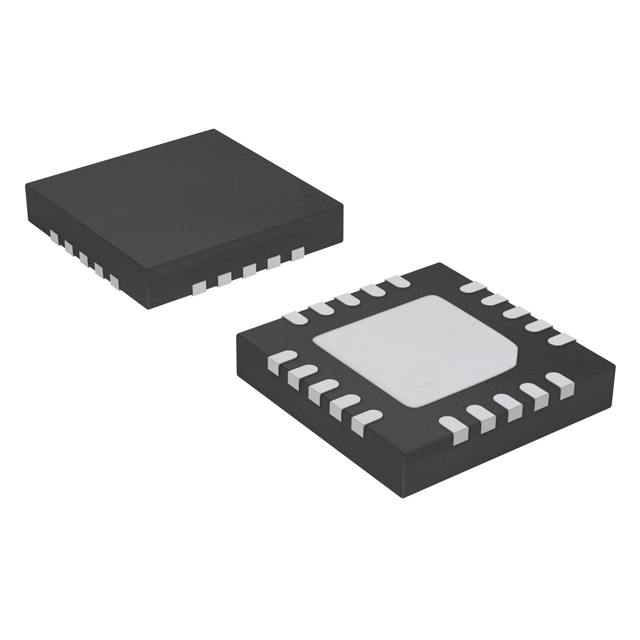
- Part No.:
- ATA5276M-PGPW 19
- Manufacturer:
- Microchip Technology
- Category:
- RFID, RF Access, Monitoring ICs
- Package:
- 20-VQFN Exposed Pad
- Datasheet:
-
 ATA5276M-PGPW 19.pdf
- Description:
- IC TPMS 100-150KHZ 20QFN
- Quantity:
- Payment:

- Shipping:

Inventory:2,246
Please send an inquiry. Send us your inquiry, and we will respond immediately.
Product details
Overview
ATA5276M-PGPW from Microchip Technology (formerly Atmel) is a 125 kHz BCDMOS antenna driver IC designed as a wake-up channel transmitter for tire pressure measurement (TPM) systems. It delivers up to 1.5 A peak antenna current, operates from 8 V to 24 V battery input, features self-tuning oscillator tracking of antenna resonance frequency, and integrates a 5 V regulator supplying up to 10 mA for external circuitry.
For engineers reviewing the ATA5276M-PGPW datasheet, ATA5276M-PGPW pinout, ATA5276M-PGPW application, or ATA5276M-PGPW equivalent, this page provides verified technical context, confirmed pin functions, real-world automotive use cases, validated alternative parts, and supply support details specific to the QFN20 package variant.
Technical Context
The ATA5276M-PGPW implements a dual-mode VCO: self-oscillating at 115–135 kHz (±8%) when idle, and resonance-tracking mode locked to antenna LC tank frequency (90–160 kHz) during transmission via zero-crossing detection on SENSE. Its half-bridge driver uses DMOS transistors with ≤0.7 Ω RDSON per side and duty-cycle regulation (15–85%) to maintain precise 1.5 A peak current across supply voltage variations.
Control and diagnostics occur over a bi-directional single-wire DIO interface supporting ASK modulation up to 4 kbaud. The IC performs real-time antenna diagnosis-including peak current error (>IAPEAK +15%), frequency deviation (<90 kHz or >160 kHz), and under-voltage detection (<6.5 V)-and reports faults via timed low pulses on DIO (TERR = 128 µs).
Key Specifications
| Parameter | Value and Actual Design Meaning |
|---|---|
| Peak Antenna Current | 1.5 A maximum-enables high-field-strength magnetic coupling for reliable TPM sensor wake-up at distance. |
| Operating Supply Voltage | 8 V to 24 V direct battery input-supports full automotive battery range including cold-crank and load-dump conditions. |
| Frequency Tuning Range | 90 kHz to 160 kHz-covers resonant drift of high-Q LC tanks in temperature-varying environments. |
| Standby Current | ≤60 µA at 90°C ambient-minimizes parasitic drain in always-on vehicle modules. |
| LF Data Rate | Up to 4 kbaud ASK modulation-sufficient for short wake-up commands and basic telemetry in TPM protocols. |
| Integrated 5 V Regulator | 5.0 V ±0.3 V output, 10 mA max-powers external EEPROM or sensor logic without secondary LDO. |
| Thermal Shutdown | 165°C typical-protects against thermal runaway during sustained high-current antenna drive. |
| Load Dump Protection | 31 V typical clamping-survives ISO 7637-2 Pulse 5a/b transients without external TVS. |
Pinout & Package
ATA5276M-PGPW is housed in a thermally enhanced Pb-free QFN20 package (5 mm × 5 mm, 0.5 mm pitch) with exposed heat slug for efficient power dissipation in automotive under-hood environments.
| Pin/Terminal | Circuit Role | Design Meaning |
|---|---|---|
| DVCC1, DVCC2, DVCC3 | Battery supply inputs | Three independent 8–24 V inputs reduce IR drop and improve EMI immunity in high-current paths. |
| DRV1, DRV2, DRV3 | Half-bridge driver outputs | Three-phase-compatible outputs enable flexible antenna coil topologies (e.g., center-tapped or multi-coil arrays). |
| SENSE | Antenna current zero-crossing sense | Enables closed-loop resonance tracking by detecting current polarity reversal in series shunt resistor. |
| RCR | Peak current reference input | External resistor (25–200 kΩ) sets IAPEAK via internal 1.215 V reference-adjustable from ~750 mA to 1.8 A. |
| DIO | Bi-directional single-wire interface | Carries ASK-modulated data, wake-up triggers, and fault acknowledgments (TACK/TERR pulses) with K-line or 5 V MCU compatibility. |
| VDIO | DIO interface voltage selection | Selects DIO logic thresholds: tied to battery for automotive K-line operation or to 5 V for standard microcontroller interfacing. |
| BOOST | Bootstrap capacitor connection | Supports high-side gate drive in half-bridge; requires 0.68–2 nF ceramic cap for stable 125 kHz switching. |
| VCC | 5 V regulated output | Stable 5.0 V supply for external loads; requires 10 µF bulk capacitor for transient response and noise filtering. |
Key Features
| Feature | Design Value |
|---|---|
| Self-tuning oscillator | Locks to antenna resonance frequency (90–160 kHz) using SENSE-based zero-crossing detection-ensures maximum magnetic field strength regardless of component aging or temperature drift. |
| Adjustable antenna peak current | IAPEAK set externally via RCR (25–200 kΩ); achieves 1.5 A nominal with 25 kΩ-enables design margin optimization for worst-case battery voltage and coil tolerance. |
| Integrated diagnostic reporting | Real-time detection of antenna detuning, open/short circuits, and supply undervoltage-communicated via standardized TACK (256 µs) and TERR (128 µs) pulses on DIO line. |
| Automotive-grade protection | Includes load dump survival (31 V), overtemperature shutdown (165°C), and anti-bounce filtering (64 µs) on DIO-eliminates need for discrete protection components in OEM designs. |
| Low-power standby mode | Consumes ≤60 µA at 90°C-meets stringent automotive module sleep-current requirements for always-on wake-up receivers. |
Applications
| Tire Pressure Monitoring (TPM) | Vehicle Wake-Up Systems |
|---|---|
Use Scenario: Mounted in wheel well or body control module to transmit LF wake-up signals to batteryless TPMS sensors inside tires. IC Role / Device Role / Timing Role: 125 kHz magnetic field transmitter generating synchronized ASK-modulated carrier for sensor activation and command delivery. Use Value: Enables reliable sensor wake-up at distances up to 1.5 m despite metal shielding and rubber attenuation-validated per SAE J2716 and ISO 21848. | Use Scenario: Integrated into door handle modules or keyless entry ECUs to detect proximity of authorized fobs and initiate secure authentication handshakes. IC Role / Device Role / Timing Role: Low-duty-cycle LF transmitter providing controlled magnetic field bursts to energize passive RFID tags or wake companion UWB anchors. Use Value: Reduces system standby power by >95% versus continuous polling-extends battery life in wireless access devices beyond 10 years. |
| Asset Tracking & Localization | Security & Anti-Theft Systems |
Use Scenario: Embedded in industrial tool cabinets or logistics pallets to broadcast unique ID beacons readable by handheld scanners during inventory audits. IC Role / Device Role / Timing Role: Programmable LF transmitter emitting configurable pulse trains for asset identification and tamper-event signaling. Use Value: Supports multi-antenna spatial encoding for coarse indoor positioning-achieves ±30 cm resolution without GPS or BLE infrastructure. | Use Scenario: Used in vehicle immobilizer antennas surrounding ignition coils to verify transponder chip authenticity before engine start authorization. IC Role / Device Role / Timing Role: High-integrity 125 kHz carrier generator performing cryptographic challenge-response with embedded security ICs in keys. Use Value: Meets ISO 14443-A timing jitter and field stability requirements-prevents relay attacks via precise resonance locking and current regulation. |
Equivalent & Alternatives
The following parts are listed as comparable options for similar 125 kHz antenna driver applications.
| Alternative Part | Technical Difference | Application Difference | Selection Advice |
|---|---|---|---|
| NXP PCF7961 | Single-channel 125 kHz driver; 1.2 A peak current; no integrated 5 V regulator; requires external VCO tuning capacitor. | Limited to basic TPM wake-up; lacks self-tuning and diagnostic reporting-requires additional MCU firmware for antenna monitoring. | Choose for cost-sensitive legacy TPM designs where external regulation and manual tuning are acceptable. |
| Infineon TLE6230-2G | Two-channel 125 kHz driver; 1.3 A peak per channel; includes LIN physical layer; no resonance tracking-fixed-frequency oscillator only. | Suitable for dual-antenna localization but cannot adapt to resonant drift; requires external current sensing and regulation loop. | Prefer when LIN bus integration and multi-antenna coverage are required, and fixed-frequency operation suffices. |
Compared with PCF7961 and TLE6230-2G, the ATA5276M-PGPW offers superior autonomous operation through its self-tuning oscillator and integrated diagnostics-reducing MCU intervention, simplifying layout, and improving field reliability in temperature-variable automotive environments.
Availability
ATA5276M-PGPW is available at Aetrix Electronics and suitable for tire pressure monitoring, vehicle proximity wake-up, and industrial asset tracking applications requiring stable component supply across automotive production lifecycles.
Supply support for ATA5276M-PGPW includes scheduled delivery planning, volume procurement assistance, BOM continuity management, traceable sourcing, and lifecycle availability coordination for OEM customers, industrial embedded developers, connected-device designers, and electronics production programs.
Manufacturer
Microchip Technology acquired Atmel in 2016 and maintains full support for the ATA5276 product family. The company specializes in microcontrollers, analog, and automotive-qualified ICs with ISO/TS 16949-certified manufacturing.
The ATA5276 belongs to Microchip's automotive RF front-end portfolio, engineered specifically for ultra-low-power, high-reliability LF communication in tire pressure, keyless entry, and immobilizer systems.
FAQ
What is the primary function of the ATA5276M-PGPW in automotive systems?
The ATA5276M-PGPW serves as a 125 kHz antenna driver IC optimized for wake-up channel transmission in tire pressure monitoring (TPM) and keyless entry systems. It generates a magnetic field to power and communicate with passive sensors or transponders, featuring self-tuning to antenna resonance, adjustable peak current up to 1.5 A, and integrated diagnostics-all within a QFN20 package rated for –40°C to +105°C operation.
How does the ATA5276M-PGPW achieve resonance tracking without external tuning components?
The ATA5276M-PGPW uses internal zero-crossing detection on the SENSE pin to monitor antenna current phase relative to the DRV output voltage. Its VCO automatically locks to the antenna's natural resonant frequency (90–160 kHz) by adjusting the carrier signal in real time-eliminating need for trimmer capacitors or manual calibration. This ensures maximum field strength across temperature, aging, and manufacturing tolerances.
Can the ATA5276M-PGPW operate with both 5 V microcontrollers and automotive K-line interfaces?
Yes-the ATA5276M-PGPW supports dual-interface modes via the VDIO pin. When VDIO is tied to 5 V, the DIO line functions as a standard CMOS-level serial interface compatible with microcontrollers. When VDIO connects to battery voltage (8–24 V), the DIO line complies with ISO 9141-2/K-line specifications for direct ECU integration-enabling seamless use in diverse automotive control units without level-shifting circuitry.
What protection features does the ATA5276M-PGPW include for harsh automotive environments?
The ATA5276M-PGPW integrates load dump protection (31 V clamping), overtemperature shutdown (165°C), under-voltage detection (6.5 V threshold), and antenna fault diagnosis (detuning, open/short). It also features anti-bounce filtering (64 µs) on the DIO line and a debounce timer (20 µs) for driver switch-off-ensuring robust operation during cranking, jump-starts, and electromagnetic interference events per ISO 11452 and ISO 7637 standards.
How is antenna peak current adjusted on the ATA5276M-PGPW?
Antenna peak current (IAPEAK) on the ATA5276M-PGPW is set externally using a resistor (RCR) connected to the RCR pin. With a typical 25 kΩ resistor, IAPEAK is configured to 1.5 A. The relationship follows IAPEAK = (750 mA × 50 kΩ) / RCR, allowing adjustment from ~750 mA to 1.8 A. This enables precise current limiting across battery voltage ranges while protecting the antenna coil and driver stage from overcurrent stress.
ATA5276M-PGPW 19 Specifications
- Product attributes
- Attribute value
- Manufacturer:
- Microchip Technology
- Series:
- -
- Package/Case:
- 20-VQFN Exposed Pad
- Packaging:
- Tape & Reel (TR)
- Product Status:
- Obsolete
- Type:
- TPMS
- Frequency:
- 100kHz ~ 150kHz
- Standards:
- -
- Interface:
- -
- Voltage - Supply:
- 8V ~ 24V
- Operating Temperature:
- -40°C ~ 105°C
- Grade:
- -
- Qualification:
- -
- Mounting Type:
- Surface Mount
- Supplier Device Package:
- 20-QFN-EP (5x5)
ATA5276M-PGPW 19 FAQ
1.How can I place an order for ATA5276M-PGPW 19 through Aetrix?
Please submit a Request for Quotation (RFQ) for ATA5276M-PGPW 19 on Aetrix. Our sales agent will provide a competitive quotation and guide you through the order confirmation once you accept the terms.
2.Are the price and stock information for ATA5276M-PGPW 19 reliable?
The price and inventory of ATA5276M-PGPW 19 are updated periodically and may fluctuate due to market conditions. Stock and pricing data are typically refreshed every 24 hours. Quotation validity for ATA5276M-PGPW 19 is usually 5 days.
3.What payment methods are accepted for ATA5276M-PGPW 19?
We accept Wire Transfer, PayPal, Credit Card, Western Union, MoneyGram, and Escrow for ATA5276M-PGPW 19 transactions.
Note: Certain payment methods may incur a processing fee.
4.How is shipping managed for ATA5276M-PGPW 19?
ATA5276M-PGPW 19 orders can be shipped via leading logistics carriers, including DHL, UPS, FedEx, TNT, or Registered Mail.
Once your ATA5276M-PGPW 19 order is processed, you will receive an email with the shipment details and tracking number.
Note: Tracking information may take up to 24 hours to appear. Express delivery typically takes 3–5 business days.
5.How can I obtain technical support or documentation for ATA5276M-PGPW 19?
For technical support, including ATA5276M-PGPW 19 datasheets, pinout diagrams, or application guidance, please contact our engineering support team. They can provide detailed documentation and assistance for your ATA5276M-PGPW 19 requirements.
6.How does Aetrix verify that ATA5276M-PGPW 19 is sourced from the original manufacturer or authorized distributors?
All ATA5276M-PGPW 19 products on Aetrix are procured from qualified distributors and authorized channels. Our dedicated quality assurance team conducts strict verification, including traceability checks and, if necessary, third-party testing. This ensures that ATA5276M-PGPW 19 meets industry standards.
7.What is the process for return or replacement of ATA5276M-PGPW 19?
All ATA5276M-PGPW 19 units undergo pre-shipment inspection (PSI). If there is an issue with ATA5276M-PGPW 19, returns or replacements are accepted under the following conditions:
1.Quantity discrepancies, incorrect items, or visible external defects (such as breakage or corrosion), acknowledged by Aetrix.
2.The issue is reported within 90 days of delivery.
3.The ATA5276M-PGPW 19 part is unused and in its original packaging.
Return procedure for ATA5276M-PGPW 19:
1.Submit a request within 90 days.
2.Obtain a Return Material Authorization (RMA) from Aetrix.
ATA5276M-PGPW 19 Tags

-
SL2S2602FTBX
NXP Semiconductors
-
ST25DV04K-IER6S3
STMicroelectronics
-
ST25DV04K-IER6C3
STMicroelectronics
-
LXMSJZNCMD-217
Murata Electronics

-
NT3H2111W0FTTJ
NXP Semiconductors
-
NT3H2111W0FHKH
NXP Semiconductors
-
M24LR04E-RMC6T/2
STMicroelectronics
-
ST25DV04KC-JF6D3
STMicroelectronics
-
ST25DV64KC-IE6S3
STMicroelectronics
-
ST25DV64K-IER6T3
STMicroelectronics
-
NT3H2211W0FTTJ
NXP Semiconductors
-
NT3H2211W0FHKH
NXP Semiconductors
Tech Hub

TTL and CMOS logic families differ in thresholds, loading, output drive, power and timing. This engineering guide compares 74HC and 74HCT, calculates noise margins and checks 3.3 V/5 V compatibility.

A practical engineering guide to 3.3V and 5V logic compatibility, input thresholds, resistor dividers, translator ICs, MOSFET level shifting, I2C pull-ups, timing limits and power-sequencing risks.

The 74HC595 uses push-pull logic outputs, while the TPIC6B595 uses 50 V open-drain DMOS sinks for higher-power loads. This guide compares timing, current limits, 3.3 V interfacing, load wiring, thermal…

The 74HC595 converts serial data into eight stable parallel outputs. This guide covers pin functions, shift and storage timing, OE and MR behavior, drive-current limits, cascading, voltage compatibilit…

A technical comparison of level-sensitive latches and edge-triggered flip-flops, covering timing windows, setup and hold limits, master–slave operation, time borrowing, race-through, HDL inference and…

A D latch stores one bit while Enable controls when data can pass. This reference covers gate-level operation, truth tables, transparency, setup and hold timing, LE versus OE, common ICs and practical …

An SR latch stores one bit through cross-coupled feedback. This engineering reference covers NOR and NAND implementations, truth tables, forbidden-state recovery, gated operation, switch debouncing, fa…

Latch circuits retain one bit through feedback. This technical reference covers SR and D latches, truth tables, transparency, timing limits, latch-versus-flip-flop behavior, applications and common log…

An engineering guide to LED driver operation, constant-current and constant-voltage outputs, linear and switching topologies, dimming, IC selection, calculations, replacement compatibility, and fault c…

Operational amplifier guide covering op amp basics, feedback, ideal vs real op amps, common configurations, buffer circuits, offset, bias current, gain-bandwidth, slew rate, rail-to-rail limits and sel…


