
 My Inquiry
 My Account


Microchip Technology ATA5283P-6AQJ
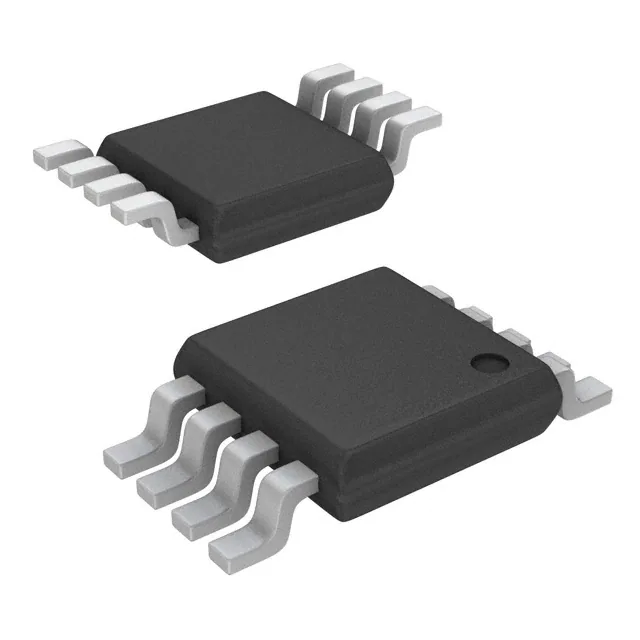
- Part No.:
- ATA5283P-6AQJ
- Manufacturer:
- Microchip Technology
- Category:
- RFID, RF Access, Monitoring ICs
- Package:
- 8-TSSOP, 8-MSOP (0.118", 3.00mm Width)
- Datasheet:
-
 ATA5283P-6AQJ.pdf
- Description:
- IC TPMS 125KHZ 8TSSOP
- Quantity:
- Payment:

- Shipping:

Inventory:1,391
Please send an inquiry. Send us your inquiry, and we will respond immediately.
Product details
Overview
ATA5283P-6AQJ from Microchip Technology (formerly Atmel) is an ultra-low-power 125 kHz ASK wake-up receiver IC designed for tire pressure monitoring (TPM) systems. It features 1 mVrms sensitivity, 1 µA standby current, 2–3.8 V supply range, up to 4 kbps data rate, and operation up to +125°C ambient with +175°C soldering tolerance.
For engineers reviewing the ATA5283P-6AQJ datasheet, ATA5283P-6AQJ pinout, ATA5283P-6AQJ application, or ATA5283P-6AQJ equivalent, this device serves as a dedicated LF wake-up front-end that enables microcontroller sleep-state activation via preamble detection - critical for battery-powered TPM sensor nodes requiring multi-year operational life.
Technical Context
The ATA5283P-6AQJ integrates an AGC amplifier, signal conditioner, preamble detector, and dual digital outputs (N_WAKEUP and N_DATA) in a single TSSOP8L package. Its input stage operates with coil impedance ranging from 143 kΩ (min) to 5 MΩ (max), supporting antenna Q-factors that influence timing delays (tON/tOFF = 40 µs typ).
It enters standby listen mode consuming only 1.5 µA at +25°C, activates on detection of ≥192 uninterrupted 125 kHz carrier periods, and requires up to 512 periods for AGC settling. The wake-up output (N_WAKEUP) is active-low and remains asserted until reset via the RESET pin.
Key Specifications
| Parameter | Value and Actual Design Meaning |
|---|---|
| Supply Voltage | 2 V to 3.8 V - compatible with standard lithium coin-cell and primary battery sources used in TPM sensors |
| Standby Current | 1.5 µA at +25°C - enables >10-year battery life in low-duty-cycle TPM applications |
| Wake-up Sensitivity | 1 mVrms - detects weak LF fields from vehicle TPMS base stations at extended distances |
| Preamble Detection | 192 carrier periods (125 kHz) - ensures robust noise immunity before wake-up assertion |
| AGC Settling Time | Up to 512 carrier periods - adapts gain dynamically to maintain signal integrity across varying coil coupling |
| Operating Temperature | –40°C to +125°C - qualified for under-wheel automotive environments |
| Data Rate | Up to 4 kbps ASK - supports standard TPM packet transmission including pressure/temperature payloads |
Pinout & Package
ATA5283P-6AQJ is housed in a Pb-free TSSOP8L package (3.0 × 4.9 mm, 0.65 mm pitch) with thermal resistance RthJA = 210 K/W.
| Pin/Terminal | Circuit Role | Design Meaning |
|---|---|---|
| COIL (Pin 1) | Antenna coil input | High-impedance analog input accepting 125 kHz ASK signals; input impedance varies from 143 kΩ to 5 MΩ depending on AGC state |
| TST1 / TST2 (Pins 2, 3) | Reserved test pins | No user connection required; left unconnected in production designs |
| VSS (Pin 4) | Signal ground | Reference node for all internal analog and digital circuitry; must be low-impedance and separated from noisy power return paths |
| RESET (Pin 5) | External reset input | CMOS-compatible active-high input; resets internal logic and forces return to standby listen mode |
| N_DATA (Pin 6) | Digital data output | Demodulated ASK envelope output; high during carrier presence, low during gaps; enabled only after wake-up |
| N_WAKEUP (Pin 7) | Active-low wake-up signal | Asserts low upon valid preamble end (first gap); used to interrupt MCU from deep sleep |
| VDD (Pin 8) | Battery voltage supply | Power input with POR threshold of 1.5–1.9 V; supports direct connection to 3 V coin cells without regulation |
Key Features
| Feature | Design Value |
|---|---|
| Ultra-low standby current | 1.5 µA at +25°C - minimizes quiescent drain on primary batteries in sealed TPM modules |
| Integrated AGC amplifier | Adjusts gain over 1 mVrms–1.1 Vrms input range - maintains consistent demodulation across variable antenna coupling |
| Preamble-based wake-up | Detects ≥192 continuous 125 kHz cycles - rejects short noise bursts and ensures reliable MCU activation |
| Coil input protection | Limiter clamps coil voltage to ±1.8 Vp at VDD = 3.8 V - prevents damage from ESD or induced transients |
| Reset-controlled standby re-entry | External RESET pulse returns IC to 1.5 µA mode - enables deterministic power management by host MCU |
Applications
| Tire Pressure Monitoring (TPM) Sensor Node | Automotive Keyless Entry Receiver |
|---|---|
Use Scenario: Mounted inside vehicle tire, powered by CR2032 battery, communicating with central ECU via UHF after wake-up. IC Role / Device Role / Timing Role: LF wake-up front-end that detects 125 kHz base station signal and asserts N_WAKEUP to awaken MCU and pressure sensor. Use Value: Enables >10-year battery life by keeping MCU in deep sleep until valid LF preamble is received. |
Use Scenario: Embedded in passive key fob to detect proximity of vehicle's LF field during approach. IC Role / Device Role / Timing Role: Low-power LF receiver triggering secure authentication sequence upon valid 125 kHz preamble detection. Use Value: Reduces fob power consumption while maintaining responsive entry functionality without manual button press. |
| Industrial Asset Tracking Tag | Medical Implant Wake-up Interface |
Use Scenario: Battery-powered tracking tag mounted on pallets or containers, activated only when scanned by handheld LF reader. IC Role / Device Role / Timing Role: Standby-mode receiver detecting LF interrogation pulses to initiate BLE or LoRaWAN transmission. Use Value: Extends tag operational lifetime beyond 5 years by eliminating continuous RF listening. |
Use Scenario: Miniaturized implantable sensor module requiring external LF activation to conserve internal energy reserves. IC Role / Device Role / Timing Role: Biocompatible LF wake-up interface enabling controlled activation of telemetry transmission. Use Value: Meets ISO 14708-1 safety requirements for low-power, externally triggered medical devices. |
Equivalent & Alternatives
The following parts are listed as comparable options for similar LF wake-up receiver applications.
| Alternative Part | Technical Difference | Application Difference | Selection Advice |
|---|---|---|---|
| ATA5780N-6AQJ | Higher integration: includes integrated 32-bit MCU and RF transmitter; 2.7–3.6 V supply; 2.5 µA standby | Replaces discrete ATA5283P-6AQJ + MCU + RF Tx in full TPM SoC designs | Select when consolidating system BOM and reducing PCB footprint is prioritized over independent wake-up control |
| MAX1472EVKIT+ | Programmable ASK transmitter evaluation platform; no native wake-up receiver function; requires external comparator and logic | Suitable for custom LF wake-up prototyping but lacks integrated preamble detection and AGC | Select only for development-stage validation where flexibility outweighs production readiness and power efficiency |
Compared with ATA5283P-6AQJ, ATA5780N-6AQJ reduces component count by integrating processing and RF transmission but increases minimum supply voltage and standby current; MAX1472EVKIT+ offers design flexibility but demands additional external circuitry and lacks certified automotive qualification.
Availability
ATA5283P-6AQJ is available at Aetrix Electronics and suitable for tire pressure monitoring, automotive keyless entry, and industrial asset tracking applications requiring stable component supply, long-term lifecycle support, and AEC-Q100-aligned reliability.
Supply support for ATA5283P-6AQJ includes scheduled delivery planning, volume procurement assistance, BOM continuity management, traceable sourcing, and lifecycle availability coordination for OEM customers, industrial embedded developers, connected-device designers, and electronics production programs.
Manufacturer
Microchip Technology acquired Atmel in 2016 and maintains its automotive-grade analog and RF product lines, emphasizing reliability, longevity, and automotive qualification compliance.
The ATA5283P-6AQJ belongs to Microchip's legacy Atmel automotive RF receiver family, engineered specifically for ultra-low-power LF wake-up in harsh-temperature, battery-constrained environments like TPMS and passive entry systems.
FAQ
What is the primary function of the ATA5283P-6AQJ in a tire pressure monitoring system?
The ATA5283P-6AQJ acts as the dedicated 125 kHz wake-up receiver in a TPM sensor node. It continuously monitors the antenna coil in ultra-low-power standby mode (1.5 µA), detects a valid LF preamble from the vehicle's base station, and asserts the N_WAKEUP signal to awaken the microcontroller and pressure/temperature sensors - enabling precise, energy-efficient activation only when needed.
Does the ATA5283P-6AQJ require external components to operate as a wake-up receiver?
Yes, the ATA5283P-6AQJ requires an external resonant LC antenna coil (typically ~125 kHz tuned) connected to the COIL pin. No additional amplifiers or demodulators are needed - the IC integrates AGC, preamble detection, and digital outputs. A pull-up resistor on RESET and proper decoupling on VDD/VSS are recommended per the datasheet layout guidelines.
How does the ATA5283P-6AQJ handle varying antenna coupling conditions?
The ATA5283P-6AQJ uses an integrated digital Automatic Gain Control (AGC) that adjusts input stage gain based on detected signal amplitude. With a dynamic input range of 1 mVrms to 1.1 Vrms and adaptive settling time (up to 512 carrier periods), it maintains reliable preamble detection and data demodulation across diverse mounting positions and tire conditions affecting coil coupling.
Can the ATA5283P-6AQJ operate reliably at elevated temperatures inside a vehicle tire?
Yes - the ATA5283P-6AQJ is specified for continuous operation from –40°C to +125°C ambient and can withstand +175°C for 30 minutes during reflow soldering. Its low-current design, thermal resistance (RthJA = 210 K/W), and automotive-qualified process ensure stable performance in the thermally demanding environment of a rotating tire.
What is the role of the RESET pin on the ATA5283P-6AQJ, and how should it be used in a TPM design?
The RESET pin on the ATA5283P-6AQJ is an active-high CMOS input that forces the IC back into ultra-low-power standby listen mode. In a TPM design, the microcontroller asserts RESET after completing pressure measurement and UHF transmission - ensuring the ATA5283P-6AQJ resumes 1.5 µA monitoring and avoids unnecessary current draw during idle periods.
ATA5283P-6AQJ Specifications
- Product attributes
- Attribute value
- Manufacturer:
- Microchip Technology
- Series:
- -
- Package/Case:
- 8-TSSOP, 8-MSOP (0.118", 3.00mm Width)
- Packaging:
- Tape & Reel (TR)
- Product Status:
- Obsolete
- Type:
- TPMS
- Frequency:
- 125kHz
- Standards:
- -
- Interface:
- -
- Voltage - Supply:
- 2V ~ 3.8V
- Operating Temperature:
- -40°C ~ 125°C
- Grade:
- -
- Qualification:
- -
- Mounting Type:
- Surface Mount
- Supplier Device Package:
- 8-TSSOP
ATA5283P-6AQJ FAQ
1.How can I place an order for ATA5283P-6AQJ through Aetrix?
Please submit a Request for Quotation (RFQ) for ATA5283P-6AQJ on Aetrix. Our sales agent will provide a competitive quotation and guide you through the order confirmation once you accept the terms.
2.Are the price and stock information for ATA5283P-6AQJ reliable?
The price and inventory of ATA5283P-6AQJ are updated periodically and may fluctuate due to market conditions. Stock and pricing data are typically refreshed every 24 hours. Quotation validity for ATA5283P-6AQJ is usually 5 days.
3.What payment methods are accepted for ATA5283P-6AQJ?
We accept Wire Transfer, PayPal, Credit Card, Western Union, MoneyGram, and Escrow for ATA5283P-6AQJ transactions.
Note: Certain payment methods may incur a processing fee.
4.How is shipping managed for ATA5283P-6AQJ?
ATA5283P-6AQJ orders can be shipped via leading logistics carriers, including DHL, UPS, FedEx, TNT, or Registered Mail.
Once your ATA5283P-6AQJ order is processed, you will receive an email with the shipment details and tracking number.
Note: Tracking information may take up to 24 hours to appear. Express delivery typically takes 3–5 business days.
5.How can I obtain technical support or documentation for ATA5283P-6AQJ?
For technical support, including ATA5283P-6AQJ datasheets, pinout diagrams, or application guidance, please contact our engineering support team. They can provide detailed documentation and assistance for your ATA5283P-6AQJ requirements.
6.How does Aetrix verify that ATA5283P-6AQJ is sourced from the original manufacturer or authorized distributors?
All ATA5283P-6AQJ products on Aetrix are procured from qualified distributors and authorized channels. Our dedicated quality assurance team conducts strict verification, including traceability checks and, if necessary, third-party testing. This ensures that ATA5283P-6AQJ meets industry standards.
7.What is the process for return or replacement of ATA5283P-6AQJ?
All ATA5283P-6AQJ units undergo pre-shipment inspection (PSI). If there is an issue with ATA5283P-6AQJ, returns or replacements are accepted under the following conditions:
1.Quantity discrepancies, incorrect items, or visible external defects (such as breakage or corrosion), acknowledged by Aetrix.
2.The issue is reported within 90 days of delivery.
3.The ATA5283P-6AQJ part is unused and in its original packaging.
Return procedure for ATA5283P-6AQJ:
1.Submit a request within 90 days.
2.Obtain a Return Material Authorization (RMA) from Aetrix.
ATA5283P-6AQJ Tags

-
SL2S2602FTBX
NXP Semiconductors
-
ST25DV04K-IER6S3
STMicroelectronics
-
ST25DV04K-IER6C3
STMicroelectronics
-
LXMSJZNCMD-217
Murata Electronics

-
NT3H2111W0FTTJ
NXP Semiconductors
-
NT3H2111W0FHKH
NXP Semiconductors
-
M24LR04E-RMC6T/2
STMicroelectronics
-
ST25DV04KC-JF6D3
STMicroelectronics
-
ST25DV64KC-IE6S3
STMicroelectronics
-
ST25DV64K-IER6T3
STMicroelectronics
-
NT3H2211W0FTTJ
NXP Semiconductors
-
NT3H2211W0FHKH
NXP Semiconductors
Tech Hub

TTL and CMOS logic families differ in thresholds, loading, output drive, power and timing. This engineering guide compares 74HC and 74HCT, calculates noise margins and checks 3.3 V/5 V compatibility.

A practical engineering guide to 3.3V and 5V logic compatibility, input thresholds, resistor dividers, translator ICs, MOSFET level shifting, I2C pull-ups, timing limits and power-sequencing risks.

The 74HC595 uses push-pull logic outputs, while the TPIC6B595 uses 50 V open-drain DMOS sinks for higher-power loads. This guide compares timing, current limits, 3.3 V interfacing, load wiring, thermal…

The 74HC595 converts serial data into eight stable parallel outputs. This guide covers pin functions, shift and storage timing, OE and MR behavior, drive-current limits, cascading, voltage compatibilit…

A technical comparison of level-sensitive latches and edge-triggered flip-flops, covering timing windows, setup and hold limits, master–slave operation, time borrowing, race-through, HDL inference and…

A D latch stores one bit while Enable controls when data can pass. This reference covers gate-level operation, truth tables, transparency, setup and hold timing, LE versus OE, common ICs and practical …

An SR latch stores one bit through cross-coupled feedback. This engineering reference covers NOR and NAND implementations, truth tables, forbidden-state recovery, gated operation, switch debouncing, fa…

Latch circuits retain one bit through feedback. This technical reference covers SR and D latches, truth tables, transparency, timing limits, latch-versus-flip-flop behavior, applications and common log…

An engineering guide to LED driver operation, constant-current and constant-voltage outputs, linear and switching topologies, dimming, IC selection, calculations, replacement compatibility, and fault c…

Operational amplifier guide covering op amp basics, feedback, ideal vs real op amps, common configurations, buffer circuits, offset, bias current, gain-bandwidth, slew rate, rail-to-rail limits and sel…


