
 My Inquiry
 My Account


Microchip Technology ATA556711-TASY
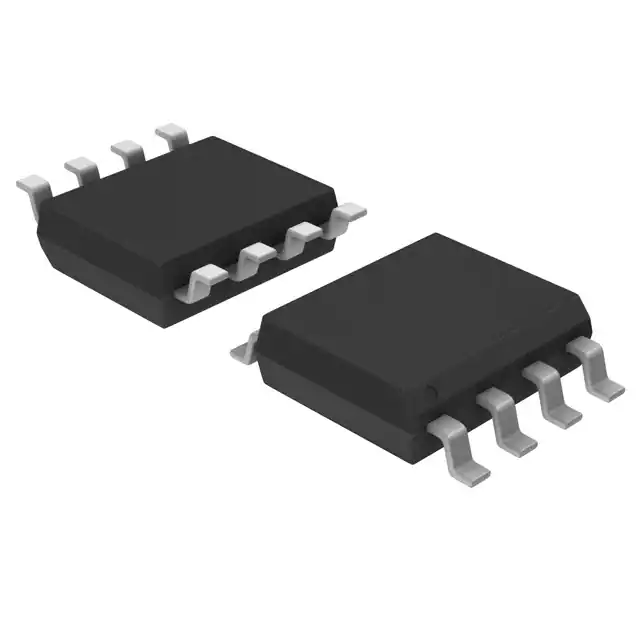
- Part No.:
- ATA556711-TASY
- Manufacturer:
- Microchip Technology
- Category:
- RFID, RF Access, Monitoring ICs
- Package:
- 8-SOIC (0.154", 3.90mm Width)
- Datasheet:
-
 ATA556711-TASY.pdf
- Description:
- IC RFID TRANSP 100-150KHZ 8SO
- Quantity:
- Payment:

- Shipping:

Inventory:4,209
Please send an inquiry. Send us your inquiry, and we will respond immediately.
Product details
Overview
ATA556711-TASY from Microchip Technology (formerly Atmel) is a contactless read/write RFID identification IC operating at 125 kHz, designed as a passive transponder tag with integrated 330-bit EEPROM, on-chip resonant capacitor (75 pF mask option), and configurable modulation support including FSK, PSK, Manchester, Bi-phase, and NRZ. It serves as the data-bearing element in low-frequency RFID systems for access control, asset tracking, and industrial identification.
For engineers reviewing the ATA556711-TASY datasheet, ATA556711-TASY pinout, ATA556711-TASY application, or ATA556711-TASY equivalent, key selection considerations include its e5550/T5557 binary compatibility, password-protected write capability, Answer-On-Request (AOR) mode for anticollision, 67 ms POR delay, and fast write method (5 Kbps).
Technical Context
The ATA556711-TASY implements a fully integrated analog front end (AFE) with coil-based power harvesting, clock extraction from the 125 kHz RF field, and resistive load modulation between Coil 1 and Coil 2 for tag-to-reader communication. Its controller executes opcode-driven command sequences (e.g., "10", "11", "00") and loads configuration from EEPROM Block 0 at power-on.
It supports two operational modes: regular-read (cyclic transmission of Blocks 1–MAXBLK) and block-read (direct access to a single block), both configurable via the 32-bit EEPROM configuration register. Extended Mode (X-mode), enabled by Master Key = 6 or 9, adds binary-programmable data rates (RF/(2n+2)), inverse data output, sequence start marker, and fast write timing.
Key Specifications
| Parameter | Value and Actual Design Meaning |
|---|---|
| Operating Frequency | 125 kHz nominal RF carrier; supports 100–150 kHz range per specification |
| Memory Capacity | 330-bit EEPROM (10 × 33-bit blocks), including 32-bit password in Block 7 and 64-bit traceability data in Page 1 Blocks 1–2 |
| Data Rate Options | Binary-selectable from RF/2 to RF/128; also fixed e5550 rates (RF/8, RF/16, RF/32, RF/40, RF/50, RF/64, RF/100, RF/128) |
| Modulation Schemes | FSK, PSK, Manchester, Bi-phase ('50 & '57), NRZ - all configurable per block and compatible with e5550 protocol |
| Write Speed | Fast write mode: 5 Kbps (vs. standard 2 Kbps); uses reduced gap intervals (d0 = 8–15 FC, d1 = 24–31 FC) |
| POR Delay | Configurable up to 67 ms (8190 × 8 µs field clocks) to ensure stable initialization before modulation begins |
| On-chip Capacitor | 75 pF resonant capacitor available as mask option - eliminates need for external tuning capacitor in many antenna designs |
Pinout & Package
ATA556711-TASY is housed in a 6-pin TSOP-I package (3.0 × 3.0 × 0.6 mm). The device interfaces exclusively through two coil terminals; no VDD/VSS or digital I/O pins are present. Power and bidirectional communication occur entirely via the external antenna coil connected across Coil 1 and Coil 2.
| Pin/Terminal | Circuit Role | Design Meaning |
|---|---|---|
| Coil 1 | RF interface terminal | Anode-side connection to external antenna coil; part of resonant LC tank with on-chip 75 pF capacitor (if enabled) |
| Coil 2 | RF interface terminal | Cathode-side connection to external antenna coil; forms complete path for rectified DC supply generation and load modulation |
| VSS | Ground reference | Internal substrate reference; tied to Coil 2 internally in standard configuration - no separate external connection required |
Key Features
| Feature | Design Value |
|---|---|
| e5550/e5551/T5557 Binary Compatibility | Enables drop-in replacement in legacy 125 kHz RFID reader ecosystems without firmware or protocol changes |
| Answer-On-Request (AOR) Mode | Allows selective wake-up of individual tags in dense environments using unique 32-bit passwords - essential for reliable anticollision |
| Configurable MAXBLK Register | Limits cyclic read transmission to Blocks 1–7; prevents unintended exposure of password (Block 7) or traceability data (Page 1) |
| OTP Functionality | When OTP bit + Master Key = 6 are set, all memory blocks become permanently write-locked - ensures immutable tag identity |
| Sequence Terminator / Start Marker | Provides reader synchronization via standardized damping patterns (e.g., "1111" for ST, "01"/"10" for SSR) - improves decode reliability for PSK/FSK |
Applications
| Access Control Systems | Industrial Asset Tracking |
|---|---|
|
Use Scenario: Secure door entry using ISO/IEC 11784/11785-compliant RFID readers and employee badges. IC Role / Device Role / Timing Role: Passive transponder tag storing encrypted UID and access privileges; modulates reader's 125 kHz field to transmit data upon interrogation. Use Value: Password protection and AOR mode prevent unauthorized cloning and enable multi-tag polling in shared reader zones. |
Use Scenario: Lifetime traceability of high-value tools, jigs, or calibration equipment in automotive manufacturing cells. IC Role / Device Role / Timing Role: Embedded tag providing factory-programmed 64-bit traceability data (ACL, MFC, LotID, Wafer#, Die#) readable via standard ISO commands. Use Value: On-chip traceability structure complies with ISO/IEC 15963-1; eliminates need for external serialization logic or host database lookups. |
| Animal Identification | Smart Packaging Authentication |
|
Use Scenario: Implantable or ear-tag RFID for livestock management under ISO/IEC 11784/11785 standards. IC Role / Device Role / Timing Role: Low-power, coil-coupled IDIC® delivering animal ID and health metadata; operates reliably in metallic or high-moisture environments. Use Value: 75 pF on-chip capacitor simplifies antenna tuning for miniaturized implants; extended POR delay accommodates slow field ramp-up during handheld scanning. |
Use Scenario: Tamper-evident packaging for pharmaceuticals or luxury goods, where tag authenticity must be verified at point-of-sale. IC Role / Device Role / Timing Role: Read/write tag storing batch number, expiry date, and cryptographic challenge-response tokens written during packaging line integration. Use Value: Fast write (5 Kbps) enables high-throughput encoding on production lines; lock-bit per block prevents post-encoding data alteration. |
Equivalent & Alternatives
The following parts are listed as comparable options for similar contactless R/W IDIC applications.
| Alternative Part | Technical Difference | Application Difference | Selection Advice |
|---|---|---|---|
| T5557-TS | No OTP mode; fixed e5550 data rates only; no AOR or extended mode features; 264-bit EEPROM (8 × 33-bit) | Lacks password-protected write and anticollision wake-up - suitable only for open, single-tag environments | Choose T5557-TS for cost-sensitive, non-secure legacy deployments where extended functionality is unnecessary |
| ATA5577-TSY | Higher memory (1024-bit EEPROM); supports 134.2 kHz; includes enhanced error detection and longer POR delay (up to 134 ms) | Built for veterinary ISO 11784 full-duplex compliance; not binary-compatible with e5550 protocol stack | Choose ATA5577-TSY when migrating to ISO 134.2 kHz or requiring >330-bit user storage - not a direct functional substitute |
Compared with T5557-TS and ATA5577-TSY, the ATA556711-TASY uniquely balances e5550 compatibility, password security, AOR anticollision, and fast write speed within the 125 kHz band - making it optimal for upgrade paths from legacy T555x systems requiring enhanced data integrity.
Availability
ATA556711-TASY is available at Aetrix Electronics and suitable for access control systems, industrial asset tracking, animal identification, smart packaging authentication, and ISO/IEC 11784/11785-compliant RFID infrastructure requiring stable component supply and long-term lifecycle support.
Supply support for ATA556711-TASY includes scheduled delivery planning, volume procurement assistance, BOM continuity management, traceable sourcing, and lifecycle availability coordination for OEM customers, industrial embedded developers, connected-device designers, and electronics production programs.
Manufacturer
Microchip Technology acquired Atmel in 2016 and maintains the ATA5567 family as part of its secure RFID solutions portfolio, emphasizing robustness, regulatory compliance, and interoperability in industrial and identification markets.
The ATA5567 product line was designed specifically for contactless, coil-powered 125 kHz identification applications requiring field-programmable memory, protocol flexibility, and tamper-resistant configuration - targeting access control, logistics, and animal ID markets.
FAQ
What is the primary function of the ATA556711-TASY in an RFID system?
The ATA556711-TASY functions as a passive, coil-powered RFID transponder tag operating at 125 kHz. It stores and transmits identification data via load modulation of the reader's RF field, supporting read/write operations, password protection, and anticollision via Answer-On-Request mode. Its role is strictly that of a data-bearing endpoint - not a reader or controller - and it requires no external power source.
Does the ATA556711-TASY support ISO/IEC 11784 and 11785 standards?
Yes, the ATA556711-TASY is configurable for ISO/IEC 11784/11785 compliance via its extended mode settings and memory layout. Its traceability data structure (ACL = E0h, MFC = 15h) conforms to ISO/IEC 15963-1, and its modulation schemes - including Bi-phase and FSK variants - align with the physical layer requirements of those standards when configured appropriately in Block 0.
How does the fast write mode of the ATA556711-TASY improve system throughput?
The ATA556711-TASY fast write mode reduces pulse interval encoding gaps - using 12 field clocks for "0" and 27 for "1" - enabling 5 Kbps write speed versus 2 Kbps in standard mode. This cuts programming time per block by ~60%, allowing higher encoding throughput on automated packaging lines and reducing reader dwell time during field-based commissioning.
Can the ATA556711-TASY be used without an external resonant capacitor?
Yes. The ATA556711-TASY offers a mask-programmable 75 pF on-chip resonant capacitor, eliminating the need for an external capacitor in many antenna designs. When this option is selected (as indicated by the "-TASY" suffix), only the coil and IC are required to form a functional LC tank - simplifying PCB layout and reducing BOM count for compact or implantable tags.
What happens if the lock bit is set on a memory block in the ATA556711-TASY?
Once the lock bit (Bit 0) of any 33-bit block is programmed to "1", that entire block - including the lock bit itself - becomes permanently unalterable via the RF field. No subsequent write, protected write, or test-mode command can modify its contents. This hardware-level write protection ensures data immutability for critical fields like traceability or configuration registers.
ATA556711-TASY Specifications
- Product attributes
- Attribute value
- Manufacturer:
- Microchip Technology
- Series:
- ATA5567
- Package/Case:
- 8-SOIC (0.154", 3.90mm Width)
- Packaging:
- Tube
- Product Status:
- Obsolete
- Type:
- RFID Transponder
- Frequency:
- 100kHz ~ 150kHz
- Standards:
- ISO 11784, ISO 11785
- Interface:
- -
- Voltage - Supply:
- 4.2V ~ 4.8V
- Operating Temperature:
- -40°C ~ 85°C
- Grade:
- -
- Qualification:
- -
- Mounting Type:
- Surface Mount
- Supplier Device Package:
- 8-SO
ATA556711-TASY FAQ
1.How can I place an order for ATA556711-TASY through Aetrix?
Please submit a Request for Quotation (RFQ) for ATA556711-TASY on Aetrix. Our sales agent will provide a competitive quotation and guide you through the order confirmation once you accept the terms.
2.Are the price and stock information for ATA556711-TASY reliable?
The price and inventory of ATA556711-TASY are updated periodically and may fluctuate due to market conditions. Stock and pricing data are typically refreshed every 24 hours. Quotation validity for ATA556711-TASY is usually 5 days.
3.What payment methods are accepted for ATA556711-TASY?
We accept Wire Transfer, PayPal, Credit Card, Western Union, MoneyGram, and Escrow for ATA556711-TASY transactions.
Note: Certain payment methods may incur a processing fee.
4.How is shipping managed for ATA556711-TASY?
ATA556711-TASY orders can be shipped via leading logistics carriers, including DHL, UPS, FedEx, TNT, or Registered Mail.
Once your ATA556711-TASY order is processed, you will receive an email with the shipment details and tracking number.
Note: Tracking information may take up to 24 hours to appear. Express delivery typically takes 3–5 business days.
5.How can I obtain technical support or documentation for ATA556711-TASY?
For technical support, including ATA556711-TASY datasheets, pinout diagrams, or application guidance, please contact our engineering support team. They can provide detailed documentation and assistance for your ATA556711-TASY requirements.
6.How does Aetrix verify that ATA556711-TASY is sourced from the original manufacturer or authorized distributors?
All ATA556711-TASY products on Aetrix are procured from qualified distributors and authorized channels. Our dedicated quality assurance team conducts strict verification, including traceability checks and, if necessary, third-party testing. This ensures that ATA556711-TASY meets industry standards.
7.What is the process for return or replacement of ATA556711-TASY?
All ATA556711-TASY units undergo pre-shipment inspection (PSI). If there is an issue with ATA556711-TASY, returns or replacements are accepted under the following conditions:
1.Quantity discrepancies, incorrect items, or visible external defects (such as breakage or corrosion), acknowledged by Aetrix.
2.The issue is reported within 90 days of delivery.
3.The ATA556711-TASY part is unused and in its original packaging.
Return procedure for ATA556711-TASY:
1.Submit a request within 90 days.
2.Obtain a Return Material Authorization (RMA) from Aetrix.
ATA556711-TASY Tags

-
SL2S2602FTBX
NXP Semiconductors
-
ST25DV04K-IER6S3
STMicroelectronics
-
ST25DV04K-IER6C3
STMicroelectronics
-
LXMSJZNCMD-217
Murata Electronics

-
NT3H2111W0FTTJ
NXP Semiconductors
-
NT3H2111W0FHKH
NXP Semiconductors
-
M24LR04E-RMC6T/2
STMicroelectronics
-
ST25DV04KC-JF6D3
STMicroelectronics
-
ST25DV64KC-IE6S3
STMicroelectronics
-
ST25DV64K-IER6T3
STMicroelectronics
-
NT3H2211W0FTTJ
NXP Semiconductors
-
NT3H2211W0FHKH
NXP Semiconductors
Tech Hub

TTL and CMOS logic families differ in thresholds, loading, output drive, power and timing. This engineering guide compares 74HC and 74HCT, calculates noise margins and checks 3.3 V/5 V compatibility.

A practical engineering guide to 3.3V and 5V logic compatibility, input thresholds, resistor dividers, translator ICs, MOSFET level shifting, I2C pull-ups, timing limits and power-sequencing risks.

The 74HC595 uses push-pull logic outputs, while the TPIC6B595 uses 50 V open-drain DMOS sinks for higher-power loads. This guide compares timing, current limits, 3.3 V interfacing, load wiring, thermal…

The 74HC595 converts serial data into eight stable parallel outputs. This guide covers pin functions, shift and storage timing, OE and MR behavior, drive-current limits, cascading, voltage compatibilit…

A technical comparison of level-sensitive latches and edge-triggered flip-flops, covering timing windows, setup and hold limits, master–slave operation, time borrowing, race-through, HDL inference and…

A D latch stores one bit while Enable controls when data can pass. This reference covers gate-level operation, truth tables, transparency, setup and hold timing, LE versus OE, common ICs and practical …

An SR latch stores one bit through cross-coupled feedback. This engineering reference covers NOR and NAND implementations, truth tables, forbidden-state recovery, gated operation, switch debouncing, fa…

Latch circuits retain one bit through feedback. This technical reference covers SR and D latches, truth tables, transparency, timing limits, latch-versus-flip-flop behavior, applications and common log…

An engineering guide to LED driver operation, constant-current and constant-voltage outputs, linear and switching topologies, dimming, IC selection, calculations, replacement compatibility, and fault c…

Operational amplifier guide covering op amp basics, feedback, ideal vs real op amps, common configurations, buffer circuits, offset, bias current, gain-bandwidth, slew rate, rail-to-rail limits and sel…


