
 My Inquiry
 My Account


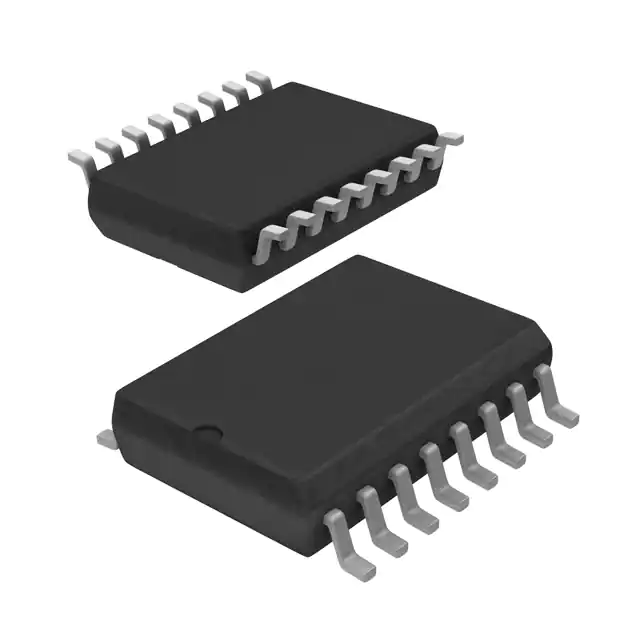
STMicroelectronics L3GD20TR
.jpg)
- Part No.:
- L3GD20TR
- Manufacturer:
- STMicroelectronics
- Category:
- Gyroscopes
- Package:
- 16-VFLGA
- Datasheet:
-
 L3GD20TR.pdf
- Description:
- IC MEMS MOTION SENSOR 16-LGA
- Quantity:
- Payment:

- Shipping:

Inventory:2,308
Please send an inquiry. Send us your inquiry, and we will respond immediately.
Product details
Overview
L3GD20TR from STMicroelectronics is a low-power, three-axis digital output gyroscope IC designed for motion sensing in compact embedded systems. It delivers angular rate measurements across ±250/±500/±2000 dps full-scale ranges with 16-bit resolution, I²C/SPI digital interface, and integrated temperature sensor - enabling precise orientation tracking in handheld gaming controllers and robotics navigation units.
For engineers reviewing the L3GD20TR datasheet, L3GD20TR pinout, L3GD20TR application, or L3GD20TR equivalent, key selection considerations include user-selectable bandwidth filtering, embedded FIFO buffer operation modes (bypass/stream/FIFO), interrupt-driven data-ready signaling, and dual-voltage IO compatibility (1.8 V logic with 2.4–3.6 V supply).
Technical Context
The L3GD20TR integrates a MEMS sensing element fabricated via ST's proprietary micro-machining process and a CMOS interface IC trimmed to match sensor characteristics. Its digital architecture includes configurable high-pass and low-pass filters, programmable interrupt generation (INT1), and a status register reporting data-ready (DRDY) and FIFO events (INT2).
It supports four FIFO operational modes - bypass, stream, FIFO, and hybrid transitions - with watermark/overrun/empty flags. Communication is handled via either I²C (standard/fast mode) or 4-wire/3-wire SPI, with dedicated registers (CTRL_REG1–CTRL_REG5, FIFO_CTRL_REG, INT1_CFG) enabling full configuration of sampling, power, and interrupt behavior.
Key Specifications
| Parameter | Value and Actual Design Meaning |
|---|---|
| Full Scale Range | ±250 / ±500 / ±2000 dps - selectable per application; determines resolution (8.75/17.5/70 mdps/digit) and dynamic range trade-off |
| Output Resolution | 16-bit angular rate data - enables sub-degree-per-second precision in low-noise applications like VR head tracking |
| Temperature Output | 8-bit digital temperature reading - supports on-board thermal compensation without external sensors |
| Supply Voltage | 2.4 V to 3.6 V - compatible with single-cell Li-ion and regulated 3.3 V rails in portable electronics |
| I/O Voltage Level | 1.8 V tolerant - allows direct interfacing with low-voltage MCUs (e.g., STM32L series) without level shifters |
| Operating Temperature | −40 °C to +85 °C - validated for industrial and automotive cabin environments |
| Shock Survivability | 10,000 g - ensures robustness during drop testing and mechanical stress in consumer devices |
Pinout & Package
L3GD20TR is housed in a 4 mm × 4 mm × 1 mm plastic land grid array (LGA-16) package with exposed pad for thermal dissipation and mechanical stability.
| Pin/Terminal | Circuit Role | Design Meaning |
|---|---|---|
| 1 Vdd_IO | I/O power supply | Decoupled with 100 nF capacitor; powers digital interface pins independently from core Vdd |
| 2 SCL/SPC | I²C clock / SPI clock | Shared pin: SCL in I²C mode, SPC in SPI mode; requires mode selection via CS pin |
| 3 SDA/SDI/SDO | I²C data / SPI input / 3-wire output | Tri-function pin: bidirectional I²C data, SPI serial input, or 3-wire serial output |
| 4 SDO/SA0 | SPI output / I²C address LSB | SDO in SPI mode; SA0 bit sets I²C slave address (0x68 or 0x69) when CS=1 |
| 5 CS | Interface mode select | CS=1 → I²C enabled; CS=0 → SPI enabled; critical for protocol initialization |
| 6 DRDY/INT2 | Data ready / FIFO interrupt | Asserts on new sample availability or FIFO watermark/overrun/empty condition |
| 7 INT1 | Programmable interrupt | Configurable via INT1_CFG register for motion detection, threshold crossing, or FIFO events |
| 13 GND | Ground reference | Primary analog/digital ground connection; must be low-impedance for noise immunity |
| 16 Vdd | Main supply | Decoupled with 100 nF + 10 µF capacitors; powers MEMS element and core logic |
Key Features
| Feature | Design Value |
|---|---|
| Embedded FIFO buffer | Supports 32-level FIFO with bypass/stream/FIFO modes - reduces host MCU polling overhead and enables burst reads |
| User-selectable filter bandwidth | Configurable low-pass and high-pass filters - suppresses vibration noise in robotic arm control or stabilizes GPS-augmented navigation |
| Dual interrupt outputs | DRDY/INT2 for data flow control and INT1 for event-triggered wake-up - enables ultra-low-power sleep mode operation |
| Integrated temperature sensor | 8-bit output calibrated across −40 °C to +85 °C - permits real-time zero-rate offset correction without external components |
| Low-power operation | 6.1 mA active current, 5 µA power-down mode - extends battery life in wearables and remote controllers |
Applications
| Game Controller Motion Sensing | Robot Arm Joint Feedback |
|---|---|
|
Use Scenario: Real-time tilt and rotation tracking in wireless gamepads and VR motion controllers. IC Role / Device Role / Timing Role: Primary angular rate sensor feeding orientation data to host MCU at 100 Hz–1 kHz update rates. Use Value: 16-bit resolution and low latency (<5 ms) enable responsive, jitter-free gesture recognition and immersive interaction. |
Use Scenario: Closed-loop joint angle monitoring in collaborative robot arms and servo-driven manipulators. IC Role / Device Role / Timing Role: High-shock-tolerant feedback element providing real-time angular velocity to motor control loop. Use Value: ±2000 dps full scale and 10,000 g survivability ensure reliable operation during rapid acceleration/deceleration cycles. |
| GPS-Aided Navigation Unit | Smart Appliance Stabilization |
|
Use Scenario: Dead-reckoning augmentation in automotive infotainment and portable navigation systems during GPS signal loss. IC Role / Device Role / Timing Role: Inertial backup sensor fused with GNSS data via Kalman filter running on application processor. Use Value: Embedded temperature sensor and factory-trimmed zero-rate level minimize drift over temperature, preserving heading accuracy for >30 s without GPS. |
Use Scenario: Vibration suppression and leveling control in smart washing machines and robotic vacuum cleaners. IC Role / Device Role / Timing Role: Low-noise angular rate monitor detecting drum imbalance or floor slope for adaptive motor response. Use Value: Configurable high-pass filter removes gravity bias and low-frequency mechanical resonance, isolating true motion events. |
Equivalent & Alternatives
The following parts are listed as comparable options for similar three-axis gyroscope applications.
| Alternative Part | Technical Difference | Application Difference | Selection Advice |
|---|---|---|---|
| LSM6DS3TR | Combines 3-axis gyroscope + 3-axis accelerometer in same package; higher current (1.5 mA gyro only); supports machine learning core | Requires tighter PCB layout due to integrated IMU; better suited for context-aware motion classification | Select when system needs fused inertial data and has processing capability for sensor fusion algorithms |
| ICM-20602 | Higher performance: 16-bit gyro + 16-bit accel; lower noise density (0.005 dps/√Hz); supports digital low-pass filter up to 32 kHz | Targets high-end drones and stabilization gimbals requiring sub-0.1° RMS accuracy | Select when angular random walk or bias instability specifications exceed L3GD20TR's capabilities |
Compared with LSM6DS3TR and ICM-20602, the L3GD20TR offers lower system cost and simpler integration for standalone gyro applications where accelerometer fusion is unnecessary and power budget is constrained below 10 mA.
Availability
L3GD20TR is available at Aetrix Electronics and suitable for gaming peripherals, robotics motion control, and GPS-augmented navigation systems requiring stable component supply across extended temperature ranges and long production lifecycles.
Supply support for L3GD20TR includes scheduled delivery planning, volume procurement assistance, BOM continuity management, traceable sourcing, and lifecycle availability coordination for OEM customers, industrial embedded developers, connected-device designers, and electronics production programs.
Manufacturer
STMicroelectronics is a global semiconductor leader headquartered in Geneva, Switzerland, specializing in MEMS, power management, microcontrollers, and automotive-grade ICs.
The L3GD20TR belongs to ST's iNEMO inertial module family, engineered for cost-sensitive, space-constrained consumer and industrial motion-sensing applications demanding reliability, low power, and seamless digital integration.
FAQ
What communication protocols does the L3GD20TR support?
The L3GD20TR supports both I²C (up to 400 kHz fast mode) and SPI (4-wire and 3-wire configurations) interfaces. Protocol selection is controlled by the CS pin: high for I²C, low for SPI. Register maps and timing diagrams are fully documented in Sections 5.1 and 5.2 of the datasheet, including SCL/SPC clock requirements and SDA/SDI setup/hold times.
How is the full-scale range selected on the L3GD20TR?
The full-scale range (±250/±500/±2000 dps) is configured via bits FS1–FS0 in CTRL_REG4 (address 0x23). Writing 00b selects ±250 dps (8.75 mdps/digit), 01b selects ±500 dps (17.5 mdps/digit), and 11b selects ±2000 dps (70 mdps/digit). No hardware modification is required - all scaling is software-defined through register writes.
Does the L3GD20TR require external passive components?
Yes - decoupling capacitors are mandatory: 100 nF on Vdd_IO (Pin 1), 100 nF + 10 µF on Vdd (Pin 16), and ≥1 nF on Pin 14 (reserved, connected to Vdd). These ensure stable power delivery and reduce noise coupling into the MEMS sensing element and ADC path, directly impacting zero-rate stability and measurement repeatability.
Can the L3GD20TR operate in low-power modes?
Yes - it features multiple power modes controlled by PD bit in CTRL_REG1: power-down (5 µA), sleep (10 µA), and active (6.1 mA typical). Sleep mode retains register settings and enables fast wake-up (<100 µs), while power-down disables all circuitry except the I²C/SPI interface for configuration. Both modes support interrupt-driven wake-up via INT1 or DRDY.
L3GD20TR Specifications
- Product attributes
- Attribute value
- Manufacturer:
- STMicroelectronics
- Series:
- -
- Package/Case:
- 16-VFLGA
- Packaging:
- Tape & Reel (TR)
- Product Status:
- Obsolete
- Type:
- Digital
- Axis:
- X (Pitch), Y (Roll), Z (Yaw)
- Range °/s:
- ±250, 500, 2000
- Sensitivity (LSB/(°/s)):
- 8.75 ~ 70
- Sensitivity (mV/°/s):
- -
- Bandwidth:
- 47.5Hz ~ 380Hz
- Output Type:
- I2C, SPI
- Voltage - Supply:
- 2.4V ~ 3.6V
- Current - Supply:
- 6.1 mA
- Features:
- Adjustable Bandwidth, Selectable Scale, Sleep Mode, Temperature Sensor
- Operating Temperature:
- -40°C ~ 85°C
- Grade:
- -
- Qualification:
- -
L3GD20TR FAQ
1.How can I place an order for L3GD20TR through Aetrix?
Please submit a Request for Quotation (RFQ) for L3GD20TR on Aetrix. Our sales agent will provide a competitive quotation and guide you through the order confirmation once you accept the terms.
2.Are the price and stock information for L3GD20TR reliable?
The price and inventory of L3GD20TR are updated periodically and may fluctuate due to market conditions. Stock and pricing data are typically refreshed every 24 hours. Quotation validity for L3GD20TR is usually 5 days.
3.What payment methods are accepted for L3GD20TR?
We accept Wire Transfer, PayPal, Credit Card, Western Union, MoneyGram, and Escrow for L3GD20TR transactions.
Note: Certain payment methods may incur a processing fee.
4.How is shipping managed for L3GD20TR?
L3GD20TR orders can be shipped via leading logistics carriers, including DHL, UPS, FedEx, TNT, or Registered Mail.
Once your L3GD20TR order is processed, you will receive an email with the shipment details and tracking number.
Note: Tracking information may take up to 24 hours to appear. Express delivery typically takes 3–5 business days.
5.How can I obtain technical support or documentation for L3GD20TR?
For technical support, including L3GD20TR datasheets, pinout diagrams, or application guidance, please contact our engineering support team. They can provide detailed documentation and assistance for your L3GD20TR requirements.
6.How does Aetrix verify that L3GD20TR is sourced from the original manufacturer or authorized distributors?
All L3GD20TR products on Aetrix are procured from qualified distributors and authorized channels. Our dedicated quality assurance team conducts strict verification, including traceability checks and, if necessary, third-party testing. This ensures that L3GD20TR meets industry standards.
7.What is the process for return or replacement of L3GD20TR?
All L3GD20TR units undergo pre-shipment inspection (PSI). If there is an issue with L3GD20TR, returns or replacements are accepted under the following conditions:
1.Quantity discrepancies, incorrect items, or visible external defects (such as breakage or corrosion), acknowledged by Aetrix.
2.The issue is reported within 90 days of delivery.
3.The L3GD20TR part is unused and in its original packaging.
Return procedure for L3GD20TR:
1.Submit a request within 90 days.
2.Obtain a Return Material Authorization (RMA) from Aetrix.
L3GD20TR Tags
-
I3G4250DTR
STMicroelectronics

-
IAM-20380HT
TDK InvenSense

-
IAM-20380
TDK InvenSense
-
A3G4250DTR
STMicroelectronics
-
SCR2100-D08-05
Murata Electronics
-
ADXRS623BBGZ-RL
Analog Devices Inc.
-
ADXRS624BBGZ-RL
Analog Devices Inc.
-
ADXRS620BBGZ-RL
Analog Devices Inc.
-
ADXRS642BBGZ-RL
Analog Devices Inc.
-
ADXRS450BEYZ
Analog Devices Inc.
-
ADXRS453BRGZ
Analog Devices Inc.
-
ADXRS649BBGZ
Analog Devices Inc.
Tech Hub

A practical engineering and sourcing framework covering lifecycle verification, lifetime-buy calculations, replacement qualification, supplier checks and counterfeit-risk controls.

TTL and CMOS logic families differ in thresholds, loading, output drive, power and timing. This engineering guide compares 74HC and 74HCT, calculates noise margins and checks 3.3 V/5 V compatibility.

A practical engineering guide to 3.3V and 5V logic compatibility, input thresholds, resistor dividers, translator ICs, MOSFET level shifting, I2C pull-ups, timing limits and power-sequencing risks.

The 74HC595 uses push-pull logic outputs, while the TPIC6B595 uses 50 V open-drain DMOS sinks for higher-power loads. This guide compares timing, current limits, 3.3 V interfacing, load wiring, thermal…

The 74HC595 converts serial data into eight stable parallel outputs. This guide covers pin functions, shift and storage timing, OE and MR behavior, drive-current limits, cascading, voltage compatibilit…

A technical comparison of level-sensitive latches and edge-triggered flip-flops, covering timing windows, setup and hold limits, master–slave operation, time borrowing, race-through, HDL inference and…

A D latch stores one bit while Enable controls when data can pass. This reference covers gate-level operation, truth tables, transparency, setup and hold timing, LE versus OE, common ICs and practical …

An SR latch stores one bit through cross-coupled feedback. This engineering reference covers NOR and NAND implementations, truth tables, forbidden-state recovery, gated operation, switch debouncing, fa…

Latch circuits retain one bit through feedback. This technical reference covers SR and D latches, truth tables, transparency, timing limits, latch-versus-flip-flop behavior, applications and common log…

An engineering guide to LED driver operation, constant-current and constant-voltage outputs, linear and switching topologies, dimming, IC selection, calculations, replacement compatibility, and fault c…


