
 My Inquiry
 My Account


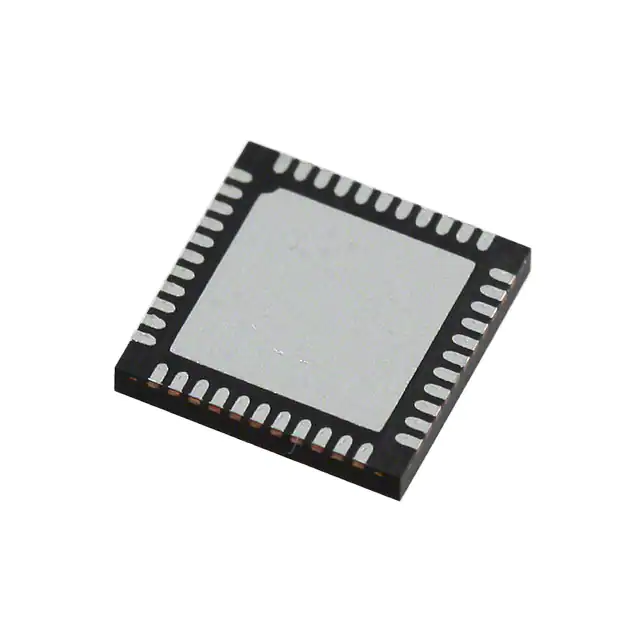
STMicroelectronics LIS3L02AQ3
- Part No.:
- LIS3L02AQ3
- Manufacturer:
- STMicroelectronics
- Category:
- Accelerometers
- Package:
- 44-QFN
- Datasheet:
-
 LIS3L02AQ3.pdf
- Description:
- ACCELEROMETER 2-6G ANALOG 44QFN
- Quantity:
- Payment:

- Shipping:

Inventory:3,446
Please send an inquiry. Send us your inquiry, and we will respond immediately.
Product details
Overview
LIS3L02AQ3 from STMicroelectronics is a low-power, 3-axis analog-output capacitive MEMS accelerometer with user-selectable ±2g/±6g full-scale range, 1.5 kHz bandwidth per axis, ratiometric output (Vdd/5 or Vdd/15), and embedded self-test/power-down functions-used in mobile terminal motion sensing and free-fall data protection systems.
For engineers reviewing the LIS3L02AQ3 datasheet, LIS3L02AQ3 pinout, LIS3L02AQ3 application, or LIS3L02AQ3 equivalent, this page delivers verified mechanical interface details, calibrated sensitivity and zero-g offset behavior, supply-voltage-dependent output scaling, shock survivability (10,000g/0.1 ms), and QFN-44 package layout for reliable PCB integration and signal chain design.
Technical Context
The LIS3L02AQ3 integrates a surface-micromachined silicon sensing element with a fully differential CMOS interface featuring Correlated Double Sampling (CDS) to suppress 1/f noise and offset drift. Its charge amplifier and three independent sample-and-hold circuits operate at 200 kHz and 66 kHz respectively, enabling oversampling-based noise reduction.
All analog parameters-including zero-g level (Vdd/2 ±6%), sensitivity (Vdd/5 ±10% for ±2g), and self-test voltage change-are ratiometric to Vdd (2.4–3.6 V). The internal 110 kΩ output impedance forms a first-order RC filter with external load capacitance (≥320 pF), allowing configurable bandwidth down to 1 Hz.
Key Specifications
| Parameter | Value and Actual Design Meaning |
|---|---|
| Supply Voltage | 2.4 V to 3.6 V - supports battery-powered operation with minimal regulation overhead |
| Full-Scale Range | ±2g or ±6g via FS pin logic level - enables dynamic range selection without firmware change |
| Bandwidth | 1.5 kHz (mechanical resonance); configurable down to 1 Hz via external Cload - matches anti-aliasing needs per application |
| Output Impedance | 80–140 kΩ - defines RC filter corner with external capacitor; requires high-Z ADC input |
| Resolution | Better than 0.5 mg over 100 Hz BW - sufficient for tilt sensing and low-speed motion detection |
| Self-Test Output ΔV | ±20–100 mV (±2g FS, Vdd=3.3 V) - verifies mechanical integrity and signal path in-system |
| Operating Temp | −40°C to +85°C - qualified for industrial and consumer portable environments |
Pinout & Package
Package: QFN-44 (7 mm × 7 mm × 1.8 mm, lead-free, green-compliant), exposed thermal pad, 0.5 mm pitch.
| Pin/Terminal | Circuit Role | Design Meaning |
|---|---|---|
| 4, GND | Ground reference | 0 V return for analog and digital circuitry; must be low-impedance connection to PCB ground plane |
| 5, Vdd | Power supply | 2.4–3.6 V analog/digital supply; requires local 100 nF + 10 µF decoupling |
| 6, Vouty | Analog output (Y-axis) | Ratiometric voltage proportional to Y acceleration; Rout ≈ 110 kΩ sets RC filter with external Cload |
| 7, ST | Self-test control | Logic 0 = normal mode; Logic 1 = activates electrostatic deflection test; output ΔV confirms sensor health |
| 8, Voutx | Analog output (X-axis) | Single-ended ratiometric output; identical electrical behavior to Vouty and Voutz |
| 14, PD | Power-down enable | Logic 0 = active mode (1.5 mA); Logic 1 = standby (5 µA); fast wake-up (≤0.3 ms + 550×Cload) |
| 15, Voutz | Analog output (Z-axis) | Vertical-axis acceleration output; same scaling and noise performance as X/Y channels |
| 16, FS | Full-scale selection | Logic 0 = ±2g (sensitivity Vdd/5); Logic 1 = ±6g (sensitivity Vdd/15); configures gain before signal conditioning |
Key Features
| Feature | Design Value |
|---|---|
| Factory-trimmed calibration | Non-volatile storage of zero-g offset and sensitivity trim values - eliminates need for end-user calibration |
| Ratiometric output scaling | Voff = Vdd/2, So = Vdd/5 (±2g) or Vdd/15 (±6g) - maintains accuracy across supply variation without recalibration |
| Embedded self-test | Digital ST pin triggers known mechanical deflection and measurable output ΔV - validates sensor+IC path in final assembly |
| Low-noise CDS architecture | Correlated Double Sampling cancels 1/f noise and offset drift - achieves 50 µg/√Hz noise density (X/Y axes) |
| High shock survivability | Rated for 10,000g/0.1 ms (powered) - survives drop testing and mechanical handling in handheld devices |
Applications
| Mobile Terminal Motion Sensing | Free-Fall Data Protection |
|---|---|
Use Scenario: Detecting orientation changes and tap gestures in smartphones and PDAs. IC Role / Device Role / Timing Role: Analog 3-axis acceleration transducer providing real-time DC-coupled motion vector for host MCU processing. Use Value: ±2g full-scale and 0.5 mg resolution enable accurate portrait/landscape detection and gesture recognition at low power. | Use Scenario: Triggering hard disk head retraction when laptop detects sudden vertical acceleration loss. IC Role / Device Role / Timing Role: Primary inertial trigger for system-level safety response; outputs analog voltage fed to comparator or ADC. Use Value: Guaranteed −40°C to +85°C operation and 1.5 kHz bandwidth ensure reliable fall detection before impact. |
| Gaming Input Devices | Appliance Vibration Monitoring |
Use Scenario: Translating controller tilt and shake into game actions in wireless remotes and VR peripherals. IC Role / Device Role / Timing Role: Low-latency analog motion sensor interfaced directly to microcontroller ADC with minimal signal conditioning. Use Value: Self-test capability allows factory and field verification of mechanical integrity prior to gameplay. | Use Scenario: Detecting abnormal motor vibration in washing machines and HVAC compressors for predictive maintenance. IC Role / Device Role / Timing Role: High-shock-tolerant analog accelerometer capturing broadband vibration signatures up to 1.5 kHz. Use Value: 10,000g survivability ensures long-term reliability in high-vibration appliance environments. |
Equivalent & Alternatives
The following parts are listed as comparable options for similar 3-axis analog accelerometer applications.
| Alternative Part | Technical Difference | Application Difference | Selection Advice |
|---|---|---|---|
| ADXL335 | 3.3 V fixed supply; ±3g default FS; no embedded self-test; 300 µg/√Hz noise density | Lacks programmable FS and self-test; lower bandwidth (1.6 kHz) but simpler supply requirement | Select when fixed ±3g range and absence of self-test are acceptable; avoid if Vdd variation >±5% or in-system diagnostics required |
| LIS331DLH | Digital I²C/SPI output; ±2g/±4g/±8g selectable; 10-bit resolution; integrated FIFO and interrupt engine | Requires digital interface and firmware support; adds motion detection logic but removes analog filtering design burden | Select when host MCU has I²C/SPI and benefits from on-chip event detection; avoid if analog signal chain or minimal BOM count is critical |
Compared with ADXL335 and LIS331DLH, the LIS3L02AQ3 uniquely provides factory-calibrated ratiometric analog outputs with user-selectable full-scale and embedded self-test-all in a compact QFN-44 package-making it optimal for cost-sensitive, analog-centric motion-sensing designs requiring in-field validation.
Availability
LIS3L02AQ3 is available at Aetrix Electronics and suitable for mobile terminal motion sensing, free-fall data protection, gaming input devices, and appliance vibration monitoring requiring stable component supply and legacy-design continuity.
Supply support for LIS3L02AQ3 includes scheduled delivery planning, volume procurement assistance, BOM continuity management, traceable sourcing, and lifecycle availability coordination for OEM customers, industrial embedded developers, connected-device designers, and electronics production programs.
Manufacturer
STMicroelectronics is a global semiconductor leader headquartered in Geneva, Switzerland, designing and manufacturing analog, MEMS, power, and microcontroller solutions for industrial, automotive, and consumer markets.
The LIS3L02AQ3 belongs to ST's legacy analog-output MEMS accelerometer family, engineered for low-power, high-reliability motion sensing in space-constrained portable electronics where analog interface simplicity and factory calibration reduce system-level validation effort.
FAQ
What is the recommended external capacitor value for 100 Hz bandwidth on LIS3L02AQ3 outputs?
For 100 Hz cutoff frequency, use a 15 nF capacitor on each Voutx/Vouty/Voutz line. This pairs with the nominal 110 kΩ output impedance (ft = 1/(2π × 110 kΩ × Cload)) and satisfies the minimum 320 pF load requirement. Tolerance of Rout (±20%) means actual cutoff may vary ±20%, so verify with oscilloscope or spectrum analyzer in final layout.
How does supply voltage variation affect zero-g level and sensitivity?
Zero-g level is ratiometric to Vdd (Voff = Vdd/2 ±6%), and sensitivity scales linearly (So = Vdd/5 ±10% for ±2g). At 2.4 V, zero-g is ~1.2 V; at 3.6 V, it is ~1.8 V. This preserves measurement accuracy across battery discharge without recalibration, provided the ADC reference tracks Vdd or uses ratiometric conversion.
Can LIS3L02AQ3 be used in systems requiring functional safety certification?
No-LIS3L02AQ3 lacks ASIL or IEC 61508 documentation, diagnostic coverage metrics, or failure-in-time (FIT) data. It was not designed or qualified for safety-critical applications such as airbag deployment or brake control. Use only in non-safety-related motion sensing where single-point failure does not compromise human safety.
What is the purpose of the reserved pins (e.g., pins 17–20, 22–23, 26–28)?
Reserved pins are internal test or future-feature connections not intended for user routing. ST specifies they be left unconnected unless explicitly tied to Vdd or GND per datasheet notes (e.g., pin 26: connect to Vdd or GND; pins 27–28: leave unconnected or tie to Vdd/GND). Floating reserved pins may cause leakage or noise coupling-follow exact guidance in Table 2 to ensure stability.
LIS3L02AQ3 Specifications
- Product attributes
- Attribute value
- Manufacturer:
- STMicroelectronics
- Series:
- -
- Package/Case:
- 44-QFN
- Packaging:
- Tray
- Product Status:
- Obsolete
- Type:
- Analog
- Axis:
- X, Y, Z
- Acceleration Range:
- ±2g, 6g
- Sensitivity (LSB/g):
- -
- Sensitivity (mV/g):
- 660 (±2g) ~ 220 (±6g)
- Bandwidth:
- 1.5kHz
- Output Type:
- Analog Voltage
- Voltage - Supply:
- 2.4V ~ 3.6V
- Features:
- Adjustable Bandwidth, Selectable Low Pass Filter, Selectable Scale
- Operating Temperature:
- -40°C ~ 85°C
- Grade:
- -
- Qualification:
- -
- Mounting Type:
- Surface Mount
- Supplier Device Package:
- 44-QFN-EP (7x7)
LIS3L02AQ3 FAQ
1.How can I place an order for LIS3L02AQ3 through Aetrix?
Please submit a Request for Quotation (RFQ) for LIS3L02AQ3 on Aetrix. Our sales agent will provide a competitive quotation and guide you through the order confirmation once you accept the terms.
2.Are the price and stock information for LIS3L02AQ3 reliable?
The price and inventory of LIS3L02AQ3 are updated periodically and may fluctuate due to market conditions. Stock and pricing data are typically refreshed every 24 hours. Quotation validity for LIS3L02AQ3 is usually 5 days.
3.What payment methods are accepted for LIS3L02AQ3?
We accept Wire Transfer, PayPal, Credit Card, Western Union, MoneyGram, and Escrow for LIS3L02AQ3 transactions.
Note: Certain payment methods may incur a processing fee.
4.How is shipping managed for LIS3L02AQ3?
LIS3L02AQ3 orders can be shipped via leading logistics carriers, including DHL, UPS, FedEx, TNT, or Registered Mail.
Once your LIS3L02AQ3 order is processed, you will receive an email with the shipment details and tracking number.
Note: Tracking information may take up to 24 hours to appear. Express delivery typically takes 3–5 business days.
5.How can I obtain technical support or documentation for LIS3L02AQ3?
For technical support, including LIS3L02AQ3 datasheets, pinout diagrams, or application guidance, please contact our engineering support team. They can provide detailed documentation and assistance for your LIS3L02AQ3 requirements.
6.How does Aetrix verify that LIS3L02AQ3 is sourced from the original manufacturer or authorized distributors?
All LIS3L02AQ3 products on Aetrix are procured from qualified distributors and authorized channels. Our dedicated quality assurance team conducts strict verification, including traceability checks and, if necessary, third-party testing. This ensures that LIS3L02AQ3 meets industry standards.
7.What is the process for return or replacement of LIS3L02AQ3?
All LIS3L02AQ3 units undergo pre-shipment inspection (PSI). If there is an issue with LIS3L02AQ3, returns or replacements are accepted under the following conditions:
1.Quantity discrepancies, incorrect items, or visible external defects (such as breakage or corrosion), acknowledged by Aetrix.
2.The issue is reported within 90 days of delivery.
3.The LIS3L02AQ3 part is unused and in its original packaging.
Return procedure for LIS3L02AQ3:
1.Submit a request within 90 days.
2.Obtain a Return Material Authorization (RMA) from Aetrix.
LIS3L02AQ3 Tags

-
MXC4005XC
Memsic Inc.
-
MC3419
Memsic Inc.
-
MC3479
Memsic Inc.
-
MXC6655XA
Memsic Inc.
-
MC3630
Memsic Inc.
.jpg)
-
LIS2HH12TR
STMicroelectronics
-
KX122-1037
Kionix Inc.
-
LIS2DE12TR
STMicroelectronics
-
LIS2DH12TR
STMicroelectronics
-
MC3635
Memsic Inc.
-
LIS2DS12TR
STMicroelectronics

-
LIS3DHTR
STMicroelectronics
Tech Hub

Counterfeit components can hide behind convincing markings and passing basic function tests. This engineering reference covers source traceability, external inspection, X-ray, XRF, electrical testing, …

A practical engineering and sourcing framework covering lifecycle verification, lifetime-buy calculations, replacement qualification, supplier checks and counterfeit-risk controls.

TTL and CMOS logic families differ in thresholds, loading, output drive, power and timing. This engineering guide compares 74HC and 74HCT, calculates noise margins and checks 3.3 V/5 V compatibility.

A practical engineering guide to 3.3V and 5V logic compatibility, input thresholds, resistor dividers, translator ICs, MOSFET level shifting, I2C pull-ups, timing limits and power-sequencing risks.

The 74HC595 uses push-pull logic outputs, while the TPIC6B595 uses 50 V open-drain DMOS sinks for higher-power loads. This guide compares timing, current limits, 3.3 V interfacing, load wiring, thermal…

The 74HC595 converts serial data into eight stable parallel outputs. This guide covers pin functions, shift and storage timing, OE and MR behavior, drive-current limits, cascading, voltage compatibilit…

A technical comparison of level-sensitive latches and edge-triggered flip-flops, covering timing windows, setup and hold limits, master–slave operation, time borrowing, race-through, HDL inference and…

A D latch stores one bit while Enable controls when data can pass. This reference covers gate-level operation, truth tables, transparency, setup and hold timing, LE versus OE, common ICs and practical …

An SR latch stores one bit through cross-coupled feedback. This engineering reference covers NOR and NAND implementations, truth tables, forbidden-state recovery, gated operation, switch debouncing, fa…

Latch circuits retain one bit through feedback. This technical reference covers SR and D latches, truth tables, transparency, timing limits, latch-versus-flip-flop behavior, applications and common log…


