
 My Inquiry
 My Account


STMicroelectronics LIS3L02DQ-TR
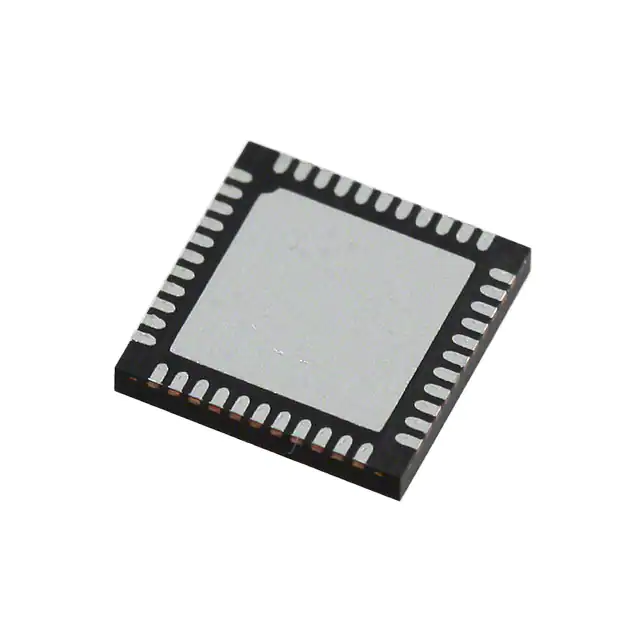
- Part No.:
- LIS3L02DQ-TR
- Manufacturer:
- STMicroelectronics
- Category:
- Accelerometers
- Package:
- 44-QFN
- Datasheet:
-
 LIS3L02DQ-TR.pdf
- Description:
- ACCELEROMETER 2G I2C/SPI 44QFN
- Quantity:
- Payment:

- Shipping:

Inventory:3,786
Please send an inquiry. Send us your inquiry, and we will respond immediately.
Product details
Overview
LIS3L02DQ-TR from STMicroelectronics is a 3-axis ±2g digital output linear MEMS accelerometer with 12-bit resolution, I²C/SPI serial interfaces, and programmable motion-triggered interrupt (RDY/INT). It operates from 2.7V to 3.6V with 1.8V-compatible I/Os and is factory calibrated for offset and sensitivity. Used in mobile terminal motion activation and inertial wake-up systems where low-power, high-shock survivability (10,000g/0.1ms), and embedded self-test are critical.
For engineers reviewing the LIS3L02DQ-TR datasheet, LIS3L02DQ-TR pinout, LIS3L02DQ-TR application, or LIS3L02DQ-TR equivalent, this page delivers verified technical context, validated pin functions, real-world use cases in motion-sensitive embedded systems, and confirmed alternative parts with documented functional differences.
Technical Context
The LIS3L02DQ-TR integrates a surface-micromachined capacitive sensing element with three ΣΔ analog-to-digital converters (one per axis), reconstruction filters, and a dual-mode serial interface (I²C Fast Mode up to 400 kHz or SPI up to 8 MHz). Its decimation-based digital filter supports selectable output data rates from 280 Hz to 4.48 kHz.
It features factory-trimmed gain and offset stored in non-volatile memory, enabling plug-and-play operation without user calibration. The RDY/INT pin provides configurable inertial wake-up signaling based on programmable acceleration thresholds across any axis, with self-test functionality activated via register control.
Key Specifications
| Parameter | Value and Actual Design Meaning |
|---|---|
| Acceleration Range | ±2 g - Full-scale range optimized for human-motion detection and tilt sensing |
| Resolution | 12-bit - 4096 LSB output with 0.97 mg/LSB sensitivity (4 g / 4096) |
| Output Data Rate | 280–4480 Hz - Configurable via decimation factor (8–128) for trade-off between bandwidth and noise |
| Supply Voltage | 2.7–3.6 V - Single supply with separate 1.8–3.6 V Vdd_IO for I/O compatibility |
| Current Consumption | 1.5 mA active / 15 µA power-down - Enables battery-operated motion wake-up |
| Shock Survivability | 10,000 g / 0.1 ms - Validated mechanical robustness for portable electronics drop tolerance |
| Operating Temp. | −20°C to +70°C - Industrial-grade temperature range for consumer and embedded use |
Pinout & Package
Package: QFN-44 (6 mm × 6 mm × 1 mm, 0.5 mm pitch), lead-free and RoHS-compliant (ECO-PACK®).
| Pin/Terminal | Circuit Role | Design Meaning |
|---|---|---|
| GND (Pins 3, 22) | Ground reference | Dual ground pins reduce impedance and improve noise immunity for analog sensing path |
| Vdd (Pins 4, 21) | Analog core supply | Primary 2.7–3.6 V supply for MEMS sensor and ADC circuitry |
| Vdd_IO (Pin 20) | I/O pad supply | Independent 1.8–3.6 V rail enabling direct interface with 1.8 V microcontrollers |
| RDY/INT (Pin 15) | Interrupt/data-ready output | Open-drain signal asserting when new data is ready or programmed acceleration threshold is exceeded |
| SCL/SPC (Pin 18) | Clock input | Shared I²C SCL / SPI SPC line - mode selected by CS logic level |
| SDA/SDI/SDO (Pin 17) | Bidirectional data | Tri-function pin: I²C SDA, SPI SDI (input), or 3-wire SDO (output) - function determined by interface mode |
| CS (Pin 19) | Interface mode select | High = I²C mode; Low = SPI mode - enables single-hardware design supporting both protocols |
Key Features
| Feature | Design Value |
|---|---|
| Embedded self-test | Electrostatic actuation verifies mechanical integrity and signal chain functionality without external equipment |
| Programmable interrupt threshold | Configurable per-axis acceleration trigger enables selective wake-up and event detection in low-power states |
| Factory-trimmed offset & sensitivity | Non-volatile calibration eliminates need for system-level compensation or runtime calibration routines |
| High shock survivability | Rated for 10,000 g mechanical shock ensures reliability in handheld and wearable applications |
| Dual serial interface | Single footprint supports either I²C or SPI via CS pin - reduces BOM and layout complexity |
Applications
| Mobile Motion Activation | Anti-Theft Tilt Detection |
|---|---|
Use Scenario: Detecting screen orientation change or shake gesture in smartphones and tablets. IC Role / Device Role / Timing Role: Primary 3-axis motion sensor providing real-time acceleration data to host MCU via I²C at 560 Hz ODR. Use Value: 12-bit resolution and ±2g range enable precise tilt estimation and gesture classification with minimal false triggers. | Use Scenario: Monitoring unauthorized movement of laptops or point-of-sale terminals. IC Role / Device Role / Timing Role: Inertial wake-up sensor asserting RDY/INT when tilt exceeds 15° from horizontal, waking host from sleep. Use Value: 15 µA power-down current and programmable threshold allow >1-year battery life in always-on security mode. |
| Gaming Input Device | Vibration Monitoring |
Use Scenario: Translating controller tilt and swing into game character movement in wireless gamepads. IC Role / Device Role / Timing Role: Low-latency motion capture source feeding SPI interface at 4.48 kHz for responsive gameplay feedback. Use Value: 4.48 kHz max ODR and <6 ms turn-on time from power-down ensure sub-frame motion responsiveness. | Use Scenario: Measuring structural vibration amplitude and frequency in industrial HVAC fans. IC Role / Device Role / Timing Role: High-stability DC-coupled acceleration transducer capturing 0–70 Hz vibration spectra using 140 Hz filter BW. Use Value: ±0.3% FS non-linearity and ±0.8 LSB/°C zero-g drift support repeatable amplitude measurement over temperature. |
Equivalent & Alternatives
The following parts are listed as comparable options for similar 3-axis ±2g digital accelerometer applications.
| Alternative Part | Technical Difference | Application Difference | Selection Advice |
|---|---|---|---|
| LSM303DLHC | Integrated 3-axis magnetometer + accelerometer; higher current (3 mA); I²C only; no SPI | Requires magnetic heading fusion; not suitable for pure motion-triggered wake-up without magnetometer overhead | Select if compass functionality is required; avoid if minimizing power or needing SPI flexibility |
| ADXL345 | Same ±2g range; 13-bit resolution; SPI/I²C; lower shock rating (10,000g/0.1ms same); no factory trim | Requires external calibration for offset/sensitivity; lacks embedded self-test | Select for legacy ADI ecosystem compatibility; accept added calibration effort for identical motion performance |
Compared with LSM303DLHC and ADXL345, the LIS3L02DQ-TR uniquely combines factory-trimmed accuracy, dual-interface flexibility, and embedded self-test in a QFN-44 package-making it optimal for cost-sensitive, calibration-free motion wake-up designs where SPI support and testability are mandatory.
Availability
LIS3L02DQ-TR is available at Aetrix Electronics and suitable for mobile motion activation, anti-theft tilt detection, and gaming input devices requiring stable component supply and long-term production continuity.
Supply support for LIS3L02DQ-TR includes scheduled delivery planning, volume procurement assistance, BOM continuity management, traceable sourcing, and lifecycle availability coordination for OEM customers, industrial embedded developers, connected-device designers, and electronics production programs.
Manufacturer
STMicroelectronics is a global semiconductor leader headquartered in Geneva, Switzerland, designing and manufacturing microcontrollers, sensors, power ICs, and automotive electronics.
The LIS3L02DQ-TR belongs to ST's legacy MEMS accelerometer family targeting cost-effective, low-power motion sensing in consumer and industrial portable devices-designed for plug-and-play integration without calibration.
FAQ
What is the function of the RDY/INT pin on LIS3L02DQ-TR?
The RDY/INT pin serves dual purpose: it asserts low when new acceleration data is ready (RDY mode), or when programmable motion threshold is exceeded on any axis (INT mode). Its open-drain output allows wired-OR connection to MCU interrupt lines and supports configurable polarity and latch behavior via internal registers.
Does LIS3L02DQ-TR require external calibration after soldering?
No. The device undergoes full factory calibration for offset, sensitivity, common-mode, and clock frequency, with trimming values stored in non-volatile memory. Upon power-up, these parameters are automatically loaded-enabling immediate operation without user calibration, even after PCB mounting stress.
Can LIS3L02DQ-TR operate with a 1.8 V microcontroller I/O voltage?
Yes. Vdd_IO supports 1.8 V to 3.6 V, allowing direct connection to 1.8 V logic without level shifters. The I²C interface uses internal pull-ups to Vdd_IO, and SPI timing remains valid at 4 MHz when Vdd_IO < 2.4 V-ensuring reliable communication with low-voltage MCUs.
What is the meaning of "ECO-PACK compliant" for LIS3L02DQ-TR?
ECO-PACK® is ST's eco-design certification confirming compliance with RoHS, halogen-free materials, and green manufacturing standards. It guarantees the QFN-44 package contains no lead, cadmium, mercury, hexavalent chromium, PBB, or PBDE-and meets JEDEC J-STD-020D reflow profile requirements for lead-free assembly.
LIS3L02DQ-TR Specifications
- Product attributes
- Attribute value
- Manufacturer:
- STMicroelectronics
- Series:
- -
- Package/Case:
- 44-QFN
- Packaging:
- Tape & Reel (TR)
- Product Status:
- Obsolete
- Type:
- Digital
- Axis:
- X, Y, Z
- Acceleration Range:
- ±2g
- Sensitivity (LSB/g):
- -
- Sensitivity (mV/g):
- 1024
- Bandwidth:
- 70Hz ~ 1.12kHz
- Output Type:
- I2C, SPI
- Voltage - Supply:
- 2.7V ~ 3.6V
- Features:
- Adjustable Bandwidth
- Operating Temperature:
- -20°C ~ 70°C
- Grade:
- -
- Qualification:
- -
- Mounting Type:
- Surface Mount
- Supplier Device Package:
- 44-QFN-EP (7x7)
LIS3L02DQ-TR FAQ
1.How can I place an order for LIS3L02DQ-TR through Aetrix?
Please submit a Request for Quotation (RFQ) for LIS3L02DQ-TR on Aetrix. Our sales agent will provide a competitive quotation and guide you through the order confirmation once you accept the terms.
2.Are the price and stock information for LIS3L02DQ-TR reliable?
The price and inventory of LIS3L02DQ-TR are updated periodically and may fluctuate due to market conditions. Stock and pricing data are typically refreshed every 24 hours. Quotation validity for LIS3L02DQ-TR is usually 5 days.
3.What payment methods are accepted for LIS3L02DQ-TR?
We accept Wire Transfer, PayPal, Credit Card, Western Union, MoneyGram, and Escrow for LIS3L02DQ-TR transactions.
Note: Certain payment methods may incur a processing fee.
4.How is shipping managed for LIS3L02DQ-TR?
LIS3L02DQ-TR orders can be shipped via leading logistics carriers, including DHL, UPS, FedEx, TNT, or Registered Mail.
Once your LIS3L02DQ-TR order is processed, you will receive an email with the shipment details and tracking number.
Note: Tracking information may take up to 24 hours to appear. Express delivery typically takes 3–5 business days.
5.How can I obtain technical support or documentation for LIS3L02DQ-TR?
For technical support, including LIS3L02DQ-TR datasheets, pinout diagrams, or application guidance, please contact our engineering support team. They can provide detailed documentation and assistance for your LIS3L02DQ-TR requirements.
6.How does Aetrix verify that LIS3L02DQ-TR is sourced from the original manufacturer or authorized distributors?
All LIS3L02DQ-TR products on Aetrix are procured from qualified distributors and authorized channels. Our dedicated quality assurance team conducts strict verification, including traceability checks and, if necessary, third-party testing. This ensures that LIS3L02DQ-TR meets industry standards.
7.What is the process for return or replacement of LIS3L02DQ-TR?
All LIS3L02DQ-TR units undergo pre-shipment inspection (PSI). If there is an issue with LIS3L02DQ-TR, returns or replacements are accepted under the following conditions:
1.Quantity discrepancies, incorrect items, or visible external defects (such as breakage or corrosion), acknowledged by Aetrix.
2.The issue is reported within 90 days of delivery.
3.The LIS3L02DQ-TR part is unused and in its original packaging.
Return procedure for LIS3L02DQ-TR:
1.Submit a request within 90 days.
2.Obtain a Return Material Authorization (RMA) from Aetrix.
LIS3L02DQ-TR Tags

-
MXC4005XC
Memsic Inc.
-
MC3419
Memsic Inc.
-
MC3479
Memsic Inc.
-
MXC6655XA
Memsic Inc.
-
MC3630
Memsic Inc.
.jpg)
-
LIS2HH12TR
STMicroelectronics
-
KX122-1037
Kionix Inc.
-
LIS2DE12TR
STMicroelectronics
-
LIS2DH12TR
STMicroelectronics
-
MC3635
Memsic Inc.
-
LIS2DS12TR
STMicroelectronics

-
LIS3DHTR
STMicroelectronics
Tech Hub

A practical engineering and sourcing framework covering lifecycle verification, lifetime-buy calculations, replacement qualification, supplier checks and counterfeit-risk controls.

TTL and CMOS logic families differ in thresholds, loading, output drive, power and timing. This engineering guide compares 74HC and 74HCT, calculates noise margins and checks 3.3 V/5 V compatibility.

A practical engineering guide to 3.3V and 5V logic compatibility, input thresholds, resistor dividers, translator ICs, MOSFET level shifting, I2C pull-ups, timing limits and power-sequencing risks.

The 74HC595 uses push-pull logic outputs, while the TPIC6B595 uses 50 V open-drain DMOS sinks for higher-power loads. This guide compares timing, current limits, 3.3 V interfacing, load wiring, thermal…

The 74HC595 converts serial data into eight stable parallel outputs. This guide covers pin functions, shift and storage timing, OE and MR behavior, drive-current limits, cascading, voltage compatibilit…

A technical comparison of level-sensitive latches and edge-triggered flip-flops, covering timing windows, setup and hold limits, master–slave operation, time borrowing, race-through, HDL inference and…

A D latch stores one bit while Enable controls when data can pass. This reference covers gate-level operation, truth tables, transparency, setup and hold timing, LE versus OE, common ICs and practical …

An SR latch stores one bit through cross-coupled feedback. This engineering reference covers NOR and NAND implementations, truth tables, forbidden-state recovery, gated operation, switch debouncing, fa…

Latch circuits retain one bit through feedback. This technical reference covers SR and D latches, truth tables, transparency, timing limits, latch-versus-flip-flop behavior, applications and common log…

An engineering guide to LED driver operation, constant-current and constant-voltage outputs, linear and switching topologies, dimming, IC selection, calculations, replacement compatibility, and fault c…


