
 My Inquiry
 My Account


NXP Semiconductors MF0MOU2101DA8,118
- Part No.:
- MF0MOU2101DA8,118
- Manufacturer:
- NXP Semiconductors
- Category:
- RFID, RF Access, Monitoring ICs
- Package:
- MOA8, Smart Card Module
- Datasheet:
-
 MF0MOU2101DA8,118.pdf
- Description:
- IC RFID TRANSP 13.56MHZ PLLMC
- Quantity:
- Payment:

- Shipping:

Inventory:20,421
Please send an inquiry. Send us your inquiry, and we will respond immediately.
Product details
Overview
MF0MOU2101DA8,118 from NXP Semiconductors is a contactless ticket IC in the MIFARE Ultralight C family, designed for secure, low-cost smart ticketing applications. It implements ISO/IEC 14443 Type A RF interface at 13.56 MHz, features 1536-bit EEPROM (including 32-bit OTP and 16-bit counter), 7-byte UID with cascade level 2, and hardware-accelerated 3DES authentication. It is used in public transport tickets where fast (<35 ms) transaction time, field-programmable memory locking, and anti-cloning are required.
For engineers reviewing the MF0MOU2101DA8,118 datasheet, MF0MOU2101DA8,118 pinout, MF0MOU2101DA8,118 application, or MF0MOU2101DA8,118 equivalent, this page delivers verified technical context, exact package mapping to MOA8 (SOT500-4), validated pin functions, real-world use scenarios, and two confirmed alternative parts - all derived from NXP's official Rev. 3.5 product data sheet dated 30 January 2026.
Technical Context
The MF0MOU2101DA8,118 integrates an RF interface compliant with ISO/IEC 14443-2 and -3 Type A, a digital control unit with command interpreter, a 3DES crypto coprocessor, and 1536-bit EEPROM organized in 48 × 32-bit pages. Its antenna interface uses LA/LB terminals with integrated 50 pF resonance capacitance optimized for TFC.0 ticket formats.
It supports true anticollision via 7-byte UID and cascade level 2 selection, executes authenticated read/write operations only after successful 3DES challenge-response, and enforces memory protection through field-programmable per-page and per-block lock bytes (pages 02h and 28h). All lock configurations become active after next REQA or WUPA command.
Key Specifications
| Parameter | Value and Actual Design Meaning |
|---|---|
| RF Standard | ISO/IEC 14443 Type A Parts 2 & 3 - ensures interoperability with standard PCD readers and enables full anticollision support. |
| Operating Frequency | 13.56 MHz - fixed carrier frequency enabling globally harmonized NFC/RFID infrastructure compatibility. |
| Input Capacitance | 50 pF - matches TFC.0 ticket form factor; eliminates need for external capacitor in compact ticket designs. |
| Total Memory | 1536-bit EEPROM - includes 1152-bit user r/w area, 32-bit OTP, 16-bit counter, and dedicated auth/key pages (2Ah–2Fh). |
| Authentication | Hardware 3DES coprocessor - performs full CBC-mode 2-key 3DES for mutual entity verification without host CPU involvement. |
| UID Length | 7-byte serial number with cascade level 2 - provides unique device identity and enables multi-level anticollision in dense reader fields. |
| Write Endurance | 100,000 cycles - supports repeated reprogramming of user memory in reusable transit passes or event credentials. |
| Data Retention | 10 years at 22 °C - guarantees long-term validity of stored ticket data, keys, and configuration without refresh. |
Pinout & Package
MF0MOU2101DA8,118 is supplied in the MOA8 plastic leadless module carrier package (SOT500-4), designed for direct integration into thin contactless tickets. It has two antenna connection terminals only - no power or digital I/O pins - as energy and data are fully harvested and exchanged wirelessly.
| Pin/Terminal | Circuit Role | Design Meaning |
|---|---|---|
| LA | Antenna coil connection A | Primary terminal for connecting one end of the printed antenna loop; forms resonant LC tank with on-chip 50 pF capacitor. |
| LB | Antenna coil connection B | Secondary terminal completing the antenna interface; polarity-insensitive but must maintain low-inductance trace routing. |
Key Features
| Feature | Design Value |
|---|---|
| Field-programmable per-page locking (pages 03h–0Fh) | Enables irreversible write-protection of OTP or user pages during personalization - prevents tampering post-issuance. |
| Block-locking for extended memory (pages 10h–27h) | Granular 4-page locking via lock bytes 2/3 (page 28h) - secures large credential payloads without over-engineering access control. |
| 16-bit one-way counter | Provides tamper-evident usage tracking (e.g., ride count) with hardware-enforced monotonic increment and optional lock. |
| Anti-tearing support on lock/OTP writes | Guarantees atomicity of critical security configuration updates - prevents partial writes during RF field dropout. |
| Typical transaction time < 35 ms | Meets high-throughput fare gate requirements - enables sub-second validation even in crowded transit hubs. |
| Read-only locking per block above 512-bit | Allows differentiated protection: early pages (03h–0Fh) locked individually; later pages (10h–27h) locked in groups - balances flexibility and security. |
Applications
| Public Transport Ticketing | Event Access Control |
|---|---|
Use Scenario: Disposable or rechargeable bus/metro tickets processed at high-speed turnstiles. IC Role / Device Role / Timing Role: Contactless ticket IC handling secure authentication, balance update, and ride counting. Use Value: 3DES authentication prevents cloning; 50 pF input capacitance enables ultra-thin TFC.0 ticket construction; <35 ms transaction time sustains >30 passengers/minute throughput. |
Use Scenario: One-time or multi-day festival wristbands scanned at venue entrances and VIP zones. IC Role / Device Role / Timing Role: Secure credential storage with programmable access tiers and session-limited validity. Use Value: Per-page locking protects attendee ID and tier privileges; OTP area stores unique activation codes; 7-byte UID enables backend reconciliation of lost/stolen units. |
| Loyalty Program Cards | Secure Campus ID Badges |
Use Scenario: Plastic or paper-based loyalty cards issued by retail chains for point accrual and redemption. IC Role / Device Role / Timing Role: Low-cost, field-updatable credential storing encrypted points balance and merchant-specific tokens. Use Value: 100,000 write cycles support lifetime point updates; 10-year data retention ensures card longevity; 32-bit OTP stores merchant keys without exposing them to readers. |
Use Scenario: Student or staff ID badges granting building access, library services, and cafeteria payments. IC Role / Device Role / Timing Role: Multi-application secure element with segregated memory zones for physical access, logical login, and microtransactions. Use Value: AUTH0/AUTH1 configuration enforces read-only access to ID data while allowing authenticated write to payment balance; block locking isolates credential and service partitions. |
Equivalent & Alternatives
The following parts are listed as comparable options for similar contactless ticket IC applications.
| Alternative Part | Technical Difference | Application Difference | Selection Advice |
|---|---|---|---|
| MF0MOU2001DA8 | 16 pF input capacitance; optimized for TFC.1 (larger) ticket formats. | Requires larger antenna geometry; not suitable for ultra-thin TFC.0 tickets. | Select MF0MOU2001DA8 only when using thicker ticket substrates or legacy TFC.1 mechanical specs. |
| MF0ICU2101DUD | Bare die (120 μm thickness); no pre-mounted antenna interface; requires external matching network. | Demands custom antenna design and assembly; used in embedded modules or hybrid cards, not direct ticket replacement. | Choose MF0ICU2101DUD only for OEMs integrating into proprietary modules where antenna co-design is feasible. |
Compared with MF0MOU2101DA8,118, MF0MOU2001DA8 offers identical functionality but mismatched capacitance for TFC.0, while MF0ICU2101DUD removes the integrated antenna interface entirely - making both unsuitable as drop-in replacements unless mechanical and RF layout changes are acceptable.
Availability
MF0MOU2101DA8,118 is available at Aetrix Electronics and suitable for public transport ticketing, event access control, and secure campus ID badge programs requiring stable component supply, long-term lifecycle assurance, and certified ISO/IEC 14443-A compliance.
Supply support for MF0MOU2101DA8,118 includes scheduled delivery planning, volume procurement assistance, BOM continuity management, traceable sourcing, and lifecycle availability coordination for OEM customers, industrial embedded developers, connected-device designers, and electronics production programs.
Manufacturer
NXP Semiconductors is a global semiconductor leader specializing in secure connectivity solutions for automotive, IoT, and identification markets, with core expertise in RFID, NFC, and trusted execution environments.
The MF0MOU2101DA8,118 belongs to NXP's MIFARE Ultralight C product line - engineered specifically for cost-sensitive, high-volume contactless ticketing applications demanding robust security, field-programmable memory protection, and seamless integration into thin-form-factor smart tickets.
FAQ
What is the input capacitance of MF0MOU2101DA8,118 and why does it matter?
The MF0MOU2101DA8,118 has a fixed on-chip input capacitance of 50 pF, explicitly designed for TFC.0 (Edmonson) ticket formats. This eliminates the need for external capacitors and enables reliable resonance with compact, low-inductance antenna geometries typical in thin paper or PET tickets. Using a 16 pF variant (e.g., MF0MOU2001DA8) in a TFC.0 design would degrade coupling efficiency and reduce operating distance.
How does MF0MOU2101DA8,118 implement memory protection?
The MF0MOU2101DA8,118 uses dual-layer memory protection: per-page locking (pages 03h–0Fh) via lock byte 0/1 (page 02h), and 4-page block locking (pages 10h–27h) via lock bytes 2/3 (page 28h). Lock bits are set irreversibly using WRITE commands; once set, they prevent further writes to protected pages. Authentication (3DES) adds read/write access control beyond locking.
Can MF0MOU2101DA8,118 be used without 3DES authentication?
Yes - MF0MOU2101DA8,118 operates in unauthenticated mode by default. Pages 04h–27h are freely readable and writable until AUTH0 is configured to require authentication. Setting AUTH0 = 30h disables memory protection entirely. However, 3DES authentication is mandatory for secure applications like transit fare media to prevent cloning and unauthorized balance manipulation.
What is the purpose of the 16-bit counter in MF0MOU2101DA8,118?
The 16-bit counter in MF0MOU2101DA8,118 (located in page 41h) provides a tamper-evident, monotonically increasing value used for usage tracking - e.g., counting rides on a transit pass. It increments automatically on each successful READ or WRITE command targeting its page and can be locked permanently to prevent reset or overwrite, ensuring auditability.
Is MF0MOU2101DA8,118 pin-compatible with other MIFARE Ultralight variants?
MF0MOU2101DA8,118 shares the same MOA8 (SOT500-4) package and LA/LB pinout with all MF0MOU2x01DA8 variants, including MF0MOU2001DA8. Mechanical and electrical pin compatibility is guaranteed within the MOA8 family. However, functional compatibility depends on input capacitance (50 pF vs. 16 pF) and associated antenna tuning - swapping variants without antenna redesign will impair performance.
MF0MOU2101DA8,118 Specifications
- Product attributes
- Attribute value
- Manufacturer:
- NXP Semiconductors
- Series:
- MIFARE® Ultralight
- Package/Case:
- MOA8, Smart Card Module
- Packaging:
- Strip
- Product Status:
- Active
- Type:
- RFID Transponder
- Frequency:
- 13.56MHz
- Standards:
- ISO 14443, MIFARE
- Interface:
- -
- Voltage - Supply:
- -
- Operating Temperature:
- -25°C ~ 70°C (TA)
- Grade:
- -
- Qualification:
- -
- Mounting Type:
- Surface Mount
- Supplier Device Package:
- PLLMC
MF0MOU2101DA8,118 FAQ
1.How can I place an order for MF0MOU2101DA8,118 through Aetrix?
Please submit a Request for Quotation (RFQ) for MF0MOU2101DA8,118 on Aetrix. Our sales agent will provide a competitive quotation and guide you through the order confirmation once you accept the terms.
2.Are the price and stock information for MF0MOU2101DA8,118 reliable?
The price and inventory of MF0MOU2101DA8,118 are updated periodically and may fluctuate due to market conditions. Stock and pricing data are typically refreshed every 24 hours. Quotation validity for MF0MOU2101DA8,118 is usually 5 days.
3.What payment methods are accepted for MF0MOU2101DA8,118?
We accept Wire Transfer, PayPal, Credit Card, Western Union, MoneyGram, and Escrow for MF0MOU2101DA8,118 transactions.
Note: Certain payment methods may incur a processing fee.
4.How is shipping managed for MF0MOU2101DA8,118?
MF0MOU2101DA8,118 orders can be shipped via leading logistics carriers, including DHL, UPS, FedEx, TNT, or Registered Mail.
Once your MF0MOU2101DA8,118 order is processed, you will receive an email with the shipment details and tracking number.
Note: Tracking information may take up to 24 hours to appear. Express delivery typically takes 3–5 business days.
5.How can I obtain technical support or documentation for MF0MOU2101DA8,118?
For technical support, including MF0MOU2101DA8,118 datasheets, pinout diagrams, or application guidance, please contact our engineering support team. They can provide detailed documentation and assistance for your MF0MOU2101DA8,118 requirements.
6.How does Aetrix verify that MF0MOU2101DA8,118 is sourced from the original manufacturer or authorized distributors?
All MF0MOU2101DA8,118 products on Aetrix are procured from qualified distributors and authorized channels. Our dedicated quality assurance team conducts strict verification, including traceability checks and, if necessary, third-party testing. This ensures that MF0MOU2101DA8,118 meets industry standards.
7.What is the process for return or replacement of MF0MOU2101DA8,118?
All MF0MOU2101DA8,118 units undergo pre-shipment inspection (PSI). If there is an issue with MF0MOU2101DA8,118, returns or replacements are accepted under the following conditions:
1.Quantity discrepancies, incorrect items, or visible external defects (such as breakage or corrosion), acknowledged by Aetrix.
2.The issue is reported within 90 days of delivery.
3.The MF0MOU2101DA8,118 part is unused and in its original packaging.
Return procedure for MF0MOU2101DA8,118:
1.Submit a request within 90 days.
2.Obtain a Return Material Authorization (RMA) from Aetrix.
MF0MOU2101DA8,118 Tags

-
SL2S2602FTBX
NXP Semiconductors
-
ST25DV04K-IER6S3
STMicroelectronics
-
ST25DV04K-IER6C3
STMicroelectronics
-
LXMSJZNCMD-217
Murata Electronics

-
NT3H2111W0FTTJ
NXP Semiconductors
-
NT3H2111W0FHKH
NXP Semiconductors
-
M24LR04E-RMC6T/2
STMicroelectronics
-
ST25DV04KC-JF6D3
STMicroelectronics
-
ST25DV64KC-IE6S3
STMicroelectronics
-
ST25DV64K-IER6T3
STMicroelectronics
-
NT3H2211W0FTTJ
NXP Semiconductors
-
NT3H2211W0FHKH
NXP Semiconductors
Tech Hub
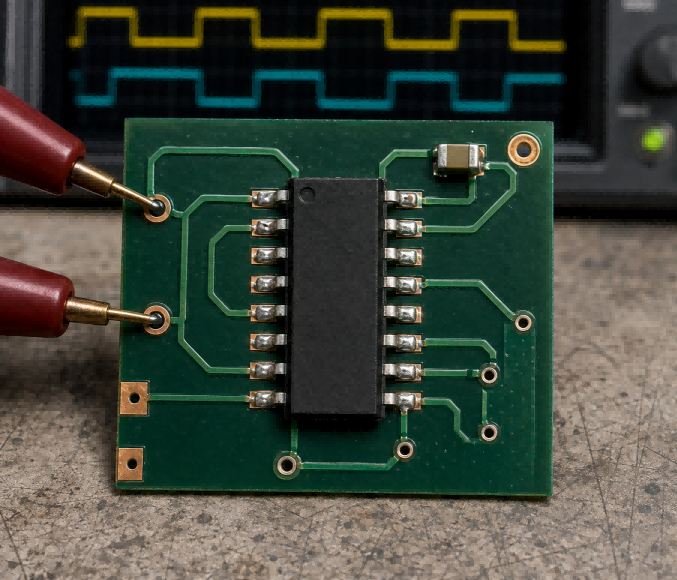
An SR latch stores one bit through cross-coupled feedback. This engineering reference covers NOR and NAND implementations, truth tables, forbidden-state recovery, gated operation, switch debouncing, fa…

Latch circuits retain one bit through feedback. This technical reference covers SR and D latches, truth tables, transparency, timing limits, latch-versus-flip-flop behavior, applications and common log…

An engineering guide to LED driver operation, constant-current and constant-voltage outputs, linear and switching topologies, dimming, IC selection, calculations, replacement compatibility, and fault c…

Operational amplifier guide covering op amp basics, feedback, ideal vs real op amps, common configurations, buffer circuits, offset, bias current, gain-bandwidth, slew rate, rail-to-rail limits and sel…

Jumper cables guide covering safe connection order, red and black clamp placement, final ground connection, cable gauge, length, clamp quality, copper vs CCA cables, jump starter comparison and battery…

LDO regulator guide covering low dropout voltage, power dissipation, thermal design, PSRR, output noise, capacitor stability, adjustable LDO circuits, LDO vs buck converter and datasheet selection chec…

Conditional Access Module guide covering CAM meaning, CI/CI+ interface, smart card authorization, DVB security workflow, TV and set-top box compatibility, internal electronics, ESD protection, connecto…

Guide to electronic component obsolescence covering EOL risk, PCN/PDN notices, last-time buy planning, replacement options, form-fit-function validation, counterfeit risk and BOM lifecycle management.

18650 battery guide covering lithium-ion cell basics, 3.6V/3.7V voltage, 4.2V charging, mAh and Wh capacity, protected cells, chargers, BMS, series-parallel packs, holders, welding and sourcing checks.…

Hall effect sensor guide covering working principle, linear and digital sensors, Arduino circuits, current sensing, speed detection, automotive applications, A3144 examples, signal filtering and datash…


