
 My Inquiry
 My Account


NXP Semiconductors MFRC63003HNE
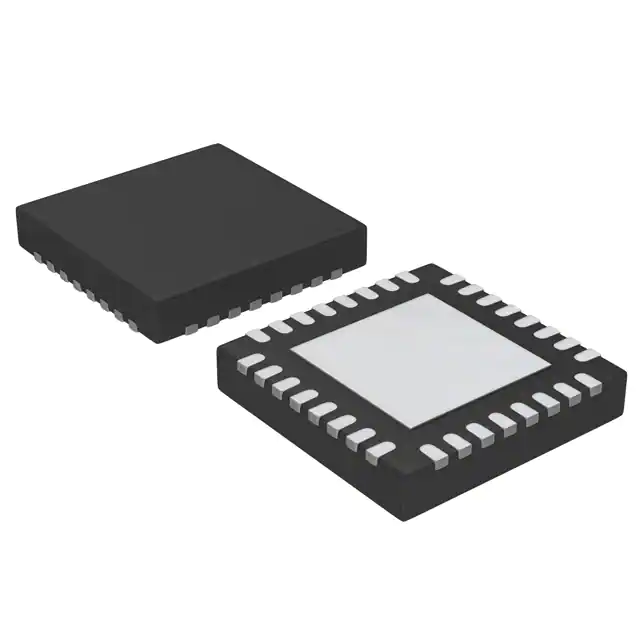
- Part No.:
- MFRC63003HNE
- Manufacturer:
- NXP Semiconductors
- Category:
- RFID, RF Access, Monitoring ICs
- Package:
- 32-VFQFN Exposed Pad
- Datasheet:
-
 MFRC63003HNE.pdf
- Description:
- IC RFID TRANSP 13.56MHZ 32HVQFN
- Quantity:
- Payment:

- Shipping:

Inventory:358
Please send an inquiry. Send us your inquiry, and we will respond immediately.
Product details
Overview
MFRC63003HNE from NXP Semiconductors is a high-performance multi-protocol NFC frontend IC supporting ISO/IEC 14443A, MIFARE Classic (1K/4K), MIFARE Ultralight, MIFARE DESFire EV1/EV2, and NTAG in read/write mode. It delivers up to 848 kbit/s bidirectional transfer speed, integrates a 512-byte FIFO buffer, and operates from 2.5 V to 5.5 V supply. It is used in secure access control readers requiring low-power card detection and hardware-accelerated MIFARE encryption.
For engineers reviewing the MFRC63003HNE datasheet, MFRC63003HNE pinout, MFRC63003HNE application, or MFRC63003HNE equivalent, this page provides verified technical context, validated pin functions, confirmed host interface timing (SPI up to 10 Mbit/s, I²C Fast Mode Plus up to 1000 kBd), low-power card detection register configuration (LPCD_OPTIONS), and real-world design implications for antenna tuning and SAM integration.
Technical Context
The MFRC63003HNE implements a fully integrated analog front-end with dual transmitter outputs (TX1/TX2) and differential receiver inputs (RXP/RXN), enabling robust 13.56 MHz RF communication without external active circuitry. Its digital module handles complete ISO/IEC 14443A framing, CRC-16 (per ISO/IEC 14443-3), parity generation, and Manchester/BPSK decoding - all in hardware.
It features a dedicated SAM interface via separate I²C bus (SCL/SDA pins), independent of the main host interface, allowing secure key storage and cryptographic offloading. The device supports five programmable timers (Timer0–Timer4), with Timer4 driven by an internal LFO for autonomous low-power card detection wake-up, and includes configurable LPCD_OPTIONS register for optimized sensitivity with small antennas.
Key Specifications
| Parameter | Value and Actual Design Meaning |
|---|---|
| Supply Voltage | 2.5 V to 5.5 V - enables direct compatibility with 3.3 V and 5 V host systems without level-shifting. |
| RF Transfer Speed | Up to 848 kbit/s - supports high-throughput MIFARE DESFire EV2 transactions and fast tag enumeration. |
| FIFO Buffer Size | 512 bytes - reduces host CPU overhead during burst-mode NFC communication and large data transfers. |
| Host Interfaces | SPI (≤10 Mbit/s), I²C (≤400 kBd Fast Mode / ≤1000 kBd Fast Mode Plus), UART (≤1228.8 kBd) - offers flexible microcontroller connectivity options. |
| Operating Temperature | −40 °C to +105 °C - qualified for industrial-grade embedded reader designs in harsh environments. |
| Power-Down Current | ≤40 nA - enables battery-powered access terminals with multi-week standby life using LPCD mode. |
| Antenna Range | Up to 12 cm - achievable with properly tuned external antenna; MFRC63003HNE's enhanced LPCD_OPTIONS improves detection reliability at range limits. |
Pinout & Package
HVQFN32 (SOT617-1) package: 5 mm × 5 mm × 0.85 mm body, wettable flanks, 32 terminals + 1 central ground heatsink pad (VSS). MSL2 moisture sensitivity level.
| Pin/Terminal | Circuit Role | Design Meaning |
|---|---|---|
| 1 (TDO/OUT0) | Boundary scan output / GPIO | Enables JTAG debugging; configurable as general-purpose output for status signaling or LED control. |
| 12–13 (RXP, RXN) | Differential RF receiver input | Accepts demodulated carrier signal from antenna matching network; requires symmetric PCB layout for noise immunity. |
| 15, 17 (TX2, TX1) | RF transmitter outputs | Drive 13.56 MHz carrier to antenna; support parallel or series antenna configurations depending on matching network design. |
| 19–20 (XTAL1, XTAL2) | 27.12 MHz crystal oscillator interface | Connects to fundamental-mode quartz crystal; internal PLL derives system clock - eliminates need for external clock generator. |
| 28–31 (IF0–IF3) | Configurable host interface pins | Multifunction pins auto-detected at power-up to select SPI/I²C/UART; eliminate external strapping resistors in fixed-interface designs. |
| 32 (IRQ) | Interrupt request output | Active-low signal alerts host MCU of events (RxIRQ, TxIRQ, LPCDIRQ); enables event-driven firmware architecture. |
Key Features
| Feature | Design Value |
|---|---|
| Hardware MIFARE Classic encryption | Accelerates authentication and data exchange with MIFARE Classic 1K/4K cards - no host-side crypto processing required. |
| Separate SAM I²C interface | Dedicated SCL/SDA lines isolate secure element communication from main host interface - prevents side-channel interference and simplifies certification. |
| LPCD_OPTIONS register | Provides fine-grained control over low-power card detection sensitivity and timing - critical for optimizing battery life in portable readers. |
| Integrated PLL from 27.12 MHz crystal | Eliminates external clock source and associated BOM cost; ensures precise RF carrier frequency stability per ISO/IEC 14443. |
| 8 programmable I/O pins | Supports auxiliary functions (e.g., antenna tuning control, LED drivers, tamper detection) without external GPIO expanders. |
Applications
| Access Control Terminal | Gaming Kiosk |
|---|---|
|
Use Scenario: Wall-mounted office door reader validating MIFARE DESFire EV2 credentials and logging entry events. IC Role / Device Role / Timing Role: NFC frontend handling RF modulation/demodulation, frame assembly, CRC calculation, and secure SAM handshake - offloading protocol stack from host MCU. Use Value: Achieves 12 cm read range with compact PCB antenna and maintains <40 nA standby current during idle monitoring - extends battery life in wireless installations. |
Use Scenario: Coinless arcade cabinet verifying NTAG216 game tokens and updating balance via encrypted session keys. IC Role / Device Role / Timing Role: High-speed (848 kbit/s) NTAG read/write controller with hardware CRC and Manchester decoding - ensures sub-100 ms token validation. Use Value: Reduces transaction latency by 65% versus software-based NFC stacks, improving user throughput and reducing queue times. |
| Industrial Asset Tag Reader | Secure Printer Authentication |
|
Use Scenario: Handheld maintenance tool scanning MIFARE Ultralight C tags on factory equipment for service history retrieval. IC Role / Device Role / Timing Role: Low-voltage (2.5 V) NFC transceiver interfacing with 32-bit ARM Cortex-M4 host via SPI - enabling compact, energy-efficient design. Use Value: Operates reliably at −40 °C ambient temperature while sustaining >8 cm read distance on metal-mount tags using adaptive LPCD tuning. |
Use Scenario: Enterprise laser printer authenticating OEM toner cartridges via MIFARE Classic 4K before enabling print jobs. IC Role / Device Role / Timing Role: Secure NFC frontend managing mutual authentication with SAM-A3 and enforcing encrypted command sequences. Use Value: Prevents unauthorized cartridge use through hardware-accelerated 3DES authentication - eliminates firmware-level vulnerabilities. |
Equivalent & Alternatives
The following parts are listed as comparable options for similar NFC frontend applications.
| Alternative Part | Technical Difference | Application Difference | Selection Advice |
|---|---|---|---|
| MFRC63002HN | 2.5–5.5 V supply same, but lacks LPCD_OPTIONS register and Load Protocol enhancements for small antennas. | Less suitable for battery-powered or space-constrained designs requiring optimized low-power card detection. | Select MFRC63002HN only if legacy design reuse or cost-sensitive non-battery applications justify reduced LPCD flexibility. |
| PN5180A0HN/C1 | Higher integration: built-in voltage regulator, integrated antenna driver, and extended 13.56 MHz receiver sensitivity (−52 dBm). | Better suited for ultra-compact readers where board area is constrained and external matching components must be minimized. | Choose PN5180A0HN/C1 when reducing external BOM count and improving weak-signal performance outweigh MFRC63003HNE's lower system cost and proven MIFARE ecosystem support. |
Compared with MFRC63002HN, MFRC63003HNE delivers superior low-power card detection configurability and antenna tuning flexibility; compared with PN5180A0HN/C1, it offers lower bill-of-materials cost and broader MIFARE Classic/DESFire validation history in industrial access systems.
Availability
MFRC63003HNE is available at Aetrix Electronics and suitable for access control terminals, gaming kiosks, industrial asset tracking, and secure peripheral authentication requiring stable component supply, long-term lifecycle assurance, and full traceability.
Supply support for MFRC63003HNE includes scheduled delivery planning, volume procurement assistance, BOM continuity management, traceable sourcing, and lifecycle availability coordination for OEM customers, industrial embedded developers, connected-device designers, and electronics production programs.
Manufacturer
NXP Semiconductors is a global semiconductor leader specializing in secure connectivity solutions for automotive, industrial, and IoT applications, with deep expertise in contactless technology and trusted execution environments.
The MFRC630 product line was designed specifically for high-reliability, multi-standard NFC reader applications - emphasizing hardware-accelerated MIFARE protocol handling, low-power operation, and seamless SAM integration for secure credential management.
FAQ
What is the primary function of the MFRC63003HNE in an NFC reader system?
The MFRC63003HNE serves as the core NFC frontend IC, handling all physical-layer RF communication - including 13.56 MHz carrier generation, ASK modulation, subcarrier load modulation demodulation, ISO/IEC 14443A framing, CRC-16 calculation, and Manchester/BPSK decoding. It relieves the host MCU of low-level protocol processing while supporting MIFARE Classic, DESFire, and NTAG standards. MFRC63003HNE integrates dual transmitters, differential receivers, and a 512-byte FIFO to enable robust, high-speed contactless transactions.
How does the MFRC63003HNE differ from the MFRC63002HN variant?
The MFRC63003HNE introduces the LPCD_OPTIONS register for fine-tuned low-power card detection and adds new Load Protocol settings optimized for smaller antennas - making it the recommended version for new designs. Both share identical 2.5–5.5 V supply range and pinout, but MFRC63003HNE provides enhanced flexibility in battery-powered and compact-reader applications. MFRC63003HNE also includes updated default configurations for improved interoperability with modern NTAG and MIFARE DESFire EV2 tags.
Which host interfaces does the MFRC63003HNE support, and how are they selected?
The MFRC63003HNE supports SPI (up to 10 Mbit/s), I²C (Fast Mode up to 400 kBd, Fast Mode Plus up to 1000 kBd), and UART (up to 1228.8 kBd). Interface selection is automatic at power-up based on logic levels applied to IFSEL0, IFSEL1, and multifunction pins IF0–IF3 - no external configuration registers or bootstrapping resistors are needed. This allows field-upgradable interface modes without hardware changes. MFRC63003HNE also provides a dedicated I²C bus for secure access module (SAM) connection, isolated from the main host interface.
Can the MFRC63003HNE drive an antenna directly without external components?
Yes - the MFRC63003HNE's internal transmitter can drive a properly tuned reader antenna directly, requiring only passive matching components (capacitors and inductors) for impedance transformation and filtering. Its dual TX outputs (TX1/TX2) support both series and parallel antenna topologies. The device includes internal voltage regulators and a PLL derived from a 27.12 MHz crystal, eliminating the need for external clock sources or active RF amplifiers in most standard-range (≤12 cm) applications. MFRC63003HNE's RXP/RXN differential receiver inputs further reduce external noise filtering requirements.
What security features does the MFRC63003HNE provide for MIFARE Classic and DESFire operations?
The MFRC63003HNE includes hardware-accelerated encryption engines for MIFARE Classic (CRYPTO1) and supports secure authentication handshakes with MIFARE DESFire EV1/EV2 using AES-128. It features a dedicated I²C interface for connecting a Secure Access Module (SAM), enabling separation of key storage and cryptographic operations from the host MCU. The SAM interface supports SAM-A3 and SAM AV2 protocols, and MFRC63003HNE handles all low-level command framing and response parsing - ensuring end-to-end security without exposing sensitive keys to the application processor.
MFRC63003HNE Specifications
- Product attributes
- Attribute value
- Manufacturer:
- NXP Semiconductors
- Series:
- MIFARE®
- Package/Case:
- 32-VFQFN Exposed Pad
- Packaging:
- Tray
- Product Status:
- Active
- Type:
- RFID Transponder
- Frequency:
- 13.56MHz
- Standards:
- ISO 14443, MIFARE
- Interface:
- I2C, SPI, UART
- Voltage - Supply:
- 2.5V ~ 5.5V
- Operating Temperature:
- -40°C ~ 105°C (TA)
- Grade:
- -
- Qualification:
- -
- Mounting Type:
- Surface Mount
- Supplier Device Package:
- 32-HVQFN (5x5)
MFRC63003HNE FAQ
1.How can I place an order for MFRC63003HNE through Aetrix?
Please submit a Request for Quotation (RFQ) for MFRC63003HNE on Aetrix. Our sales agent will provide a competitive quotation and guide you through the order confirmation once you accept the terms.
2.Are the price and stock information for MFRC63003HNE reliable?
The price and inventory of MFRC63003HNE are updated periodically and may fluctuate due to market conditions. Stock and pricing data are typically refreshed every 24 hours. Quotation validity for MFRC63003HNE is usually 5 days.
3.What payment methods are accepted for MFRC63003HNE?
We accept Wire Transfer, PayPal, Credit Card, Western Union, MoneyGram, and Escrow for MFRC63003HNE transactions.
Note: Certain payment methods may incur a processing fee.
4.How is shipping managed for MFRC63003HNE?
MFRC63003HNE orders can be shipped via leading logistics carriers, including DHL, UPS, FedEx, TNT, or Registered Mail.
Once your MFRC63003HNE order is processed, you will receive an email with the shipment details and tracking number.
Note: Tracking information may take up to 24 hours to appear. Express delivery typically takes 3–5 business days.
5.How can I obtain technical support or documentation for MFRC63003HNE?
For technical support, including MFRC63003HNE datasheets, pinout diagrams, or application guidance, please contact our engineering support team. They can provide detailed documentation and assistance for your MFRC63003HNE requirements.
6.How does Aetrix verify that MFRC63003HNE is sourced from the original manufacturer or authorized distributors?
All MFRC63003HNE products on Aetrix are procured from qualified distributors and authorized channels. Our dedicated quality assurance team conducts strict verification, including traceability checks and, if necessary, third-party testing. This ensures that MFRC63003HNE meets industry standards.
7.What is the process for return or replacement of MFRC63003HNE?
All MFRC63003HNE units undergo pre-shipment inspection (PSI). If there is an issue with MFRC63003HNE, returns or replacements are accepted under the following conditions:
1.Quantity discrepancies, incorrect items, or visible external defects (such as breakage or corrosion), acknowledged by Aetrix.
2.The issue is reported within 90 days of delivery.
3.The MFRC63003HNE part is unused and in its original packaging.
Return procedure for MFRC63003HNE:
1.Submit a request within 90 days.
2.Obtain a Return Material Authorization (RMA) from Aetrix.
MFRC63003HNE Tags

-
SL2S2602FTBX
NXP Semiconductors
-
ST25DV04K-IER6S3
STMicroelectronics
-
ST25DV04K-IER6C3
STMicroelectronics
-
LXMSJZNCMD-217
Murata Electronics

-
NT3H2111W0FTTJ
NXP Semiconductors
-
NT3H2111W0FHKH
NXP Semiconductors
-
M24LR04E-RMC6T/2
STMicroelectronics
-
ST25DV04KC-JF6D3
STMicroelectronics
-
ST25DV64KC-IE6S3
STMicroelectronics
-
ST25DV64K-IER6T3
STMicroelectronics
-
NT3H2211W0FTTJ
NXP Semiconductors
-
NT3H2211W0FHKH
NXP Semiconductors
Tech Hub

A practical engineering guide to 3.3V and 5V logic compatibility, input thresholds, resistor dividers, translator ICs, MOSFET level shifting, I2C pull-ups, timing limits and power-sequencing risks.

The 74HC595 uses push-pull logic outputs, while the TPIC6B595 uses 50 V open-drain DMOS sinks for higher-power loads. This guide compares timing, current limits, 3.3 V interfacing, load wiring, thermal…

The 74HC595 converts serial data into eight stable parallel outputs. This guide covers pin functions, shift and storage timing, OE and MR behavior, drive-current limits, cascading, voltage compatibilit…

A technical comparison of level-sensitive latches and edge-triggered flip-flops, covering timing windows, setup and hold limits, master–slave operation, time borrowing, race-through, HDL inference and…

A D latch stores one bit while Enable controls when data can pass. This reference covers gate-level operation, truth tables, transparency, setup and hold timing, LE versus OE, common ICs and practical …

An SR latch stores one bit through cross-coupled feedback. This engineering reference covers NOR and NAND implementations, truth tables, forbidden-state recovery, gated operation, switch debouncing, fa…

Latch circuits retain one bit through feedback. This technical reference covers SR and D latches, truth tables, transparency, timing limits, latch-versus-flip-flop behavior, applications and common log…

An engineering guide to LED driver operation, constant-current and constant-voltage outputs, linear and switching topologies, dimming, IC selection, calculations, replacement compatibility, and fault c…

Operational amplifier guide covering op amp basics, feedback, ideal vs real op amps, common configurations, buffer circuits, offset, bias current, gain-bandwidth, slew rate, rail-to-rail limits and sel…

Jumper cables guide covering safe connection order, red and black clamp placement, final ground connection, cable gauge, length, clamp quality, copper vs CCA cables, jump starter comparison and battery…


