
 My Inquiry
 My Account


NXP Semiconductors MMA3201EG
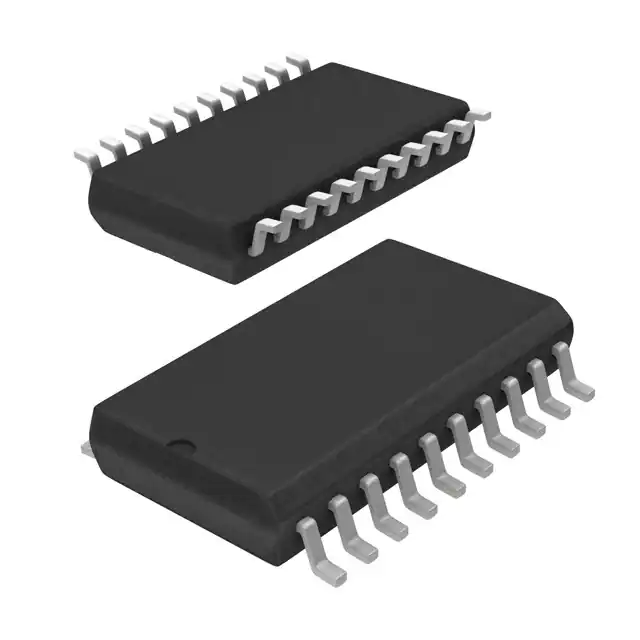
- Part No.:
- MMA3201EG
- Manufacturer:
- NXP Semiconductors
- Category:
- Accelerometers
- Package:
- 20-SOIC (0.295", 7.50mm Width)
- Datasheet:
-
 MMA3201EG.pdf
- Description:
- ACCELEROMETER 45G ANALOG 20SOIC
- Quantity:
- Payment:

- Shipping:

Inventory:1,098
Please send an inquiry. Send us your inquiry, and we will respond immediately.
Product details
Overview
MMA3201EG from Freescale Semiconductor is a dual-axis (X/Y) surface-micromachined capacitive accelerometer with integrated signal conditioning, 4th-order Bessel low-pass filtering, and factory-calibrated ±40g full-scale range. It delivers ratiometric linear analog outputs for both axes, operates from 4.75–5.25 V, draws 6–10 mA, and is qualified to AEC-Q100 Grade 2 (–40°C to +105°C) for automotive and industrial vibration monitoring.
For engineers reviewing the MMA3201EG datasheet, MMA3201EG pinout, MMA3201EG application, or MMA3201EG equivalent, key selection considerations include its dual-axis analog output architecture, self-test functionality with STATUS fault reporting, SOIC-20 package compatibility, and built-in temperature compensation eliminating external calibration components.
Technical Context
The MMA3201EG integrates a polysilicon micromachined g-cell transducer with a CMOS ASIC containing switched-capacitor sensing, gain/offset trimming via EPROM, and a 4-pole Bessel filter (f–3dB = 360–440 Hz). Its ratiometric output (0.46–0.54 × VDD at zero-g; 47.5–52.5 mV/g sensitivity) ensures stability across supply variations.
Self-test activation applies electrostatic force to the movable plate, inducing ~10–14.4 g equivalent deflection verified by output shift and latched STATUS flag. Fault detection includes low-voltage detect (VLVD = 2.7–4.0 V), clock monitor (fmin = 50–260 kHz), and EPROM parity check - all reported on the open-drain STATUS pin.
Key Specifications
| Parameter | Value and Actual Design Meaning |
|---|---|
| Full-Scale Range | ±40 g per axis - supports high-dynamic-range impact and vibration measurement without clipping |
| Output Sensitivity | 47.5–52.5 mV/g - enables direct interface with 12-bit ADCs (e.g., 5 V supply → ~2 V full-scale swing) |
| Bandwidth | 360–440 Hz - preserves pulse shape integrity for shock/impact events via Bessel filter phase linearity |
| Supply Voltage | 4.75–5.25 V - operates within standard 5 V rail with ±5% tolerance; uncalibrated beyond this range |
| Operating Temp | –40°C to +105°C - meets AEC-Q100 Grade 2 for under-hood automotive and industrial environments |
| Self-Test Output | 10–14.4 g equivalent step response - verifies mechanical integrity and signal chain in-system prior to deployment |
| Power Supply Current | 6–10 mA - supports low-power embedded systems with predictable thermal budget |
Pinout & Package
Package: 20-lead SOIC (Case 475A-02), surface-mount, lead-free (KEG suffix), 0.380″ wide body, 1.27 mm pitch.
| Pin/Terminal | Circuit Role | Design Meaning |
|---|---|---|
| 5 ST | Logic input | Active-high self-test trigger; internal pull-down prevents false activation; initiates calibrated electrostatic deflection |
| 6 XOUT | Analog output | Ratiometric voltage proportional to X-axis acceleration (0.46–0.54 × VDD at 0 g; ±40 g range) |
| 7 STATUS | Open-drain fault indicator | Latches high on LVD, clock failure, or EPROM parity error; reset via ST pulse ≥100 µs |
| 8 VSS | Digital ground | Reference for logic inputs/outputs; separate from analog ground to reduce noise coupling |
| 9 VDD | Digital supply | Primary 4.75–5.25 V power for logic and control circuits; requires 0.1 µF decoupling |
| 10 AVDD | Analog supply | Dedicated analog power rail; improves PSRR and reduces switching noise on sensor outputs |
| 11 YOUT | Analog output | Ratiometric voltage proportional to Y-axis acceleration; independent channel with identical specs to XOUT |
| 20 GND | Analog ground | Reference for analog signal path; PCB layout requires solid ground plane beneath device |
Key Features
| Feature | Design Value |
|---|---|
| Hermetic wafer-level seal | Eliminates moisture-induced drift and long-term calibration shift in harsh environments |
| Factory-trimmed zero-g offset | Removes need for external potentiometers or software calibration during system integration |
| 4th-order Bessel filter | Ensures minimal phase distortion for transient acceleration waveforms (e.g., impact pulses) |
| Integrated self-test with status latch | Enables automated pre-deployment verification of sensor and ASIC functionality in safety-critical systems |
| AEC-Q100 Grade 2 qualification | Validates reliability for automotive applications including airbag sensors and chassis control modules |
Applications
| Vibration Monitoring System | Hard Disk Drive Protection |
|---|---|
Use Scenario: Continuous monitoring of rotating machinery (motors, pumps) for early bearing wear detection. IC Role / Device Role / Timing Role: Dual-axis analog acceleration sensor providing real-time X/Y vibration amplitude and frequency data to MCU-based FFT analysis engine. Use Value: ±40 g range captures high-frequency bearing faults; 360–440 Hz bandwidth avoids aliasing while preserving transient signatures. | Use Scenario: Free-fall detection in laptops to park HDD heads before impact. IC Role / Device Role / Timing Role: Low-latency inertial trigger generating interrupt via STATUS pin when acceleration exceeds threshold. Use Value: Self-test capability validates sensor readiness at boot; ratiometric output eliminates supply variation errors in battery-powered systems. |
| Appliance Control Interface | Sports Diagnostic Equipment |
Use Scenario: Detecting drum imbalance or spin cycle anomalies in washing machines. IC Role / Device Role / Timing Role: Dual-axis motion detector feeding acceleration magnitude and direction into motor control algorithm. Use Value: Factory-calibrated sensitivity ensures consistent trip thresholds across production units without per-unit calibration. | Use Scenario: Measuring joint angular acceleration in biomechanical analysis suits. IC Role / Device Role / Timing Role: High-reliability analog sensor capturing dynamic movement profiles for athlete performance modeling. Use Value: AEC-Q100 qualification guarantees operation across wide temperature swings encountered outdoors or in gyms. |
Equivalent & Alternatives
The following parts are listed as comparable options for similar dual-axis analog accelerometer applications.
| Alternative Part | Technical Difference | Application Difference | Selection Advice |
|---|---|---|---|
| ADXL202E | Dual-axis, ±2 g full-scale, PWM/duty-cycle output (not analog voltage); 50–1000 Hz bandwidth; no integrated self-test or STATUS latch | Suitable for low-g tilt sensing but lacks MMA3201EG's high-g impact detection and fault reporting capability | Select ADXL202E only if PWM interface and lower sensitivity are acceptable; avoid for shock/vibration where analog output and diagnostics are required |
| MMA8451Q | 3-axis, ±2/4/8 g programmable range, I²C digital output; integrated FIFO, motion detection, and embedded functions; no analog outputs | Replaces MMA3201EG in systems requiring multi-axis orientation or smart features, but demands firmware support for digital interface | Choose MMA8451Q when digital bus integration and advanced features outweigh need for direct analog interfacing and self-contained diagnostics |
Compared with ADXL202E and MMA8451Q, the MMA3201EG uniquely delivers dual-axis ±40 g analog outputs with built-in self-test verification and hardware fault latching - making it optimal for deterministic, safety-aware analog-signal-chain designs where simplicity and diagnostic confidence are prioritized over programmability or axis count.
Availability
MMA3201EG is available at Aetrix Electronics and suitable for vibration monitoring, hard disk drive protection, and appliance control applications requiring stable component supply and long-term industrial availability.
Supply support for MMA3201EG includes scheduled delivery planning, volume procurement assistance, BOM continuity management, traceable sourcing, and lifecycle availability coordination for OEM customers, industrial embedded developers, connected-device designers, and electronics production programs.
Manufacturer
Freescale Semiconductor (now part of NXP Semiconductors) is a fabless semiconductor company specializing in embedded processing, analog, and sensor solutions for automotive, industrial, and consumer markets.
The MMA3201EG belongs to Freescale's Xtrinsic™ family of intelligent sensors, designed specifically for high-reliability inertial sensing in automotive safety systems and industrial condition monitoring where analog output fidelity and hardware-level diagnostics are critical.
FAQ
What is the operating temperature range for the MMA3201EG?
The MMA3201EG is rated for –40°C to +105°C operation and qualified to AEC-Q100 Grade 2. This specification ensures reliable performance in under-hood automotive environments and industrial enclosures where ambient temperatures exceed standard commercial ranges. The MMA3201EG maintains calibrated output accuracy across this full range due to on-chip temperature compensation circuitry.
Does the MMA3201EG require external components for basic operation?
No, the MMA3201EG requires only two external components for nominal operation: a 0.1 µF ceramic capacitor between VDD and VSS for power supply decoupling, and optional RC filters (1 kΩ + 0.01 µF) on XOUT/YOUT to suppress switched-capacitor clock noise. All signal conditioning, filtering, and calibration are fully integrated - no external resistors, capacitors, or trim pots are needed for zero-g offset or sensitivity.
How does the self-test function work on the MMA3201EG?
The MMA3201EG self-test applies an electrostatic force to the movable g-cell plate via the ST pin, inducing a mechanical deflection equivalent to 10–14.4 g. This produces a measurable step change in XOUT and YOUT voltages. The STATUS pin latches high during test execution and remains high if faults (LVD, clock failure, EPROM parity) are detected - allowing the host system to verify both mechanical and electronic functionality of the MMA3201EG in situ.
What is the purpose of separate VDD and AVDD pins on the MMA3201EG?
VDD powers the digital logic and control circuitry (self-test logic, EPROM, clock generator), while AVDD supplies the analog signal chain (g-cell interface, amplifiers, filters). This separation minimizes digital switching noise coupling into sensitive analog outputs, improving SNR and measurement accuracy. Both rails must be supplied with 4.75–5.25 V and independently decoupled with 0.1 µF capacitors to achieve specified MMA3201EG performance.
Can the MMA3201EG be used in safety-critical automotive applications?
Yes - the MMA3201EG is AEC-Q100 Grade 2 qualified (–40°C to +105°C) and includes hardware-level safety features: calibrated self-test, STATUS fault latching for LVD/clock/EPROM errors, and hermetic wafer-level sealing for long-term reliability. These capabilities make the MMA3201EG suitable for automotive applications such as airbag deployment triggers, rollover detection, and chassis stability control where deterministic behavior and diagnostic coverage are mandatory.
MMA3201EG Specifications
- Product attributes
- Attribute value
- Manufacturer:
- NXP Semiconductors
- Series:
- MMA
- Package/Case:
- 20-SOIC (0.295", 7.50mm Width)
- Packaging:
- Tube
- Product Status:
- Obsolete
- Type:
- Analog
- Axis:
- X, Y
- Acceleration Range:
- ±45g
- Sensitivity (LSB/g):
- -
- Sensitivity (mV/g):
- 50
- Bandwidth:
- 400Hz
- Output Type:
- Analog Voltage
- Voltage - Supply:
- 4.75V ~ 5.25V
- Features:
- -
- Operating Temperature:
- -40°C ~ 125°C
- Grade:
- -
- Qualification:
- -
- Mounting Type:
- Surface Mount
- Supplier Device Package:
- 20-SOIC
MMA3201EG FAQ
1.How can I place an order for MMA3201EG through Aetrix?
Please submit a Request for Quotation (RFQ) for MMA3201EG on Aetrix. Our sales agent will provide a competitive quotation and guide you through the order confirmation once you accept the terms.
2.Are the price and stock information for MMA3201EG reliable?
The price and inventory of MMA3201EG are updated periodically and may fluctuate due to market conditions. Stock and pricing data are typically refreshed every 24 hours. Quotation validity for MMA3201EG is usually 5 days.
3.What payment methods are accepted for MMA3201EG?
We accept Wire Transfer, PayPal, Credit Card, Western Union, MoneyGram, and Escrow for MMA3201EG transactions.
Note: Certain payment methods may incur a processing fee.
4.How is shipping managed for MMA3201EG?
MMA3201EG orders can be shipped via leading logistics carriers, including DHL, UPS, FedEx, TNT, or Registered Mail.
Once your MMA3201EG order is processed, you will receive an email with the shipment details and tracking number.
Note: Tracking information may take up to 24 hours to appear. Express delivery typically takes 3–5 business days.
5.How can I obtain technical support or documentation for MMA3201EG?
For technical support, including MMA3201EG datasheets, pinout diagrams, or application guidance, please contact our engineering support team. They can provide detailed documentation and assistance for your MMA3201EG requirements.
6.How does Aetrix verify that MMA3201EG is sourced from the original manufacturer or authorized distributors?
All MMA3201EG products on Aetrix are procured from qualified distributors and authorized channels. Our dedicated quality assurance team conducts strict verification, including traceability checks and, if necessary, third-party testing. This ensures that MMA3201EG meets industry standards.
7.What is the process for return or replacement of MMA3201EG?
All MMA3201EG units undergo pre-shipment inspection (PSI). If there is an issue with MMA3201EG, returns or replacements are accepted under the following conditions:
1.Quantity discrepancies, incorrect items, or visible external defects (such as breakage or corrosion), acknowledged by Aetrix.
2.The issue is reported within 90 days of delivery.
3.The MMA3201EG part is unused and in its original packaging.
Return procedure for MMA3201EG:
1.Submit a request within 90 days.
2.Obtain a Return Material Authorization (RMA) from Aetrix.
MMA3201EG Tags

-
MXC4005XC
Memsic Inc.
-
MC3419
Memsic Inc.
-
MC3479
Memsic Inc.
-
MXC6655XA
Memsic Inc.
-
MC3630
Memsic Inc.
.jpg)
-
LIS2HH12TR
STMicroelectronics
-
KX122-1037
Kionix Inc.
-
LIS2DE12TR
STMicroelectronics
-
LIS2DH12TR
STMicroelectronics
-
MC3635
Memsic Inc.
-
LIS2DS12TR
STMicroelectronics

-
LIS3DHTR
STMicroelectronics
Tech Hub

A practical engineering guide to 3.3V and 5V logic compatibility, input thresholds, resistor dividers, translator ICs, MOSFET level shifting, I2C pull-ups, timing limits and power-sequencing risks.

The 74HC595 uses push-pull logic outputs, while the TPIC6B595 uses 50 V open-drain DMOS sinks for higher-power loads. This guide compares timing, current limits, 3.3 V interfacing, load wiring, thermal…

The 74HC595 converts serial data into eight stable parallel outputs. This guide covers pin functions, shift and storage timing, OE and MR behavior, drive-current limits, cascading, voltage compatibilit…

A technical comparison of level-sensitive latches and edge-triggered flip-flops, covering timing windows, setup and hold limits, master–slave operation, time borrowing, race-through, HDL inference and…

A D latch stores one bit while Enable controls when data can pass. This reference covers gate-level operation, truth tables, transparency, setup and hold timing, LE versus OE, common ICs and practical …

An SR latch stores one bit through cross-coupled feedback. This engineering reference covers NOR and NAND implementations, truth tables, forbidden-state recovery, gated operation, switch debouncing, fa…

Latch circuits retain one bit through feedback. This technical reference covers SR and D latches, truth tables, transparency, timing limits, latch-versus-flip-flop behavior, applications and common log…

An engineering guide to LED driver operation, constant-current and constant-voltage outputs, linear and switching topologies, dimming, IC selection, calculations, replacement compatibility, and fault c…

Operational amplifier guide covering op amp basics, feedback, ideal vs real op amps, common configurations, buffer circuits, offset, bias current, gain-bandwidth, slew rate, rail-to-rail limits and sel…

Jumper cables guide covering safe connection order, red and black clamp placement, final ground connection, cable gauge, length, clamp quality, copper vs CCA cables, jump starter comparison and battery…


