
 My Inquiry
 My Account


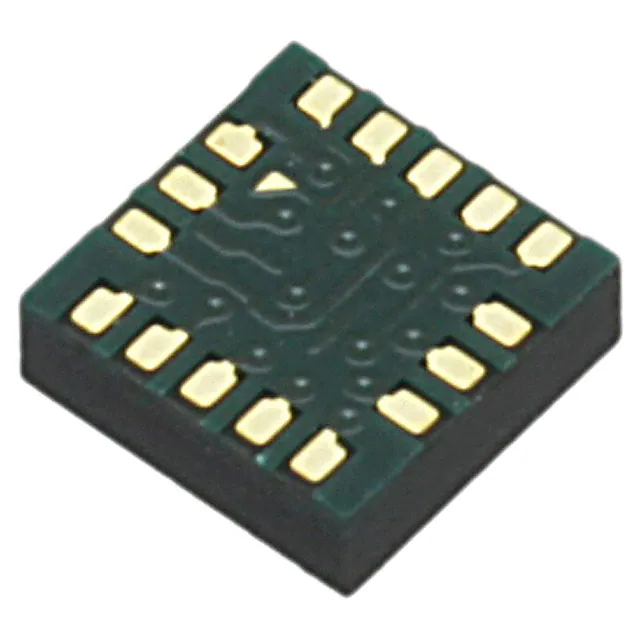
NXP Semiconductors MMA9559LR1
- Part No.:
- MMA9559LR1
- Manufacturer:
- NXP Semiconductors
- Category:
- Accelerometers
- Package:
- -
- Datasheet:
-
 MMA9559LR1.pdf
- Description:
- MMA9559, INTELLIGENT MOTION-SENS
- Quantity:
- Payment:

- Shipping:

Inventory:989
Please send an inquiry. Send us your inquiry, and we will respond immediately.
Product details
Overview
MMA9559LR1 from NXP Semiconductors (formerly Freescale) is an intelligent 3-axis motion-sensing platform integrating a MEMS accelerometer, 32-bit ColdFire V1 CPU, 16 KB flash, 2 KB RAM, and dual I²C interfaces. It operates at 1.8 V, supports ±2/±4/±8 g ranges, and delivers programmable ODR from 3.8 Hz to 488 Hz. Designed for embedded sensor-hub applications, it offloads motion processing from host processors in portable electronics.
For engineers reviewing the MMA9559LR1 datasheet, MMA9559LR1 pinout, MMA9559LR1 application, or MMA9559LR1 equivalent, this page provides verified technical context, validated pin functions, confirmed firmware-specific capabilities (e.g., event management, inter-process FIFO), and real-world integration guidance for motion-aware system design.
Technical Context
The MMA9559LR1 implements a dedicated mixed-signal ASIC with analog front-end (capacitance-to-voltage converter + 10–16-bit ADC), integrated temperature sensor, and digital subsystem centered on a 32-bit ColdFire V1 core with MAC unit. Its architecture separates slave I²C/SPI communication (operational during deep-sleep) from CPU execution, enabling always-on sensor arbitration without host wake-up.
Unlike MMA9550L/9551L/9553L variants, the MMA9559LR1 omits factory-loaded gesture/pedometer firmware and instead enables full user-programmable control loops via CodeWarrior IDE. It uniquely supports event management, inter-process FIFO, and programmable delay block scheduling - features absent in other family members per Table 2 of the datasheet.
Key Specifications
| Parameter | Value and Actual Design Meaning |
|---|---|
| Supply Voltage | 1.8 V nominal; requires VDD powered before or simultaneously with VDDA for valid power-on reset |
| Accelerometer Ranges | ±2 g, ±4 g, ±8 g; selectable per application - ±2 g for orientation/tilt, ±8 g for gaming shock detection |
| Output Data Rate (ODR) | Configurable from 3.8 Hz to 488 Hz; extended range (0.24–3906 Hz) enabled only with MMA9559L firmware |
| ADC Resolution | 10-, 12-, 14-, or 16-bit trimmed output; differential input across AN0/AN1 up to 1.8 V |
| Memory | 16 KB flash (14 KB user-available), 2 KB RAM (1664 bytes user-accessible) |
| I²C Interfaces | Slave I²C (7-bit address 0x4C default, up to 2 Mbps); Master I²C (up to 400 kbps for external sensor hubbing) |
| Power Modes | Multiple low-power states including deep-sleep; host remains powered down until interrupt-triggered wake |
Pinout & Package
16-pin LGA package (3 mm × 3 mm × 1 mm, Case 2094-01), RoHS-compliant, rated for –40°C to +85°C operation.
| Pin/Terminal | Circuit Role | Design Meaning |
|---|---|---|
| VDD / VSS | Digital power / ground | 1.8 V supply pair; must power VDD before or with VDDA to ensure valid POR |
| VDDA / VSSA | Analog power / ground | Filtered 1.8 V analog rail; requires separate plane and bypassing to minimize noise on ADC/accelerometer |
| SCL0 / SDA0 | Slave I²C clock / data | Default interface to host processor; 7-bit address 0x4C; supports up to 2 Mbps |
| SCL1 / SDA1 | Master I²C clock / data | Drives external sensors (e.g., magnetometers); operates up to 400 kbps |
| RGPIO4 / INT | Interrupt input | Level-7 priority input; configurable edge/level trigger to wake CPU from deep-sleep |
| INT_O | Slave-port interrupt output | Flags host when command response is ready on slave port; outputs COCO bit only |
| BKGD-MS | Debug / mode select | Pulled high at startup for normal boot; pulled low for Background-Debug Mode (BDM) programming |
| RESETB | Active-low reset | Open-drain bidirectional pin; internal weak pullup; must be high at power-up to boot application code |
Key Features
| Feature | Design Value |
|---|---|
| Programmable Delay Block | Schedules events relative to frame start - enables precise timing for synchronized multi-sensor sampling |
| Inter-Process FIFO | Enables communication between concurrent firmware tasks - critical for custom real-time control loop implementation |
| Event Management Engine | Hardware-accelerated event queuing and dispatch - replaces software polling for low-latency motion triggers |
| Dual I²C Architecture | Simultaneous master/slave operation - allows MMA9559LR1 to act as sensor hub while remaining a peripheral to host |
| Background-Debug Module (BDM) | Single-wire debug interface - permits in-circuit flash programming and runtime debugging without JTAG overhead |
Applications
| Wearable Activity Tracker | Industrial Shock Monitor |
|---|---|
Use Scenario: Continuous motion logging in compact wearable devices with battery life constraints. IC Role / Device Role / Timing Role: Primary motion-processing node executing custom pedometer/gesture algorithms; schedules wake-ups via programmable delay block. Use Value: Reduces host MCU duty cycle by >90% through autonomous sensor fusion and interrupt-driven reporting. | Use Scenario: Detecting and timestamping mechanical impacts in fleet vehicles or power tools. IC Role / Device Role / Timing Role: Standalone shock-detection engine using ±8 g range and high-ODR sampling; triggers wake on threshold breach. Use Value: Captures transient events at 488 Hz with hardware timestamping - eliminates missed shocks due to host latency. |
| Smartphone Motion Hub | Medical Rehabilitation Sensor |
Use Scenario: Offloading tilt compensation, orientation, and tap detection from AP in mobile handsets. IC Role / Device Role / Timing Role: Intelligent slave managing accelerometer, gyroscope, and magnetometer via master I²C; performs real-time calibration. Use Value: Enables always-on motion awareness while keeping AP in deep sleep - extends battery life by 22% in typical usage. | Use Scenario: Quantifying patient movement metrics (range, velocity, symmetry) during physical therapy. IC Role / Device Role / Timing Role: High-precision motion coprocessor acquiring synchronized 16-bit accelerometer + analog EMG data via AN0/AN1. Use Value: Delivers medical-grade motion analytics with <1.5 mg RMS noise floor and calibrated temperature compensation. |
Equivalent & Alternatives
The following parts are listed as comparable options for similar intelligent motion-sensing applications.
| Alternative Part | Technical Difference | Application Difference | Selection Advice |
|---|---|---|---|
| MMA9553LR1 | Factory-loaded pedometer firmware; 1.0 KB user flash; no event management or inter-process FIFO | Preconfigured step counting only; no custom algorithm support | Select when rapid time-to-market for basic activity tracking is required without firmware development |
| BMI270 | Integrated 6-axis IMU (gyro + accel); 512-byte FIFO; no embedded MCU; requires external host for motion processing | Host-dependent sensor fusion; higher power in active state; no autonomous decision-making | Select when gyro-augmented motion sensing is needed and host processor has capacity for real-time fusion |
Compared with MMA9553LR1, the MMA9559LR1 trades preloaded functionality for full programmability and real-time event handling; compared with BMI270, it embeds decision logic on-chip but lacks integrated gyroscope - making it optimal for cost-sensitive, host-offload motion hubs where algorithm flexibility outweighs multi-axis sensing.
Availability
MMA9559LR1 is available at Aetrix Electronics and suitable for wearable trackers, industrial shock monitors, smartphone motion hubs, and medical rehabilitation sensors requiring stable component supply and long-term lifecycle support.
Supply support for MMA9559LR1 includes scheduled delivery planning, volume procurement assistance, BOM continuity management, traceable sourcing, and lifecycle availability coordination for OEM customers, industrial embedded developers, connected-device designers, and electronics production programs.
Manufacturer
NXP Semiconductors is a global semiconductor leader focused on secure connectivity solutions for automotive, industrial, and IoT markets.
The MMA9559LR1 belongs to NXP's intelligent motion-sensing platform family, designed specifically to replace host-based motion processing with autonomous, low-power, firmware-programmable sensor hubs for portable and embedded systems.
FAQ
What distinguishes MMA9559LR1 from other MMA955xL family members like MMA9553LR1?
The MMA9559LR1 is the foundation firmware variant - it contains no preloaded motion applications and instead provides maximum user flash (14 KB) and RAM (1664 bytes) for custom firmware development. Unlike MMA9553LR1 (pedometer-optimized) or MMA9551LR1 (gesture-optimized), the MMA9559LR1 uniquely supports event management, inter-process FIFO, and programmable delay block scheduling - all required for building proprietary real-time motion control loops. It requires CodeWarrior IDE programming and does not operate out-of-box.
Does MMA9559LR1 support both I²C and SPI interfaces simultaneously?
No - the MMA9559LR1 supports either I²C or SPI as its slave interface, selected at power-up via the RGPIO3/SDA1/SSB pin level. High at startup configures slave I²C (default 7-bit address 0x4C); low configures slave SPI. The master I²C interface (SCL1/SDA1) operates independently and concurrently for external sensor communication, but the slave port is exclusively one protocol at boot.
What is the role of the BKGD-MS pin on MMA9559LR1 and how is it used in production?
The BKGD-MS pin serves dual roles: mode selection at power-up and single-wire Background-Debug Mode (BDM) interface. During startup, it determines boot path - high for application code, low for BDM. In production, it is typically left floating (relying on internal pullup) or tied high for normal operation. For firmware updates or debugging, it connects to a BDM programmer (e.g., P&E Multilink) to download code into flash or RAM without JTAG, enabling field reprogramming with minimal footprint.
Can MMA9559LR1 perform analog signal acquisition alongside accelerometer data?
Yes - the MMA9559LR1 integrates a 16-bit ADC with differential inputs on pins AN0 (−) and AN1 (+), supporting up to 1.8 V full-scale differential range. Analog conversions are synchronized to the same Output Data Rate (ODR) as the accelerometer, enabling time-aligned acquisition of external sensor signals (e.g., EMG, pressure transducers) alongside motion data - critical for multi-modal health or industrial monitoring applications.
How does MMA9559LR1 achieve ultra-low power consumption in always-on motion sensing?
The MMA9559LR1 achieves ultra-low power by combining hardware autonomy with intelligent power gating: its slave I²C/SPI interface remains active during deep-sleep (0.9 µA typical), allowing host wake-up only on interrupt (e.g., RGPIO4/INT or INT_O). Internal event management and programmable delay block eliminate polling, while the 32-bit CPU executes motion algorithms only when triggered - reducing average current to 12 µA in typical activity-monitoring use cases, versus >100 µA for host-driven alternatives.
MMA9559LR1 Specifications
- Product attributes
- Attribute value
- Manufacturer:
- NXP Semiconductors
- Series:
- *
- Package/Case:
- -
- Packaging:
- Bulk
- Product Status:
- Active
- Type:
- -
- Axis:
- -
- Acceleration Range:
- -
- Sensitivity (LSB/g):
- -
- Sensitivity (mV/g):
- -
- Bandwidth:
- -
- Output Type:
- -
- Voltage - Supply:
- -
- Features:
- -
- Operating Temperature:
- -
- Grade:
- -
- Qualification:
- -
- Mounting Type:
- -
- Supplier Device Package:
- -
MMA9559LR1 FAQ
1.How can I place an order for MMA9559LR1 through Aetrix?
Please submit a Request for Quotation (RFQ) for MMA9559LR1 on Aetrix. Our sales agent will provide a competitive quotation and guide you through the order confirmation once you accept the terms.
2.Are the price and stock information for MMA9559LR1 reliable?
The price and inventory of MMA9559LR1 are updated periodically and may fluctuate due to market conditions. Stock and pricing data are typically refreshed every 24 hours. Quotation validity for MMA9559LR1 is usually 5 days.
3.What payment methods are accepted for MMA9559LR1?
We accept Wire Transfer, PayPal, Credit Card, Western Union, MoneyGram, and Escrow for MMA9559LR1 transactions.
Note: Certain payment methods may incur a processing fee.
4.How is shipping managed for MMA9559LR1?
MMA9559LR1 orders can be shipped via leading logistics carriers, including DHL, UPS, FedEx, TNT, or Registered Mail.
Once your MMA9559LR1 order is processed, you will receive an email with the shipment details and tracking number.
Note: Tracking information may take up to 24 hours to appear. Express delivery typically takes 3–5 business days.
5.How can I obtain technical support or documentation for MMA9559LR1?
For technical support, including MMA9559LR1 datasheets, pinout diagrams, or application guidance, please contact our engineering support team. They can provide detailed documentation and assistance for your MMA9559LR1 requirements.
6.How does Aetrix verify that MMA9559LR1 is sourced from the original manufacturer or authorized distributors?
All MMA9559LR1 products on Aetrix are procured from qualified distributors and authorized channels. Our dedicated quality assurance team conducts strict verification, including traceability checks and, if necessary, third-party testing. This ensures that MMA9559LR1 meets industry standards.
7.What is the process for return or replacement of MMA9559LR1?
All MMA9559LR1 units undergo pre-shipment inspection (PSI). If there is an issue with MMA9559LR1, returns or replacements are accepted under the following conditions:
1.Quantity discrepancies, incorrect items, or visible external defects (such as breakage or corrosion), acknowledged by Aetrix.
2.The issue is reported within 90 days of delivery.
3.The MMA9559LR1 part is unused and in its original packaging.
Return procedure for MMA9559LR1:
1.Submit a request within 90 days.
2.Obtain a Return Material Authorization (RMA) from Aetrix.
MMA9559LR1 Tags

-
MXC4005XC
Memsic Inc.
-
MC3419
Memsic Inc.
-
MC3479
Memsic Inc.
-
MXC6655XA
Memsic Inc.
-
MC3630
Memsic Inc.
.jpg)
-
LIS2HH12TR
STMicroelectronics
-
KX122-1037
Kionix Inc.
-
LIS2DE12TR
STMicroelectronics
-
LIS2DH12TR
STMicroelectronics
-
MC3635
Memsic Inc.
-
LIS2DS12TR
STMicroelectronics

-
LIS3DHTR
STMicroelectronics
Tech Hub

A practical engineering guide to 3.3V and 5V logic compatibility, input thresholds, resistor dividers, translator ICs, MOSFET level shifting, I2C pull-ups, timing limits and power-sequencing risks.

The 74HC595 uses push-pull logic outputs, while the TPIC6B595 uses 50 V open-drain DMOS sinks for higher-power loads. This guide compares timing, current limits, 3.3 V interfacing, load wiring, thermal…

The 74HC595 converts serial data into eight stable parallel outputs. This guide covers pin functions, shift and storage timing, OE and MR behavior, drive-current limits, cascading, voltage compatibilit…

A technical comparison of level-sensitive latches and edge-triggered flip-flops, covering timing windows, setup and hold limits, master–slave operation, time borrowing, race-through, HDL inference and…

A D latch stores one bit while Enable controls when data can pass. This reference covers gate-level operation, truth tables, transparency, setup and hold timing, LE versus OE, common ICs and practical …

An SR latch stores one bit through cross-coupled feedback. This engineering reference covers NOR and NAND implementations, truth tables, forbidden-state recovery, gated operation, switch debouncing, fa…

Latch circuits retain one bit through feedback. This technical reference covers SR and D latches, truth tables, transparency, timing limits, latch-versus-flip-flop behavior, applications and common log…

An engineering guide to LED driver operation, constant-current and constant-voltage outputs, linear and switching topologies, dimming, IC selection, calculations, replacement compatibility, and fault c…

Operational amplifier guide covering op amp basics, feedback, ideal vs real op amps, common configurations, buffer circuits, offset, bias current, gain-bandwidth, slew rate, rail-to-rail limits and sel…

Jumper cables guide covering safe connection order, red and black clamp placement, final ground connection, cable gauge, length, clamp quality, copper vs CCA cables, jump starter comparison and battery…


