
 My Inquiry
 My Account


NXP Semiconductors NCF2951ETT/TPE080J
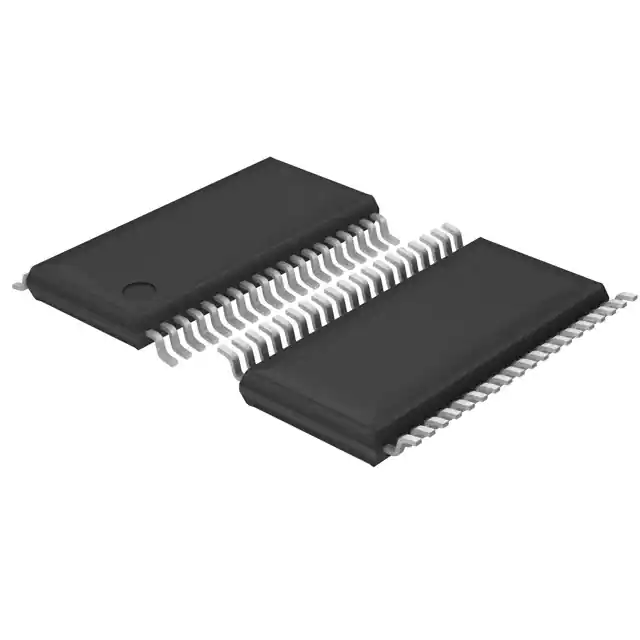
- Part No.:
- NCF2951ETT/TPE080J
- Manufacturer:
- NXP Semiconductors
- Category:
- RFID, RF Access, Monitoring ICs
- Package:
- -
- Datasheet:
-
 NCF2951ETT/TPE080J.pdf
- Description:
- IC PASS ENTRY 125KHZ
- Quantity:
- Payment:

- Shipping:

Inventory:1,955
Please send an inquiry. Send us your inquiry, and we will respond immediately.
Product details
Overview
NCF2951ETT/TPE080J from NXP Semiconductors is a fourth-generation keyless entry/go IC with integrated 16-bit RISC microcontroller, 3-channel active 125 kHz LF interface, and 3D security transponder functionality. It delivers ultra-low power operation, 2 KB EEPROM, 16 KB EROM + 8 KB ROM, 512-byte RAM, and multi-mode crypto support (AES-128, 96-bit) for automotive secure access systems.
For engineers reviewing the NCF2951ETT/TPE080J datasheet, NCF2951ETT/TPE080J pinout, NCF2951ETT/TPE080J application, or NCF2951ETT/TPE080J equivalent, key selection considerations include LF sensitivity for inside/outside detection, UHF response timing compatibility with transceivers like PQJ7980, crypto protocol alignment with OEM immobilizer requirements, and TSSOP38 package integration into compact door handle modules.
Technical Context
The NCF2951ETT/TPE080J implements a dedicated 16-bit RISC core optimized for low-power wake-up and cryptographic challenge-response execution. Its 3D active LF frontend supports simultaneous 125 kHz signal reception across three orthogonal axes, enabling precise spatial localization of the key fob relative to vehicle entry points.
It integrates a hardware-based multi-mode crypto unit supporting AES-128, 96-bit proprietary protocols, and legacy car access algorithms - all verified against NXP's immobilizer portfolio. The device operates in dual-mode: active keyless entry (LF wake-up + UHF response) and passive backup mode using immobilizer basestation coupling.
Key Specifications
| Parameter | Value and Actual Design Meaning |
|---|---|
| Microcontroller Core | 16-bit RISC architecture enabling deterministic execution of crypto and LF/UHF protocol stacks |
| LF Interface | 3-channel active 125 kHz frontend with orthogonal coil support for true 3D field sensing |
| Memory | 2 KB EEPROM (non-volatile key data), 16 KB EROM + 8 KB ROM (firmware + OEM app space) |
| Crypto Support | AES-128, 96-bit, and NXP immobilizer-compatible protocols executed in hardware accelerator |
| I/O Resources | Up to 21 I/O ports including 8 wake-up inputs, 2 SPI interfaces, and 3 PWM channels for RGB LED control |
| Package | TSSOP38 - 38-pin thermally enhanced thin shrink small outline package for high-density automotive PCBs |
Pinout & Package
TSSOP38 package with exposed thermal pad; 0.65 mm pitch, 12.5 × 4.4 mm body size, JEDEC MO-153 compliant.
| Pin/Terminal | Circuit Role | Design Meaning |
|---|---|---|
| IN1P/IN1N, IN2P/IN2N, IN3P/IN3N | 3D LF differential inputs | Accept orthogonal 125 kHz magnetic field signals for spatial position detection |
| P10–P13, P20–P24, P30–P34 | General-purpose I/O | Configurable as wake-up inputs, button interfaces, or LED drive outputs |
| P14–P17 | SPI interface | Support external UHF transceiver communication (e.g., PQJ7980) via master/slave SPI |
| VBAT, VBATA, VDDC, VSS, VSSA | Power supply rails | Separate analog/digital domains with battery monitoring and low-dropout regulation |
| MSCL, MSDA | LED PWM outputs | Drive RGB status LEDs with color-coded feedback for authentication state |
Key Features
| Feature | Design Value |
|---|---|
| 3D Active LF Interface | Enables millimeter-level proximity discrimination between inside/outside vehicle zones without additional sensors |
| Hardware Crypto Accelerator | Offloads AES-128 and 96-bit encryption from CPU, reducing response latency to <15 ms per challenge |
| Passive LF Backup Mode | Allows full keyless function even at <1.8 V battery voltage via energy harvesting from immobilizer basestation |
| Integrated Temp Sensor | Monitors die temperature for adaptive LF gain calibration and crypto key refresh timing |
| UHF Transceiver Interface | Dedicated SPI port with configurable timing ensures interoperability with NXP PQJ7980 and compatible UHF ICs |
Applications
| Automotive Door Handle Module | Smart Key Fob Transponder |
|---|---|
Use Scenario: Embedded in vehicle door handle to detect hand approach and initiate LF challenge sequence. IC Role / Device Role / Timing Role: Primary LF frontend and crypto processor; initiates 125 kHz challenge within 200 ms of wake-up event. Use Value: Enables sub-1-second unlock latency with <±5 cm spatial resolution for reliable inside/outside detection. | Use Scenario: Core IC in OEM smart key fob housing 3D transponder coil and UHF transmitter. IC Role / Device Role / Timing Role: Responds to vehicle LF challenge with encrypted UHF reply; manages battery-aware sleep/wake cycles. Use Value: Delivers >10-year battery life using 210 µA active current and 30 nA deep-sleep mode. |
| Passive Entry Backup System | Vehicle Start Button Authentication |
Use Scenario: Integrated into vehicle pillar or dashboard for fallback immobilizer coupling when fob battery is depleted. IC Role / Device Role / Timing Role: Acts as LF basestation to power and interrogate passive transponder in fob via magnetic induction. Use Value: Maintains compliance with ISO 14443-A and SAE J2931/2 standards for low-energy backup authentication. | Use Scenario: Mounted behind push-button start panel to verify key presence inside cabin before engine cranking. IC Role / Device Role / Timing Role: Performs secondary LF ranging and UHF verification during ignition sequence. Use Value: Prevents unauthorized remote start by confirming key location within defined 3D cabin volume. |
Equivalent & Alternatives
The following parts are listed as comparable options for similar keyless entry/go applications.
| Alternative Part | Technical Difference | Application Difference | Selection Advice |
|---|---|---|---|
| NCF2952ETT/TPE080J | 1D LF interface only; no 3D transponder; identical memory map and crypto engine | Limited to single-axis LF detection; used in cost-sensitive entry-only systems without inside/outside discrimination | Select when 3D spatial awareness is not required and BOM cost reduction is prioritized |
| PCF7953 | 8-bit core; 125 kHz 3D LF frontend; no UHF interface; legacy crypto (no AES-128) | Designed for legacy keyless systems with separate UHF IC; lacks integrated transceiver interface | Choose for backward compatibility with existing PCF79xx-based designs requiring minimal firmware changes |
Compared with NCF2951ETT/TPE080J, NCF2952ETT/TPE080J removes 3D transponder capability but retains identical package and software compatibility, while PCF7953 offers proven reliability in mature platforms but requires external UHF handling and lacks modern crypto acceleration.
Availability
NCF2951ETT/TPE080J is available at Aetrix Electronics and suitable for automotive door handle modules, smart key fobs, passive entry backup systems, and push-button start authentication requiring stable component supply and long-term lifecycle assurance.
Supply support for NCF2951ETT/TPE080J includes scheduled delivery planning, volume procurement assistance, BOM continuity management, traceable sourcing, and lifecycle availability coordination for OEM customers, industrial embedded developers, connected-device designers, and electronics production programs.
Manufacturer
NXP Semiconductors is a global semiconductor leader focused on automotive, industrial, and IoT applications, with deep expertise in secure identification and wireless connectivity.
The ACTIC-4G product line - including NCF2951ETT/TPE080J - was engineered specifically for next-generation automotive keyless entry/go systems requiring 3D localization, ultra-low power, and hardware-accelerated security protocols.
FAQ
What is the primary function of the NCF2951ETT/TPE080J in a keyless entry system?
The NCF2951ETT/TPE080J serves as the central secure controller in automotive keyless entry/go systems, integrating a 16-bit RISC microcontroller, 3D active 125 kHz LF frontend, hardware crypto accelerator, and UHF transceiver interface. It executes challenge-response authentication, performs spatial localization of the key fob, and manages low-power states - all within a single TSSOP38 package. Its design enables seamless unlock and push-to-start functionality while meeting stringent automotive security and power requirements.
Does the NCF2951ETT/TPE080J support AES-128 encryption?
Yes, the NCF2951ETT/TPE080J includes a dedicated multi-mode crypto unit that natively supports AES-128 encryption alongside 96-bit proprietary protocols and legacy NXP immobilizer algorithms. This hardware-accelerated implementation ensures deterministic execution time (<15 ms per operation) and eliminates software-based vulnerabilities. The crypto engine is tightly coupled with the 16-bit RISC core and memory subsystem, enabling secure key storage in EEPROM and protected firmware execution in EROM/ROM.
What package type is used for the NCF2951ETT/TPE080J?
The NCF2951ETT/TPE080J is housed in a TSSOP38 package - a 38-pin thermally enhanced thin shrink small outline package with 0.65 mm pitch and JEDEC MO-153 compliance. This package features an exposed thermal pad for improved heat dissipation in high-density automotive PCB layouts, such as those found in door handle modules. Pin assignments are optimized for LF coil routing, UHF SPI interface, and RGB LED drive, with strict separation between analog and digital power domains.
How does the NCF2951ETT/TPE080J achieve ultra-low power consumption?
The NCF2951ETT/TPE080J achieves ultra-low power through multiple architectural features: a 16-bit RISC core with dynamic clock gating, 30 nA deep-sleep mode with wake-up on LF field detection, hardware crypto acceleration to minimize active time, and integrated power management with separate VBAT/VBATA rails. Its 3D LF frontend uses adaptive gain control and internal RC oscillator trimming to reduce reliance on external components. These features collectively enable >10-year battery life in smart key fobs operating at 210 µA active current.
Is the NCF2951ETT/TPE080J pin-compatible with earlier NXP keyless ICs like PCF7953?
No, the NCF2951ETT/TPE080J is not pin-compatible with PCF7953. It uses a TSSOP38 package with 38 pins, while PCF7953 is offered in smaller packages such as SOIC-20 or TSSOP-28. More critically, the pin functions differ significantly: NCF2951ETT/TPE080J includes dedicated 3D LF differential inputs (IN1P/IN1N, etc.), dual SPI interfaces, and RGB PWM outputs absent in PCF7953. Migration requires PCB redesign and firmware adaptation to leverage the enhanced 3D sensing and crypto capabilities of NCF2951ETT/TPE080J.
NCF2951ETT/TPE080J Specifications
- Product attributes
- Attribute value
- Manufacturer:
- NXP Semiconductors
- Series:
- -
- Package/Case:
- -
- Packaging:
- Tape & Reel (TR)
- Product Status:
- Active
- Type:
- Passive Entry/Start
- Frequency:
- 125kHz
- Standards:
- -
- Interface:
- SPI
- Voltage - Supply:
- -
- Operating Temperature:
- -
- Grade:
- -
- Qualification:
- -
- Mounting Type:
- -
- Supplier Device Package:
- -
NCF2951ETT/TPE080J FAQ
1.How can I place an order for NCF2951ETT/TPE080J through Aetrix?
Please submit a Request for Quotation (RFQ) for NCF2951ETT/TPE080J on Aetrix. Our sales agent will provide a competitive quotation and guide you through the order confirmation once you accept the terms.
2.Are the price and stock information for NCF2951ETT/TPE080J reliable?
The price and inventory of NCF2951ETT/TPE080J are updated periodically and may fluctuate due to market conditions. Stock and pricing data are typically refreshed every 24 hours. Quotation validity for NCF2951ETT/TPE080J is usually 5 days.
3.What payment methods are accepted for NCF2951ETT/TPE080J?
We accept Wire Transfer, PayPal, Credit Card, Western Union, MoneyGram, and Escrow for NCF2951ETT/TPE080J transactions.
Note: Certain payment methods may incur a processing fee.
4.How is shipping managed for NCF2951ETT/TPE080J?
NCF2951ETT/TPE080J orders can be shipped via leading logistics carriers, including DHL, UPS, FedEx, TNT, or Registered Mail.
Once your NCF2951ETT/TPE080J order is processed, you will receive an email with the shipment details and tracking number.
Note: Tracking information may take up to 24 hours to appear. Express delivery typically takes 3–5 business days.
5.How can I obtain technical support or documentation for NCF2951ETT/TPE080J?
For technical support, including NCF2951ETT/TPE080J datasheets, pinout diagrams, or application guidance, please contact our engineering support team. They can provide detailed documentation and assistance for your NCF2951ETT/TPE080J requirements.
6.How does Aetrix verify that NCF2951ETT/TPE080J is sourced from the original manufacturer or authorized distributors?
All NCF2951ETT/TPE080J products on Aetrix are procured from qualified distributors and authorized channels. Our dedicated quality assurance team conducts strict verification, including traceability checks and, if necessary, third-party testing. This ensures that NCF2951ETT/TPE080J meets industry standards.
7.What is the process for return or replacement of NCF2951ETT/TPE080J?
All NCF2951ETT/TPE080J units undergo pre-shipment inspection (PSI). If there is an issue with NCF2951ETT/TPE080J, returns or replacements are accepted under the following conditions:
1.Quantity discrepancies, incorrect items, or visible external defects (such as breakage or corrosion), acknowledged by Aetrix.
2.The issue is reported within 90 days of delivery.
3.The NCF2951ETT/TPE080J part is unused and in its original packaging.
Return procedure for NCF2951ETT/TPE080J:
1.Submit a request within 90 days.
2.Obtain a Return Material Authorization (RMA) from Aetrix.
NCF2951ETT/TPE080J Tags

-
SL2S2602FTBX
NXP Semiconductors
-
ST25DV04K-IER6S3
STMicroelectronics
-
ST25DV04K-IER6C3
STMicroelectronics
-
LXMSJZNCMD-217
Murata Electronics

-
NT3H2111W0FTTJ
NXP Semiconductors
-
NT3H2111W0FHKH
NXP Semiconductors
-
M24LR04E-RMC6T/2
STMicroelectronics
-
ST25DV04KC-JF6D3
STMicroelectronics
-
ST25DV64KC-IE6S3
STMicroelectronics
-
ST25DV64K-IER6T3
STMicroelectronics
-
NT3H2211W0FTTJ
NXP Semiconductors
-
NT3H2211W0FHKH
NXP Semiconductors
Tech Hub

A practical engineering guide to 3.3V and 5V logic compatibility, input thresholds, resistor dividers, translator ICs, MOSFET level shifting, I2C pull-ups, timing limits and power-sequencing risks.

The 74HC595 uses push-pull logic outputs, while the TPIC6B595 uses 50 V open-drain DMOS sinks for higher-power loads. This guide compares timing, current limits, 3.3 V interfacing, load wiring, thermal…

The 74HC595 converts serial data into eight stable parallel outputs. This guide covers pin functions, shift and storage timing, OE and MR behavior, drive-current limits, cascading, voltage compatibilit…

A technical comparison of level-sensitive latches and edge-triggered flip-flops, covering timing windows, setup and hold limits, master–slave operation, time borrowing, race-through, HDL inference and…

A D latch stores one bit while Enable controls when data can pass. This reference covers gate-level operation, truth tables, transparency, setup and hold timing, LE versus OE, common ICs and practical …

An SR latch stores one bit through cross-coupled feedback. This engineering reference covers NOR and NAND implementations, truth tables, forbidden-state recovery, gated operation, switch debouncing, fa…

Latch circuits retain one bit through feedback. This technical reference covers SR and D latches, truth tables, transparency, timing limits, latch-versus-flip-flop behavior, applications and common log…

An engineering guide to LED driver operation, constant-current and constant-voltage outputs, linear and switching topologies, dimming, IC selection, calculations, replacement compatibility, and fault c…

Operational amplifier guide covering op amp basics, feedback, ideal vs real op amps, common configurations, buffer circuits, offset, bias current, gain-bandwidth, slew rate, rail-to-rail limits and sel…

Jumper cables guide covering safe connection order, red and black clamp placement, final ground connection, cable gauge, length, clamp quality, copper vs CCA cables, jump starter comparison and battery…


