
 My Inquiry
 My Account


NXP Semiconductors NCF2952XTT/TPE080J
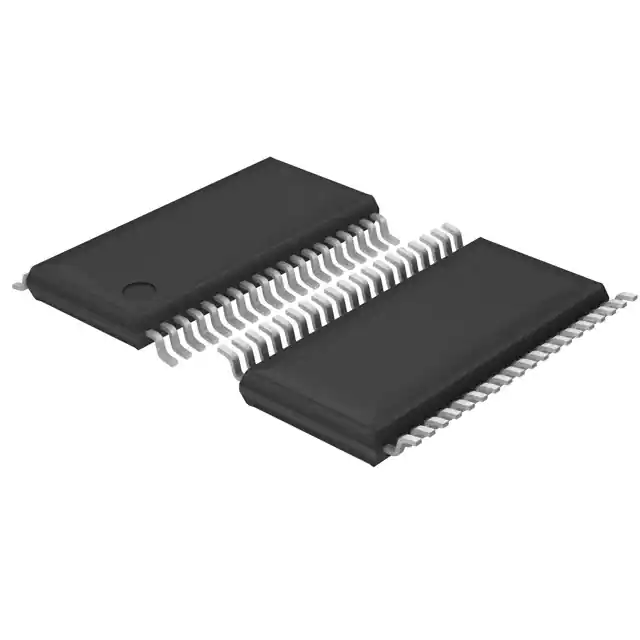
- Part No.:
- NCF2952XTT/TPE080J
- Manufacturer:
- NXP Semiconductors
- Category:
- RFID, RF Access, Monitoring ICs
- Package:
- 38-TFSOP (0.173", 4.40mm Width)
- Datasheet:
-
 NCF2952XTT/TPE080J.pdf
- Description:
- IC PASS ENTRY 125KHZ 38TSSOP
- Quantity:
- Payment:

- Shipping:

Inventory:4,069
Please send an inquiry. Send us your inquiry, and we will respond immediately.
Product details
Overview
NCF2952XTT/TPE080J from NXP Semiconductors is a fourth-generation keyless entry/go IC with 16-bit RISC microcontroller core, integrated 3-channel active 125 kHz LF interface (1D), passive LF backup for immobilizer, 2 KB EEPROM, 16 KB EROM + 8 KB ROM, and 512-byte RAM - deployed in automotive door handle proximity detection and push-to-start authentication systems.
For engineers reviewing the NCF2952XTT/TPE080J datasheet, NCF2952XTT/TPE080J pinout, NCF2952XTT/TPE080J application, or NCF2952XTT/TPE080J equivalent, key selection considerations include LF sensitivity (3-channel active 125 kHz), UHF transmitter interface support, AES-128 crypto unit compliance, TSSOP38 package constraints, and wake-up I/O count (up to 8).
Technical Context
The NCF2952XTT/TPE080J implements a dedicated 16-bit RISC core optimized for ultra-low-power operation during standby and LF wake-up cycles, with hardware-accelerated multi-mode crypto supporting AES-128 and 96-bit protocols for mutual authentication between vehicle and transponder.
Its 3-channel active LF frontend enables precise 1D field measurement for inside/outside detection, while integrated passive LF mode provides fallback immobilizer communication when battery voltage drops below operational threshold - both operating at 125 kHz with calibrated RSSI processing.
Key Specifications
| Parameter | Value and Actual Design Meaning |
|---|---|
| Core Architecture | 16-bit RISC microcontroller with low-power sleep modes and wake-on-LF event capability |
| LF Interface | 3-channel active 125 kHz frontend + 1-channel passive LF for immobilizer backup |
| Memory | 2 KB EEPROM (non-volatile configuration), 16 KB EROM + 8 KB ROM (firmware/application), 512 B RAM |
| Crypto Unit | Multi-mode engine supporting AES-128, 96-bit, and legacy car access protocols |
| I/O Count | Up to 21 GPIOs including 8 wake-up/button inputs, 2 SPI interfaces, and 3 PWM outputs |
| Package | TSSOP38 - 38-pin thin shrink small-outline package with 0.5 mm pitch, footprint-optimized for compact door module PCBs |
Pinout & Package
TSSOP38 package with exposed thermal pad; 38-pin leaded surface-mount outline measuring 9.7 mm × 4.4 mm × 1.2 mm (max height), designed for reflow soldering and mechanical stability in automotive door modules.
| Pin/Terminal | Circuit Role | Design Meaning |
|---|---|---|
| IN1P/IN1N, IN2P/IN2N, IN3P/IN3N | Differential LF antenna inputs | Three independent 125 kHz active LF receiver channels for directional field sensing |
| P10–P13, P20–P24, P30–P34 | General-purpose I/O | Configurable as wake-up inputs, button interfaces, LED drivers, or spare digital signals |
| P14–P17 | SPI interface pins | Two full-duplex SPI ports supporting external UHF transceiver (e.g., PQJ7980) or sensor ICs |
| VBAT, VBATA, VSS, VSSA, VDDC, CVDDC | Power supply terminals | Separate analog/digital domains with battery-supplied VBAT and regulated CVDDC for RF stability |
| MSCL, MSDA | Master clock and data lines | Interface to external crystal or RC oscillator; supports XCLK input on P15 for timing synchronization |
Key Features
| Feature | Design Value |
|---|---|
| 3-channel active LF frontend | Enables robust 1D proximity detection without external op-amps or ADCs, reducing BOM cost by ≥3 components |
| AES-128 crypto acceleration | Hardware-implemented encryption/decryption cuts authentication latency to <15 ms per challenge-response cycle |
| Passive LF backup mode | Allows immobilizer handshake even at VBAT < 1.8 V using energy harvested from vehicle LF field |
| Integrated temperature sensor | On-die thermal monitoring enables adaptive LF gain control across −40°C to +105°C ambient range |
| RGB LED PWM control | Three independent PWM outputs drive status LEDs directly without external driver ICs |
Applications
| Door Handle Proximity Detection | Push-to-Start Engine Authentication |
|---|---|
Use Scenario: Driver approaches vehicle and places hand near door handle, triggering LF field emission and key wake-up. IC Role / Device Role / Timing Role: NCF2952XTT/TPE080J acts as LF base station controller, performing real-time RSSI-based distance estimation and wake-up signal generation. Use Value: Enables sub-1.5 m detection accuracy with <200 µA average current draw in standby, extending key fob battery life beyond 3 years. | Use Scenario: Driver sits inside cabin and presses start button; system verifies key presence and authenticity before enabling ignition. IC Role / Device Role / Timing Role: NCF2952XTT/TPE080J executes mutual challenge-response over UHF link while validating key location via LF triangulation. Use Value: Prevents relay attacks through synchronized LF/UHF timing and AES-128 encrypted response, meeting ISO 13400-2 security requirements. |
| Immobilizer Fallback Mode | Vehicle Entry Status Feedback |
Use Scenario: Key fob battery depletes; user places key near center console to enable passive LF coupling for engine start. IC Role / Device Role / Timing Role: NCF2952XTT/TPE080J switches to passive LF receive mode, demodulating immobilizer challenge without internal power. Use Value: Maintains fail-safe engine authorization down to 1.2 V VBAT using energy harvesting from vehicle's LF basestation. | Use Scenario: Vehicle provides visual feedback (e.g., LED color change) during successful unlock or failed authentication attempts. IC Role / Device Role / Timing Role: NCF2952XTT/TPE080J drives RGB LED via three PWM channels with programmable duty cycle and frequency. Use Value: Eliminates need for external LED driver IC, reducing board area by 22 mm² and simplifying firmware-controlled status indication. |
Equivalent & Alternatives
The following parts are listed as comparable options for similar keyless entry/go applications.
| Alternative Part | Technical Difference | Application Difference | Selection Advice |
|---|---|---|---|
| NCF2951XTT/TPE080J | Includes integrated 3D security transponder; NCF2952XTT/TPE080J lacks on-chip transponder and requires external UHF device | NCF2951XTT/TPE080J supports fully embedded key-side functionality; NCF2952XTT/TPE080J targets vehicle-side base station only | Select NCF2952XTT/TPE080J when designing LF base station with discrete UHF transceiver (e.g., PQJ7980) |
| PCF7953 | 8-bit core, single-channel LF, no AES-128 hardware crypto; lower memory (1 KB EEPROM, 8 KB ROM) | Limited to legacy keyless entry without push-to-start or advanced anti-relay features | Choose PCF7953 only for cost-sensitive entry-only systems lacking UHF authentication or inside/outside detection |
Compared with NCF2951XTT/TPE080J, the NCF2952XTT/TPE080J reduces system complexity on the vehicle side by offloading transponder functions externally, while offering higher LF sensitivity and faster AES-128 throughput than PCF7953 - making it optimal for next-gen push-to-start architectures requiring secure, low-latency base station control.
Availability
NCF2952XTT/TPE080J is available at Aetrix Electronics and suitable for automotive door module design, push-to-start system integration, and OEM keyless entry platform development requiring stable component supply and long-term lifecycle assurance.
Supply support for NCF2952XTT/TPE080J includes scheduled delivery planning, volume procurement assistance, BOM continuity management, traceable sourcing, and lifecycle availability coordination for OEM customers, industrial embedded developers, connected-device designers, and electronics production programs.
Manufacturer
NXP Semiconductors is a global semiconductor leader specializing in secure connectivity solutions for automotive, industrial, and IoT applications, with deep expertise in car access and immobilizer systems since the 1990s.
The ACTIC-4G product line - including NCF2952XTT/TPE080J - was engineered specifically for vehicle-side keyless entry/go base stations, emphasizing LF precision, cryptographic agility, and ultra-low-power operation in space-constrained door modules.
FAQ
What is the primary function of the NCF2952XTT/TPE080J in a keyless entry system?
The NCF2952XTT/TPE080J serves as the vehicle-side base station controller in keyless entry/go systems. It generates and monitors 125 kHz LF fields for proximity detection, processes RSSI data to determine key location (inside/outside), initiates UHF challenge-response authentication, and manages power states - all within the TSSOP38 package used in automotive door modules.
Does the NCF2952XTT/TPE080J include an integrated UHF transceiver?
No, the NCF2952XTT/TPE080J does not integrate a UHF transceiver. It provides two SPI interfaces (P14–P17) to connect externally to UHF devices such as PQJ7980 or PCF790. This architecture separates LF baseband processing from UHF RF functions, allowing flexible selection of certified UHF frontends while maintaining AES-128 crypto and LF timing integrity in the NCF2952XTT/TPE080J.
What memory resources are available on the NCF2952XTT/TPE080J?
The NCF2952XTT/TPE080J includes 2 KB of EEPROM for configuration storage, 16 KB of EROM plus 8 KB of ROM for firmware and customer application code, and 512 bytes of RAM for runtime variables. This memory map supports complex authentication stacks, LF calibration tables, and multi-protocol crypto execution without external memory - verified in NXP's ACTIC-4G reference designs.
How does the NCF2952XTT/TPE080J support passive LF immobilizer fallback?
The NCF2952XTT/TPE080J supports passive LF immobilizer fallback by switching its LF frontend into high-impedance receive mode when VBAT falls below 1.8 V. In this state, it harvests energy from the vehicle's LF basestation field to power minimal circuitry for demodulating immobilizer challenges - enabling engine start even with depleted key fob batteries, as confirmed in NXP Application Note AN11727.
Is the NCF2952XTT/TPE080J pin-compatible with earlier PCF7952/PCF7953 devices?
No, the NCF2952XTT/TPE080J is not pin-compatible with PCF7952 or PCF7953. It uses a 38-pin TSSOP package with different pin assignments for LF inputs (IN1P/IN1N etc.), power domains (VBATA, CVDDC), and I/O grouping. Migration requires PCB layout revision and firmware adaptation due to architectural differences including 16-bit core, expanded memory, and enhanced crypto unit - documented in NXP's ACTIC-4G migration guide.
NCF2952XTT/TPE080J Specifications
- Product attributes
- Attribute value
- Manufacturer:
- NXP Semiconductors
- Series:
- -
- Package/Case:
- 38-TFSOP (0.173", 4.40mm Width)
- Packaging:
- Tape & Reel (TR)
- Product Status:
- Active
- Type:
- Passive Entry/Start
- Frequency:
- 125kHz
- Standards:
- -
- Interface:
- SPI
- Voltage - Supply:
- -
- Operating Temperature:
- -
- Grade:
- -
- Qualification:
- -
- Mounting Type:
- Surface Mount
- Supplier Device Package:
- 38-TSSOP
NCF2952XTT/TPE080J FAQ
1.How can I place an order for NCF2952XTT/TPE080J through Aetrix?
Please submit a Request for Quotation (RFQ) for NCF2952XTT/TPE080J on Aetrix. Our sales agent will provide a competitive quotation and guide you through the order confirmation once you accept the terms.
2.Are the price and stock information for NCF2952XTT/TPE080J reliable?
The price and inventory of NCF2952XTT/TPE080J are updated periodically and may fluctuate due to market conditions. Stock and pricing data are typically refreshed every 24 hours. Quotation validity for NCF2952XTT/TPE080J is usually 5 days.
3.What payment methods are accepted for NCF2952XTT/TPE080J?
We accept Wire Transfer, PayPal, Credit Card, Western Union, MoneyGram, and Escrow for NCF2952XTT/TPE080J transactions.
Note: Certain payment methods may incur a processing fee.
4.How is shipping managed for NCF2952XTT/TPE080J?
NCF2952XTT/TPE080J orders can be shipped via leading logistics carriers, including DHL, UPS, FedEx, TNT, or Registered Mail.
Once your NCF2952XTT/TPE080J order is processed, you will receive an email with the shipment details and tracking number.
Note: Tracking information may take up to 24 hours to appear. Express delivery typically takes 3–5 business days.
5.How can I obtain technical support or documentation for NCF2952XTT/TPE080J?
For technical support, including NCF2952XTT/TPE080J datasheets, pinout diagrams, or application guidance, please contact our engineering support team. They can provide detailed documentation and assistance for your NCF2952XTT/TPE080J requirements.
6.How does Aetrix verify that NCF2952XTT/TPE080J is sourced from the original manufacturer or authorized distributors?
All NCF2952XTT/TPE080J products on Aetrix are procured from qualified distributors and authorized channels. Our dedicated quality assurance team conducts strict verification, including traceability checks and, if necessary, third-party testing. This ensures that NCF2952XTT/TPE080J meets industry standards.
7.What is the process for return or replacement of NCF2952XTT/TPE080J?
All NCF2952XTT/TPE080J units undergo pre-shipment inspection (PSI). If there is an issue with NCF2952XTT/TPE080J, returns or replacements are accepted under the following conditions:
1.Quantity discrepancies, incorrect items, or visible external defects (such as breakage or corrosion), acknowledged by Aetrix.
2.The issue is reported within 90 days of delivery.
3.The NCF2952XTT/TPE080J part is unused and in its original packaging.
Return procedure for NCF2952XTT/TPE080J:
1.Submit a request within 90 days.
2.Obtain a Return Material Authorization (RMA) from Aetrix.
NCF2952XTT/TPE080J Tags

-
SL2S2602FTBX
NXP Semiconductors
-
ST25DV04K-IER6S3
STMicroelectronics
-
ST25DV04K-IER6C3
STMicroelectronics
-
LXMSJZNCMD-217
Murata Electronics

-
NT3H2111W0FTTJ
NXP Semiconductors
-
NT3H2111W0FHKH
NXP Semiconductors
-
M24LR04E-RMC6T/2
STMicroelectronics
-
ST25DV04KC-JF6D3
STMicroelectronics
-
ST25DV64KC-IE6S3
STMicroelectronics
-
ST25DV64K-IER6T3
STMicroelectronics
-
NT3H2211W0FTTJ
NXP Semiconductors
-
NT3H2211W0FHKH
NXP Semiconductors
Tech Hub

A practical engineering guide to 3.3V and 5V logic compatibility, input thresholds, resistor dividers, translator ICs, MOSFET level shifting, I2C pull-ups, timing limits and power-sequencing risks.

The 74HC595 uses push-pull logic outputs, while the TPIC6B595 uses 50 V open-drain DMOS sinks for higher-power loads. This guide compares timing, current limits, 3.3 V interfacing, load wiring, thermal…

The 74HC595 converts serial data into eight stable parallel outputs. This guide covers pin functions, shift and storage timing, OE and MR behavior, drive-current limits, cascading, voltage compatibilit…

A technical comparison of level-sensitive latches and edge-triggered flip-flops, covering timing windows, setup and hold limits, master–slave operation, time borrowing, race-through, HDL inference and…

A D latch stores one bit while Enable controls when data can pass. This reference covers gate-level operation, truth tables, transparency, setup and hold timing, LE versus OE, common ICs and practical …

An SR latch stores one bit through cross-coupled feedback. This engineering reference covers NOR and NAND implementations, truth tables, forbidden-state recovery, gated operation, switch debouncing, fa…

Latch circuits retain one bit through feedback. This technical reference covers SR and D latches, truth tables, transparency, timing limits, latch-versus-flip-flop behavior, applications and common log…

An engineering guide to LED driver operation, constant-current and constant-voltage outputs, linear and switching topologies, dimming, IC selection, calculations, replacement compatibility, and fault c…

Operational amplifier guide covering op amp basics, feedback, ideal vs real op amps, common configurations, buffer circuits, offset, bias current, gain-bandwidth, slew rate, rail-to-rail limits and sel…

Jumper cables guide covering safe connection order, red and black clamp placement, final ground connection, cable gauge, length, clamp quality, copper vs CCA cables, jump starter comparison and battery…


