
 My Inquiry
 My Account


NXP Semiconductors PN7160A1EV/C100K
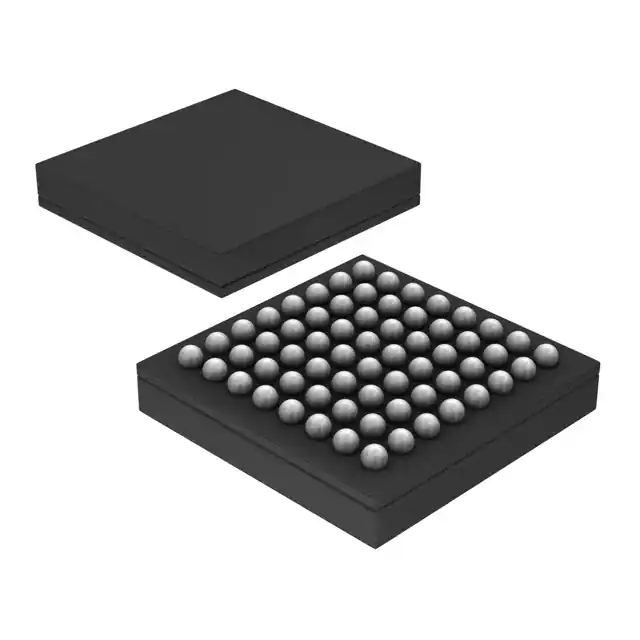
- Part No.:
- PN7160A1EV/C100K
- Manufacturer:
- NXP Semiconductors
- Category:
- RFID, RF Access, Monitoring ICs
- Package:
- 64-VFBGA
- Datasheet:
-
 PN7160A1EV/C100K.pdf
- Description:
- IC NFC CONTROLLER I2C VFBGA64
- Quantity:
- Payment:

- Shipping:

Inventory:2,917
Please send an inquiry. Send us your inquiry, and we will respond immediately.
Product details
Overview
PN7160A1EV/C100K from NXP Semiconductors is a Near Field Communication (NFC) controller IC with integrated NCI 2.0 interface and firmware v12.50.05, designed for card emulation, reader/writer, and P2P modes in mobile and portable devices. It supports ISO/IEC 14443A/B, ISO/IEC 15693, MIFARE, FeliCa, and NFC Forum T4T protocols, delivers 1.3 W transmitter output power, and operates across 2.8–5.5 V battery supply with <100 μA low-power polling loop current.
For engineers reviewing the PN7160A1EV/C100K datasheet, PN7160A1EV/C100K pinout, PN7160A1EV/C100K application, or PN7160A1EV/C100K equivalent, this page provides verified technical context, package-specific pin definitions, real-world use cases, and validated alternative options for NFC system integration in battery-constrained embedded designs.
Technical Context
The PN7160A1EV/C100K implements an ARM Cortex-M0 core with 128 kB ROM, 4 kB EEPROM, and 8 kB SRAM, executing NCI 2.0-compliant firmware to manage contactless protocol stacks autonomously. Its RF front-end supports dynamic power control, enhanced DLMA, and independent 5° LMA phase adjustment per Type A/B/F - enabling high-sensitivity card mode (20 mVp-p) and active load modulation for compact antenna designs.
It integrates a dual-supply transmitter (VDD(TX) up to 5.25 V), buffered antenna drivers (TX1/TX2), single-ended receiver (RXP/RXN), and flexible clocking via internal 27.12 MHz oscillator or external crystal (NFC_CLK_XTAL1/XTAL2). Power management includes Hard Power Down, Standby, and Autonomous modes - allowing full NFC functionality (e.g., NDEF read/write in card emulation) even when host processor is off.
Key Specifications
| Parameter | Value and Actual Design Meaning |
|---|---|
| Battery Supply Range | 2.8 V to 5.5 V - enables direct connection to Li-ion/Li-poly battery rails without external regulators. |
| Transmitter Output Power | 1.3 W - supports extended read range and reliable coupling with small-form-factor antennas. |
| Card Mode Sensitivity | 20 mVp-p - ensures robust detection of weak field signals in passive card emulation applications. |
| Low-Power Polling Current | <100 μA at 500 ms loop time - extends battery life in always-on NFC discovery scenarios. |
| Firmware Version | v12.50.05 - production firmware supporting T4T NDEF write from RF side and EMVCo-compliant ECP (via PN7161 only). |
| Host Interface | I²C-bus High-Speed mode - simplifies integration with application processors using standard NCI 2.0 command set. |
| Operating Temperature | −30 °C to +85 °C - qualified for industrial and consumer portable equipment environments. |
Pinout & Package
VFBGA64 package (SOT1860-1), 3.5 mm × 3.5 mm × 0.5 mm, 0.4 mm ball pitch, bottom-side thermal pad (VSS) for thermal dissipation. Ball grid layout optimized for minimal PCB footprint and RF isolation.
| Pin/Terminal | Circuit Role | Design Meaning |
|---|---|---|
| VEN | Reset / Hard Power Down control | Active-low input; pulls device into HPD state when <0.4 V - enables ultra-low leakage (<16 μA) during host sleep. |
| IRQ | Interrupt request output | Open-drain signal indicating RF event, firmware notification, or wake-up trigger - requires external pull-up on VDD(PAD). |
| I2C_SDA / I2C_SCL | I²C data/clock bidirectional | NCI 2.0 command/data channel; supports High-Speed mode (3.4 Mbps) for low-latency host interaction. |
| TX1 / TX2 | RF transmitter outputs | Differential antenna drive terminals; support 50 Ω matching networks and enable 1.3 W output with VDD(TX) = 5.25 V. |
| RXP / RXN | Receiver differential inputs | Single-ended receiver architecture; accepts 20 mVp-p minimum signal for reliable card emulation detection. |
| NFC_CLK_XTAL1 | Crystal oscillator input | Accepts 27.12 MHz fundamental-mode crystal; internal PLL generates precise RF carrier and timing references. |
| VSS(PAD), VSS(A), VSS(TX), VSS(D) | Ground terminals | Separate analog, digital, transmitter, and pad ground domains - critical for noise isolation and RF performance stability. |
Key Features
| Feature | Design Value |
|---|---|
| Integrated Polling Loop | Autonomous RF field scanning without host CPU involvement - reduces system-level power and firmware overhead. |
| Dynamic Power Control | Real-time transmitter power adjustment to stay within ISO/IEC 14443 limits at 0 mm distance - prevents field saturation and improves interoperability. |
| Enhanced DLMA | Load modulation amplitude optimized per external field strength - increases communication range in card emulation mode by up to 30% vs prior generation. |
| Autonomous Card Emulation | Full NDEF read/write capability while host is powered off - enabled via Standby mode and wake-up via RF field or timer. |
| Anti-Tearing Support | Hardware-assisted EEPROM transaction recovery - ensures data integrity during unexpected power loss in NDEF record updates. |
Applications
| Smartphone NFC Front-End | Wearable Payment Terminal |
|---|---|
|
Use Scenario: Integration as primary NFC controller in Android smartphones supporting Google Pay and transit card emulation. IC Role / Device Role / Timing Role: NCI 2.0-compliant host-facing controller managing ISO/IEC 14443A/B, MIFARE DESFire, and T4T tag emulation with autonomous wake-up. Use Value: Enables certified EMVCo Level 1 operation and seamless tap-to-pay with sub-100 μA background polling current. |
Use Scenario: Embedded NFC module in wrist-worn health trackers enabling secure payment and access credential storage. IC Role / Device Role / Timing Role: Low-power card emulator with integrated EEPROM for persistent NDEF records and hardware anti-tearing protection. Use Value: Delivers 20 mVp-p sensitivity and 1.3 W output to maintain reliable coupling despite small antenna size and metal housing interference. |
| Smart Home Gateway | Industrial Asset Tag Reader |
|
Use Scenario: NFC-enabled home hub performing secure provisioning of IoT sensors and firmware updates via T5T tags. IC Role / Device Role / Timing Role: Reader/writer supporting ISO/IEC 15693 and NFC Forum T5T for long-range (up to 50 cm) tag interrogation. Use Value: Leverages dynamic ECP configuration (firmware-dependent) and PRBS test mode for robust field validation in noisy RF environments. |
Use Scenario: Ruggedized handheld tool reading maintenance logs from ISO/IEC 14443B asset tags in factory settings. IC Role / Device Role / Timing Role: High-reliability PCD mode controller with 2.8–5.5 V wide supply range and −30 °C to +85 °C operation. Use Value: Maintains stable 290 mA max continuous current in PCD mode while rejecting board-level noise via separate VSS(A)/VSS(TX) domains. |
Equivalent & Alternatives
The following parts are listed as comparable options for similar NFC controller applications.
| Alternative Part | Technical Difference | Application Difference | Selection Advice |
|---|---|---|---|
| PN7160A1HN/C100K | HVQFN40 package (6 × 6 mm), 40-pin, exposed thermal pad - higher thermal dissipation but larger PCB footprint than VFBGA64. | Suitable for designs requiring easier rework or thermal management over space-constrained layouts. | Select when board-level thermal design prioritizes heat spreading over miniaturization. |
| PN7161A1EV/C100K | Same VFBGA64 package and firmware v12.50.05, but model ID 0x71 enables Apple ECP authorization - requires formal Apple certification. | Required for iOS accessory authentication and enhanced polling in Apple ecosystem deployments. | Choose only if ECP compliance is mandated; otherwise PN7160A1EV/C100K offers identical base functionality at lower qualification burden. |
Compared with PN7160A1HN/C100K, the PN7160A1EV/C100K saves >40% board area and enables tighter RF layout; compared with PN7161A1EV/C100K, it avoids ECP licensing complexity while retaining full NFC Forum T4T, ISO/IEC 14443, and MIFARE compatibility.
Availability
PN7160A1EV/C100K is available at Aetrix Electronics and suitable for smartphone NFC front-end, wearable payment terminal, and smart home gateway applications requiring stable component supply, long-term lifecycle support, and RoHS-compliant manufacturing.
Supply support for PN7160A1EV/C100K includes scheduled delivery planning, volume procurement assistance, BOM continuity management, traceable sourcing, and lifecycle availability coordination for OEM customers, industrial embedded developers, connected-device designers, and electronics production programs.
Manufacturer
NXP Semiconductors is a global semiconductor leader specializing in secure connectivity solutions, with core expertise in RFID, NFC, and secure element technologies for automotive, industrial, and consumer markets.
The PN7160 product line delivers highly integrated NFC controllers targeting mobile and portable electronics - designed to reduce external BOM count, minimize PCB footprint, and enable autonomous low-power operation in battery-powered systems.
FAQ
What is the exact firmware version preloaded on PN7160A1EV/C100K?
The PN7160A1EV/C100K ships with firmware version 12.50.05, confirmed by the 10th–12th bytes of the CORE_RESET_NTF response. This version supports T4T NDEF write from the RF side, ISO/IEC 14443A/B card emulation, and full NCI 2.0 host interface compliance - and is the initial production firmware for PN7160 devices.
Does PN7160A1EV/C100K support Apple Enhanced Contactless Polling (ECP)?
No, PN7160A1EV/C100K does not support Apple ECP. Only PN7161 variants (model ID 0x71) include ECP functionality, and even then, formal Apple authorization is required. The PN7160A1EV/C100K uses model ID 0x61 and implements standard NFC Forum polling behavior without ECP extensions.
What package type and dimensions does PN7160A1EV/C100K use?
PN7160A1EV/C100K uses the VFBGA64 package (SOT1860-1): 3.5 mm × 3.5 mm × 0.5 mm body size with 0.4 mm ball pitch and a bottom thermal pad (VSS). This ultra-compact package enables high-density placement in space-constrained mobile and wearable PCBs.
Can PN7160A1EV/C100K operate in card emulation mode without host processor power?
Yes, PN7160A1EV/C100K supports Autonomous mode: when configured by the host and placed in Standby, it maintains NDEF read/write capability in card emulation (T4T) using only VBAT supply - enabling tap-to-pay or credential access even when the main SoC is powered down.
What are the key power supply requirements for PN7160A1EV/C100K?
PN7160A1EV/C100K requires three distinct supplies: VBAT (2.8–5.5 V) for core and transmitter, VDD(PAD) (3.0–3.6 V) for I²C interface, and VDD(TX) (2.7–5.25 V) for RF output stage. Separate ground domains (VSS(PAD), VSS(A), VSS(TX)) must be independently routed to ensure RF stability and low-noise operation.
PN7160A1EV/C100K Specifications
- Product attributes
- Attribute value
- Manufacturer:
- NXP Semiconductors
- Series:
- -
- Package/Case:
- 64-VFBGA
- Packaging:
- Tray
- Product Status:
- Active
- Type:
- RFID Reader
- Frequency:
- 13.56MHz
- Standards:
- FeliCa, ISO 14443, ISO 15693, MIFARE, NFC
- Interface:
- I2C
- Voltage - Supply:
- 1.65V ~ 1.95V, 3V ~ 3.6V
- Operating Temperature:
- -25°C ~ 85°C (TA)
- Grade:
- -
- Qualification:
- -
- Mounting Type:
- Surface Mount
- Supplier Device Package:
- 64-VFBGA (4x4)
PN7160A1EV/C100K FAQ
1.How can I place an order for PN7160A1EV/C100K through Aetrix?
Please submit a Request for Quotation (RFQ) for PN7160A1EV/C100K on Aetrix. Our sales agent will provide a competitive quotation and guide you through the order confirmation once you accept the terms.
2.Are the price and stock information for PN7160A1EV/C100K reliable?
The price and inventory of PN7160A1EV/C100K are updated periodically and may fluctuate due to market conditions. Stock and pricing data are typically refreshed every 24 hours. Quotation validity for PN7160A1EV/C100K is usually 5 days.
3.What payment methods are accepted for PN7160A1EV/C100K?
We accept Wire Transfer, PayPal, Credit Card, Western Union, MoneyGram, and Escrow for PN7160A1EV/C100K transactions.
Note: Certain payment methods may incur a processing fee.
4.How is shipping managed for PN7160A1EV/C100K?
PN7160A1EV/C100K orders can be shipped via leading logistics carriers, including DHL, UPS, FedEx, TNT, or Registered Mail.
Once your PN7160A1EV/C100K order is processed, you will receive an email with the shipment details and tracking number.
Note: Tracking information may take up to 24 hours to appear. Express delivery typically takes 3–5 business days.
5.How can I obtain technical support or documentation for PN7160A1EV/C100K?
For technical support, including PN7160A1EV/C100K datasheets, pinout diagrams, or application guidance, please contact our engineering support team. They can provide detailed documentation and assistance for your PN7160A1EV/C100K requirements.
6.How does Aetrix verify that PN7160A1EV/C100K is sourced from the original manufacturer or authorized distributors?
All PN7160A1EV/C100K products on Aetrix are procured from qualified distributors and authorized channels. Our dedicated quality assurance team conducts strict verification, including traceability checks and, if necessary, third-party testing. This ensures that PN7160A1EV/C100K meets industry standards.
7.What is the process for return or replacement of PN7160A1EV/C100K?
All PN7160A1EV/C100K units undergo pre-shipment inspection (PSI). If there is an issue with PN7160A1EV/C100K, returns or replacements are accepted under the following conditions:
1.Quantity discrepancies, incorrect items, or visible external defects (such as breakage or corrosion), acknowledged by Aetrix.
2.The issue is reported within 90 days of delivery.
3.The PN7160A1EV/C100K part is unused and in its original packaging.
Return procedure for PN7160A1EV/C100K:
1.Submit a request within 90 days.
2.Obtain a Return Material Authorization (RMA) from Aetrix.
PN7160A1EV/C100K Tags

-
SL2S2602FTBX
NXP Semiconductors
-
ST25DV04K-IER6S3
STMicroelectronics
-
ST25DV04K-IER6C3
STMicroelectronics
-
LXMSJZNCMD-217
Murata Electronics

-
NT3H2111W0FTTJ
NXP Semiconductors
-
NT3H2111W0FHKH
NXP Semiconductors
-
M24LR04E-RMC6T/2
STMicroelectronics
-
ST25DV04KC-JF6D3
STMicroelectronics
-
ST25DV64KC-IE6S3
STMicroelectronics
-
ST25DV64K-IER6T3
STMicroelectronics
-
NT3H2211W0FTTJ
NXP Semiconductors
-
NT3H2211W0FHKH
NXP Semiconductors
Tech Hub
An SR latch stores one bit through cross-coupled feedback. This engineering reference covers NOR and NAND implementations, truth tables, forbidden-state recovery, gated operation, switch debouncing, fa…

Latch circuits retain one bit through feedback. This technical reference covers SR and D latches, truth tables, transparency, timing limits, latch-versus-flip-flop behavior, applications and common log…

An engineering guide to LED driver operation, constant-current and constant-voltage outputs, linear and switching topologies, dimming, IC selection, calculations, replacement compatibility, and fault c…

Operational amplifier guide covering op amp basics, feedback, ideal vs real op amps, common configurations, buffer circuits, offset, bias current, gain-bandwidth, slew rate, rail-to-rail limits and sel…

Jumper cables guide covering safe connection order, red and black clamp placement, final ground connection, cable gauge, length, clamp quality, copper vs CCA cables, jump starter comparison and battery…

LDO regulator guide covering low dropout voltage, power dissipation, thermal design, PSRR, output noise, capacitor stability, adjustable LDO circuits, LDO vs buck converter and datasheet selection chec…

Conditional Access Module guide covering CAM meaning, CI/CI+ interface, smart card authorization, DVB security workflow, TV and set-top box compatibility, internal electronics, ESD protection, connecto…

Guide to electronic component obsolescence covering EOL risk, PCN/PDN notices, last-time buy planning, replacement options, form-fit-function validation, counterfeit risk and BOM lifecycle management.

18650 battery guide covering lithium-ion cell basics, 3.6V/3.7V voltage, 4.2V charging, mAh and Wh capacity, protected cells, chargers, BMS, series-parallel packs, holders, welding and sourcing checks.…

Hall effect sensor guide covering working principle, linear and digital sensors, Arduino circuits, current sensing, speed detection, automotive applications, A3144 examples, signal filtering and datash…


