
 My Inquiry
 My Account


NXP Semiconductors PN7360AUEV/C300Y
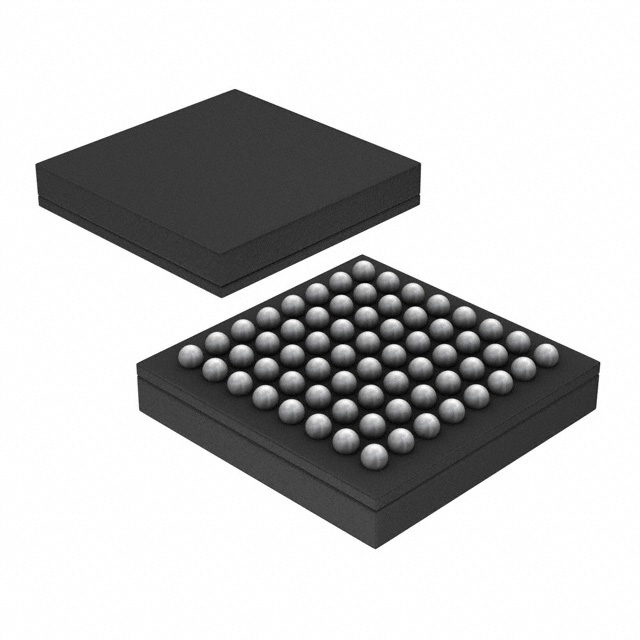
- Part No.:
- PN7360AUEV/C300Y
- Manufacturer:
- NXP Semiconductors
- Category:
- RFID, RF Access, Monitoring ICs
- Package:
- 64-VFBGA
- Datasheet:
-
 PN7360AUEV/C300Y.pdf
- Description:
- PN7360AUEV - NFC Cortex®
- Quantity:
- Payment:

- Shipping:

Inventory:4,000
Please send an inquiry. Send us your inquiry, and we will respond immediately.
Product details
Overview
PN7360AUEV/C300Y from NXP Semiconductors is a 32-bit Arm Cortex-M0 NFC microcontroller with 80 kB Flash, 12 kB SRAM, and integrated 13.56 MHz contactless frontend supporting ISO/IEC 14443 A/B, NFC Forum Types 1–5, P2P, and card emulation - deployed in secure USB NFC readers and EMVCo-compliant payment terminals.
For engineers reviewing the PN7360AUEV/C300Y datasheet, PN7360AUEV/C300Y pinout, PN7360AUEV/C300Y application, or PN7360AUEV/C300Y equivalent, key selection criteria include VFBGA64 package compatibility, absence of contact interface (ISO/IEC 7816), lack of UART auxiliary interface, and 80 kB Flash memory constraint versus 160 kB variants in the same family.
Technical Context
The PN7360AUEV/C300Y implements a dedicated high-power NFC frontend with Adaptive Wave Control (AWC) and Dynamic Power Control (DPC), enabling EMV-level RF compliance without external active components. Its Cortex-M0 core runs at up to 20 MHz and integrates four general-purpose timers, CRC coprocessor, and random number generator.
It supports host interfaces including USB 2.0 full-speed, HSUART (up to 1.288 Mbit/s), SPI (up to 7 Mbit/s), and I²C (standard/fast/high-speed modes), but omits both contact smart card interface and ISO/IEC 7816-3&4 UART - distinguishing it from PN7462AUEV and PN7462AUHN variants.
Key Specifications
| Parameter | Value and Actual Design Meaning |
|---|---|
| CPU Core | Arm Cortex-M0, 20 MHz max - enables deterministic real-time NFC protocol handling with low interrupt latency. |
| Flash Memory | 80 kB - sufficient for lightweight NFC firmware stacks; half the capacity of PN7462-series parts. |
| SRAM | 12 kB - supports concurrent NFC stack operation, host interface buffering, and application logic. |
| Contactless Support | ISO/IEC 14443 A/B, NFC Forum Types 1–5, P2P initiator/target, card emulation - full RF protocol coverage at 13.56 MHz. |
| Operating Temp | −40 °C to +85 °C - qualified for industrial and consumer terminal environments. |
| Supply Voltage | VDDP(VBUS): 2.7–5.5 V - compatible with USB bus-powered and battery-operated designs. |
| Power Consumption | 12 µA in hard power-down mode - enables ultra-low-power wake-on-field detection in portable readers. |
Pinout & Package
VFBGA64 package (4.5 mm × 4.5 mm × 0.80 mm, SOT1307-2), ball-grid layout optimized for compact NFC reader PCBs with minimal RF trace length.
| Pin/Terminal | Circuit Role | Design Meaning |
|---|---|---|
| A1 (I2CM_SDA) | I²C master serial data I/O / GPIO13 | Host communication or general-purpose I/O; bidirectional with internal pull-up capability. |
| A2 (SPIM_MISO) | SPI master data input / GPIO20 | Receives data from peripheral SPI slaves; configurable as interrupt-capable GPIO. |
| A5 (VBUS) | Main supply voltage input | Primary power rail (2.7–5.5 V); powers digital core, USB PHY, and internal LDOs. |
| C7 (RST_N) | Active-low reset input | Asynchronous hardware reset; asserted low for ≥100 ns to initiate cold boot sequence. |
| E1 (DVDD) | Digital core logic supply | 1.8 V regulated output from internal LDO; powers CPU, memory, and digital peripherals. |
| G1 (ANT1) | NFC antenna connection | Load modulation node for card emulation and P2P passive target; requires matching network. |
| H1 (ANT2) | NFC antenna connection | Second antenna port for differential tuning; used with ANT1 to form balanced 13.56 MHz tank circuit. |
Key Features
| Feature | Design Value |
|---|---|
| EMVCo RF Compliance | Integrated high-power NFC frontend meets EMV contactless level 1 requirements without external amplifiers or matching ICs. |
| Low-Power Card Detection | Enables wake-from-sleep on RF field presence - critical for battery-powered point-of-sale terminals. |
| Dynamic Power Control (DPC) | Automatically adjusts RF output power based on coupling distance and tag response, improving interoperability. |
| Adaptive Wave Control (AWC) | Compensates for antenna detuning due to mechanical stress or nearby metal, maintaining stable link margin. |
| USB Mass Storage Bootloader | 40 kB ROM includes primary USB MSC bootloader - simplifies field firmware updates without JTAG debugger. |
Applications
| Secure USB NFC Reader | EMVCo Payment Terminal |
|---|---|
|
Use Scenario: Compact desktop or mobile USB-connected NFC reader for contactless card authentication and tokenized payments. IC Role / Device Role / Timing Role: Primary NFC controller executing ISO/IEC 14443 and NFC Forum protocols; handles RF framing, crypto offload, and host command translation. Use Value: Eliminates need for discrete NFC transceiver + MCU pairing; reduces BOM count and PCB area by 40% vs. two-chip solutions. |
Use Scenario: Integrated payment terminal with embedded NFC for tap-to-pay, supporting EMVCo Level 1 certification. IC Role / Device Role / Timing Role: Contactless transaction engine managing field generation, anti-collision, and secure element communication via SWP or I²C. Use Value: Meets EMV RF conformance out-of-box; avoids costly retesting when using external NFC ICs with variable RF performance. |
| Physical Access Control | Industrial Asset Tagging |
|
Use Scenario: Battery-powered door lock or gate controller reading NFC credentials in harsh indoor/outdoor environments. IC Role / Device Role / Timing Role: Standalone NFC initiator scanning for Type 4A/B tags; performs mutual authentication and session key derivation. Use Value: 12 µA hard power-down current extends coin-cell life to >2 years; −40 °C to +85 °C rating ensures reliability in unconditioned enclosures. |
Use Scenario: Ruggedized handheld scanner identifying NFC-enabled maintenance tags on factory equipment or HVAC units. IC Role / Device Role / Timing Role: High-sensitivity NFC reader supporting ISO/IEC 15693 and 18000-3 Mode 3 for long-range (~50 cm) asset interrogation. Use Value: Adaptive Range Control (ARC) maintains read range stability despite metal proximity - eliminating manual antenna retuning during deployment. |
Equivalent & Alternatives
The following parts are listed as comparable options for similar NFC microcontroller applications.
| Alternative Part | Technical Difference | Application Difference | Selection Advice |
|---|---|---|---|
| PN7362AUEV | 160 kB Flash, same VFBGA64 package, no contact interface or ISO/IEC 7816 UART | Supports larger NFC middleware stacks and dual-application firmware (e.g., reader + secure element proxy) | Select when firmware size exceeds 80 kB or future-proofing for feature expansion is required. |
| PN7462AUEV | 160 kB Flash, VFBGA64, adds ISO/IEC 7816-3&4 UART interface for auxiliary smart card slot support | Enables dual-interface (contact + contactless) readers using TDA8026 slot extenders | Choose only if contact smart card extension is needed; otherwise PN7360AUEV/C300Y offers lower cost and simpler layout. |
Compared with PN7362AUEV and PN7462AUEV, PN7360AUEV/C300Y provides identical RF performance and package footprint but trades Flash capacity and optional contact interface for reduced unit cost and optimized BOM for pure contactless use cases.
Availability
PN7360AUEV/C300Y is available at Aetrix Electronics and suitable for secure USB NFC readers, EMVCo payment terminals, and physical access control systems requiring stable component supply across multi-year production cycles.
Supply support for PN7360AUEV/C300Y includes scheduled delivery planning, volume procurement assistance, BOM continuity management, traceable sourcing, and lifecycle availability coordination for OEM customers, industrial embedded developers, connected-device designers, and electronics production programs.
Manufacturer
NXP Semiconductors is a global semiconductor leader specializing in secure connectivity solutions for automotive, industrial, and IoT markets, with deep expertise in NFC, RFID, and secure microcontrollers.
PN7360AUEV/C300Y belongs to the PN7462 family of NFC microcontrollers designed specifically for cost-sensitive, space-constrained contactless reader applications where integrated RF compliance and low-power operation are mandatory.
FAQ
What is the Flash memory size of PN7360AUEV/C300Y?
PN7360AUEV/C300Y contains 80 kB of on-chip Flash memory, confirmed in Table 3 (Ordering Information) and Section 4 (Quick Reference Data) of the PN7462 family datasheet Rev. 4.7. This is half the capacity of PN7462-series variants and constrains firmware complexity - PN7360AUEV/C300Y is intended for streamlined NFC reader implementations without extensive middleware layers.
Does PN7360AUEV/C300Y support contact smart card interfaces?
No, PN7360AUEV/C300Y does not include a contact smart card interface. As shown in Table 1 (Comparison of the PN7462 family members), it has "No" under both "Contact smart card reader" and "ISO/IEC 7816" columns. This distinguishes it from PN7462AUHN and PN7462AUEV, which integrate full ISO/IEC 7816-3&4 UART support for dual-interface readers.
What package type is used for PN7360AUEV/C300Y?
PN7360AUEV/C300Y uses the VFBGA64 package (4.5 mm × 4.5 mm × 0.80 mm, SOT1307-2), as specified in Table 3 (Ordering Information). This fine-pitch ball grid array enables high-density PCB layouts essential for compact USB NFC dongles and handheld readers, with thermal and electrical performance validated per JEDEC standards.
Which NFC protocols does PN7360AUEV/C300Y support?
PN7360AUEV/C300Y supports full NFC Forum tag types (1, 2, 3, 4A, 4B, 5), ISO/IEC 14443 A/B, ISO/IEC 15693, ISO/IEC 18000-3 Mode 3, P2P active/passive, and card emulation - all enabled by its integrated high-power contactless frontend, as detailed in Section 2.3 of the datasheet.
Is PN7360AUEV/C300Y pin-compatible with other PN7462 family members?
PN7360AUEV/C300Y shares the VFBGA64 pinout with PN7462AUEV and PN7362AUEV, as confirmed in Figures 8 and Table 5 (Pin description VFBGA64). However, functional pin mapping differs: PN7360AUEV/C300Y lacks contact interface pins (e.g., SCVDD, SAP, AUX1/AUX2) present on PN7462AUEV, making it not functionally interchangeable without PCB revision.
PN7360AUEV/C300Y Specifications
- Product attributes
- Attribute value
- Manufacturer:
- NXP Semiconductors
- Series:
- -
- Package/Case:
- 64-VFBGA
- Packaging:
- Bulk
- Product Status:
- Active
- Type:
- RFID Reader/Transponder
- Frequency:
- 13.56MHz
- Standards:
- FeliCa, ISO 14443, ISO 15693, ISO 18000-3, MIFARE, NFC
- Interface:
- I2C, SPI, UART, USB
- Voltage - Supply:
- 1.65V ~ 1.95V, 3V ~ 3.6V
- Operating Temperature:
- -40°C ~ 85°C (TA)
- Grade:
- -
- Qualification:
- -
- Mounting Type:
- Surface Mount
- Supplier Device Package:
- 64-VFBGA (4.5x4.5)
PN7360AUEV/C300Y FAQ
1.How can I place an order for PN7360AUEV/C300Y through Aetrix?
Please submit a Request for Quotation (RFQ) for PN7360AUEV/C300Y on Aetrix. Our sales agent will provide a competitive quotation and guide you through the order confirmation once you accept the terms.
2.Are the price and stock information for PN7360AUEV/C300Y reliable?
The price and inventory of PN7360AUEV/C300Y are updated periodically and may fluctuate due to market conditions. Stock and pricing data are typically refreshed every 24 hours. Quotation validity for PN7360AUEV/C300Y is usually 5 days.
3.What payment methods are accepted for PN7360AUEV/C300Y?
We accept Wire Transfer, PayPal, Credit Card, Western Union, MoneyGram, and Escrow for PN7360AUEV/C300Y transactions.
Note: Certain payment methods may incur a processing fee.
4.How is shipping managed for PN7360AUEV/C300Y?
PN7360AUEV/C300Y orders can be shipped via leading logistics carriers, including DHL, UPS, FedEx, TNT, or Registered Mail.
Once your PN7360AUEV/C300Y order is processed, you will receive an email with the shipment details and tracking number.
Note: Tracking information may take up to 24 hours to appear. Express delivery typically takes 3–5 business days.
5.How can I obtain technical support or documentation for PN7360AUEV/C300Y?
For technical support, including PN7360AUEV/C300Y datasheets, pinout diagrams, or application guidance, please contact our engineering support team. They can provide detailed documentation and assistance for your PN7360AUEV/C300Y requirements.
6.How does Aetrix verify that PN7360AUEV/C300Y is sourced from the original manufacturer or authorized distributors?
All PN7360AUEV/C300Y products on Aetrix are procured from qualified distributors and authorized channels. Our dedicated quality assurance team conducts strict verification, including traceability checks and, if necessary, third-party testing. This ensures that PN7360AUEV/C300Y meets industry standards.
7.What is the process for return or replacement of PN7360AUEV/C300Y?
All PN7360AUEV/C300Y units undergo pre-shipment inspection (PSI). If there is an issue with PN7360AUEV/C300Y, returns or replacements are accepted under the following conditions:
1.Quantity discrepancies, incorrect items, or visible external defects (such as breakage or corrosion), acknowledged by Aetrix.
2.The issue is reported within 90 days of delivery.
3.The PN7360AUEV/C300Y part is unused and in its original packaging.
Return procedure for PN7360AUEV/C300Y:
1.Submit a request within 90 days.
2.Obtain a Return Material Authorization (RMA) from Aetrix.
PN7360AUEV/C300Y Tags

-
SL2S2602FTBX
NXP Semiconductors
-
ST25DV04K-IER6S3
STMicroelectronics
-
ST25DV04K-IER6C3
STMicroelectronics
-
LXMSJZNCMD-217
Murata Electronics

-
NT3H2111W0FTTJ
NXP Semiconductors
-
NT3H2111W0FHKH
NXP Semiconductors
-
M24LR04E-RMC6T/2
STMicroelectronics
-
ST25DV04KC-JF6D3
STMicroelectronics
-
ST25DV64KC-IE6S3
STMicroelectronics
-
ST25DV64K-IER6T3
STMicroelectronics
-
NT3H2211W0FTTJ
NXP Semiconductors
-
NT3H2211W0FHKH
NXP Semiconductors
Tech Hub

A practical engineering guide to 3.3V and 5V logic compatibility, input thresholds, resistor dividers, translator ICs, MOSFET level shifting, I2C pull-ups, timing limits and power-sequencing risks.

The 74HC595 uses push-pull logic outputs, while the TPIC6B595 uses 50 V open-drain DMOS sinks for higher-power loads. This guide compares timing, current limits, 3.3 V interfacing, load wiring, thermal…

The 74HC595 converts serial data into eight stable parallel outputs. This guide covers pin functions, shift and storage timing, OE and MR behavior, drive-current limits, cascading, voltage compatibilit…

A technical comparison of level-sensitive latches and edge-triggered flip-flops, covering timing windows, setup and hold limits, master–slave operation, time borrowing, race-through, HDL inference and…

A D latch stores one bit while Enable controls when data can pass. This reference covers gate-level operation, truth tables, transparency, setup and hold timing, LE versus OE, common ICs and practical …

An SR latch stores one bit through cross-coupled feedback. This engineering reference covers NOR and NAND implementations, truth tables, forbidden-state recovery, gated operation, switch debouncing, fa…

Latch circuits retain one bit through feedback. This technical reference covers SR and D latches, truth tables, transparency, timing limits, latch-versus-flip-flop behavior, applications and common log…

An engineering guide to LED driver operation, constant-current and constant-voltage outputs, linear and switching topologies, dimming, IC selection, calculations, replacement compatibility, and fault c…

Operational amplifier guide covering op amp basics, feedback, ideal vs real op amps, common configurations, buffer circuits, offset, bias current, gain-bandwidth, slew rate, rail-to-rail limits and sel…

Jumper cables guide covering safe connection order, red and black clamp placement, final ground connection, cable gauge, length, clamp quality, copper vs CCA cables, jump starter comparison and battery…


