
 My Inquiry
 My Account


Texas Instruments RF430FRL154HCRGER
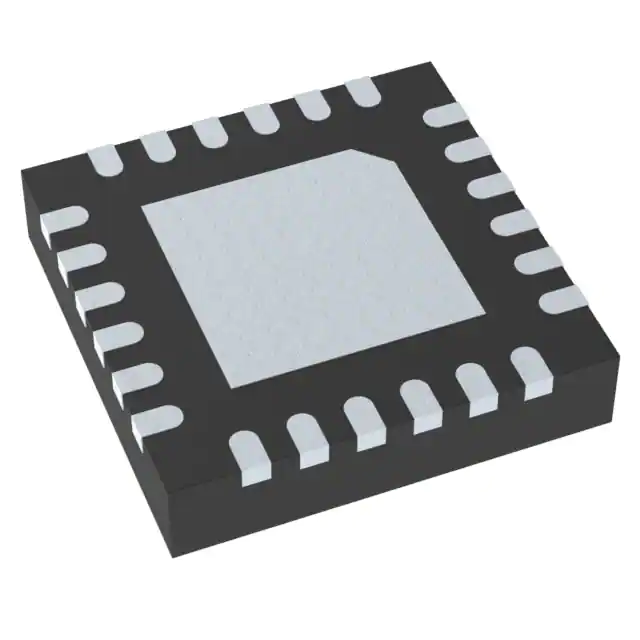
- Part No.:
- RF430FRL154HCRGER
- Manufacturer:
- Texas Instruments
- Category:
- RFID, RF Access, Monitoring ICs
- Package:
- 24-VFQFN Exposed Pad
- Datasheet:
-
 RF430FRL154HCRGER.pdf
- Description:
- IC RFID TRANSP 13.56MHZ 24VQFN
- Quantity:
- Payment:

- Shipping:

Inventory:4,578
Please send an inquiry. Send us your inquiry, and we will respond immediately.
Product details
Overview
RF430FRL154HCRGER from Texas Instruments is a 13.56-MHz ISO/IEC 15693-compliant NFC sensor transponder integrating a 16-bit MSP430™ low-power microcontroller, 2 KB FRAM, 4 KB SRAM, and a 14-bit sigma-delta ADC. It operates in battery-less (fully passive) or single-cell battery-powered mode and supports SPI/I²C host interfaces for sensor data readout and configuration. Used in contactless industrial and medical wireless sensing nodes.
For engineers reviewing the RF430FRL154HCRGER datasheet, RF430FRL154HCRGER pinout, RF430FRL154HCRGER application, or RF430FRL154HCRGER equivalent, key selection criteria include its ISO 15693 RF interface compliance, integrated 14-bit SD14 ADC with resistive bias capability, FRAM nonvolatile memory retention without write endurance limits, and ultra-low standby current of 16 µA in LPM3 mode.
Technical Context
The RF430FRL154HCRGER implements a dual-mode power architecture supporting both H-field energy harvesting (via ANT1/ANT2) and battery supply (VDDB), with internal voltage regulation including a charge pump (CP1/CP2) and voltage doubler (VDD2X). Its RF front end complies strictly with ISO/IEC 15693 Mode 1 and ISO/IEC 18000-3, featuring ASK demodulation and load modulation for bidirectional communication.
Unlike RF430FRL152H and RF430FRL153H, the RF430FRL154H variant omits the SD14 ADC module but retains full ISO 15693 RF functionality, FRAM/SRAM memory, eUSCI_B (SPI/I²C), Timer_A, and temperature sensor - confirming its role as the RF-optimized member of the family for applications prioritizing RF performance and memory over onboard analog conversion.
Key Specifications
| Parameter | Value and Actual Design Meaning |
|---|---|
| RF Standard | ISO/IEC 15693 & ISO/IEC 18000-3 (Mode 1) compliant - enables interoperability with standard NFC readers and industrial RFID infrastructure. |
| Memory | 2 KB FRAM + 4 KB SRAM - FRAM allows unlimited write cycles and instant nonvolatile storage of sensor logs or calibration data without wear leveling. |
| Supply Modes | Fully passive (H-field powered) or semi-active (1.45–1.65 V battery) - supports maintenance-free deployment in sealed or inaccessible locations. |
| Low-Power Standby | 16 µA in LPM3 (32 kHz ACLK) - extends multi-year battery life in intermittent-read sensor applications. |
| CPU Clock | Up to 2 MHz MCLK - sufficient for real-time sensor polling, CRC16 generation, and RF command processing without external timing sources. |
| Interface Support | eUSCI_B module with SPI (3-/4-wire) and I²C - enables direct connection to host MCUs or sensors without level-shifting or protocol translation. |
| Operating Temp | 0°C to +70°C - validated for industrial ambient environments including factory-floor and point-of-care medical devices. |
Pinout & Package
VQFN-24 (RGE) package, 4 mm × 4 mm, 0.5 mm pitch, with exposed thermal pad (VSS-connected).
| Pin/Terminal | Circuit Role | Design Meaning |
|---|---|---|
| ANT1 / ANT2 | RF antenna differential input | Connects to 13.56 MHz LC resonant tank (LRES ≈ 2.66 µH, CRES ≈ 51.8 pF); enables passive power harvesting and bidirectional ISO 15693 communication. |
| VDDB | Battery supply input | Accepts 1.45–1.65 V single-cell battery; powers digital core and RF modulator when active; enables semi-active operation. |
| VDDH | Rectified RF supply output | Provides regulated ~1.5 V from harvested H-field energy; used internally by RF analog front end and bias circuits. |
| P1.0–P1.7 | Configurable GPIO / peripheral mux | Support SPI_SIMO/SOMI/CLK/STE, I²C SDA/SCL, Timer_A outputs, and ADC inputs (on variants with SD14); on RF430FRL154H, ADC0/1/2 are functional but SD14 module is absent. |
| TCK/TMS/TDI/TDO | JTAG debug interface | Full 4-wire JTAG enables firmware development, boundary scan, and in-system programming without requiring dedicated debug headers. |
| ADC0 / ADC1 / ADC2 | Analog input / resistive bias terminals | Support external thermistor or RTD connections; SVSS provides stable sensor reference; TEMP1/TEMP2 pins enable internal temperature measurement. |
Key Features
| Feature | Design Value |
|---|---|
| ISO 15693 RF Interface | Enables contactless configuration, firmware updates, and sensor data retrieval using standard NFC readers - eliminates need for wired connectors or batteries in field-deployed nodes. |
| FRAM Nonvolatile Memory | 2 KB of ultra-low-power, high-endurance memory stores calibration coefficients, event logs, or security keys without flash write delays or erase cycles. |
| Dual Power Architecture | Seamlessly switches between harvested RF energy and battery supply - ensures continuous operation during reader interrogation and autonomous sensing between reads. |
| eUSCI_B Serial Interface | Hardware-accelerated SPI and I²C support up to 400 kHz I²C and system-clock-synchronized SPI - reduces MCU overhead for interfacing with external sensors or hosts. |
| Integrated Temperature Sensor | On-die sensor with TEMP1/TEMP2 pins delivers calibrated readings across 0–70°C - enables self-compensation of RF front-end drift or environmental monitoring. |
Applications
| Industrial Wireless Sensors | Medical Wireless Sensors |
|---|---|
Use Scenario: Contactless temperature and humidity monitoring inside sealed HVAC ducts or rotating machinery enclosures. IC Role / Device Role / Timing Role: RF430FRL154HCRGER acts as ISO 15693 transponder and local sensor aggregator - wakes on reader poll, samples connected thermistors via ADC0/ADC1, computes CRC16, and replies with encrypted payload. Use Value: Eliminates wiring and battery replacement; achieves >5-year lifetime in semi-active mode using CR2032; meets IEC 61000-4-3 immunity requirements via integrated RF front end. | Use Scenario: Disposable smart wound dressings that report temperature and moisture levels to NFC-enabled tablets during clinical rounds. IC Role / Device Role / Timing Role: RF430FRL154HCRGER serves as passive RF sensor node - harvests energy from clinician's NFC phone, activates internal bias for resistive moisture sensing, and returns timestamped health metrics. Use Value: Zero-power operation removes infection risk from batteries; FRAM retains last reading if reader is out of range; ISO 15693 compliance ensures interoperability across hospital-grade NFC readers. |
| Asset Tracking Tags | Smart Packaging Authentication |
Use Scenario: Reusable tooling tags in automotive assembly lines subjected to repeated thermal cycling and ESD exposure. IC Role / Device Role / Timing Role: RF430FRL154HCRGER functions as tamper-evident ID tag with embedded serial number and usage counter stored in FRAM - updated only during authorized NFC interrogation. Use Value: FRAM withstands >10¹⁵ write cycles vs. flash's ~10⁵; 2000-V HBM ESD rating survives factory handling; VQFN-24 package resists mechanical stress from mounting screws and vibration. | Use Scenario: High-value pharmaceutical packaging with NFC-based anti-counterfeiting and cold-chain verification. IC Role / Device Role / Timing Role: RF430FRL154HCRGER operates as passive authentication token - stores cryptographic challenge-response keys in FRAM and validates temperature history using internal sensor. Use Value: No battery required for shelf-life validation; ISO 15693 range (~50 cm) enables scanning through cardboard; CRC16 generator ensures data integrity during transit. |
Equivalent & Alternatives
The following parts are listed as comparable options for similar NFC transponder applications.
| Alternative Part | Technical Difference | Application Difference | Selection Advice |
|---|---|---|---|
| RF430FRL152HCRGER | Includes SD14 14-bit ADC; same FRAM/SRAM, RF, and interface specs. | Required when onboard high-resolution analog sensing (e.g., precision strain gauges) is needed alongside NFC. | Select RF430FRL152HCRGER only if SD14 ADC functionality is mandatory; otherwise RF430FRL154HCRGER offers identical RF and memory performance at lower cost. |
| NXP NT3H2201W0FHKH | HF NFC Forum Type 4B tag IC; no MCU, no FRAM, no ADC; 2 KB EEPROM; supports NDEF. | Suitable for pure data storage and simple authentication - lacks programmability, sensor interface, or custom firmware execution. | Choose NT3H2201W0FHKH for cost-sensitive, standards-only NFC labels; RF430FRL154HCRGER is required for programmable, sensor-integrated, or proprietary protocol implementations. |
Compared with RF430FRL152HCRGER, the RF430FRL154HCRGER removes the SD14 ADC to reduce die size and cost while retaining full ISO 15693 RF, FRAM, and host interface capabilities - making it optimal for RF-centric applications where external ADCs or digital sensors are used. Against NT3H2201W0FHKH, it trades NDEF compatibility for full MCU programmability and sensor integration.
Availability
RF430FRL154HCRGER is available at Aetrix Electronics and suitable for industrial wireless sensors, medical wireless sensors, and asset tracking tags requiring stable component supply, long-term lifecycle support, and guaranteed traceable sourcing.
Supply support for RF430FRL154HCRGER includes scheduled delivery planning, volume procurement assistance, BOM continuity management, traceable sourcing, and lifecycle availability coordination for OEM customers, industrial embedded developers, connected-device designers, and electronics production programs.
Manufacturer
Texas Instruments is a global semiconductor company specializing in analog, embedded processing, and connectivity technologies with decades of leadership in low-power design and industrial-grade reliability.
The RF430FRL15xH product line was designed specifically for battery-less and ultra-low-power NFC-enabled sensing applications - combining ISO 15693 RF transceivers with MSP430™ MCU cores and FRAM to enable intelligent, maintenance-free wireless nodes.
FAQ
What is the primary RF standard supported by the RF430FRL154HCRGER?
The RF430FRL154HCRGER supports ISO/IEC 15693 and ISO/IEC 18000-3 (Mode 1) standards exclusively - enabling interoperability with industrial and commercial NFC readers. It does not support ISO 14443 (used in contactless payment cards) or NFC Forum protocols like NDEF. This makes RF430FRL154HCRGER ideal for longer-range (>50 cm), high-reliability sensor tagging rather than short-range secure transactions.
Does the RF430FRL154HCRGER include an integrated analog-to-digital converter (ADC)?
No, the RF430FRL154HCRGER does not include the SD14 14-bit sigma-delta ADC module. While it retains ADC0/ADC1/ADC2 pins for resistive sensor bias and temperature sensing, the SD14 peripheral is disabled per the device comparison table. For applications requiring high-resolution analog conversion, RF430FRL152HCRGER (which includes SD14) is the appropriate variant. RF430FRL154HCRGER focuses on RF performance and memory efficiency.
What power supply configurations does the RF430FRL154HCRGER support?
The RF430FRL154HCRGER supports two distinct power modes: fully passive operation powered solely by the 13.56 MHz H-field via ANT1/ANT2, and semi-active operation using a 1.45–1.65 V battery connected to VDDB. Internal circuitry automatically selects the appropriate source - allowing uninterrupted operation during reader interrogation (H-field) and autonomous sensing between polls (battery). VDDH provides rectified RF voltage for analog front-end bias.
Can the RF430FRL154HCRGER be programmed in-circuit after PCB assembly?
Yes, the RF430FRL154HCRGER supports full 4-wire JTAG (TCK/TMS/TDI/TDO) for in-system programming and debugging. Firmware can be loaded, verified, and updated post-assembly without removing the device. The JTAG interface remains accessible even when the device is in low-power modes, provided the debug pins are routed to test points or headers. TI's MSP430 Flash Emulation Tool (FET) and Code Composer Studio fully support RF430FRL154HCRGER.
What is the memory architecture of the RF430FRL154HCRGER and how does it benefit sensor applications?
The RF430FRL154HCRGER integrates 2 KB of FRAM (ferroelectric RAM) and 4 KB of SRAM. FRAM provides true nonvolatile storage with unlimited write endurance, zero write latency, and lower active power than flash - enabling reliable logging of sensor events, timestamps, or calibration data without wear-out concerns. SRAM supports fast runtime variables and stack operations. This architecture eliminates the need for external EEPROM or flash in compact, long-life sensor nodes.
RF430FRL154HCRGER Specifications
- Product attributes
- Attribute value
- Manufacturer:
- Texas Instruments
- Series:
- -
- Package/Case:
- 24-VFQFN Exposed Pad
- Packaging:
- Tape & Reel (TR)
- Product Status:
- Active
- Type:
- RFID Transponder
- Frequency:
- 13.56MHz
- Standards:
- ISO 15693, ISO 18000-3, NFC
- Interface:
- I2C, SPI
- Voltage - Supply:
- 1.45V ~ 1.65V
- Operating Temperature:
- 0°C ~ 70°C
- Grade:
- -
- Qualification:
- -
- Mounting Type:
- Surface Mount
- Supplier Device Package:
- 24-VQFN (4x4)
RF430FRL154HCRGER FAQ
1.How can I place an order for RF430FRL154HCRGER through Aetrix?
Please submit a Request for Quotation (RFQ) for RF430FRL154HCRGER on Aetrix. Our sales agent will provide a competitive quotation and guide you through the order confirmation once you accept the terms.
2.Are the price and stock information for RF430FRL154HCRGER reliable?
The price and inventory of RF430FRL154HCRGER are updated periodically and may fluctuate due to market conditions. Stock and pricing data are typically refreshed every 24 hours. Quotation validity for RF430FRL154HCRGER is usually 5 days.
3.What payment methods are accepted for RF430FRL154HCRGER?
We accept Wire Transfer, PayPal, Credit Card, Western Union, MoneyGram, and Escrow for RF430FRL154HCRGER transactions.
Note: Certain payment methods may incur a processing fee.
4.How is shipping managed for RF430FRL154HCRGER?
RF430FRL154HCRGER orders can be shipped via leading logistics carriers, including DHL, UPS, FedEx, TNT, or Registered Mail.
Once your RF430FRL154HCRGER order is processed, you will receive an email with the shipment details and tracking number.
Note: Tracking information may take up to 24 hours to appear. Express delivery typically takes 3–5 business days.
5.How can I obtain technical support or documentation for RF430FRL154HCRGER?
For technical support, including RF430FRL154HCRGER datasheets, pinout diagrams, or application guidance, please contact our engineering support team. They can provide detailed documentation and assistance for your RF430FRL154HCRGER requirements.
6.How does Aetrix verify that RF430FRL154HCRGER is sourced from the original manufacturer or authorized distributors?
All RF430FRL154HCRGER products on Aetrix are procured from qualified distributors and authorized channels. Our dedicated quality assurance team conducts strict verification, including traceability checks and, if necessary, third-party testing. This ensures that RF430FRL154HCRGER meets industry standards.
7.What is the process for return or replacement of RF430FRL154HCRGER?
All RF430FRL154HCRGER units undergo pre-shipment inspection (PSI). If there is an issue with RF430FRL154HCRGER, returns or replacements are accepted under the following conditions:
1.Quantity discrepancies, incorrect items, or visible external defects (such as breakage or corrosion), acknowledged by Aetrix.
2.The issue is reported within 90 days of delivery.
3.The RF430FRL154HCRGER part is unused and in its original packaging.
Return procedure for RF430FRL154HCRGER:
1.Submit a request within 90 days.
2.Obtain a Return Material Authorization (RMA) from Aetrix.
RF430FRL154HCRGER Tags

-
SL2S2602FTBX
NXP Semiconductors
-
ST25DV04K-IER6S3
STMicroelectronics
-
ST25DV04K-IER6C3
STMicroelectronics
-
LXMSJZNCMD-217
Murata Electronics

-
NT3H2111W0FTTJ
NXP Semiconductors
-
NT3H2111W0FHKH
NXP Semiconductors
-
M24LR04E-RMC6T/2
STMicroelectronics
-
ST25DV04KC-JF6D3
STMicroelectronics
-
ST25DV64KC-IE6S3
STMicroelectronics
-
ST25DV64K-IER6T3
STMicroelectronics
-
NT3H2211W0FTTJ
NXP Semiconductors
-
NT3H2211W0FHKH
NXP Semiconductors
Tech Hub

A practical engineering guide to 3.3V and 5V logic compatibility, input thresholds, resistor dividers, translator ICs, MOSFET level shifting, I2C pull-ups, timing limits and power-sequencing risks.

The 74HC595 uses push-pull logic outputs, while the TPIC6B595 uses 50 V open-drain DMOS sinks for higher-power loads. This guide compares timing, current limits, 3.3 V interfacing, load wiring, thermal…

The 74HC595 converts serial data into eight stable parallel outputs. This guide covers pin functions, shift and storage timing, OE and MR behavior, drive-current limits, cascading, voltage compatibilit…

A technical comparison of level-sensitive latches and edge-triggered flip-flops, covering timing windows, setup and hold limits, master–slave operation, time borrowing, race-through, HDL inference and…

A D latch stores one bit while Enable controls when data can pass. This reference covers gate-level operation, truth tables, transparency, setup and hold timing, LE versus OE, common ICs and practical …

An SR latch stores one bit through cross-coupled feedback. This engineering reference covers NOR and NAND implementations, truth tables, forbidden-state recovery, gated operation, switch debouncing, fa…

Latch circuits retain one bit through feedback. This technical reference covers SR and D latches, truth tables, transparency, timing limits, latch-versus-flip-flop behavior, applications and common log…

An engineering guide to LED driver operation, constant-current and constant-voltage outputs, linear and switching topologies, dimming, IC selection, calculations, replacement compatibility, and fault c…

Operational amplifier guide covering op amp basics, feedback, ideal vs real op amps, common configurations, buffer circuits, offset, bias current, gain-bandwidth, slew rate, rail-to-rail limits and sel…

Jumper cables guide covering safe connection order, red and black clamp placement, final ground connection, cable gauge, length, clamp quality, copper vs CCA cables, jump starter comparison and battery…


