
 My Inquiry
 My Account


Texas Instruments RI-RFM-006A
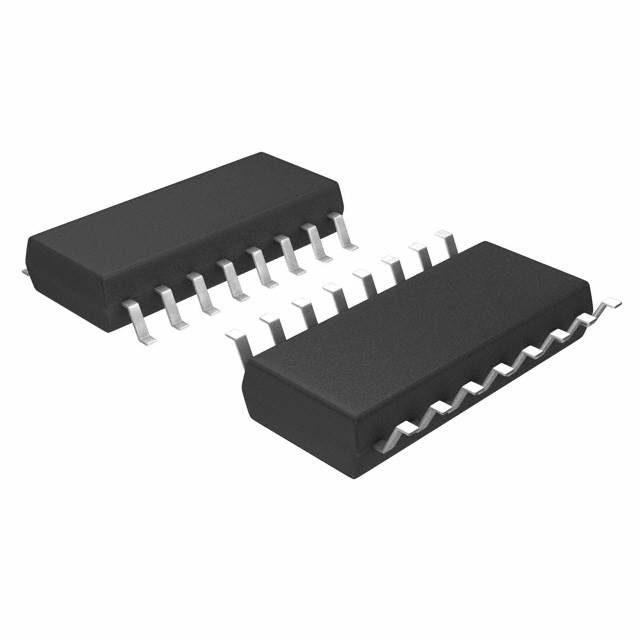
- Part No.:
- RI-RFM-006A
- Manufacturer:
- Texas Instruments
- Category:
- RFID, RF Access, Monitoring ICs
- Package:
- 16-SOIC (0.209", 5.30mm Width)
- Datasheet:
-
 RI-RFM-006A.pdf
- Description:
- IC RFID READER 134.2KHZ 16SO
- Quantity:
- Payment:

- Shipping:

Inventory:3,959
Please send an inquiry. Send us your inquiry, and we will respond immediately.
Product details
Overview
RI-RFM-006A from Texas Instruments is a CMOS-based automotive RF-module IC integrating transmitter and digitized FSK receiver functions for TIRIS read-write systems. It operates at 4.5–5.5 V, –40°C to +85°C, uses a 17.1776 MHz master oscillator, and delivers TXHI/TXLO open-drain outputs plus RXDT–/RXCK demodulated data/clock outputs - enabling compact, low-part-count transponder communication in vehicle access systems.
For engineers reviewing the RI-RFM-006A datasheet, RI-RFM-006A pinout, RI-RFM-006A application, or RI-RFM-006A equivalent, key selection considerations include its integrated 3-stage CMOS receiver amplifier chain, reverse-polarity RXDT– output, 134.2 kHz FSK transmit frequency, 16-pin SO package, and exclusive use in TIRIS-compatible transponder interrogation systems.
Technical Context
The RI-RFM-006A implements a dual-mode operation controlled by TXCT–: Low enables sending mode (134.2 kHz carrier generation via 17.1776 MHz ÷ 128), driving external PCH/NCH MOSFETs through TXHI/TXLO; High enables receiving mode, activating internal digitized FSK demodulation using A1IN–A3OP amplifier stages and binary clock-count discrimination at A3OP with fixed threshold of 132 cycles.
Demodulation is fully digital: incoming FSK signals are amplified across three configurable CMOS inverters, then discriminated by counting master clock cycles between leading edges at A3OP - outputting RXDT– (negative for "1", positive for "0") and synchronized RXCK at 1/16th A3OP frequency, with automatic reset on 0→1 transitions to maintain clock alignment during noise-induced bit errors.
Key Specifications
| Parameter | Value and Actual Design Meaning |
|---|---|
| Supply Voltage | 4.5 V to 5.5 V - ensures compatibility with automotive 5 V rail and tolerance to battery transients |
| Operating Temperature | –40°C to +85°C - qualified for under-hood and door module environments |
| Master Clock Frequency | 17.1776 MHz ±5.12 kHz - directly determines 134.2 kHz transmit and FSK demodulation accuracy |
| Transmit Output Type | NCH/PCH open-drain (TXLO/TXHI) - drives external antenna MOSFETs without level-shifting |
| Receiver Output Polarity | RXDT– active-low for "1" - reverse polarity vs. TIRIS standard, requiring controller logic adaptation |
| FSK Discrimination Threshold | 132 master clock cycles - defines 130.133 kHz boundary between "1" (≤130.133 kHz) and "0" (>130.133 kHz) |
| Demodulator Clock Source | RXCK synchronized to A3OP, divided by 16 - provides deterministic timing for external controller sampling |
Pinout & Package
Package: 16-pin SO (Small Outline Package), 7.40–8.20 mm body width, 9.90–10.50 mm length, 1.27 mm lead pitch per JEDEC MS-012.
| Pin/Terminal | Circuit Role | Design Meaning |
|---|---|---|
| A3OP | FSK signal output from CMOS inverter-3 | Drives internal digital demodulator; connects to antenna receive path after amplification |
| A3IN | FSK signal input to CMOS inverter-3 | Accepts externally amplified FSK signals when bypassing first two amplifier stages |
| TXLO | N-channel open-drain TX output | Drives source of NCH MOSFET in series-resonant antenna circuit during transmission |
| TXHI | P-channel open-drain TX output | Drives source of PCH MOSFET in series-resonant antenna circuit during transmission |
| TXCT– | Transmit/receive mode control input | Low = transmit mode (TXHI/TXLO active); High = receive mode (demodulator enabled, TX outputs disabled) |
| RXDT– | Digital FSK data output | Negative logic: low = "1", high = "0"; requires controller inversion or logic adaptation |
| RXCK | Data clock output | Synchronized to RXDT– bit stream; first edge occurs 4 A3OP cycles after data transition |
| TPC | TX power select input | Low = reduced transmit power; used to limit field strength in proximity applications |
Key Features
| Feature | Design Value |
|---|---|
| Digitized FSK demodulation | Eliminates analog filters and tuning components; improves production yield and temperature stability |
| Three-stage programmable CMOS receiver amplifiers | Enables gain/frequency response optimization via external resistors/capacitors per stage |
| Integrated 17.1776 MHz oscillator interface | Supports crystal or ceramic resonator; oscillator accuracy directly governs system interoperability with TIRIS transponders |
| Reverse-polarity RXDT– output | Requires no external inverter but mandates controller firmware awareness of active-low "1" encoding |
| Automatic RXCK resynchronization | Resets 16-cycle counter on RXDT– 0→1 transitions to correct clock drift caused by noise or missing bits |
Applications
| Keyless Entry Transceiver | Immobilizer Interrogation Module |
|---|---|
Use Scenario: Vehicle door handle or pillar-mounted reader interrogating passive TIRIS transponders in fobs. IC Role / Device Role / Timing Role: RI-RFM-006A generates 134.2 kHz carrier to energize transponder and digitizes returned FSK ID code with precise RXCK-synchronized sampling. Use Value: Enables compact, single-chip reader design with no external demodulator or analog tuning components, reducing BOM cost and PCB area. | Use Scenario: Engine bay-mounted immobilizer ECU verifying transponder authenticity before engine start. IC Role / Device Role / Timing Role: RI-RFM-006A operates in controlled transmit/receive bursts under microcontroller command, delivering authenticated ID data via RXDT–/RXCK to safety-critical MCU. Use Value: Meets automotive ASIL-B functional safety requirements via deterministic digital demodulation and noise-immune clock recovery. |
| Smart Trunk Release | Vehicle Access Diagnostic Tool |
Use Scenario: Rear bumper-mounted sensor detecting authorized fob presence within ~1.5 m for hands-free trunk opening. IC Role / Device Role / Timing Role: RI-RFM-006A drives low-power antenna with TPC-controlled output and decodes short-range FSK responses with minimal latency. Use Value: Supports rapid polling cycles (<50 ms) due to fast mode switching and zero external calibration, improving user experience responsiveness. | Use Scenario: Service technician tool reading/transcoding legacy TIRIS transponder IDs during vehicle programming. IC Role / Device Role / Timing Role: RI-RFM-006A serves as standardized RF front-end, interfacing with host MCU via simple parallel I/O (TXCT–, RXDT–, RXCK) without protocol stack dependency. Use Value: Provides field-serviceable, drop-in compatibility with TI's TIRIS ecosystem without requiring custom RF design or certification. |
Equivalent & Alternatives
The following parts are listed as comparable options for similar RF transceiver applications.
| Alternative Part | Technical Difference | Application Difference | Selection Advice |
|---|---|---|---|
| RI-RFM-005A | Same 16-pin SO package and pinout; lacks TPC pin and RXDT– polarity reversal; uses different oscillator tolerance spec | Designed for older TIRIS transponders with looser clock accuracy requirements; not interoperable with transponders requiring RI-RFM-006A's 132-cycle threshold | Select only if legacy system compatibility and absence of power control are acceptable |
| RI-RFM-007A | Includes integrated voltage regulator (3.3 V output), wider supply range (3.5–5.5 V), and enhanced ESD protection (±6 kV HBM) | Targeted at newer automotive platforms with mixed-voltage domains; requires layout changes for regulator bypassing and thermal management | Choose for new designs needing simplified power architecture and higher robustness, accepting minor footprint adjustment |
Compared with RI-RFM-005A and RI-RFM-007A, the RI-RFM-006A uniquely balances cost-optimized integration (no regulator), strict TIRIS-134.2 kHz compliance, and reverse-polarity RXDT– for direct interface with legacy TI microcontrollers - making it irreplaceable in certified production systems built to SCBU036 specification.
Availability
RI-RFM-006A is available at Aetrix Electronics and suitable for keyless entry transceivers, immobilizer interrogation modules, and smart trunk release systems requiring stable component supply across extended automotive product lifecycles.
Supply support for RI-RFM-006A includes scheduled delivery planning, volume procurement assistance, BOM continuity management, traceable sourcing, and lifecycle availability coordination for OEM customers, industrial embedded developers, connected-device designers, and electronics production programs.
Manufacturer
Texas Instruments is a global semiconductor leader specializing in analog, embedded processing, and connectivity technologies for automotive, industrial, and consumer applications.
The RI-RFM-006A belongs to TI's TIRIS™ RF-module product line, engineered specifically for contactless identification systems in automotive access control - emphasizing interoperability with TI's proprietary transponder family and minimizing external component count.
FAQ
What is the primary function of the RI-RFM-006A in a TIRIS system?
The RI-RFM-006A serves as the complete RF transceiver front-end for TIRIS read-write systems, generating the 134.2 kHz carrier to power passive transponders and digitally demodulating returned FSK-encoded ID data. Its integrated transmitter driver (TXHI/TXLO) and digitized receiver (A1IN–A3OP + digital discriminator) eliminate need for external modulators, filters, or analog demodulators - all within a single 16-pin SO package. The RI-RFM-006A is not a general-purpose RF IC; it is strictly designed for interoperability with TI's TIRIS transponder protocol.
Why does the RI-RFM-006A have reverse-polarity RXDT– output?
The RI-RFM-006A's RXDT– output is intentionally inverted relative to the TIRIS standard: low voltage represents bit "1", high voltage represents bit "0". This design choice simplifies interface with certain TI microcontrollers that natively decode active-low serial data, reducing external logic. Documentation explicitly warns designers to account for this polarity in firmware - misinterpreting RXDT– without inversion will cause systematic ID decoding failures. The RI-RFM-006A's behavior is fixed and non-configurable.
How does the RI-RFM-006A achieve noise-immune FSK demodulation?
The RI-RFM-006A achieves noise immunity through three mechanisms: (1) digital clock-count discrimination at A3OP with a fixed 132-cycle threshold, rejecting sub-threshold jitter; (2) mandatory validation of ≥4 consecutive FSK waves in the same frequency band before declaring a bit; and (3) automatic RXCK counter reset on every RXDT– 0→1 transition to realign clock timing after bit errors. These features are hardwired into the RI-RFM-006A's CMOS logic and require no configuration - they operate deterministically across –40°C to +85°C.
Can the RI-RFM-006A be used with non-TI transponders?
No - the RI-RFM-006A is exclusively designed for TI's TIRIS transponder protocol. Its 134.2 kHz transmit frequency, 123.2 kHz/134.2 kHz FSK deviation pair, 17.1776 MHz master clock dependency, and 132-cycle demodulation threshold are all specified to match TI's transponder timing and modulation specifications. Using the RI-RFM-006A with ISO 11784/11785 or other standards-compliant transponders will result in failed communication due to incompatible carrier, deviation, and timing parameters.
What are the critical layout considerations for the RI-RFM-006A's power supply?
The RI-RFM-006A's internal three-stage CMOS receiver amplifiers form an unintended feedback loop through parasitic L/R/C in the VCC/GND routing. To prevent oscillation in the 120–140 kHz band, TI mandates a 1 µF low-ESR ceramic bypass capacitor placed ≤5 mm from pins 11 (GND) and 12 (VCC), with minimum 12-mil wide power traces and ground plane coverage beneath the IC. Failure to follow this layout guidance - documented in Section 14.1 of SCBU036 - causes unstable demodulation and intermittent communication loss, especially near metal enclosures or high-noise ECUs. This requirement applies uniquely to the RI-RFM-006A due to its internal amplifier topology.
RI-RFM-006A Specifications
- Product attributes
- Attribute value
- Manufacturer:
- Texas Instruments
- Series:
- -
- Package/Case:
- 16-SOIC (0.209", 5.30mm Width)
- Packaging:
- Tape & Reel (TR)
- Product Status:
- Obsolete
- Type:
- RFID Reader
- Frequency:
- 134.2kHz
- Standards:
- -
- Interface:
- -
- Voltage - Supply:
- 4.5V ~ 5.5V
- Operating Temperature:
- -40°C ~ 85°C
- Grade:
- -
- Qualification:
- -
- Mounting Type:
- Surface Mount
- Supplier Device Package:
- 16-SO
RI-RFM-006A FAQ
1.How can I place an order for RI-RFM-006A through Aetrix?
Please submit a Request for Quotation (RFQ) for RI-RFM-006A on Aetrix. Our sales agent will provide a competitive quotation and guide you through the order confirmation once you accept the terms.
2.Are the price and stock information for RI-RFM-006A reliable?
The price and inventory of RI-RFM-006A are updated periodically and may fluctuate due to market conditions. Stock and pricing data are typically refreshed every 24 hours. Quotation validity for RI-RFM-006A is usually 5 days.
3.What payment methods are accepted for RI-RFM-006A?
We accept Wire Transfer, PayPal, Credit Card, Western Union, MoneyGram, and Escrow for RI-RFM-006A transactions.
Note: Certain payment methods may incur a processing fee.
4.How is shipping managed for RI-RFM-006A?
RI-RFM-006A orders can be shipped via leading logistics carriers, including DHL, UPS, FedEx, TNT, or Registered Mail.
Once your RI-RFM-006A order is processed, you will receive an email with the shipment details and tracking number.
Note: Tracking information may take up to 24 hours to appear. Express delivery typically takes 3–5 business days.
5.How can I obtain technical support or documentation for RI-RFM-006A?
For technical support, including RI-RFM-006A datasheets, pinout diagrams, or application guidance, please contact our engineering support team. They can provide detailed documentation and assistance for your RI-RFM-006A requirements.
6.How does Aetrix verify that RI-RFM-006A is sourced from the original manufacturer or authorized distributors?
All RI-RFM-006A products on Aetrix are procured from qualified distributors and authorized channels. Our dedicated quality assurance team conducts strict verification, including traceability checks and, if necessary, third-party testing. This ensures that RI-RFM-006A meets industry standards.
7.What is the process for return or replacement of RI-RFM-006A?
All RI-RFM-006A units undergo pre-shipment inspection (PSI). If there is an issue with RI-RFM-006A, returns or replacements are accepted under the following conditions:
1.Quantity discrepancies, incorrect items, or visible external defects (such as breakage or corrosion), acknowledged by Aetrix.
2.The issue is reported within 90 days of delivery.
3.The RI-RFM-006A part is unused and in its original packaging.
Return procedure for RI-RFM-006A:
1.Submit a request within 90 days.
2.Obtain a Return Material Authorization (RMA) from Aetrix.
RI-RFM-006A Tags

-
SL2S2602FTBX
NXP Semiconductors
-
ST25DV04K-IER6S3
STMicroelectronics
-
ST25DV04K-IER6C3
STMicroelectronics
-
LXMSJZNCMD-217
Murata Electronics

-
NT3H2111W0FTTJ
NXP Semiconductors
-
NT3H2111W0FHKH
NXP Semiconductors
-
M24LR04E-RMC6T/2
STMicroelectronics
-
ST25DV04KC-JF6D3
STMicroelectronics
-
ST25DV64KC-IE6S3
STMicroelectronics
-
ST25DV64K-IER6T3
STMicroelectronics
-
NT3H2211W0FTTJ
NXP Semiconductors
-
NT3H2211W0FHKH
NXP Semiconductors
Tech Hub

A practical engineering guide to 3.3V and 5V logic compatibility, input thresholds, resistor dividers, translator ICs, MOSFET level shifting, I2C pull-ups, timing limits and power-sequencing risks.

The 74HC595 uses push-pull logic outputs, while the TPIC6B595 uses 50 V open-drain DMOS sinks for higher-power loads. This guide compares timing, current limits, 3.3 V interfacing, load wiring, thermal…

The 74HC595 converts serial data into eight stable parallel outputs. This guide covers pin functions, shift and storage timing, OE and MR behavior, drive-current limits, cascading, voltage compatibilit…

A technical comparison of level-sensitive latches and edge-triggered flip-flops, covering timing windows, setup and hold limits, master–slave operation, time borrowing, race-through, HDL inference and…

A D latch stores one bit while Enable controls when data can pass. This reference covers gate-level operation, truth tables, transparency, setup and hold timing, LE versus OE, common ICs and practical …

An SR latch stores one bit through cross-coupled feedback. This engineering reference covers NOR and NAND implementations, truth tables, forbidden-state recovery, gated operation, switch debouncing, fa…

Latch circuits retain one bit through feedback. This technical reference covers SR and D latches, truth tables, transparency, timing limits, latch-versus-flip-flop behavior, applications and common log…

An engineering guide to LED driver operation, constant-current and constant-voltage outputs, linear and switching topologies, dimming, IC selection, calculations, replacement compatibility, and fault c…

Operational amplifier guide covering op amp basics, feedback, ideal vs real op amps, common configurations, buffer circuits, offset, bias current, gain-bandwidth, slew rate, rail-to-rail limits and sel…

Jumper cables guide covering safe connection order, red and black clamp placement, final ground connection, cable gauge, length, clamp quality, copper vs CCA cables, jump starter comparison and battery…


