
 My Inquiry
 My Account


NXP Semiconductors SL2S1512FTBX
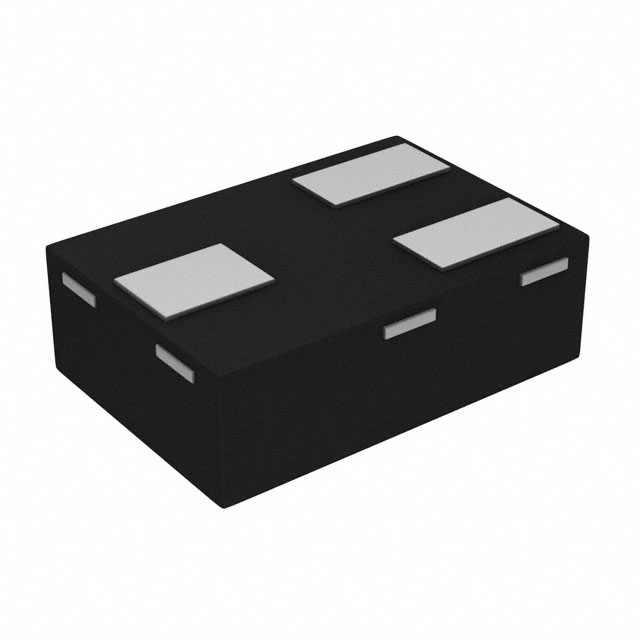
- Part No.:
- SL2S1512FTBX
- Manufacturer:
- NXP Semiconductors
- Category:
- RFID, RF Access, Monitoring ICs
- Package:
- 3-XDFN
- Datasheet:
-
 SL2S1512FTBX.pdf
- Description:
- IC RFID TRANSP 13.56MHZ 3XSON
- Quantity:
- Payment:

- Shipping:

Inventory:9,720
Please send an inquiry. Send us your inquiry, and we will respond immediately.
Product details
Overview
SL2S1512FTBX from NXP Semiconductors is a passive HF RFID IC compliant with ISO 18000-3 Mode 3 and EPC Class-1 HF standards, operating at 13.56 MHz. It delivers 512-bit user memory, 240-bit EPC memory, and 96-bit TID with 48-bit unique serial number. Its ultra-low-power analog RF interface enables contactless power harvesting and bidirectional data exchange in supply chain and healthcare tagging applications.
For engineers reviewing the SL2S1512FTBX datasheet, SL2S1512FTBX pinout, SL2S1512FTBX application, or SL2S1512FTBX equivalent, this page provides verified technical context, memory architecture details, anti-collision performance (up to 800 tags/s), EAS functionality, and XSON3 package-specific interface constraints - all confirmed for SL2S1512FTBX per Rev. 3.3 datasheet.
Technical Context
The SL2S1512FTBX implements a three-block architecture: Analog RF Interface (with on-chip voltage regulation, demodulation, and load modulation), Digital Controller (managing ISO 18000-3 Mode 3 protocol state machines and anti-collision arbitration), and EEPROM (storing EPC, TID, and user data). It operates without external power, extracting energy and clock from the reader's 13.56 MHz magnetic field.
Its RF interface supports DSB-ASK forward link (25–100 kbit/s) and ASK return link (53–848 kbit/s), with selectable subcarrier (424 kHz or 848 kHz) and FM0/Miller/Manchester baseband encoding. The chip enforces access control via 32-bit kill and access passwords, and supports EAS alarm toggling via ChangeConfigWord command on EPC Bank address 20Fh.
Key Specifications
| Parameter | Value and Actual Design Meaning |
|---|---|
| RF Standard | Fully compliant with ISO 18000-3 Mode 3 and EPC Class-1 HF v2.0.3 - ensures interoperability with global HF RFID infrastructure. |
| Operating Frequency | 13.56 MHz ±7 kHz - matches ISM band requirements and enables reliable coupling with printed/wound antennas. |
| Memory Capacity | 512-bit user memory (Bank 11), 240-bit EPC (Bank 01), 96-bit TID with 48-bit unique serial number - sufficient for item-level traceability and secure identification. |
| Input Capacitance (Ci) | 23.5 pF (typical) between LA and LB - defines resonant tank tuning requirement for optimal power transfer at 13.56 MHz. |
| Minimum Input Power | 40 μW - enables operation at extended read ranges (up to 1.5 m gate width) with low-cost reader antennas. |
| Anti-Collision Rate | Up to 800 tags/s - supports high-density logistics environments without inventory timeout or missed reads. |
| ESD Rating | ±2 kV HBM - meets industrial handling requirements for tag assembly and label conversion processes. |
Pinout & Package
SL2S1512FTBX is housed in an XSON3 (SOT1122) plastic extremely thin small outline package: 1.0 × 1.45 × 0.5 mm body, no leads, 3 terminals. The package is optimized for direct die bonding onto flexible antenna substrates in smart label manufacturing.
| Pin/Terminal | Circuit Role | Design Meaning |
|---|---|---|
| 1 (LB) | Antenna RF input | One terminal of differential RF interface; connects to antenna coil leg B - forms resonant LC tank with external capacitor and LA. |
| 2 (LA) | Antenna RF input | Second terminal of differential RF interface; connects to antenna coil leg A - Ci = 23.5 pF typical between LA and LB defines tuning point. |
| 3 (n.c.) | Not connected | No internal connection; must remain unconnected in PCB layout or antenna substrate design - floating terminal avoids parasitic coupling. |
Key Features
| Feature | Design Value |
|---|---|
| EAS (Electronic Article Surveillance) | Configurable via EAS Alarm bit (address 20Fh); enables standalone theft-deterrent operation without backend database dependency. |
| Recommissioning & Kill Security | 32-bit kill password and 32-bit access password support privacy-preserving tag deactivation and secured state transition - compliant with EPCglobal security mandates. |
| FastInitialization (Write EPC) | Accelerated EPC programming when target memory is erased (00h); reduces write time during high-speed label encoding in production lines. |
| BlockPermalock Support | User memory partitioned into eight 4-word blocks; each block can be permanently locked independently - enables granular data protection for multi-application labels. |
| High-Sensitivity RF Interface | Operates down to 40 μW input power; achieves long read/write range with minimal antenna size - critical for compact medical device tags and casino chip embedding. |
Applications
| Healthcare Supply Chain | Medical Lab Automation |
|---|---|
Use Scenario: Tracking single-use surgical kits across sterilization, storage, and OR deployment cycles. IC Role / Device Role / Timing Role: Passive HF RFID tag IC enabling battery-free, line-of-sight-free identification during automated cart scanning and cabinet inventory. Use Value: Ensures real-time kit availability and expiry compliance using 48-bit unique TID and 240-bit EPC - validated for dense metal-rich hospital environments. |
Use Scenario: Sample tube labeling in high-throughput clinical labs with robotic handlers and multi-reader gateways. IC Role / Device Role / Timing Role: ISO 18000-3 Mode 3-compliant transponder supporting simultaneous interrogation of >500 tubes per minute. Use Value: Achieves 800 tags/s anti-collision throughput and 1.5 m read range - eliminates manual scan bottlenecks in automated sample processing. |
| Document Tracking | Casino Chip Authentication |
Use Scenario: Secure archival of legal and financial documents in tamper-evident envelopes with embedded RFID. IC Role / Device Role / Timing Role: EPC-compliant tag IC storing encrypted document hash in user memory and immutable TID for forensic verification. Use Value: Leverages 512-bit user memory and kill/password security to prevent unauthorized duplication or alteration of certified records. |
Use Scenario: Embedded authentication of polymer casino chips using integrated HF RFID for table-side validation. IC Role / Device Role / Timing Role: Miniaturized XSON3-packaged transponder enabling flush mounting in 35 mm diameter chips with no battery or visible antenna. Use Value: Delivers robust operation under mechanical stress and RF noise via 23.5 pF Ci matching and ±2 kV HBM ESD tolerance - proven in live gaming floor deployments. |
Equivalent & Alternatives
The following parts are listed as comparable options for similar passive HF RFID tag IC applications.
| Alternative Part | Technical Difference | Application Difference | Selection Advice |
|---|---|---|---|
| SL2S1412FTB | Input capacitance = 0 pF (typical) vs. SL2S1512FTBX's 23.5 pF - requires different antenna tuning capacitor value. | Optimized for ultra-thin label constructions where lower Ci enables smaller external capacitors. | Select SL2S1412FTB only when redesigning antenna resonance for 0 pF Ci; SL2S1512FTBX remains preferred for standard 23.5 pF-optimized layouts. |
| SL2S1612FTB | Input capacitance = 97 pF (typical) - significantly higher Ci demands larger external tuning capacitor and alters antenna impedance matching. | Suitable for applications requiring enhanced near-field coupling in metallic or high-dielectric environments. | Choose SL2S1612FTB only when measured field strength or material interference necessitates higher Ci; SL2S1512FTBX offers best balance of range and layout flexibility. |
Compared with SL2S1412FTB and SL2S1612FTB, SL2S1512FTBX provides the industry-standard 23.5 pF input capacitance - simplifying antenna design, reducing component count, and ensuring consistent performance across global HF reader ecosystems without retuning.
Availability
SL2S1512FTBX is available at Aetrix Electronics and suitable for healthcare supply chain management, medical lab automation, and document tracking applications requiring stable component supply, long-term lifecycle assurance, and full traceability through wafer-level sourcing.
Supply support for SL2S1512FTBX includes scheduled delivery planning, volume procurement assistance, BOM continuity management, traceable sourcing, and lifecycle availability coordination for OEM customers, industrial embedded developers, connected-device designers, and electronics production programs.
Manufacturer
NXP Semiconductors is a global semiconductor leader specializing in secure connectivity solutions, with core expertise in RFID, NFC, automotive, and secure microcontrollers.
The ICODE product family - including SL2S1512FTBX - was designed specifically for high-reliability passive HF RFID tagging in demanding industrial, healthcare, and logistics environments, emphasizing anti-collision robustness, memory security, and ultra-low-power RF coupling.
FAQ
What is the primary RF standard compliance for SL2S1512FTBX?
SL2S1512FTBX fully complies with ISO 18000-3 Mode 3 and EPC Class-1 HF v2.0.3 standards. This dual compliance ensures interoperability with global HF RFID infrastructure, including commercial readers used in supply chain, healthcare, and retail systems. The SL2S1512FTBX implements mandatory commands (Select, BeginRound, ACK, READ, WRITE, KILL) and optional features (Access, BlockPermalock) as defined in both specifications - verified in Section 9.3 and Table 13 of the Rev. 3.3 datasheet.
How does SL2S1512FTBX derive power and clock in passive operation?
SL2S1512FTBX derives all operating power and system clock from the reader's 13.56 MHz magnetic field via inductive coupling through its LA and LB terminals. The on-chip analog RF interface rectifies the RF signal to generate VDD and extracts the clock signal directly from the carrier - eliminating need for batteries or external power sources. This enables true passive operation up to 1.5 m gate width, as confirmed in Section 9.1 and Table 16 of the datasheet.
What memory banks are implemented in SL2S1512FTBX and how are they allocated?
SL2S1512FTBX implements four standardized memory banks: Bank 00 (64-bit reserved for kill/access passwords), Bank 01 (240-bit EPC), Bank 10 (96-bit TID with 48-bit unique serial number), and Bank 11 (512-bit user memory). Memory addresses begin at zero per bank, with initial content factory-set (e.g., all 00h for unlocked memory). This allocation follows EPCglobal Tag Data Standards and is detailed in Table 5 and Section 10.1 of the datasheet.
Does SL2S1512FTBX support Electronic Article Surveillance (EAS) functionality?
Yes, SL2S1512FTBX supports EAS via a dedicated EAS Alarm bit located at EPC Bank address 20Fh. This bit is toggled using the ChangeConfigWord command, and tags with EAS Alarm = 1 respond uniquely during inventory rounds initiated by a specific Select + BeginRound + ACK sequence. No backend database is required - EAS operates autonomously, as specified in Sections 2.1, 11.7.1, and 11.8.1 of the datasheet.
What is the package type and pin configuration of SL2S1512FTBX?
SL2S1512FTBX uses the XSON3 (SOT1122) package: 1.0 × 1.45 × 0.5 mm body, no leads, 3 terminals. Pin 1 is LB (antenna RF input), Pin 2 is LA (antenna RF input), and Pin 3 is n.c. (not connected). The 23.5 pF typical input capacitance between LA and LB defines resonant tank tuning - confirmed in Table 1 (Ordering Information) and Table 2 (Pin Description) of the Rev. 3.3 datasheet.
SL2S1512FTBX Specifications
- Product attributes
- Attribute value
- Manufacturer:
- NXP Semiconductors
- Series:
- -
- Package/Case:
- 3-XDFN
- Packaging:
- Tape & Reel (TR)
- Product Status:
- Active
- Type:
- RFID Transponder
- Frequency:
- 13.56MHz
- Standards:
- ISO 18000-6, EPC
- Interface:
- -
- Voltage - Supply:
- 1.5V ~ 1.7V
- Operating Temperature:
- -40°C ~ 85°C
- Grade:
- -
- Qualification:
- -
- Mounting Type:
- Surface Mount
- Supplier Device Package:
- 3-XSON (1x1.45)
SL2S1512FTBX FAQ
1.How can I place an order for SL2S1512FTBX through Aetrix?
Please submit a Request for Quotation (RFQ) for SL2S1512FTBX on Aetrix. Our sales agent will provide a competitive quotation and guide you through the order confirmation once you accept the terms.
2.Are the price and stock information for SL2S1512FTBX reliable?
The price and inventory of SL2S1512FTBX are updated periodically and may fluctuate due to market conditions. Stock and pricing data are typically refreshed every 24 hours. Quotation validity for SL2S1512FTBX is usually 5 days.
3.What payment methods are accepted for SL2S1512FTBX?
We accept Wire Transfer, PayPal, Credit Card, Western Union, MoneyGram, and Escrow for SL2S1512FTBX transactions.
Note: Certain payment methods may incur a processing fee.
4.How is shipping managed for SL2S1512FTBX?
SL2S1512FTBX orders can be shipped via leading logistics carriers, including DHL, UPS, FedEx, TNT, or Registered Mail.
Once your SL2S1512FTBX order is processed, you will receive an email with the shipment details and tracking number.
Note: Tracking information may take up to 24 hours to appear. Express delivery typically takes 3–5 business days.
5.How can I obtain technical support or documentation for SL2S1512FTBX?
For technical support, including SL2S1512FTBX datasheets, pinout diagrams, or application guidance, please contact our engineering support team. They can provide detailed documentation and assistance for your SL2S1512FTBX requirements.
6.How does Aetrix verify that SL2S1512FTBX is sourced from the original manufacturer or authorized distributors?
All SL2S1512FTBX products on Aetrix are procured from qualified distributors and authorized channels. Our dedicated quality assurance team conducts strict verification, including traceability checks and, if necessary, third-party testing. This ensures that SL2S1512FTBX meets industry standards.
7.What is the process for return or replacement of SL2S1512FTBX?
All SL2S1512FTBX units undergo pre-shipment inspection (PSI). If there is an issue with SL2S1512FTBX, returns or replacements are accepted under the following conditions:
1.Quantity discrepancies, incorrect items, or visible external defects (such as breakage or corrosion), acknowledged by Aetrix.
2.The issue is reported within 90 days of delivery.
3.The SL2S1512FTBX part is unused and in its original packaging.
Return procedure for SL2S1512FTBX:
1.Submit a request within 90 days.
2.Obtain a Return Material Authorization (RMA) from Aetrix.
SL2S1512FTBX Tags

-
SL2S2602FTBX
NXP Semiconductors
-
ST25DV04K-IER6S3
STMicroelectronics
-
ST25DV04K-IER6C3
STMicroelectronics
-
LXMSJZNCMD-217
Murata Electronics

-
NT3H2111W0FTTJ
NXP Semiconductors
-
NT3H2111W0FHKH
NXP Semiconductors
-
M24LR04E-RMC6T/2
STMicroelectronics
-
ST25DV04KC-JF6D3
STMicroelectronics
-
ST25DV64KC-IE6S3
STMicroelectronics
-
ST25DV64K-IER6T3
STMicroelectronics
-
NT3H2211W0FTTJ
NXP Semiconductors
-
NT3H2211W0FHKH
NXP Semiconductors
Tech Hub

A practical engineering guide to 3.3V and 5V logic compatibility, input thresholds, resistor dividers, translator ICs, MOSFET level shifting, I2C pull-ups, timing limits and power-sequencing risks.

The 74HC595 uses push-pull logic outputs, while the TPIC6B595 uses 50 V open-drain DMOS sinks for higher-power loads. This guide compares timing, current limits, 3.3 V interfacing, load wiring, thermal…

The 74HC595 converts serial data into eight stable parallel outputs. This guide covers pin functions, shift and storage timing, OE and MR behavior, drive-current limits, cascading, voltage compatibilit…

A technical comparison of level-sensitive latches and edge-triggered flip-flops, covering timing windows, setup and hold limits, master–slave operation, time borrowing, race-through, HDL inference and…

A D latch stores one bit while Enable controls when data can pass. This reference covers gate-level operation, truth tables, transparency, setup and hold timing, LE versus OE, common ICs and practical …

An SR latch stores one bit through cross-coupled feedback. This engineering reference covers NOR and NAND implementations, truth tables, forbidden-state recovery, gated operation, switch debouncing, fa…

Latch circuits retain one bit through feedback. This technical reference covers SR and D latches, truth tables, transparency, timing limits, latch-versus-flip-flop behavior, applications and common log…

An engineering guide to LED driver operation, constant-current and constant-voltage outputs, linear and switching topologies, dimming, IC selection, calculations, replacement compatibility, and fault c…

Operational amplifier guide covering op amp basics, feedback, ideal vs real op amps, common configurations, buffer circuits, offset, bias current, gain-bandwidth, slew rate, rail-to-rail limits and sel…

Jumper cables guide covering safe connection order, red and black clamp placement, final ground connection, cable gauge, length, clamp quality, copper vs CCA cables, jump starter comparison and battery…


