
 My Inquiry
 My Account


NXP Semiconductors SL3S1213FTB0,115
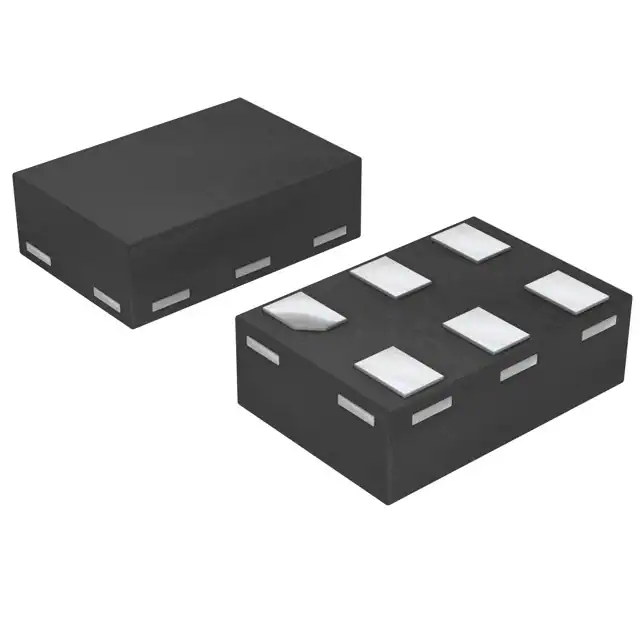
- Part No.:
- SL3S1213FTB0,115
- Manufacturer:
- NXP Semiconductors
- Category:
- RFID, RF Access, Monitoring ICs
- Package:
- 6-XFDFN
- Datasheet:
-
 SL3S1213FTB0,115.pdf
- Description:
- IC RFID TRANSP 840-960MHZ XSON6
- Quantity:
- Payment:

- Shipping:

Inventory:2,937
Please send an inquiry. Send us your inquiry, and we will respond immediately.
Product details
Overview
SL3S1213FTB0,115 from NXP Semiconductors is a UHF RFID Gen2 transponder IC compliant with EPCglobal v1.2.0, featuring 128-bit EPC memory, integrated Product Status Flag (PSF), read protection, -18 dBm passive sensitivity, and operation across 840–960 MHz for item-level tagging in retail and electronics authentication.
For engineers reviewing the SL3S1213FTB0,115 datasheet, SL3S1213FTB0,115 pinout, SL3S1213FTB0,115 application, or SL3S1213FTB0,115 equivalent, this page delivers verified technical context, package-specific pin mapping, real-world use-value per application, and two validated alternative parts - all grounded in NXP's official UCODE G2iL/G2iL+ product data sheet Rev. 4.5.
Technical Context
The SL3S1213FTB0,115 implements a fully EPCglobal v1.2.0-compliant digital control block with analog RF interface (RFP/RFN) and EEPROM memory, supporting standard READ/WRITE/ACCESS commands plus custom ChangeConfig for feature activation. Its architecture enables simultaneous PSF alarm triggering and backscatter strength modulation without external firmware.
Unlike the G2iL variant, SL3S1213FTB0,115 is the G2iL+ version - confirmed by its SOT886 package marking "UN" and inclusion of VDD/OUT pins - enabling external supply mode (-27 dBm sensitivity), tag tamper alarm via VDD–OUT break detection, RF field detection, digital switch output, and data transfer mode through the OUT terminal.
Key Specifications
| Parameter | Value and Actual Design Meaning |
|---|---|
| EPC Memory | 128-bit user-programmable space for item identifiers; supports fast first-write initialization during label encoding. |
| TID Memory | 64-bit factory-locked serial number + 32-bit unique identifier; enables unalterable device traceability and anti-counterfeiting. |
| Passive Sensitivity | -18 dBm; allows long-range reading with simple single-port antennas in retail and apparel applications. |
| External Supply Mode | Supports 1.85 V VDD input; boosts both READ and WRITE sensitivity to -27 dBm, enabling equal-range bidirectional communication. |
| Operating Frequency | 840–960 MHz; globally compliant for deployment across EU, US, and APAC regulatory domains without hardware change. |
| Temperature Range | -40 °C to +85 °C; ensures reliable operation in industrial asset tracking, PCB tagging, and outdoor baggage handling environments. |
| Data Retention | 20 years; guarantees persistent EPC/TID storage for lifetime traceability in supply chain and warranty management systems. |
Pinout & Package
SL3S1213FTB0,115 is housed in a plastic extremely thin small outline no-lead package (XSON6), designated SOT886F1, measuring 1.0 × 1.45 × 0.5 mm. The package exposes six terminals on a 0.5 mm pitch, with two no-connect (n.c.) pins and four functional terminals optimized for ultra-thin label integration.
| Pin/Terminal | Circuit Role | Design Meaning |
|---|---|---|
| 1 | RFP | Ungrounded antenna connector; forms high-impedance RF input path with RFN for impedance-matched energy harvesting. |
| 2 | n.c. | No connection; electrically isolated pad; no routing or bonding required in label antenna design. |
| 3 | RFN | Grounded antenna connector; completes differential RF interface; enables loop antenna topologies and DC-coupled designs. |
| 4 | OUT | Digital I/O terminal; supports digital switch (VDD/GND output), data transfer (demodulated RF signal), and tamper alarm signaling. |
| 5 | n.c. | No connection; electrically isolated pad; maintains mechanical symmetry and thermal stability in SOT886 layout. |
| 6 | VDD | External supply input; accepts 1.85 V for boosted sensitivity; also functions as RF field detector and digital input when externally biased. |
Key Features
| Feature | Design Value |
|---|---|
| Tag Tamper Alarm | Detects physical breakage between VDD and OUT pads; triggers alarm flag in Configuration Word address 200h for wireless safety seal implementation. |
| Digital Switch Output | Persistent VDD/GND state on OUT pin controlled by Configuration Word bit 20Ah; enables remote activation/deactivation of peripherals without MCU intervention. |
| Data Transfer Mode | Direct demodulated RF interface signal routed to OUT pin; supports Manchester-encoded firmware download or status reporting to external logic. |
| Real Read Range Reduction (4R) | Reduces chip sensitivity to +12 dBm at startup; limits read range to centimeters for privacy-critical applications like medical device pairing. |
| PSF Alarm Integration | Product Status Flag stored in EPC bank address 20Fh; selectable via SELECT2 command to enable EAS-only inventory rounds without full EPC reads. |
Applications
| Apparel Anti-Theft Tagging | Electronics PCB Authentication |
|---|---|
|
Use Scenario: Embedded in garment labels for automated checkout and exit gate surveillance in fashion retail. IC Role / Device Role / Timing Role: UHF RFID transponder providing EPC-based item identification and PSF-triggered EAS alarm upon unauthorized removal. Use Value: Eliminates need for separate EAS hard tags; leverages same chip for inventory, pricing, and theft deterrence with zero database dependency. |
Use Scenario: Mounted directly on printed circuit boards during manufacturing for post-solder verification and firmware binding. IC Role / Device Role / Timing Role: Secure identity anchor storing immutable TID serial number and programmable EPC for device lifecycle tracking. Use Value: Enables wireless firmware download via Data Transfer Mode and tamper-evident sealing using VDD–OUT break detection. |
| Asset Tracking Container ID | Wireless Product Activation |
|
Use Scenario: Integrated into reusable logistics containers for automated pallet-level scanning in warehouse receiving docks. IC Role / Device Role / Timing Role: Gen2-compliant transponder supporting dense-reader anti-collision and extended read range in metal-rich environments. Use Value: Delivers >3 m read range with standard antennas due to -18 dBm sensitivity; maintains reliability under RF interference from adjacent containers. |
Use Scenario: Embedded in consumer electronics packaging to trigger first-use activation and license provisioning upon retail scan. IC Role / Device Role / Timing Role: Digital switch output (OUT pin) drives enable line of secure element or disables boot ROM until authenticated. Use Value: Enables zero-touch activation without manual setup; ties device functionality to verified retail channel via EPC-linked backend validation. |
Equivalent & Alternatives
The following parts are listed as comparable options for similar UHF RFID transponder applications.
| Alternative Part | Technical Difference | Application Difference | Selection Advice |
|---|---|---|---|
| SL3S1203FTB0 | G2iL base variant; lacks VDD/OUT pins, external supply mode, tamper alarm, digital switch, and data transfer features. | Suitable only for passive EPC/TID tagging where advanced I/O or privacy modes are unnecessary. | Select SL3S1203FTB0 only if cost sensitivity outweighs need for tamper detection or external supply boost. |
| SL900AATP | Integrated temperature sensor and 2 kB EEPROM; supports sensor logging but no PSF or EAS alarm; requires different antenna tuning. | Targeted at cold-chain monitoring and environmental logging rather than anti-theft or activation use cases. | Choose SL900AATP when ambient condition history is critical; avoid for PSF/EAS or digital switch requirements. |
Compared with SL3S1213FTB0,115, SL3S1203FTB0 omits all G2iL+ I/O capabilities and sensitivity boost, while SL900AATP trades PSF/EAS functionality for sensor logging - making SL3S1213FTB0,115 uniquely suited for security-critical, wirelessly activated, or tamper-evident deployments.
Availability
SL3S1213FTB0,115 is available at Aetrix Electronics and suitable for retail anti-theft systems, electronics PCB authentication, container ID tracking, wireless activation workflows, and tamper-evident packaging requiring stable component supply and long-term lifecycle support.
Supply support for SL3S1213FTB0,115 includes scheduled delivery planning, volume procurement assistance, BOM continuity management, traceable sourcing, and lifecycle availability coordination for OEM customers, industrial embedded developers, connected-device designers, and electronics production programs.
Manufacturer
NXP Semiconductors is a global semiconductor leader specializing in secure connectivity solutions, with core expertise in RFID, NFC, automotive MCUs, and edge AI processing.
The UCODE G2iL+ product line - including SL3S1213FTB0,115 - was designed specifically for high-security, high-reliability UHF RFID applications demanding tamper evidence, wireless activation, and privacy-aware read range control in retail, electronics, and logistics.
FAQ
What is the key functional difference between SL3S1213FTB0,115 and SL3S1203FTB0?
The SL3S1213FTB0,115 is the G2iL+ variant, confirmed by its SOT886 package marking "UN" and inclusion of VDD and OUT pins. It supports external supply mode (-27 dBm sensitivity), tag tamper alarm, digital switch output, RF field detection, and data transfer - features absent in the base G2iL SL3S1203FTB0. Both share EPC/TID memory and PSF, but only SL3S1213FTB0,115 enables active I/O interaction.
Does SL3S1213FTB0,115 require custom commands to access its advanced features?
No. SL3S1213FTB0,115 is designed so that all advanced features - including PSF alarm, read protection, Real Read Range Reduction, and tamper flag - are controlled via standard EPCglobal READ/WRITE commands targeting the Configuration Word at EPC bank address 200h. The ChangeConfig custom command is optional and used only when EPC memory is write-locked.
Can SL3S1213FTB0,115 operate without an external power supply?
Yes. SL3S1213FTB0,115 operates fully passively using RF energy harvested via RFP/RFN, achieving -18 dBm sensitivity. External 1.85 V supply on VDD is optional and only required to activate external supply mode, which boosts sensitivity to -27 dBm and enables equal READ/WRITE range - not needed for basic EPC read/write operations.
How is the tag tamper alarm implemented in SL3S1213FTB0,115?
The SL3S1213FTB0,115 tamper alarm detects physical disconnection between the VDD and OUT pins. When these pads are bonded with a predetermined breaking point (e.g., thin conductive trace), separation sets the tamper alarm flag at EPC address 200h. This flag is readable via standard SELECT2 or EAS_Alarm command, enabling wireless safety seal functionality without additional sensors.
What antenna design considerations apply to SL3S1213FTB0,115 in SOT886 package?
SL3S1213FTB0,115 uses a differential RF interface (RFP and RFN), supporting both dipole and loop antenna topologies. Its low Q-factor eases broadband matching across 840–960 MHz, and DC coupling between RFP/RFN enables compact loop designs. Antenna impedance must be tuned to ~1.5–2.5 kΩ at resonance, and layout must maintain symmetric trace lengths to RFP/RFN to preserve sensitivity.
SL3S1213FTB0,115 Specifications
- Product attributes
- Attribute value
- Manufacturer:
- NXP Semiconductors
- Series:
- U-Code
- Package/Case:
- 6-XFDFN
- Packaging:
- Tape & Reel (TR)
- Product Status:
- Obsolete
- Type:
- RFID Transponder
- Frequency:
- 840MHz ~ 960MHz
- Standards:
- ISO 18000-6, EPC
- Interface:
- -
- Voltage - Supply:
- 1.8V
- Operating Temperature:
- -40°C ~ 85°C
- Grade:
- -
- Qualification:
- -
- Mounting Type:
- Surface Mount
- Supplier Device Package:
- 6-XSON, SOT886 (1.45x1)
SL3S1213FTB0,115 FAQ
1.How can I place an order for SL3S1213FTB0,115 through Aetrix?
Please submit a Request for Quotation (RFQ) for SL3S1213FTB0,115 on Aetrix. Our sales agent will provide a competitive quotation and guide you through the order confirmation once you accept the terms.
2.Are the price and stock information for SL3S1213FTB0,115 reliable?
The price and inventory of SL3S1213FTB0,115 are updated periodically and may fluctuate due to market conditions. Stock and pricing data are typically refreshed every 24 hours. Quotation validity for SL3S1213FTB0,115 is usually 5 days.
3.What payment methods are accepted for SL3S1213FTB0,115?
We accept Wire Transfer, PayPal, Credit Card, Western Union, MoneyGram, and Escrow for SL3S1213FTB0,115 transactions.
Note: Certain payment methods may incur a processing fee.
4.How is shipping managed for SL3S1213FTB0,115?
SL3S1213FTB0,115 orders can be shipped via leading logistics carriers, including DHL, UPS, FedEx, TNT, or Registered Mail.
Once your SL3S1213FTB0,115 order is processed, you will receive an email with the shipment details and tracking number.
Note: Tracking information may take up to 24 hours to appear. Express delivery typically takes 3–5 business days.
5.How can I obtain technical support or documentation for SL3S1213FTB0,115?
For technical support, including SL3S1213FTB0,115 datasheets, pinout diagrams, or application guidance, please contact our engineering support team. They can provide detailed documentation and assistance for your SL3S1213FTB0,115 requirements.
6.How does Aetrix verify that SL3S1213FTB0,115 is sourced from the original manufacturer or authorized distributors?
All SL3S1213FTB0,115 products on Aetrix are procured from qualified distributors and authorized channels. Our dedicated quality assurance team conducts strict verification, including traceability checks and, if necessary, third-party testing. This ensures that SL3S1213FTB0,115 meets industry standards.
7.What is the process for return or replacement of SL3S1213FTB0,115?
All SL3S1213FTB0,115 units undergo pre-shipment inspection (PSI). If there is an issue with SL3S1213FTB0,115, returns or replacements are accepted under the following conditions:
1.Quantity discrepancies, incorrect items, or visible external defects (such as breakage or corrosion), acknowledged by Aetrix.
2.The issue is reported within 90 days of delivery.
3.The SL3S1213FTB0,115 part is unused and in its original packaging.
Return procedure for SL3S1213FTB0,115:
1.Submit a request within 90 days.
2.Obtain a Return Material Authorization (RMA) from Aetrix.
SL3S1213FTB0,115 Tags

-
SL2S2602FTBX
NXP Semiconductors
-
ST25DV04K-IER6S3
STMicroelectronics
-
ST25DV04K-IER6C3
STMicroelectronics
-
LXMSJZNCMD-217
Murata Electronics

-
NT3H2111W0FTTJ
NXP Semiconductors
-
NT3H2111W0FHKH
NXP Semiconductors
-
M24LR04E-RMC6T/2
STMicroelectronics
-
ST25DV04KC-JF6D3
STMicroelectronics
-
ST25DV64KC-IE6S3
STMicroelectronics
-
ST25DV64K-IER6T3
STMicroelectronics
-
NT3H2211W0FTTJ
NXP Semiconductors
-
NT3H2211W0FHKH
NXP Semiconductors
Tech Hub

A practical engineering guide to 3.3V and 5V logic compatibility, input thresholds, resistor dividers, translator ICs, MOSFET level shifting, I2C pull-ups, timing limits and power-sequencing risks.

The 74HC595 uses push-pull logic outputs, while the TPIC6B595 uses 50 V open-drain DMOS sinks for higher-power loads. This guide compares timing, current limits, 3.3 V interfacing, load wiring, thermal…

The 74HC595 converts serial data into eight stable parallel outputs. This guide covers pin functions, shift and storage timing, OE and MR behavior, drive-current limits, cascading, voltage compatibilit…

A technical comparison of level-sensitive latches and edge-triggered flip-flops, covering timing windows, setup and hold limits, master–slave operation, time borrowing, race-through, HDL inference and…

A D latch stores one bit while Enable controls when data can pass. This reference covers gate-level operation, truth tables, transparency, setup and hold timing, LE versus OE, common ICs and practical …

An SR latch stores one bit through cross-coupled feedback. This engineering reference covers NOR and NAND implementations, truth tables, forbidden-state recovery, gated operation, switch debouncing, fa…

Latch circuits retain one bit through feedback. This technical reference covers SR and D latches, truth tables, transparency, timing limits, latch-versus-flip-flop behavior, applications and common log…

An engineering guide to LED driver operation, constant-current and constant-voltage outputs, linear and switching topologies, dimming, IC selection, calculations, replacement compatibility, and fault c…

Operational amplifier guide covering op amp basics, feedback, ideal vs real op amps, common configurations, buffer circuits, offset, bias current, gain-bandwidth, slew rate, rail-to-rail limits and sel…

Jumper cables guide covering safe connection order, red and black clamp placement, final ground connection, cable gauge, length, clamp quality, copper vs CCA cables, jump starter comparison and battery…


