
 My Inquiry
 My Account


NXP Semiconductors SLRC61002HN,157
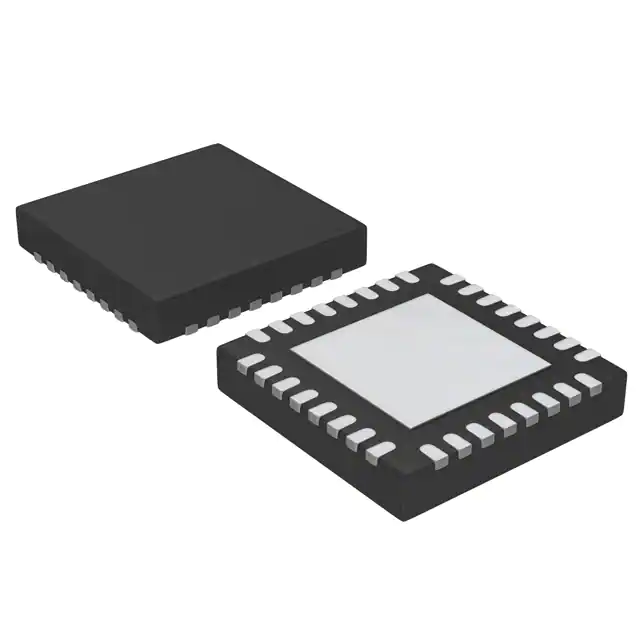
- Part No.:
- SLRC61002HN,157
- Manufacturer:
- NXP Semiconductors
- Category:
- RFID, RF Access, Monitoring ICs
- Package:
- 32-VFQFN Exposed Pad
- Datasheet:
-
 SLRC61002HN,157.pdf
- Description:
- IC RFID READER 13.56MHZ 32HVQFN
- Quantity:
- Payment:

- Shipping:

Inventory:4,866
Please send an inquiry. Send us your inquiry, and we will respond immediately.
Product details
Overview
SLRC61002HN,157 from NXP Semiconductors is a low-cost, multi-protocol NFC frontend IC supporting ISO/IEC 15693, ICODE EPC UID, and ISO/IEC 18000-3 Mode 3/EPC Class-1 HF in read/write mode. It operates from 3.0–5.5 V, integrates a 512-byte FIFO buffer, supports SPI up to 10 Mbit/s, and features dedicated SAM interface for secure key storage and crypto acceleration - deployed in industrial access control readers and gaming authentication terminals.
For engineers reviewing the SLRC61002HN,157 datasheet, SLRC61002HN,157 pinout, SLRC61002HN,157 application, or SLRC61002HN,157 equivalent, this page delivers verified electrical specs, HVQFN32 pin mapping, host interface configuration logic (SPI/I²C/UART), low-power card detection behavior, and real-world design trade-offs versus SLRC61003HN variants.
Technical Context
The SLRC61002HN,157 implements a dual-transmitter analog front-end (TX1/TX2) with RXP/RXN differential receiver inputs, VMID reference generation, and integrated PLL deriving system clock from 27.12 MHz crystal. Its contactless UART handles protocol-specific framing for ISO/IEC 15693 (1.66–26.48 kbit/s reader-to-tag, Manchester subcarrier decoding), EPC UID (RTZ encoding), and EPC Class-1 HF modes.
Host communication is dynamically selected via IFSEL0/IFSEL1 pins, enabling SPI (slave mode, NSS-controlled), I²C (Fast mode up to 400 kBd), or UART (RS232-level compatible, up to 1228.8 kBd). A separate I²C bus connects to external Secure Access Module (SAM), while five programmable timers-including Timer4 as LFO-driven wake-up timer-support LPCD and protocol timing compliance.
Key Specifications
| Parameter | Value and Actual Design Meaning |
|---|---|
| Supply Voltage | 3.0–5.5 V - enables direct integration with 3.3 V or 5 V microcontroller systems without level-shifting. |
| FIFO Buffer Size | 512 bytes - eliminates host polling overhead during burst RFID tag reads/writes. |
| SPI Speed | Up to 10 Mbit/s - supports high-throughput firmware updates and rapid register access in embedded readers. |
| Operating Temp | −25 °C to +85 °C - validated for industrial-grade access control hardware operating in uncontrolled environments. |
| Power-Down Current | 8 nA typical - enables battery-powered handheld readers with multi-week standby life. |
| RF Protocols | ISO/IEC 15693, ICODE EPC UID, ISO/IEC 18000-3 Mode 3 - ensures interoperability with legacy ICODE tags and EPCglobal HF assets. |
| Antenna Interface | Dual TX outputs (TX1/TX2) + differential RX (RXP/RXN) - allows flexible antenna matching and noise rejection in compact PCB layouts. |
Pinout & Package
SLRC61002HN,157 uses HVQFN32 (SOT617-1): 5 × 5 × 0.85 mm thermal-enhanced quad flat no-lead package with wettable flanks, MSL2 rating, and central ground heatsink (Pin 33).
| Pin/Terminal | Circuit Role | Design Meaning |
|---|---|---|
| 1 (TDO/OUT0) | Boundary scan output / GPIO | Enables JTAG debugging or configurable digital output for status signaling. |
| 12–13 (RXP/RXN) | Differential RF input | Accepts demodulated 13.56 MHz signal from antenna; rejects common-mode noise. |
| 15–17 (TX2/TX1) | Modulated RF carrier outputs | Drive external matching network; support independent power control per transmitter path. |
| 19–20 (XTAL1/XTAL2) | 27.12 MHz crystal interface | Direct connection to fundamental-mode quartz; eliminates need for external oscillator. |
| 28–31 (IF0–IF3) | Multi-function host interface pins | Configure SPI/MOSI/MISO/NSS or I²C/SCL/SDA or UART/RX/TX via IFSEL0/IFSEL1 strapping. |
| 32 (IRQ) | Interrupt request output | Asserts active-low on FIFO threshold, card detect, or timer underflow - reduces host polling load. |
Key Features
| Feature | Design Value |
|---|---|
| Integrated PLL clock synthesis | Derives all internal clocks from 27.12 MHz crystal - removes external clock generator and saves BOM cost. |
| Dedicated SAM I²C interface | Isolates cryptographic operations from main host bus - prevents side-channel leakage during secure authentication. |
| Low-power card detection (LPCD) | Configurable wake-up timer (Timer4 + LFO) - achieves <10 µA average current during idle scanning. |
| Flexible power domains | Separate VDD (digital), AVDD (analog), TVDD (transmitter), PVDD (pad) rails - enables selective domain shutdown. |
| 8 programmable I/O pins | Support auxiliary test signals (AUX1/AUX2), clock output (CLKOUT), or general-purpose control - simplifies board-level bring-up. |
Applications
| Industrial Asset Tracking | Access Control Reader |
|---|---|
Use Scenario: RFID-enabled tool crib management system logging metal tools entering/exiting secure zones. IC Role / Device Role / Timing Role: Frontend transceiver handling ISO/IEC 15693 inventory bursts and UID reads at 26.48 kbit/s. Use Value: Dual TX outputs enable robust field shaping around metallic enclosures; 512-byte FIFO absorbs back-to-back tag responses without host latency. | Use Scenario: Wall-mounted door controller verifying employee ICODE credentials before granting physical entry. IC Role / Device Role / Timing Role: Protocol-aware reader IC executing ISO/IEC 15693 anti-collision and secure authentication handshake. Use Value: Dedicated SAM interface offloads AES-128 key decryption; IRQ pin triggers immediate host response on card presence. |
| Gaming Token Authentication | Logistics Pallet Verification |
Use Scenario: Casino slot machine validating tamper-resistant RFID tokens prior to payout authorization. IC Role / Device Role / Timing Role: High-reliability reader supporting EPC UID read/write and OTP memory access. Use Value: RTZ encoding compatibility ensures deterministic timing for fast token verification; 3.0–5.5 V supply tolerates varying power rail conditions. | Use Scenario: Warehouse dock reader confirming EPC Class-1 HF pallet IDs during inbound shipment processing. IC Role / Device Role / Timing Role: Multi-protocol frontend executing ISO/IEC 18000-3 Mode 3 commands for bulk inventory. Use Value: Configurable LPCD maintains readiness between pallet arrivals; 8 free GPIOs drive LED status indicators and relay drivers. |
Equivalent & Alternatives
The following parts are listed as comparable options for similar NFC frontend applications.
| Alternative Part | Technical Difference | Application Difference | Selection Advice |
|---|---|---|---|
| SLRC61003HN,157 | Wider supply range (2.5–5.5 V); enhanced LPCD register (LPCD_OPTIONS); optimized Load Protocol settings for small antennas. | Better suited for battery-powered handheld readers and compact antenna designs requiring fine-grained power tuning. | Select SLRC61003HN,157 for new designs where low-voltage operation or miniaturized antenna matching is critical. |
| PN5180A0HN/C1 | Single-chip NFC controller (integrated MCU core); supports ISO/IEC 14443 A/B, FeliCa, and peer-to-peer; no external SAM interface. | Targets full-stack NFC reader applications needing embedded firmware execution rather than host-controlled frontend operation. | Choose PN5180A0HN/C1 when replacing microcontroller-based reader stacks with integrated NFC stack - not for SAM-dependent secure systems. |
Compared with SLRC61002HN,157, SLRC61003HN,157 offers lower minimum voltage and improved LPCD flexibility but shares identical pinout and protocol support; PN5180A0HN/C1 provides higher integration at the cost of losing dedicated SAM security and multi-protocol configurability.
Availability
SLRC61002HN,157 is available at Aetrix Electronics and suitable for industrial asset tracking, access control readers, and gaming token authentication requiring stable component supply across multi-year production cycles.
Supply support for SLRC61002HN,157 includes scheduled delivery planning, volume procurement assistance, BOM continuity management, traceable sourcing, and lifecycle availability coordination for OEM customers, industrial embedded developers, connected-device designers, and electronics production programs.
Manufacturer
NXP Semiconductors is a global semiconductor leader specializing in secure connectivity solutions for automotive, industrial, and IoT markets.
The SLRC610 product line delivers high-performance, low-cost NFC frontend ICs designed specifically for host-controlled RFID reader systems requiring ISO/IEC 15693, EPC UID, and EPC Class-1 HF interoperability with secure SAM integration.
FAQ
What protocols does the SLRC61002HN,157 support?
The SLRC61002HN,157 supports three primary protocols: ISO/IEC 15693 (vicinity), ICODE EPC UID/EPC OTP, and ISO/IEC 18000-3 Mode 3/EPC Class-1 HF - all in read/write mode. It does not support ISO/IEC 14443 or FeliCa. Each protocol uses distinct modulation schemes (ASK, subcarrier load modulation) and data encoding (Manchester, RTZ, 1-out-of-4), all handled by the SLRC61002HN,157's contactless UART without host intervention.
How is host interface selection implemented on the SLRC61002HN,157?
Host interface selection on the SLRC61002HN,157 is determined by strapping IFSEL0 (Pin 26) and IFSEL1 (Pin 27) to VSS or PAD_VDD during power-up reset. This configures Pins IF0–IF3 (28–31) as SPI (MOSI/MISO/SCK/NSS), I²C (SCL/SDA/ADR1/ADR2), I²C-L (low-voltage variant), or UART (RX/TX/n.c./PAD_VDD). The SLRC61002HN,157 auto-detects the interface type - no firmware reconfiguration is needed after initial setup.
Does the SLRC61002HN,157 include an integrated crystal oscillator?
The SLRC61002HN,157 does not include a fully integrated crystal oscillator but integrates a PLL and inverting amplifier circuit that accepts a 27.12 MHz fundamental-mode quartz crystal directly on XTAL1 (Pin 19) and XTAL2 (Pin 20). This eliminates the need for an external oscillator module while maintaining precise RF carrier frequency stability - a key requirement for ISO/IEC 15693 compliance. The SLRC61002HN,157 derives all internal clocks from this source.
What is the purpose of the separate SAM interface on the SLRC61002HN,157?
The dedicated I²C interface (SCL/SDA pins reserved exclusively for SAM) on the SLRC61002HN,157 isolates cryptographic operations from the main host bus. It enables secure key storage, AES-128 encryption/decryption, and mutual authentication offload - critical for payment-grade or government ID applications. This architecture prevents side-channel attacks and ensures that sensitive keys never traverse the primary host interface, preserving the security model defined in the SLRC61002HN,157 specification.
How does low-power card detection (LPCD) work on the SLRC61002HN,157?
LPCD on the SLRC61002HN,157 uses Timer4 driven by the internal low-frequency oscillator (LFO) to periodically activate the RF front-end for brief card presence checks. When no card is detected, the device returns to hard power-down (8 nA typical). Detection triggers LPCDIRQ interrupt and wakes the host. Unlike continuous polling, this method achieves microamp-level average current - validated for battery-operated SLRC61002HN,157 deployments requiring weeks of standby life.
SLRC61002HN,157 Specifications
- Product attributes
- Attribute value
- Manufacturer:
- NXP Semiconductors
- Series:
- -
- Package/Case:
- 32-VFQFN Exposed Pad
- Packaging:
- Tray
- Product Status:
- Active
- Type:
- RFID Reader
- Frequency:
- 13.56MHz
- Standards:
- ISO 15693, ISO 18000-3
- Interface:
- I2C, SPI, UART
- Voltage - Supply:
- 3V ~ 5.5V
- Operating Temperature:
- -25°C ~ 85°C
- Grade:
- -
- Qualification:
- -
- Mounting Type:
- Surface Mount
- Supplier Device Package:
- 32-HVQFN (5x5)
SLRC61002HN,157 FAQ
1.How can I place an order for SLRC61002HN,157 through Aetrix?
Please submit a Request for Quotation (RFQ) for SLRC61002HN,157 on Aetrix. Our sales agent will provide a competitive quotation and guide you through the order confirmation once you accept the terms.
2.Are the price and stock information for SLRC61002HN,157 reliable?
The price and inventory of SLRC61002HN,157 are updated periodically and may fluctuate due to market conditions. Stock and pricing data are typically refreshed every 24 hours. Quotation validity for SLRC61002HN,157 is usually 5 days.
3.What payment methods are accepted for SLRC61002HN,157?
We accept Wire Transfer, PayPal, Credit Card, Western Union, MoneyGram, and Escrow for SLRC61002HN,157 transactions.
Note: Certain payment methods may incur a processing fee.
4.How is shipping managed for SLRC61002HN,157?
SLRC61002HN,157 orders can be shipped via leading logistics carriers, including DHL, UPS, FedEx, TNT, or Registered Mail.
Once your SLRC61002HN,157 order is processed, you will receive an email with the shipment details and tracking number.
Note: Tracking information may take up to 24 hours to appear. Express delivery typically takes 3–5 business days.
5.How can I obtain technical support or documentation for SLRC61002HN,157?
For technical support, including SLRC61002HN,157 datasheets, pinout diagrams, or application guidance, please contact our engineering support team. They can provide detailed documentation and assistance for your SLRC61002HN,157 requirements.
6.How does Aetrix verify that SLRC61002HN,157 is sourced from the original manufacturer or authorized distributors?
All SLRC61002HN,157 products on Aetrix are procured from qualified distributors and authorized channels. Our dedicated quality assurance team conducts strict verification, including traceability checks and, if necessary, third-party testing. This ensures that SLRC61002HN,157 meets industry standards.
7.What is the process for return or replacement of SLRC61002HN,157?
All SLRC61002HN,157 units undergo pre-shipment inspection (PSI). If there is an issue with SLRC61002HN,157, returns or replacements are accepted under the following conditions:
1.Quantity discrepancies, incorrect items, or visible external defects (such as breakage or corrosion), acknowledged by Aetrix.
2.The issue is reported within 90 days of delivery.
3.The SLRC61002HN,157 part is unused and in its original packaging.
Return procedure for SLRC61002HN,157:
1.Submit a request within 90 days.
2.Obtain a Return Material Authorization (RMA) from Aetrix.
SLRC61002HN,157 Tags

-
SL2S2602FTBX
NXP Semiconductors
-
ST25DV04K-IER6S3
STMicroelectronics
-
ST25DV04K-IER6C3
STMicroelectronics
-
LXMSJZNCMD-217
Murata Electronics

-
NT3H2111W0FTTJ
NXP Semiconductors
-
NT3H2111W0FHKH
NXP Semiconductors
-
M24LR04E-RMC6T/2
STMicroelectronics
-
ST25DV04KC-JF6D3
STMicroelectronics
-
ST25DV64KC-IE6S3
STMicroelectronics
-
ST25DV64K-IER6T3
STMicroelectronics
-
NT3H2211W0FTTJ
NXP Semiconductors
-
NT3H2211W0FHKH
NXP Semiconductors
Tech Hub

A practical engineering guide to 3.3V and 5V logic compatibility, input thresholds, resistor dividers, translator ICs, MOSFET level shifting, I2C pull-ups, timing limits and power-sequencing risks.

The 74HC595 uses push-pull logic outputs, while the TPIC6B595 uses 50 V open-drain DMOS sinks for higher-power loads. This guide compares timing, current limits, 3.3 V interfacing, load wiring, thermal…

The 74HC595 converts serial data into eight stable parallel outputs. This guide covers pin functions, shift and storage timing, OE and MR behavior, drive-current limits, cascading, voltage compatibilit…

A technical comparison of level-sensitive latches and edge-triggered flip-flops, covering timing windows, setup and hold limits, master–slave operation, time borrowing, race-through, HDL inference and…

A D latch stores one bit while Enable controls when data can pass. This reference covers gate-level operation, truth tables, transparency, setup and hold timing, LE versus OE, common ICs and practical …

An SR latch stores one bit through cross-coupled feedback. This engineering reference covers NOR and NAND implementations, truth tables, forbidden-state recovery, gated operation, switch debouncing, fa…

Latch circuits retain one bit through feedback. This technical reference covers SR and D latches, truth tables, transparency, timing limits, latch-versus-flip-flop behavior, applications and common log…

An engineering guide to LED driver operation, constant-current and constant-voltage outputs, linear and switching topologies, dimming, IC selection, calculations, replacement compatibility, and fault c…

Operational amplifier guide covering op amp basics, feedback, ideal vs real op amps, common configurations, buffer circuits, offset, bias current, gain-bandwidth, slew rate, rail-to-rail limits and sel…

Jumper cables guide covering safe connection order, red and black clamp placement, final ground connection, cable gauge, length, clamp quality, copper vs CCA cables, jump starter comparison and battery…


