
 My Inquiry
 My Account


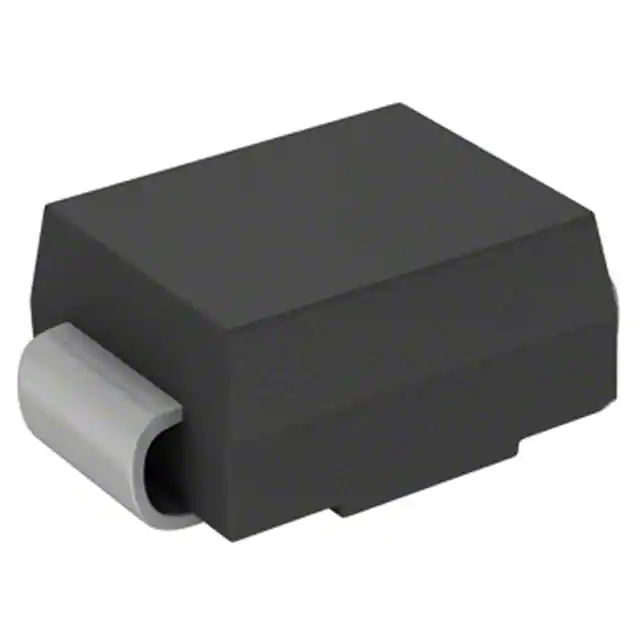
Diodes Incorporated SMBJ26AQ-13-F
- Part No.:
- SMBJ26AQ-13-F
- Manufacturer:
- Diodes Incorporated
- Category:
- TVS Diodes
- Package:
- DO-214AA, SMB
- Datasheet:
-
 SMBJ26AQ-13-F.pdf
- Description:
- TVS DIODE 26VWM 42.1VC SMB
- Quantity:
- Payment:

- Shipping:

Inventory:2,497
Please send an inquiry. Send us your inquiry, and we will respond immediately.
Product details
Overview
SMBJ26AQ-13-F from Diodes Incorporated is a unidirectional 600W surface-mount transient voltage suppressor (TVS) diode designed for automotive power-line surge protection. It features a 26V reverse standoff voltage (VRWM), 42.1V maximum clamping voltage at 14.2A peak pulse current, and AEC-Q101 qualification for under-hood and body-control module applications compliant with ISO7637-2 Pulse 1/2a/3a/3b and ISO10605 ESD standards.
For engineers reviewing the SMBJ26AQ-13-F datasheet, SMBJ26AQ-13-F pinout, SMBJ26AQ-13-F application, or SMBJ26AQ-13-F equivalent, this device serves as a primary overvoltage clamp in 12V/24V automotive electrical systems-especially where robustness against load dump, inductive switching transients, and contact/air discharge ESD is required per OEM specifications.
Technical Context
This unidirectional TVS diode operates as a voltage-clamped shunt protector: it remains high-impedance below 26V VRWM, then rapidly avalanches to limit transient voltages to ≤42.1V at 14.2A (10×1000μs waveform). Its 600W peak pulse power rating enables handling of ISO7637-2 Pulse 1 (−150V), Pulse 2a (+112V), and Pulse 3a (−220V) without failure.
Designed for IATF 16949-certified production, it delivers −55°C to +175°C junction operation, 5W steady-state power dissipation at TL = +75°C, and RoHS-compliant, halogen-free packaging in the SMB outline-ensuring compatibility with automated SMT assembly and long-term reliability in harsh automotive environments.
Key Specifications
| Parameter | Value and Actual Design Meaning |
|---|---|
| Peak Pulse Power | 600W - sustains single 10×1000μs transients up to 14.2A without thermal runaway |
| Reverse Standoff Voltage (VRWM) | 26.0V - blocks normal 12V/24V system voltages while remaining fully inactive |
| Max Clamping Voltage (VC) | 42.1V @ IPP = 14.2A - limits downstream IC voltage stress during ISO7637-2 Pulse 3a (−220V) |
| Breakdown Voltage (VBR) | 28.9–31.9V @ IT = 1.0mA - ensures precise, repeatable avalanche initiation margin above VRWM |
| Leakage Current (IR) | ≤0.5µA @ VRWM - negligible standby power loss and no signal integrity impact in always-on circuits |
| Operating Temperature | −55°C to +175°C TJ - supports placement near engines, alternators, and battery junction boxes |
Pinout & Package
Package: SMB (Surface-Mount Small Outline), molded plastic, UL 94V-0 rated, 0.1g weight. Cathode band denotes polarity on unidirectional devices; bi-directional variants omit this marking.
| Pin/Terminal | Circuit Role | Design Meaning |
|---|---|---|
| Anode | Transient return path | Connected to ground or low-impedance chassis reference; completes clamping loop during overvoltage events |
| Cathode | Protected line connection | Connected to the 12V/24V supply rail or signal line requiring surge suppression; clamps to anode when voltage exceeds VBR |
Key Features
| Feature | Design Value |
|---|---|
| AEC-Q101 qualified | Validated for automotive use across temperature, humidity, and mechanical shock profiles per JESD22 |
| ISO7637-2 & ISO10605 compliance | Passes full test suite including Pulse 1 (−150V), Pulse 3a (−220V), and ±30kV contact/air discharge |
| Lead-free, halogen-free "Green" construction | Meets RoHS 3 (2015/863/EU); <900ppm Br, <900ppm Cl, <1000ppm Sb - supports eco-conscious manufacturing |
| SMB package with 3k/reel tape-and-reel | Enables high-speed pick-and-place assembly; moisture sensitivity level 1 (J-STD-020) eliminates bake requirements |
Applications
| Engine Control Unit (ECU) Power Input | Body Control Module (BCM) CAN Bus Protection |
|---|---|
|
Use Scenario: Protects 12V main power input of engine control units exposed to load dump and alternator transients. IC Role / Device Role / Timing Role: Shunt TVS diode placed directly at ECU power entry point, clamping surges before they reach DC-DC converters and microcontrollers. Use Value: Limits transient voltage to ≤42.1V, preventing latch-up or permanent damage to 3.3V/5V logic rails downstream of the input filter. |
Use Scenario: Safeguards CAN_H/CAN_L lines in body control modules against ESD and coupled power-line noise. IC Role / Device Role / Timing Role: Unidirectional TVS pair (one per line) referenced to chassis ground, suppressing fast transients without distorting differential signaling. Use Value: Maintains CAN signal integrity by clamping ESD spikes within 1ns response time while adding <0.5pF parasitic capacitance. |
| Automotive Lighting Driver Supply | Infotainment System USB Power Rail |
|
Use Scenario: Shields LED driver ICs and MOSFETs in headlamp modules from inductive kickback during PWM dimming. IC Role / Device Role / Timing Role: High-energy TVS mounted across input capacitor, absorbing repetitive 100A/8.3ms surges from relay coil de-energization. Use Value: Withstands ≥1000 pulses at 4.8W/°C derated power, enabling >10-year field life in stop-start cycling conditions. |
Use Scenario: Guards 5V USB VBUS line in infotainment head units against hot-plug transients and ESD from user ports. IC Role / Device Role / Timing Role: Primary clamping device upstream of USB power switch, triggered before internal polyfuse trips. Use Value: Clamps to 42.1V within nanoseconds, limiting energy delivered to downstream USB PD controllers and Type-C port ICs. |
Equivalent & Alternatives
The following parts are listed as comparable options for similar unidirectional automotive TVS applications.
| Alternative Part | Technical Difference | Application Difference | Selection Advice |
|---|---|---|---|
| SMBJ26A-13-F | No AEC-Q101 qualification; standard industrial grade only | Not approved for automotive PPAP; limited to non-safety-critical consumer/industrial designs | Select only if AEC-Q101 certification and IATF 16949 traceability are not required |
| SMCJ26A-Q | Larger SMC package (higher 1500W PPK); same VRWM/VC but 2.5× footprint area | Better suited for high-energy load-dump scenarios (>100V transients); less space-efficient for dense PCB layouts | Choose when higher surge margin is needed and board space allows SMC outline |
Compared with SMBJ26A-13-F, SMBJ26AQ-13-F adds mandatory automotive change control, PPAP documentation, and extended temperature validation-making it the sole choice for Tier 1-supplied ECUs. Versus SMCJ26A-Q, it trades peak power headroom for compact SMB mounting and lower parasitic inductance in high-frequency transient suppression.
Availability
SMBJ26AQ-13-F is available at Aetrix Electronics and suitable for automotive ECU power protection, body control module surge hardening, and infotainment USB rail safeguarding requiring stable component supply across multi-year vehicle production cycles.
Supply support for SMBJ26AQ-13-F includes scheduled delivery planning, volume procurement assistance, BOM continuity management, traceable sourcing, and lifecycle availability coordination for OEM customers, industrial embedded developers, connected-device designers, and electronics production programs.
Manufacturer
Diodes Incorporated is a global semiconductor company specializing in discrete, analog, and mixed-signal solutions, with design centers in Asia, Europe, and the U.S., and manufacturing in IATF 16949-certified facilities.
This device belongs to Diodes' AQ-series automotive-grade TVS portfolio-engineered specifically to meet OEM-level surge immunity, longevity, and process control requirements for 12V/24V vehicle electrical architectures.
FAQ
What is the difference between SMBJ26AQ-13-F and SMBJ26A-13-F?
The "Q" suffix denotes full AEC-Q101 qualification, PPAP capability, and production in IATF 16949-certified facilities-requirements mandatory for automotive Tier 1 suppliers. SMBJ26A-13-F lacks these certifications and is restricted to industrial or consumer applications where automotive reliability standards do not apply.
Can SMBJ26AQ-13-F be used for bidirectional protection?
No-it is a unidirectional TVS diode with cathode marking and asymmetric breakdown behavior. For bidirectional protection (e.g., data lines like CAN or LIN), the "C" variant SMBJ26CAQ-13-F must be used, which provides symmetrical clamping for both polarities.
What is the maximum allowable ambient temperature for continuous operation?
At TA = +25°C, the device supports 5.0W steady-state dissipation. Derating follows 4.8W/°C above +25°C, meaning maximum ambient temperature for full 5W operation is +25°C. For sustained 5W loads, heatsinking or forced convection is required to maintain junction temperature ≤+175°C.
Does SMBJ26AQ-13-F require a series resistor for ESD protection?
No-its sub-nanosecond response time and low dynamic impedance enable direct placement across protected lines without external current-limiting resistors. However, a small series ferrite bead may be added to reduce RF coupling in sensitive analog or RF sections without affecting clamping performance.
SMBJ26AQ-13-F Specifications
- Product attributes
- Attribute value
- Manufacturer:
- Diodes Incorporated
- Package/Case:
- DO-214AA, SMB
- Series:
- -
- Packaging:
- Tape & Reel (TR)
- Product Status:
- Active
- Type:
- Zener
- Unidirectional Channels:
- 1
- Bidirectional Channels:
- -
- Voltage - Reverse Standoff (Typ):
- 26V
- Voltage - Breakdown (Min):
- 28.9V
- Voltage - Clamping (Max) @ Ipp:
- 42.1V
- Current - Peak Pulse (10/1000µs):
- 14.2A
- Power - Peak Pulse:
- 600W
- Power Line Protection:
- No
- Applications:
- -
- Capacitance @ Frequency:
- -
- Operating Temperature:
- -55°C ~ 150°C (TJ)
- Grade:
- Automotive
- Qualification:
- AEC-Q101
- Mounting Type:
- Surface Mount
- Supplier Device Package:
- SMB
SMBJ26AQ-13-F FAQ
1.How can I place an order for SMBJ26AQ-13-F through Aetrix?
Please submit a Request for Quotation (RFQ) for SMBJ26AQ-13-F on Aetrix. Our sales agent will provide a competitive quotation and guide you through the order confirmation once you accept the terms.
2.Are the price and stock information for SMBJ26AQ-13-F reliable?
The price and inventory of SMBJ26AQ-13-F are updated periodically and may fluctuate due to market conditions. Stock and pricing data are typically refreshed every 24 hours. Quotation validity for SMBJ26AQ-13-F is usually 5 days.
3.What payment methods are accepted for SMBJ26AQ-13-F?
We accept Wire Transfer, PayPal, Credit Card, Western Union, MoneyGram, and Escrow for SMBJ26AQ-13-F transactions.
Note: Certain payment methods may incur a processing fee.
4.How is shipping managed for SMBJ26AQ-13-F?
SMBJ26AQ-13-F orders can be shipped via leading logistics carriers, including DHL, UPS, FedEx, TNT, or Registered Mail.
Once your SMBJ26AQ-13-F order is processed, you will receive an email with the shipment details and tracking number.
Note: Tracking information may take up to 24 hours to appear. Express delivery typically takes 3–5 business days.
5.How can I obtain technical support or documentation for SMBJ26AQ-13-F?
For technical support, including SMBJ26AQ-13-F datasheets, pinout diagrams, or application guidance, please contact our engineering support team. They can provide detailed documentation and assistance for your SMBJ26AQ-13-F requirements.
6.How does Aetrix verify that SMBJ26AQ-13-F is sourced from the original manufacturer or authorized distributors?
All SMBJ26AQ-13-F products on Aetrix are procured from qualified distributors and authorized channels. Our dedicated quality assurance team conducts strict verification, including traceability checks and, if necessary, third-party testing. This ensures that SMBJ26AQ-13-F meets industry standards.
7.What is the process for return or replacement of SMBJ26AQ-13-F?
All SMBJ26AQ-13-F units undergo pre-shipment inspection (PSI). If there is an issue with SMBJ26AQ-13-F, returns or replacements are accepted under the following conditions:
1.Quantity discrepancies, incorrect items, or visible external defects (such as breakage or corrosion), acknowledged by Aetrix.
2.The issue is reported within 90 days of delivery.
3.The SMBJ26AQ-13-F part is unused and in its original packaging.
Return procedure for SMBJ26AQ-13-F:
1.Submit a request within 90 days.
2.Obtain a Return Material Authorization (RMA) from Aetrix.
SMBJ26AQ-13-F Tags
-
ESD9B5.0ST5G
onsemi
-
DESD3V3E1BL-7B
Diodes Incorporated
-
ESD5Z3.3T1G
onsemi
-
D5V0H1B2LP-7B
Diodes Incorporated
-
D5V0P1B2LP-7B
Diodes Incorporated
-
DESD5V0U1BA-7
Diodes Incorporated
-
ESD5Z5.0T1G
onsemi
-
DESD5V0U1BB-7
Diodes Incorporated
-
D12V0L1B2LP-7B
Diodes Incorporated
-
PESD2V0Y1BSFYL
Nexperia USA Inc.
-
DF2S5M4CT,L3F
Toshiba Semiconductor and Storage
-
D5V0L1B2WS-7
Diodes Incorporated
Tech Hub

Hall effect sensor guide covering working principle, linear and digital sensors, Arduino circuits, current sensing, speed detection, automotive applications, A3144 examples, signal filtering and datash…

Product Change Notification guide for electronic components, covering PCN meaning, PCN vs PDN/EOL, common change types, risk levels, form-fit-function review, engineering validation, BOM control, LTB/L…

A practical guide to blend door actuators, covering HVAC function, symptoms, location, AC and heater issues, reset and calibration, replacement cost, electrical diagnosis, compatibility checks, and rep…

Engineering guide to Raspberry Pi alternatives, covering chip-level differences, Orange Pi, ROCK, Jetson, Banana Pi, NanoPi, Compute Module, Pico, GPIO, camera, HAT compatibility, and replacement risks…
Engineering guide to dynamic load response testing for high-current buck converters, covering load step setup, slew rate, Vcore undershoot, overshoot, recovery time, probe location, output capacitors a…
Engineering guide to output capacitor selection for ASIC Vcore rails, covering bulk capacitors, polymer capacitors, MLCC decoupling, DC bias, ESR, ESL, placement, transient response and substitution ri…
Engineering guide to high-current ASIC Vcore rails, covering 12-phase buck architecture, PMBus control, dynamic load testing, output capacitor networks, smart power stage selection, thermal design and …
Voltage regulator guide covering linear, LDO, 7805, Zener, adjustable, buck, VRM and alternator regulators, with design checks, testing methods, troubleshooting and datasheet-based selection.

Amplifier guide covering voltage, current and power amplification, gain, feedback, amplifier classes, audio and RF applications, op-amp circuits, transimpedance amplifiers, datasheet selection and trou…

Machine vision system guide covering components, inspection workflow, camera and lens selection, FOV, pixel resolution, motion blur, strobe lighting, bandwidth, 2D/3D vision, integration, troubleshooti…


