
 My Inquiry
 My Account


STMicroelectronics ST25R3911B-AQFT
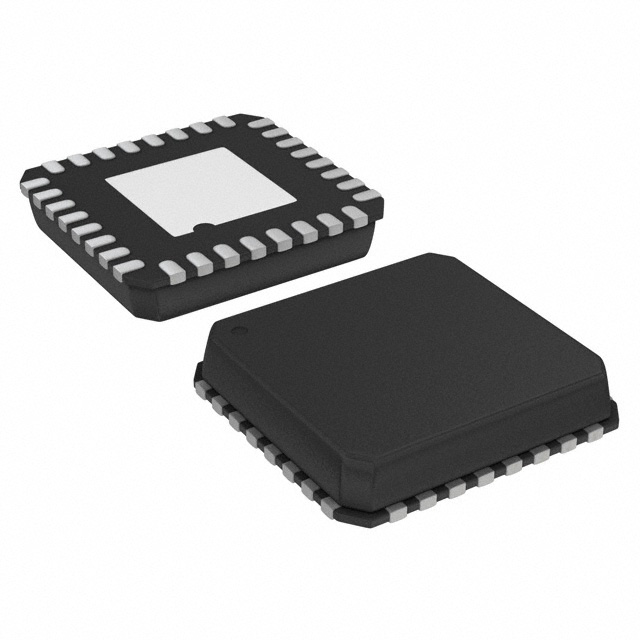
- Part No.:
- ST25R3911B-AQFT
- Manufacturer:
- STMicroelectronics
- Category:
- RFID, RF Access, Monitoring ICs
- Package:
- 32-VFQFN Exposed Pad
- Datasheet:
-
 ST25R3911B-AQFT.pdf
- Description:
- IC RFID READER 13.56MHZ 32QFN
- Quantity:
- Payment:

- Shipping:

Inventory:11,688
Please send an inquiry. Send us your inquiry, and we will respond immediately.
Product details
Overview
ST25R3911B-AQFT from STMicroelectronics is a high-performance HF NFC initiator/reader IC supporting ISO 14443A/B, ISO 15693, FeliCa®, and ISO 18092 (NFCIP-1) P2P active mode with VHBR up to 6.8 Mbit/s, 1.4 W differential RF output, and integrated automatic antenna tuning (AAT). It operates across 2.4–5.5 V and −40 °C to +125 °C in QFN32 (5 × 5 mm) package, targeting infrastructure-grade access control and EMVCo® 2.6b payment terminals.
For engineers reviewing the ST25R3911B-AQFT datasheet, ST25R3911B-AQFT pinout, ST25R3911B-AQFT application, or ST25R3911B-AQFT equivalent, key selection considerations include VHBR framing capability, dual-channel AM/PM demodulation with auto-selection, capacitive wake-up sensing, differential 1 Ω antenna drivers, and SPI interface with 96-byte FIFO - all validated for low-power, high-reliability NFC infrastructure deployment.
Technical Context
The ST25R3911B-AQFT integrates two independent receive chains (AM and PM), each with programmable gain stages, band-pass filtering optimized for subcarrier frequencies from 212 kHz to 6.8 MHz, and digitization for ISO-compliant framing. Its transmitter features dual 1 Ω differential drivers (RFO1/RFO2) supporting single-ended or differential antenna driving, with OOK/AM modulation and slow-ramp field control per Syndicat des transports d'Ile de France spec.
It embeds a phase/amplitude detector for real-time antenna LC tank tuning, an on-die A/D converter for RF calibration, and a low-power capacitive sensor (CSI/CSO pins) enabling card-presence detection without RF field activation. The 6 Mbit/s SPI interface includes hardware flow control and supports transparent mode for custom protocol implementation via external MCU framing.
Key Specifications
| Parameter | Value and Actual Design Meaning |
|---|---|
| VHBR Support | 6.8 Mbit/s PCD→PICC framing (requires 27.12 MHz crystal); enables EMVCo® 2.6b fast transaction mode |
| RF Output Power | Up to 1.4 W differential; achieved via dual 1 Ω push-pull drivers enabling direct PCB antenna drive without external matching |
| Demodulation Channels | Dual independent AM & PM paths with auto-selection; supports simultaneous ISO 14443A (OOK) and ISO 14443B (AM) detection |
| Capacitive Wake-up | Dedicated CSI/CSO interface with programmable threshold; detects card/hand presence at <10 µA avg current, eliminating continuous RF polling |
| SPI Interface | 6 Mbit/s with 96-byte FIFO and hardware CS/IRQ signaling; enables deterministic low-latency host communication for real-time framing control |
| Antenna Tuning | Automatic Antenna Tuning (AAT) using phase/amplitude feedback from RFO1/RFO2 and RFI1/RFI2; maintains resonance under temperature/voltage drift |
| Supply Range | 2.4 V to 5.5 V analog/digital supply; IO pins support 1.65–5.5 V logic level, enabling direct interfacing with 1.8 V/3.3 V/5 V MCUs |
Pinout & Package
ST25R3911B-AQFT is housed in a wettable-flank QFN32 (5 × 5 mm, 0.5 mm pitch) package optimized for automated optical inspection and high-reliability solder joints in industrial NFC readers.
| Pin/Terminal | Circuit Role | Design Meaning |
|---|---|---|
| RFO1 / RFO2 | Differential RF output drivers | Low-impedance (1 Ω) push-pull outputs for direct antenna LC tank drive; support single-ended or differential configuration |
| RFI1 / RFI2 | Differential RF input receivers | Inputs for AM/PM demodulation chains; accept signals from capacitor-divided antenna terminals with phase coherence |
| CSI / CSO | Capacitive sensor interface | Two-pin differential capacitance measurement path for ultra-low-power card presence wake-up (no RF field required) |
| XTI / XTO | Crystal oscillator inputs | Support 13.56 MHz (standard) or 27.12 MHz (VHBR mandatory) crystals with fast-start transconductance boost |
| MOSI / MISO / SCLK / /SS | SPI interface | Full-duplex 4-wire SPI at up to 6 Mbit/s; 96-byte FIFO reduces host CPU overhead during burst data transfers |
| IRQ | Interrupt request output | Open-drain signal indicating event completion (e.g., FIFO full, capacitive wake-up, oscillator stable, framing error) |
| MCU_CLK | Output clock for external MCU | Provides 13.56 MHz or 27.12 MHz system clock derived from internal oscillator; eliminates need for second crystal |
Key Features
| Feature | Design Value |
|---|---|
| Dual 1 Ω antenna drivers | Enables >1 W differential RF output directly into PCB antennas; eliminates discrete power amplifiers and matching networks |
| Automatic antenna tuning (AAT) | Real-time phase/amplitude feedback loop adjusts driver bias to maintain LC tank resonance across temperature, aging, and mechanical stress |
| VHBR framing engine | Hardware-accelerated 6.8 Mbit/s PCD→PICC framing compliant with EMVCo® 2.6b; reduces host MCU processing load for contactless payments |
| Capacitive wake-up sensor | Sub-10 µA average current detection path using CSI/CSO pins; extends battery life in portable NFC readers by avoiding periodic RF polling |
| Transparent mode SPI interface | Bypasses internal framing logic to expose raw digitized subcarrier samples (MISO) and baseband modulation commands (MOSI); enables MIFARE Classic® or proprietary protocol stack implementation |
Applications
| EMVCo® 2.6b Payment Terminal | Secure Access Control Panel |
|---|---|
Use Scenario: Contactless credit/debit card transactions in unattended kiosks requiring <500 ms transaction time and EMVCo® 2.6b VHBR compliance. IC Role / Device Role / Timing Role: NFC initiator handling full ISO 14443A/B framing, VHBR modulation, and secure field management per EMVCo® timing constraints. Use Value: Integrated 6.8 Mbit/s framing engine and dual 1 Ω drivers deliver certified transaction speed without external RF components or timing-critical firmware intervention. | Use Scenario: Multi-factor office entry system combining NFC badge read, capacitive hand detection, and tamper-resistant field monitoring. IC Role / Device Role / Timing Role: Reader IC performing ISO 15693 tag interrogation while concurrently running low-power capacitive wake-up and phase-based antenna integrity checks. Use Value: Single-chip integration of capacitive sensing, AAT, and dual-mode demodulation eliminates separate wake-up ICs and field stability monitors, reducing BOM count by 3+ components. |
| NFC Infrastructure Reader | Industrial Asset Tagging Gateway |
Use Scenario: High-availability public transport validators operating 24/7 in −40 °C to +85 °C environments with vibration-prone mounting. IC Role / Device Role / Timing Role: Robust HF reader IC managing ISO 14443A/B/FeliCa® protocols with automatic gain control, thermal drift compensation, and slow-ramp field startup per STIF spec. Use Value: −40 °C to +125 °C rating, integrated regulators with PSRR optimization, and slow-ramp field control ensure reliable operation in extreme outdoor deployments without derating. | Use Scenario: Factory-floor gateway reading ISO 15693 tags on metal-mounted tools, requiring immunity to EMI and antenna detuning from nearby conductive surfaces. IC Role / Device Role / Timing Role: Reader IC executing amplitude/phase-based antenna tuning and RSSI-squelched reception to maintain link stability near motors and welders. Use Value: Real-time phase/amplitude detector and adaptive AGC maintain >99.5% read success rate on metal assets where conventional readers fail due to detuning or noise. |
Equivalent & Alternatives
The following parts are listed as comparable options for similar NFC initiator applications.
| Alternative Part | Technical Difference | Application Difference | Selection Advice |
|---|---|---|---|
| NXP PN7160 | Integrated ARM Cortex-M0 host processor; lower RF output (0.7 W); no VHBR or capacitive wake-up | Targeted at embedded systems needing onboard protocol stack execution; lacks infrastructure-grade RF performance | Select when MCU offload and compact footprint outweigh RF power and VHBR needs |
| Infineon SLI13 | Single 0.5 Ω driver; supports only ISO 14443A/B; no AAT or capacitive sensing; 3.3 V fixed supply | Designed for cost-sensitive consumer devices; limited to basic contactless card emulation | Select for battery-powered accessories where 1.4 W output and industrial temp range are unnecessary |
Compared with PN7160 and SLI13, the ST25R3911B-AQFT uniquely delivers 1.4 W differential output, VHBR framing, automatic antenna tuning, and capacitive wake-up in a single chip - making it the only option qualified for EMVCo® 2.6b infrastructure and harsh-environment industrial NFC readers.
Availability
ST25R3911B-AQFT is available at Aetrix Electronics and suitable for EMVCo® 2.6b payment terminals, secure access control panels, and NFC infrastructure readers requiring stable component supply, long-term lifecycle assurance, and automotive-grade reliability validation.
Supply support for ST25R3911B-AQFT includes scheduled delivery planning, volume procurement assistance, BOM continuity management, traceable sourcing, and lifecycle availability coordination for OEM customers, industrial embedded developers, connected-device designers, and electronics production programs.
Manufacturer
STMicroelectronics is a global semiconductor leader headquartered in Geneva, specializing in microcontrollers, power management, sensors, and analog ICs for industrial, automotive, and smart infrastructure markets.
The ST25R series targets high-reliability NFC infrastructure applications, with the ST25R3911B specifically engineered for EMVCo®-certified payment terminals, transit validators, and industrial asset tracking systems demanding VHBR, AAT, and ultra-low-power wake-up.
FAQ
What crystal frequency is required for VHBR operation?
The ST25R3911B-AQFT requires a 27.12 MHz crystal to achieve 6.8 Mbit/s PCD→PICC VHBR framing. A 13.56 MHz crystal supports all standard modes (ISO 14443A/B, ISO 15693, FeliCa®) but not VHBR. The oscillator block provides fast startup via transconductance boost and generates a stable MCU_CLK output synchronized to the selected crystal.
How does automatic antenna tuning (AAT) improve system robustness?
AAT continuously monitors phase and amplitude between RFO1/RFO2 and RFI1/RFI2 to detect LC tank detuning caused by temperature shifts, mechanical stress, or nearby metal. It dynamically adjusts driver bias to maintain resonance, ensuring consistent read range and reliability in industrial environments where manual tuning is impractical.
Can the ST25R3911B-AQFT drive two separate antennas?
Yes - in single-ended mode, the ST25R3911B-AQFT can drive two independent antennas by configuring IO register bit rfo2 to multiplex RFO2 between antennas. Each antenna requires its own LC matching network, and AAT operates per-antenna when enabled. Differential mode uses both RFO1/RFO2 for one high-power antenna only.
What is the role of the CSI and CSO pins beyond capacitive sensing?
CSI and CSO form a dedicated differential capacitance measurement path exclusively for low-power wake-up sensing. They are not general-purpose I/Os and cannot be repurposed for analog input, GPIO, or communication. Their design minimizes leakage and noise to achieve sub-10 µA average current consumption during periodic card-detection cycles.
ST25R3911B-AQFT Specifications
- Product attributes
- Attribute value
- Manufacturer:
- STMicroelectronics
- Series:
- ST25R
- Package/Case:
- 32-VFQFN Exposed Pad
- Packaging:
- Tape & Reel (TR)
- Product Status:
- Active
- Type:
- RFID Reader
- Frequency:
- 13.56MHz
- Standards:
- ISO 14443, NFC
- Interface:
- SPI
- Voltage - Supply:
- 2.4V ~ 5.5V
- Operating Temperature:
- -40°C ~ 125°C
- Grade:
- -
- Qualification:
- -
- Mounting Type:
- Surface Mount
- Supplier Device Package:
- 32-QFN (5x5)
ST25R3911B-AQFT FAQ
1.How can I place an order for ST25R3911B-AQFT through Aetrix?
Please submit a Request for Quotation (RFQ) for ST25R3911B-AQFT on Aetrix. Our sales agent will provide a competitive quotation and guide you through the order confirmation once you accept the terms.
2.Are the price and stock information for ST25R3911B-AQFT reliable?
The price and inventory of ST25R3911B-AQFT are updated periodically and may fluctuate due to market conditions. Stock and pricing data are typically refreshed every 24 hours. Quotation validity for ST25R3911B-AQFT is usually 5 days.
3.What payment methods are accepted for ST25R3911B-AQFT?
We accept Wire Transfer, PayPal, Credit Card, Western Union, MoneyGram, and Escrow for ST25R3911B-AQFT transactions.
Note: Certain payment methods may incur a processing fee.
4.How is shipping managed for ST25R3911B-AQFT?
ST25R3911B-AQFT orders can be shipped via leading logistics carriers, including DHL, UPS, FedEx, TNT, or Registered Mail.
Once your ST25R3911B-AQFT order is processed, you will receive an email with the shipment details and tracking number.
Note: Tracking information may take up to 24 hours to appear. Express delivery typically takes 3–5 business days.
5.How can I obtain technical support or documentation for ST25R3911B-AQFT?
For technical support, including ST25R3911B-AQFT datasheets, pinout diagrams, or application guidance, please contact our engineering support team. They can provide detailed documentation and assistance for your ST25R3911B-AQFT requirements.
6.How does Aetrix verify that ST25R3911B-AQFT is sourced from the original manufacturer or authorized distributors?
All ST25R3911B-AQFT products on Aetrix are procured from qualified distributors and authorized channels. Our dedicated quality assurance team conducts strict verification, including traceability checks and, if necessary, third-party testing. This ensures that ST25R3911B-AQFT meets industry standards.
7.What is the process for return or replacement of ST25R3911B-AQFT?
All ST25R3911B-AQFT units undergo pre-shipment inspection (PSI). If there is an issue with ST25R3911B-AQFT, returns or replacements are accepted under the following conditions:
1.Quantity discrepancies, incorrect items, or visible external defects (such as breakage or corrosion), acknowledged by Aetrix.
2.The issue is reported within 90 days of delivery.
3.The ST25R3911B-AQFT part is unused and in its original packaging.
Return procedure for ST25R3911B-AQFT:
1.Submit a request within 90 days.
2.Obtain a Return Material Authorization (RMA) from Aetrix.
ST25R3911B-AQFT Tags

-
SL2S2602FTBX
NXP Semiconductors
-
ST25DV04K-IER6S3
STMicroelectronics
-
ST25DV04K-IER6C3
STMicroelectronics
-
LXMSJZNCMD-217
Murata Electronics

-
NT3H2111W0FTTJ
NXP Semiconductors
-
NT3H2111W0FHKH
NXP Semiconductors
-
M24LR04E-RMC6T/2
STMicroelectronics
-
ST25DV04KC-JF6D3
STMicroelectronics
-
ST25DV64KC-IE6S3
STMicroelectronics
-
ST25DV64K-IER6T3
STMicroelectronics
-
NT3H2211W0FTTJ
NXP Semiconductors
-
NT3H2211W0FHKH
NXP Semiconductors
Tech Hub
An SR latch stores one bit through cross-coupled feedback. This engineering reference covers NOR and NAND implementations, truth tables, forbidden-state recovery, gated operation, switch debouncing, fa…

Latch circuits retain one bit through feedback. This technical reference covers SR and D latches, truth tables, transparency, timing limits, latch-versus-flip-flop behavior, applications and common log…

An engineering guide to LED driver operation, constant-current and constant-voltage outputs, linear and switching topologies, dimming, IC selection, calculations, replacement compatibility, and fault c…

Operational amplifier guide covering op amp basics, feedback, ideal vs real op amps, common configurations, buffer circuits, offset, bias current, gain-bandwidth, slew rate, rail-to-rail limits and sel…

Jumper cables guide covering safe connection order, red and black clamp placement, final ground connection, cable gauge, length, clamp quality, copper vs CCA cables, jump starter comparison and battery…

LDO regulator guide covering low dropout voltage, power dissipation, thermal design, PSRR, output noise, capacitor stability, adjustable LDO circuits, LDO vs buck converter and datasheet selection chec…

Conditional Access Module guide covering CAM meaning, CI/CI+ interface, smart card authorization, DVB security workflow, TV and set-top box compatibility, internal electronics, ESD protection, connecto…

Guide to electronic component obsolescence covering EOL risk, PCN/PDN notices, last-time buy planning, replacement options, form-fit-function validation, counterfeit risk and BOM lifecycle management.

18650 battery guide covering lithium-ion cell basics, 3.6V/3.7V voltage, 4.2V charging, mAh and Wh capacity, protected cells, chargers, BMS, series-parallel packs, holders, welding and sourcing checks.…

Hall effect sensor guide covering working principle, linear and digital sensors, Arduino circuits, current sensing, speed detection, automotive applications, A3144 examples, signal filtering and datash…


