
 My Inquiry
 My Account


STMicroelectronics ST25R95-VMD5T
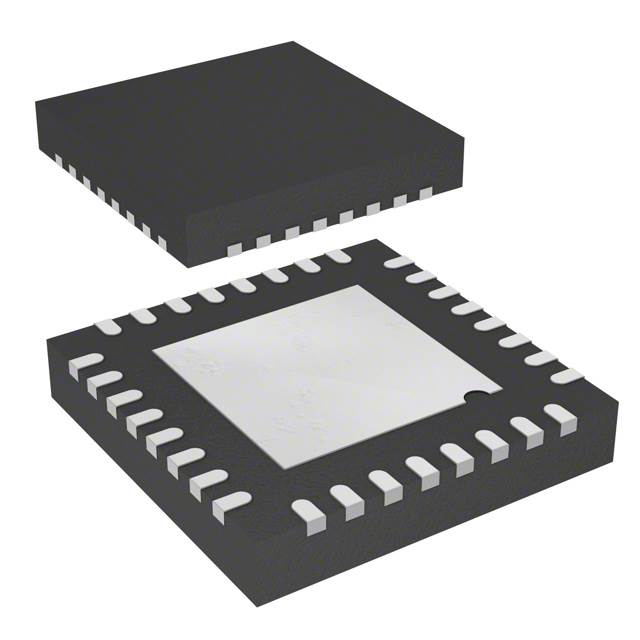
- Part No.:
- ST25R95-VMD5T
- Manufacturer:
- STMicroelectronics
- Category:
- RFID, RF Access, Monitoring ICs
- Package:
- 32-VFQFN Exposed Pad
- Datasheet:
-
 ST25R95-VMD5T.pdf
- Description:
- NFC/HF RFID READER IC
- Quantity:
- Payment:

- Shipping:

Inventory:17,002
Please send an inquiry. Send us your inquiry, and we will respond immediately.
Product details
Overview
ST25R95-VMD5T from STMicroelectronics is an NFC/RFID transceiver IC supporting ISO/IEC 14443-A/B, ISO/IEC 15693, FeliCa™, and NFC-V protocols in reader mode, plus ISO/IEC 14443-A card emulation with MIFARE® Classic compatibility; operates at 13.56 MHz with integrated analog front end (AFE), hardware frame controller, and SPI interface up to 2 Mbps; used in NFC-enabled Wi-Fi/Bluetooth pairing and secure data exchange systems.
For engineers reviewing the ST25R95-VMD5T datasheet, ST25R95-VMD5T pinout, ST25R95-VMD5T application, or ST25R95-VMD5T equivalent, key selection considerations include RF protocol coverage (NFC-A/B/F/V, ISO14443A/B, ISO15693), low-power WFE operating states (Tag detector, Sleep/Field detector), 528-byte FIFO buffer for long-frame reception, and dual-clock architecture with 27.12 MHz crystal + internal 32 kHz RC oscillator.
Technical Context
The ST25R95-VMD5T implements a fully integrated digital baseband with dedicated frame controller handling encoding/decoding for all supported protocols, including automatic SOF/EOT detection, CRC validation, and anti-collision filtering for ISO14443-A. Its AFE includes configurable TX drivers (dual-output), differential RX inputs (RX1/RX2), and field detection circuitry enabling autonomous tag presence sensing without host intervention.
It supports three distinct operational domains: Active mode (Reader, Card Emulator, Ready), Wait-for-Event (WFE) mode with four low-power states (Power-up, Hibernate, Sleep/Field detector, Tag detector), and clock recovery during card emulation using external HF field - eliminating need for local 27.12 MHz oscillator in that mode when ClkRec bit is set.
Key Specifications
| Parameter | Value and Actual Design Meaning |
|---|---|
| RF Frequency | 13.56 MHz carrier - enables interoperability with global NFC/RFID infrastructure and regulatory compliance (ETSI EN 300 330, FCC Part 15B). |
| Protocol Support | ISO/IEC 14443-A/B (reader & A-emulation), ISO/IEC 15693, FeliCa™, NFC-V - covers all major contactless standards including NFC Forum Types 1–5. |
| SPI Interface | Up to 2 Mbps, CPOL/CPHA configurable (0/0 or 1/1) - allows direct connection to common MCUs without level-shifting or protocol translation. |
| FIFO Depth | 528-byte receive buffer - supports full-length FeliCa™ frames (up to 512 bytes) and ISO14443-B responses without host polling overhead. |
| Operating Modes | Active (Reader/Card Emulator/Ready) + WFE (Power-up/Hibernate/Sleep-Field/Tag detector) - enables ultra-low-power wake-on-field or wake-on-tag-detection operation. |
| Clock Sources | External 27.12 MHz crystal + internal 32 kHz RC oscillator - provides precise RF timing while enabling sub-10 µA hibernate current. |
| Supply Rails | VPS (digital/analog core), VPS_TX (RF driver stage) - independent power domains allow optimized noise isolation and thermal management. |
Pinout & Package
VFQFPN32 (5 × 5 mm, 0.5 mm pitch) with exposed thermal pad - RoHS-compliant ECOPACK2 package enabling compact PCB layout and efficient heat dissipation in space-constrained consumer and industrial designs.
| Pin/Terminal | Circuit Role | Design Meaning |
|---|---|---|
| TX1 / TX2 | RF driver outputs | Dual differential outputs drive series-resonant antenna matching network; support 13.56 MHz field generation with programmable amplitude control. |
| RX1 / RX2 | RF receiver inputs | Differential analog inputs feed internal AFE; enable high-SNR demodulation of weak tag responses under noisy EMI conditions. |
| VPS_TX | RF power supply | Dedicated supply for TX drivers - decoupled from digital rail to prevent switching noise coupling into sensitive analog receive path. |
| GND_TX | RF ground | Separate ground plane for RF section - critical for minimizing ground loop interference and maintaining EMI compliance. |
| SPI_MOSI / SPI_MISO / SPI_SCK / SPI_SS | SPI interface signals | Full-duplex slave interface with active-low chip select; supports command/response framing and error-code reporting per ST25R95 protocol spec. |
| IRQ_IN / IRQ_OUT | Interrupt control | IRQ_IN triggers wake-up from WFE states; IRQ_OUT signals frame-ready or error condition - eliminates polling latency in real-time applications. |
| XIN / XOUT | Crystal oscillator terminals | Connect external 27.12 MHz fundamental-mode crystal; internal load capacitance configured via register for stable RF clock generation. |
Key Features
| Feature | Design Value |
|---|---|
| Hardware Frame Controller | Offloads ISO14443-A/B/F/V encoding/decoding, CRC calculation, and SOF/EOT detection from host MCU - reduces firmware complexity and CPU load. |
| Tag Detection Mode | Autonomous low-power state detecting presence of passive tags without RF field activation - enables battery-operated devices to achieve multi-week standby life. |
| Field Detection Mode | Monitors ambient 13.56 MHz field strength independently of communication - supports secure card emulation wake-up only when external reader is active. |
| MIFARE® Classic Compatibility | Supports legacy MIFARE Classic 1K/4K authentication and memory access - ensures backward compatibility in access control and transit ticketing systems. |
| Configurable Power Management | Four WFE states with individually selectable wake sources (timer, IRQ_IN, SPI_SS, field/tag detector) - enables application-specific power optimization. |
Applications
| Smartphone NFC Pairing | Secure Access Control |
|---|---|
|
Use Scenario: Tap-to-pair Bluetooth headphones or Wi-Fi routers using NFC handshake. IC Role / Device Role / Timing Role: Acts as NFC reader initiating ISO14443-A communication to exchange pairing credentials; uses hardware frame controller for zero-latency response. Use Value: Eliminates manual SSID/password entry; achieves sub-500 ms setup time with deterministic timing guaranteed by dedicated AFE and FIFO buffering. |
Use Scenario: Contactless door lock reading encrypted MIFARE Classic credentials. IC Role / Device Role / Timing Role: Functions in ISO14443-A reader mode with built-in cryptographic acceleration support; handles mutual authentication and sector read/write sequences. Use Value: Enables offline credential validation without cloud dependency; maintains <100 ms transaction time even during peak RF interference. |
| Industrial Asset Tagging | Medical Device Configuration |
|
Use Scenario: Handheld scanner reading ISO15693 inventory tags on factory equipment. IC Role / Device Role / Timing Role: Operates in ISO15693 reader mode with extended range tuning; leverages 528-byte FIFO to capture full asset metadata payloads in single burst. Use Value: Supports >1 m read distance with standard antennas; avoids packet fragmentation and reassembly logic in host firmware. |
Use Scenario: NFC-enabled insulin pump programmed via smartphone app using NFC-V (FeliCa™) protocol. IC Role / Device Role / Timing Role: Runs in FeliCa™ reader mode with auto-detection filter enabled; performs rapid parameter upload with CRC-protected frame validation. Use Value: Ensures tamper-resistant configuration transfer; meets IEC 62304 Class B software safety requirements via hardware-checked data integrity. |
Equivalent & Alternatives
The following parts are listed as comparable options for similar NFC transceiver applications.
| Alternative Part | Technical Difference | Application Difference | Selection Advice |
|---|---|---|---|
| NXP PN7150B | Integrated firmware stack, single 3.3 V supply, no separate VPS_TX rail - simpler BOM but lower RF output flexibility. | Limited to ISO14443-A/B and NFC-F; lacks ISO15693 and NFC-V support - unsuitable for industrial tagging or FeliCa™-based healthcare systems. | Preferred for cost-sensitive consumer accessories where full protocol coverage is unnecessary and firmware offload is prioritized. |
| Infineon SLI9100 | Supports same protocols but requires external crystal oscillator circuitry; no integrated field detector - increases component count and design complexity. | Higher typical active current (18 mA vs. ST25R95's 12 mA); no Tag detector WFE state - reduces battery life in portable medical devices. | Consider only when existing Infineon ecosystem mandates reuse or when custom antenna tuning demands discrete oscillator control. |
Compared with PN7150B and SLI9100, the ST25R95-VMD5T uniquely combines full NFC Forum protocol coverage, autonomous low-power detection modes, and dual-rail power architecture - making it optimal for multi-standard, battery-constrained, and safety-critical applications requiring deterministic RF performance.
Availability
ST25R95-VMD5T is available at Aetrix Electronics and suitable for NFC-enabled Wi-Fi pairing, secure access control systems, and industrial asset tagging requiring stable component supply across automotive-grade temperature ranges and long product lifecycles.
Supply support for ST25R95-VMD5T includes scheduled delivery planning, volume procurement assistance, BOM continuity management, traceable sourcing, and lifecycle availability coordination for OEM customers, industrial embedded developers, connected-device designers, and electronics production programs.
Manufacturer
STMicroelectronics is a global semiconductor leader headquartered in Geneva, Switzerland, designing and manufacturing microcontrollers, analog ICs, MEMS, and power management solutions for industrial, automotive, and consumer markets.
The ST25 family targets contactless communication systems, with the ST25R95 engineered specifically for high-reliability NFC/RFID reader and card emulation applications demanding multi-protocol support, ultra-low-power operation, and robust EMI immunity.
FAQ
Does ST25R95-VMD5T support NFC peer-to-peer (P2P) mode?
No, the ST25R95-VMD5T does not implement NFCIP-1 (ISO/IEC 18092) P2P mode. It supports only reader/writer and card emulation functions per ISO/IEC 14443 and related standards. P2P requires additional protocol stack layers and dynamic role switching not present in this transceiver's hardware architecture.
What is the maximum antenna size supported by ST25R95-VMD5T?
The ST25R95-VMD5T supports antennas with inductance values from 0.5 µH to 2.0 µH and typical Q-factors ≥30. Maximum practical antenna diameter is ~100 mm for standard FR4 PCB layouts; larger coils require careful impedance matching and may reduce efficiency due to increased parasitic capacitance.
Can ST25R95-VMD5T operate without an external crystal?
Yes - in card emulation mode only, the internal clock recovery block can extract timing from the external reader's 13.56 MHz field when ClkRec bit is set. For reader mode or any active RF transmission, the 27.12 MHz external crystal connected to XIN/XOUT is mandatory to generate stable transmit carrier and sampling clocks.
How is the 528-byte FIFO allocated across protocols?
The 528-byte FIFO is dynamically allocated: up to 528 bytes for ISO14443-B and FeliCa™ frames, 256 bytes for ISO14443-A frames (due to stricter timing constraints), and 128 bytes for ISO15693 responses. Allocation is managed automatically by the hardware frame controller based on selected ProtocolSelect code.
ST25R95-VMD5T Specifications
- Product attributes
- Attribute value
- Manufacturer:
- STMicroelectronics
- Series:
- ST25R
- Package/Case:
- 32-VFQFN Exposed Pad
- Packaging:
- Tape & Reel (TR)
- Product Status:
- Active
- Type:
- RFID Reader
- Frequency:
- 13.56MHz
- Standards:
- FeliCa, ISO 14443, ISO 15693, ISO 18000-3, MIFARE, NFC
- Interface:
- SPI
- Voltage - Supply:
- 2.7V ~ 5.5V
- Operating Temperature:
- -25°C ~ 85°C (TA)
- Grade:
- -
- Qualification:
- -
- Mounting Type:
- Surface Mount
- Supplier Device Package:
- 32-VFQFPN (5x5)
ST25R95-VMD5T FAQ
1.How can I place an order for ST25R95-VMD5T through Aetrix?
Please submit a Request for Quotation (RFQ) for ST25R95-VMD5T on Aetrix. Our sales agent will provide a competitive quotation and guide you through the order confirmation once you accept the terms.
2.Are the price and stock information for ST25R95-VMD5T reliable?
The price and inventory of ST25R95-VMD5T are updated periodically and may fluctuate due to market conditions. Stock and pricing data are typically refreshed every 24 hours. Quotation validity for ST25R95-VMD5T is usually 5 days.
3.What payment methods are accepted for ST25R95-VMD5T?
We accept Wire Transfer, PayPal, Credit Card, Western Union, MoneyGram, and Escrow for ST25R95-VMD5T transactions.
Note: Certain payment methods may incur a processing fee.
4.How is shipping managed for ST25R95-VMD5T?
ST25R95-VMD5T orders can be shipped via leading logistics carriers, including DHL, UPS, FedEx, TNT, or Registered Mail.
Once your ST25R95-VMD5T order is processed, you will receive an email with the shipment details and tracking number.
Note: Tracking information may take up to 24 hours to appear. Express delivery typically takes 3–5 business days.
5.How can I obtain technical support or documentation for ST25R95-VMD5T?
For technical support, including ST25R95-VMD5T datasheets, pinout diagrams, or application guidance, please contact our engineering support team. They can provide detailed documentation and assistance for your ST25R95-VMD5T requirements.
6.How does Aetrix verify that ST25R95-VMD5T is sourced from the original manufacturer or authorized distributors?
All ST25R95-VMD5T products on Aetrix are procured from qualified distributors and authorized channels. Our dedicated quality assurance team conducts strict verification, including traceability checks and, if necessary, third-party testing. This ensures that ST25R95-VMD5T meets industry standards.
7.What is the process for return or replacement of ST25R95-VMD5T?
All ST25R95-VMD5T units undergo pre-shipment inspection (PSI). If there is an issue with ST25R95-VMD5T, returns or replacements are accepted under the following conditions:
1.Quantity discrepancies, incorrect items, or visible external defects (such as breakage or corrosion), acknowledged by Aetrix.
2.The issue is reported within 90 days of delivery.
3.The ST25R95-VMD5T part is unused and in its original packaging.
Return procedure for ST25R95-VMD5T:
1.Submit a request within 90 days.
2.Obtain a Return Material Authorization (RMA) from Aetrix.
ST25R95-VMD5T Tags

-
SL2S2602FTBX
NXP Semiconductors
-
ST25DV04K-IER6S3
STMicroelectronics
-
ST25DV04K-IER6C3
STMicroelectronics
-
LXMSJZNCMD-217
Murata Electronics

-
NT3H2111W0FTTJ
NXP Semiconductors
-
NT3H2111W0FHKH
NXP Semiconductors
-
M24LR04E-RMC6T/2
STMicroelectronics
-
ST25DV04KC-JF6D3
STMicroelectronics
-
ST25DV64KC-IE6S3
STMicroelectronics
-
ST25DV64K-IER6T3
STMicroelectronics
-
NT3H2211W0FTTJ
NXP Semiconductors
-
NT3H2211W0FHKH
NXP Semiconductors
Tech Hub
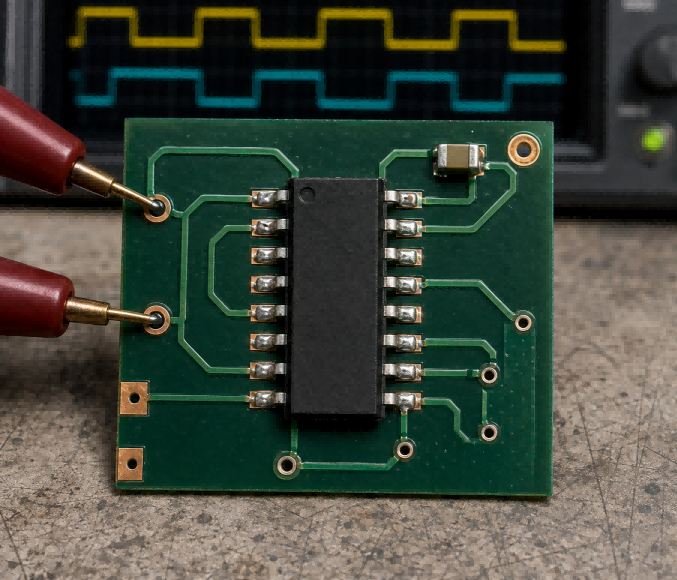
An SR latch stores one bit through cross-coupled feedback. This engineering reference covers NOR and NAND implementations, truth tables, forbidden-state recovery, gated operation, switch debouncing, fa…

Latch circuits retain one bit through feedback. This technical reference covers SR and D latches, truth tables, transparency, timing limits, latch-versus-flip-flop behavior, applications and common log…

An engineering guide to LED driver operation, constant-current and constant-voltage outputs, linear and switching topologies, dimming, IC selection, calculations, replacement compatibility, and fault c…

Operational amplifier guide covering op amp basics, feedback, ideal vs real op amps, common configurations, buffer circuits, offset, bias current, gain-bandwidth, slew rate, rail-to-rail limits and sel…

Jumper cables guide covering safe connection order, red and black clamp placement, final ground connection, cable gauge, length, clamp quality, copper vs CCA cables, jump starter comparison and battery…

LDO regulator guide covering low dropout voltage, power dissipation, thermal design, PSRR, output noise, capacitor stability, adjustable LDO circuits, LDO vs buck converter and datasheet selection chec…

Conditional Access Module guide covering CAM meaning, CI/CI+ interface, smart card authorization, DVB security workflow, TV and set-top box compatibility, internal electronics, ESD protection, connecto…

Guide to electronic component obsolescence covering EOL risk, PCN/PDN notices, last-time buy planning, replacement options, form-fit-function validation, counterfeit risk and BOM lifecycle management.

18650 battery guide covering lithium-ion cell basics, 3.6V/3.7V voltage, 4.2V charging, mAh and Wh capacity, protected cells, chargers, BMS, series-parallel packs, holders, welding and sourcing checks.…

Hall effect sensor guide covering working principle, linear and digital sensors, Arduino circuits, current sensing, speed detection, automotive applications, A3144 examples, signal filtering and datash…


