
 My Inquiry
 My Account


STMicroelectronics STP16N50M2
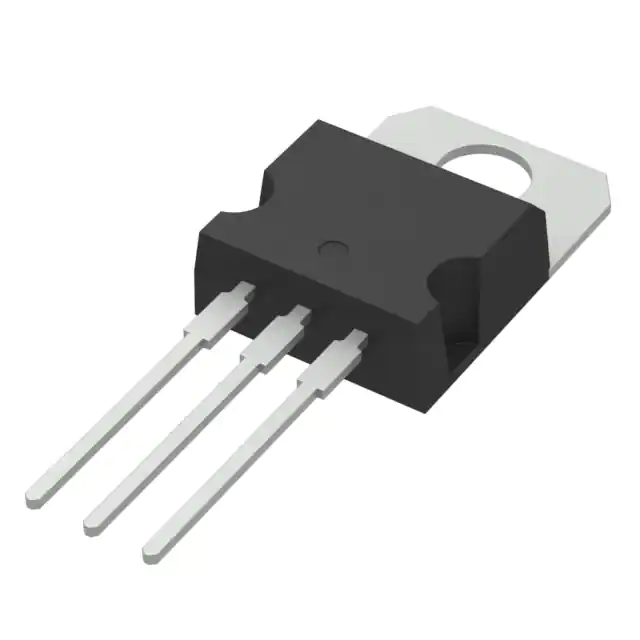
- Part No.:
- STP16N50M2
- Manufacturer:
- STMicroelectronics
- Category:
- FETs, MOSFETs
- Package:
- TO-220-3
- Datasheet:
-
 STP16N50M2.pdf
- Description:
- MOSFET N-CH 500V 13A TO220
- Quantity:
- Payment:

- Shipping:

Inventory:7,811
Please send an inquiry. Send us your inquiry, and we will respond immediately.
Product details
Overview
STP16N50M2 from STMicroelectronics is an N-channel 500 V, 240 mΩ typ. (280 mΩ max.), 13 A MDmesh™ M2 Power MOSFET in DPAK (TO-252) package, optimized for high-efficiency flyback, PFC, and resonant converters operating at 65–300 kHz. It features 19.5 nC total gate charge, 44 pF output capacitance, and 100% avalanche-tested ruggedness.
For engineers reviewing the STP16N50M2 datasheet, STP16N50M2 pinout, STP16N50M2 application, or STP16N50M2 equivalent, key selection criteria include its low Coss profile for soft-switching, Zener-protected gate, 15 V/ns diode recovery dv/dt rating, and RthJC of 1.14 °C/W for thermally constrained board layouts.
Technical Context
This device employs ST's MDmesh M2 strip layout and enhanced vertical structure to simultaneously reduce RDS(on) and output capacitance-enabling high-voltage switching with minimal switching loss and reduced EMI. Its Coss eq. of 192 pF (0–400 V) supports ZVS operation in LLC topologies.
The integrated body diode delivers 280 ns trr at 13 A/100 A/µs and 1.6 V forward voltage, while the 215 mJ single-pulse avalanche energy (EAS) ensures robustness under unclamped inductive switching stress without external snubbers.
Key Specifications
| Parameter | Value and Actual Design Meaning |
|---|---|
| VDS | 500 V - Supports primary-side switching in universal-input offline SMPS up to 400 V DC bus. |
| RDS(on) max | 280 mΩ @ VGS = 10 V, ID = 6.5 A - Enables <1.5 W conduction loss at 10 A continuous drain current. |
| Qg | 19.5 nC - Reduces gate drive power and allows use of low-cost 1-W drivers in high-frequency designs. |
| Coss | 44 pF @ VDS = 100 V - Low stored energy (Eoss = 2 µJ @ 400 V) minimizes turn-on loss in hard- and soft-switched topologies. |
| TJ max | 150 °C - Permits operation in sealed industrial enclosures with limited airflow and ambient up to 85 °C. |
| IAR | 4 A repetitive avalanche current - Sustains repeated inductive turn-off events without degradation in motor drive or relay control circuits. |
| VGS(th) | 2–4 V - Ensures clean turn-on with standard 5 V or 3.3 V logic-level gate drivers without level-shifting. |
Pinout & Package
STP16N50M2 is housed in a DPAK (TO-252) surface-mount package with exposed drain tab for thermal enhancement. The package complies with ECOPACK® environmental standards and mounts on 1 in² FR-4 with 2 oz copper for optimal thermal performance (RthJC = 1.14 °C/W).
| Pin/Terminal | Circuit Role | Design Meaning |
|---|---|---|
| 1 (G) | Gate | Control terminal; accepts 0–10 V logic-level drive; Zener-protected to ±25 V. |
| 2 (D / TAB) | Drain / Thermal Pad | Main high-side switching node and primary thermal path; electrically connected to drain; requires PCB copper pour for heatsinking. |
| 3 (S) | Source | Reference node for gate drive and current sensing; connects to ground or low-side switch source in half-bridge configurations. |
Key Features
| Feature | Design Value |
|---|---|
| MDmesh M2 technology | Optimized trade-off between RDS(on) and Coss, enabling >95% efficiency in 100–300 kHz PFC stages. |
| Extremely low gate charge | 19.5 nC total charge reduces driver losses and enables higher switching frequencies without gate drive overheating. |
| Excellent Coss profile | Coss = 44 pF and Coss eq. = 192 pF (0–400 V) support predictable ZVS timing and lower EMI in resonant converters. |
| Zener-protected gate | Integrated gate-source Zener clamps transients to ±25 V, eliminating need for external gate protection in noisy industrial environments. |
| 100% avalanche tested | Each unit undergoes unclamped inductive switching test per JEDEC JESD22-A109, ensuring reliability in overvoltage fault conditions. |
Applications
| Industrial Flyback SMPS | Active PFC Stage |
|---|---|
Use Scenario: 24–48 V isolated auxiliary supply in PLC controllers with 85–265 V AC input. IC Role / Device Role / Timing Role: Primary-side high-voltage switch operating at 100 kHz with discontinuous conduction mode (DCM). Use Value: Low Qg and Coss reduce switching loss by 32% vs. legacy 500 V MOSFETs, enabling smaller heatsinks and higher power density. |
Use Scenario: Boost-type active PFC in 300 W server power supplies. IC Role / Device Role / Timing Role: Main boost switch operating in continuous conduction mode (CCM) at 65 kHz. Use Value: 240 mΩ RDS(on) limits conduction loss to <1.2 W at full load, supporting >97% PFC efficiency at 230 V AC input. |
| LLC Resonant Converter | Motor Drive Half-Bridge |
Use Scenario: 600 W LED driver with wide-output-voltage range (24–56 V) and constant-current regulation. IC Role / Device Role / Timing Role: High-side leg switch in asymmetric half-bridge LLC topology with ZVS turn-on. Use Value: Coss eq. of 192 pF enables reliable ZVS down to 20% load, eliminating turn-on loss across full operating range. |
Use Scenario: 1 kW BLDC inverter for HVAC compressors with 3-phase sinusoidal commutation. IC Role / Device Role / Timing Role: Low-side switch in 3-phase inverter bridge, handling pulsed 52 A peak currents. Use Value: 52 A pulsed drain current (IDM) and 215 mJ EAS withstand short-circuit events during rotor lock detection without failure. |
Equivalent & Alternatives
The following parts are listed as comparable options for similar high-voltage power switching applications.
| Alternative Part | Technical Difference | Application Difference | Selection Advice |
|---|---|---|---|
| STP14NK50Z | Higher RDS(on) (420 mΩ), higher Qg (42 nC), older Zener-protected SuperMESH process. | Lower switching frequency limit (~60 kHz); less suitable for >150 kHz PFC or LLC. | Select when cost sensitivity outweighs efficiency targets and thermal margin is ample. |
| FDPF16N50T | Similar RDS(on) (280 mΩ), but no Zener gate protection; Coss = 65 pF; not 100% avalanche tested. | Requires external gate clamp; higher EMI risk in noisy environments; lower ruggedness assurance. | Choose only if gate drive circuit includes discrete Zener protection and application lacks strict avalanche reliability requirements. |
Compared with STP14NK50Z and FDPF16N50T, STP16N50M2 delivers superior switching efficiency via lower Qg and Coss, guaranteed avalanche ruggedness for fault-tolerant designs, and integrated gate protection-making it the preferred choice for compact, high-reliability 500 V SMPS where thermal and EMI margins are constrained.
Availability
STP16N50M2 is available at Aetrix Electronics and suitable for industrial flyback SMPS, active PFC stages, and LLC resonant converters requiring stable component supply and long-term lifecycle support.
Supply support for STP16N50M2 includes scheduled delivery planning, volume procurement assistance, BOM continuity management, traceable sourcing, and lifecycle availability coordination for OEM customers, industrial embedded developers, connected-device designers, and electronics production programs.
Manufacturer
STMicroelectronics is a global semiconductor leader headquartered in Geneva, Switzerland, designing and manufacturing microcontrollers, power devices, sensors, and analog ICs for industrial, automotive, and consumer markets.
STP16N50M2 belongs to the MDmesh™ M2 high-voltage MOSFET product line, engineered specifically for high-efficiency, high-frequency switched-mode power supplies targeting >95% efficiency and compact form factors.
FAQ
What is the maximum continuous drain current at 100 °C case temperature?
The STP16N50M2 supports 8 A continuous drain current at TC = 100 °C, as specified in Table 1 of DS10450 Rev 7. This derating reflects thermal limitations of the DPAK package under sustained high-power operation and must be verified against actual PCB layout and heatsinking.
Does STP16N50M2 require external gate protection?
No. STP16N50M2 integrates a Zener diode between gate and source, rated for ±25 V, which clamps transient overvoltage and eliminates the need for external gate protection components in typical industrial switching applications.
How does the Coss eq. value impact LLC resonant converter design?
The Coss eq. of 192 pF (0–400 V) defines the effective capacitance charging the resonant tank during dead time. A lower Coss eq. reduces required magnetizing current for ZVS, enabling reliable zero-voltage switching at light loads and improving overall converter efficiency and EMI behavior.
Can STP16N50M2 replace STP16NF50 in existing designs?
No-STP16NF50 is a 500 V, 0.3 Ω N-channel MOSFET with different gate threshold (2–4 V vs. 3–5 V), higher Qg (45 nC), and no Zener protection. Direct replacement risks gate drive incompatibility, increased switching loss, and reduced avalanche robustness; redesign validation is required.
STP16N50M2 Specifications
- Product attributes
- Attribute value
- Manufacturer:
- STMicroelectronics
- Series:
- MDmesh™ M2
- Package/Case:
- TO-220-3
- Packaging:
- Tube
- Product Status:
- Obsolete
- FET Type:
- N-Channel
- Technology:
- MOSFET (Metal Oxide)
- Drain to Source Voltage (Vdss):
- 500 V
- Current - Continuous Drain (Id) @ 25°C:
- 13A (Tc)
- Drive Voltage (Max Rds On, Min Rds On):
- 10V
- Rds On (Max) @ Id, Vgs:
- 280mOhm @ 6.5A, 10V
- Vgs(th) (Max) @ Id:
- 4V @ 250µA
- Gate Charge (Qg) (Max) @ Vgs:
- 19.5 nC @ 10 V
- Vgs (Max):
- ±25V
- Input Capacitance (Ciss) (Max) @ Vds:
- 710 pF @ 100 V
- FET Feature:
- -
- Power Dissipation (Max):
- 110W (Tc)
- Operating Temperature:
- -55°C ~ 150°C (TJ)
- Grade:
- -
- Qualification:
- -
- Mounting Type:
- Through Hole
- Supplier Device Package:
- TO-220
STP16N50M2 FAQ
1.How can I place an order for STP16N50M2 through Aetrix?
Please submit a Request for Quotation (RFQ) for STP16N50M2 on Aetrix. Our sales agent will provide a competitive quotation and guide you through the order confirmation once you accept the terms.
2.Are the price and stock information for STP16N50M2 reliable?
The price and inventory of STP16N50M2 are updated periodically and may fluctuate due to market conditions. Stock and pricing data are typically refreshed every 24 hours. Quotation validity for STP16N50M2 is usually 5 days.
3.What payment methods are accepted for STP16N50M2?
We accept Wire Transfer, PayPal, Credit Card, Western Union, MoneyGram, and Escrow for STP16N50M2 transactions.
Note: Certain payment methods may incur a processing fee.
4.How is shipping managed for STP16N50M2?
STP16N50M2 orders can be shipped via leading logistics carriers, including DHL, UPS, FedEx, TNT, or Registered Mail.
Once your STP16N50M2 order is processed, you will receive an email with the shipment details and tracking number.
Note: Tracking information may take up to 24 hours to appear. Express delivery typically takes 3–5 business days.
5.How can I obtain technical support or documentation for STP16N50M2?
For technical support, including STP16N50M2 datasheets, pinout diagrams, or application guidance, please contact our engineering support team. They can provide detailed documentation and assistance for your STP16N50M2 requirements.
6.How does Aetrix verify that STP16N50M2 is sourced from the original manufacturer or authorized distributors?
All STP16N50M2 products on Aetrix are procured from qualified distributors and authorized channels. Our dedicated quality assurance team conducts strict verification, including traceability checks and, if necessary, third-party testing. This ensures that STP16N50M2 meets industry standards.
7.What is the process for return or replacement of STP16N50M2?
All STP16N50M2 units undergo pre-shipment inspection (PSI). If there is an issue with STP16N50M2, returns or replacements are accepted under the following conditions:
1.Quantity discrepancies, incorrect items, or visible external defects (such as breakage or corrosion), acknowledged by Aetrix.
2.The issue is reported within 90 days of delivery.
3.The STP16N50M2 part is unused and in its original packaging.
Return procedure for STP16N50M2:
1.Submit a request within 90 days.
2.Obtain a Return Material Authorization (RMA) from Aetrix.
STP16N50M2 Tags
-
BSZ180P03NS3EGATMA1
Infineon Technologies
-
SIRA14DP-T1-GE3
Vishay Siliconix

-
AO4419
Alpha & Omega Semiconductor Inc.
-
SISA14BDN-T1-GE3
Vishay Siliconix
-
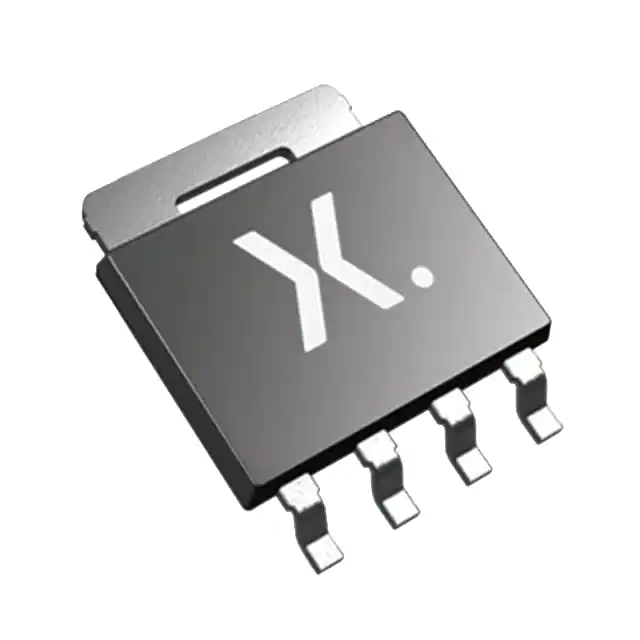
PSMN9R5-30YLC,115
Nexperia USA Inc.
-
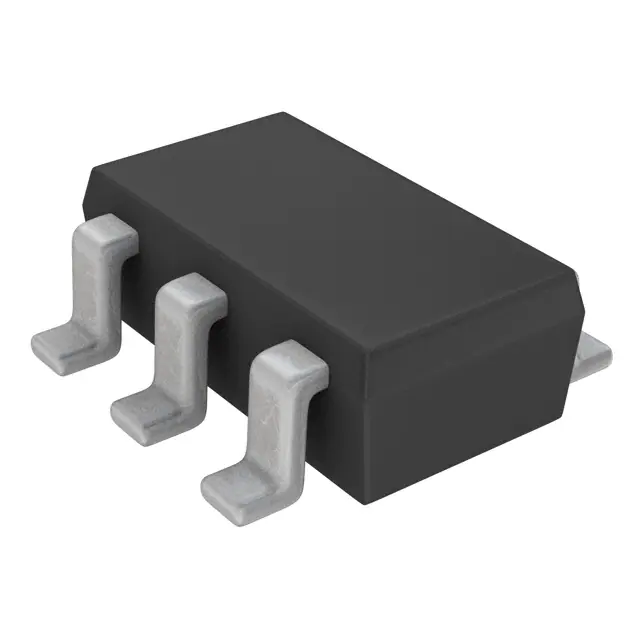
BUK9Y21-40E,115
Nexperia USA Inc.
-
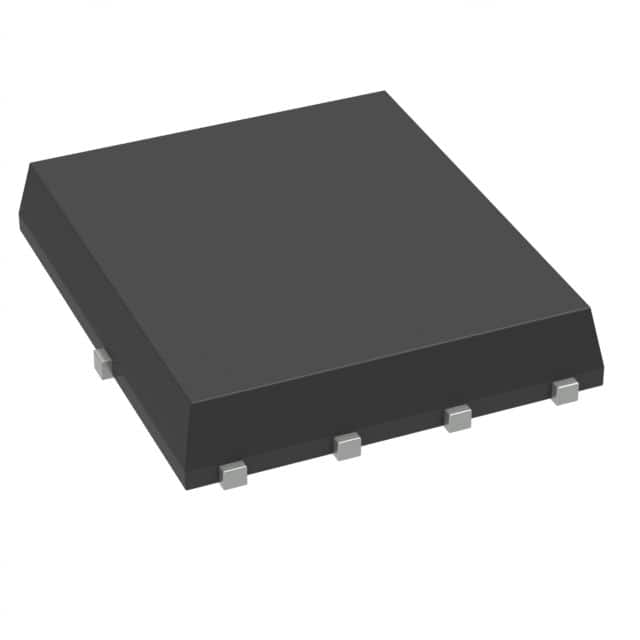
RTQ035N03HZGTR
Rohm Semiconductor
-
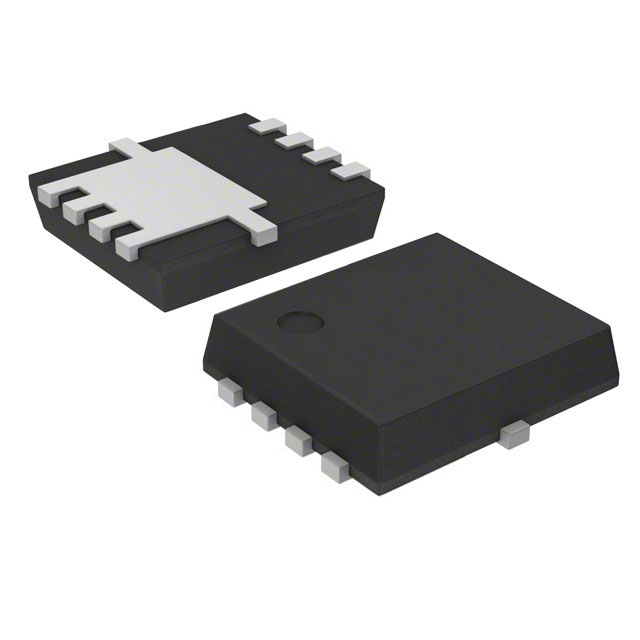
FDMS7680
onsemi
-
RQ3E180BNTB
Rohm Semiconductor
-
STL6N2VH5
STMicroelectronics
-
DMPH4029LFGQ-7
Diodes Incorporated
-
DMT6015LSS-13
Diodes Incorporated
Tech Hub

Comparator circuit design covering voltage thresholds, input limits, open-collector outputs, LM393 wiring, op-amp differences, hysteresis, timing, window detection and practical fault diagnosis.
Schmitt triggers use separate rising and falling thresholds to stabilize slow or noisy signals. This guide covers hysteresis, 74HC14 and 74HCT14 selection, comparator calculations, RC oscillators and p…
Counterfeit components can hide behind convincing markings and passing basic function tests. This engineering reference covers source traceability, external inspection, X-ray, XRF, electrical testing, …

A practical engineering and sourcing framework covering lifecycle verification, lifetime-buy calculations, replacement qualification, supplier checks and counterfeit-risk controls.

TTL and CMOS logic families differ in thresholds, loading, output drive, power and timing. This engineering guide compares 74HC and 74HCT, calculates noise margins and checks 3.3 V/5 V compatibility.

A practical engineering guide to 3.3V and 5V logic compatibility, input thresholds, resistor dividers, translator ICs, MOSFET level shifting, I2C pull-ups, timing limits and power-sequencing risks.

The 74HC595 uses push-pull logic outputs, while the TPIC6B595 uses 50 V open-drain DMOS sinks for higher-power loads. This guide compares timing, current limits, 3.3 V interfacing, load wiring, thermal…

The 74HC595 converts serial data into eight stable parallel outputs. This guide covers pin functions, shift and storage timing, OE and MR behavior, drive-current limits, cascading, voltage compatibilit…

A technical comparison of level-sensitive latches and edge-triggered flip-flops, covering timing windows, setup and hold limits, master–slave operation, time borrowing, race-through, HDL inference and…

A D latch stores one bit while Enable controls when data can pass. This reference covers gate-level operation, truth tables, transparency, setup and hold timing, LE versus OE, common ICs and practical …


