
 My Inquiry
 My Account


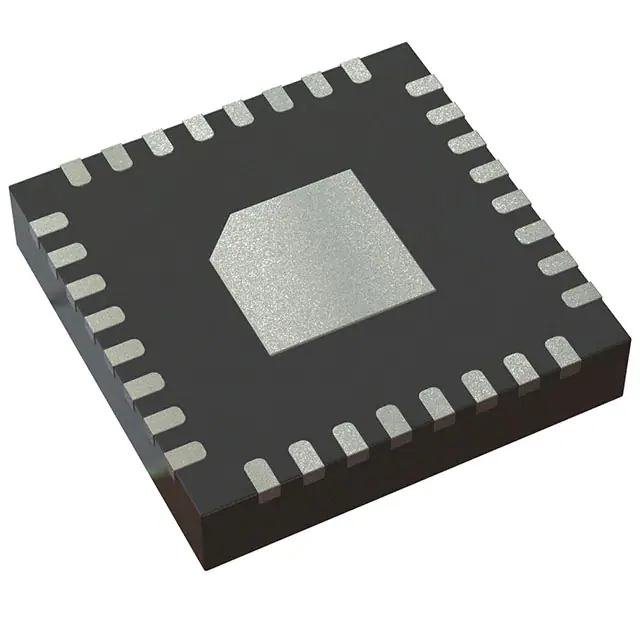
Texas Instruments TRF7961RHBTG4
- Part No.:
- TRF7961RHBTG4
- Manufacturer:
- Texas Instruments
- Category:
- RFID, RF Access, Monitoring ICs
- Package:
- 32-VFQFN Exposed Pad
- Datasheet:
-
 TRF7961RHBTG4.pdf
- Description:
- IC RFID READER 13.56MHZ 32VQFN
- Quantity:
- Payment:

- Shipping:

Inventory:3,925
Please send an inquiry. Send us your inquiry, and we will respond immediately.
Product details
Overview
TRF7961RHBTG4 from Texas Instruments is a fully integrated 13.56-MHz RFID analog front end and data-framing reader IC supporting ISO/IEC 14443 A/B, FeliCa, and ISO/IEC 15693 protocols. It delivers 200 mW RF output power (23 dBm), dual AM/PM receiver inputs with RSSI, and programmable ASK modulation depth (8–30%). Used in secure access control readers requiring robust near-field communication.
For engineers reviewing the TRF7961RHBTG4 datasheet, TRF7961RHBTG4 pinout, TRF7961RHBTG4 application, or TRF7961RHBTG4 equivalent, key selection criteria include its 32-pin VQFN package, SPI/parallel interface flexibility, ultra-low-power modes (<1 µA power-down), integrated 20-mA LDO for MCU supply, and dual-receiver architecture minimizing communication holes in noisy environments.
Technical Context
The TRF7961RHBTG4 implements a dual-input receiver with independent AM and PM demodulation paths, each with selectable gain and built-in band-pass filtering. Its framing engine handles SOF/EOF, CRC, and parity generation for ISO/IEC 14443 and ISO/IEC 15693 without MCU intervention.
It supports direct-mode operation for custom protocol implementation, providing raw subcarrier data or unframed ISO-formatted data with extracted clock. The transmitter offers OOK/ASK modulation with programmable output power (100 mW or 200 mW into 50 Ω) and adjustable modulation depth.
Key Specifications
| Parameter | Value and Actual Design Meaning |
|---|---|
| Operating Frequency | 13.56 MHz carrier - fixed crystal-based RF system compliant with global HF RFID standards. |
| RF Output Power | 200 mW (+23 dBm) into 50 Ω at 5 V - enables extended read range up to ~10 cm with standard antennas. |
| Receiver Sensitivity | 1.2–3.0 mVPP at 424/848 kHz subcarriers - ensures reliable tag response under weak coupling or interference. |
| Supply Voltage Range | 2.7 V to 5.5 V VIN - supports battery-powered and USB-supplied portable readers. |
| Power-Down Current | <1 µA - enables multi-year operation in energy-harvesting or coin-cell–powered access devices. |
| Data Interface | SPI (4-pin) or parallel (8-bit) with 12-byte FIFO - reduces MCU overhead and simplifies firmware integration. |
| Integrated LDO | 20-mA, adjustable 2.7–3.4 V VDD_X regulator - powers external MSP430 or low-voltage microcontrollers without extra regulators. |
Pinout & Package
TRF7961RHBTG4 is housed in a 32-pin VQFN package (5 mm × 5 mm) with exposed thermal pad connected to ground. Pin assignment follows TI's RHB footprint and supports both SPI and parallel host interfaces.
| Pin/Terminal | Circuit Role | Design Meaning |
|---|---|---|
| VIN (Pin 2) | Main supply input | Accepts 2.7–5.5 V; sources internal regulators (VDD_RF, VDD_A, VDD_X) with high PSRR for noise immunity. |
| TX_OUT (Pin 5) | RF power amplifier output | Delivers 100/200 mW RF signal; requires external matching network to 50 Ω antenna interface. |
| RX_IN1 / RX_IN2 (Pins 8/9) | Dual receiver inputs | Enable simultaneous AM (RX_IN1) and PM (RX_IN2) demodulation - eliminates blind spots during tag polling. |
| IRQ (Pin 13) | Interrupt request output | Asserts on frame reception, error, or FIFO status - allows event-driven MCU operation without polling. |
| I/O_0–I/O_7 (Pins 17–24) | Parallel data bus | Configurable as 8-bit bidirectional interface; alternatively used as SPI signals (MOSI/MISO) in serial mode. |
| DATA_CLK / SYS_CLK (Pins 26/27) | Interface and system clocks | DATA_CLK synchronizes MCU reads/writes; SYS_CLK provides 3.39/6.78/13.56 MHz clock to MCU - eliminates external clock source. |
| VDD_X (Pin 32) | Auxiliary regulated output | 20-mA, 2.7–3.4 V LDO - powers external MCU or sensors, reducing BOM count and board space. |
Key Features
| Feature | Design Value |
|---|---|
| Dual AM/PM receiver architecture | Eliminates communication dead zones by concurrently processing amplitude- and phase-modulated tag responses. |
| Programmable ASK modulation depth (8–30%) | Enables optimization for different tag types and environmental conditions - improves interoperability with legacy ISO 14443 A cards. |
| Reader-to-reader anticollision | Prevents interference when multiple TRF7961RHBTG4-based readers operate in proximity - essential for dense deployment in transit gates. |
| 12-byte hardware FIFO | Offloads MCU timing-critical framing tasks - supports 848 kbps data rates while maintaining deterministic interrupt latency. |
| Ultra-low-power standby mode (120 µA) | Permits rapid wake-up (<100 µs) from low-power state - ideal for battery-operated handheld readers needing instant responsiveness. |
Applications
| Secure Access Control | Public Transport Ticketing |
|---|---|
|
Use Scenario: Contactless door entry system using ISO 14443 B smart cards in office buildings. IC Role / Device Role / Timing Role: TRF7961RHBTG4 acts as the full-stack RFID reader front end - handling analog signal conditioning, protocol framing, and MCU interface. Use Value: Dual-receiver architecture ensures reliable card detection even with misaligned or metallic-door-mounted antennas. |
Use Scenario: Fare validator terminals on buses and subway turnstiles reading FeliCa and ISO 15693 tickets. IC Role / Device Role / Timing Role: TRF7961RHBTG4 performs real-time subcarrier demodulation and CRC-checked frame extraction for fast transaction throughput. Use Value: 848 kbps support and hardware FIFO enable sub-100-ms validation time - critical for high-throughput passenger flow. |
| Medical Equipment Authentication | Product Anti-Counterfeiting |
|
Use Scenario: Infusion pump verifying disposable cartridge authenticity via embedded ISO 15693 tag. IC Role / Device Role / Timing Role: TRF7961RHBTG4 operates in low-voltage (2.7 V) mode and supplies regulated 3.3 V to MCU via VDD_X pin. Use Value: Integrated 20-mA LDO eliminates need for external regulator - reduces size and cost in compact medical enclosures. |
Use Scenario: Luxury goods packaging with NFC tag enabling consumer smartphone verification via TRF7961RHBTG4-based kiosk. IC Role / Device Role / Timing Role: TRF7961RHBTG4 executes ISO 14443 A anti-cloning handshake and transmits UID + signature to host MCU. Use Value: Programmable modulation depth and RSSI reporting allow adaptive tuning to varying tag placement and packaging materials. |
Equivalent & Alternatives
The following parts are listed as comparable options for similar RFID reader applications.
| Alternative Part | Technical Difference | Application Difference | Selection Advice |
|---|---|---|---|
| TRF7960RHB | Same pinout and register map; lacks ISO/IEC 15693 support per device comparison table (Table 3-1). | Restricted to ISO 14443 A/B and FeliCa only - unsuitable for inventory tracking systems requiring ISO 15693. | Select TRF7960RHB only if ISO 15693 is not required and cost minimization is prioritized. |
| ST25R3916B | Supports same protocols plus NFC Forum Type 4; higher integration (integrated DC-DC); lower max output power (150 mW). | Better suited for NFC-enabled consumer devices; less optimal for long-range industrial readers due to lower RF power. | Choose ST25R3916B when NFC Forum compliance or embedded power management is mandatory. |
Compared with TRF7961RHBTG4, TRF7960RHB omits ISO/IEC 15693 capability but shares identical footprint and firmware compatibility, while ST25R3916B adds NFC certification at the expense of peak RF output - making TRF7961RHBTG4 optimal for multiprotocol, medium-range industrial readers requiring field-proven reliability.
Availability
TRF7961RHBTG4 is available at Aetrix Electronics and suitable for secure access control, public transport ticketing, and medical authentication systems requiring stable component supply across multi-year production cycles.
Supply support for TRF7961RHBTG4 includes scheduled delivery planning, volume procurement assistance, BOM continuity management, traceable sourcing, and lifecycle availability coordination for OEM customers, industrial embedded developers, connected-device designers, and electronics production programs.
Manufacturer
Texas Instruments is a global semiconductor leader specializing in analog, embedded processing, and connectivity solutions, with over 50 years of innovation in RF and mixed-signal design.
The TRF7961RHBTG4 belongs to TI's RFID reader analog front-end product line, engineered specifically for high-reliability, multi-standard contactless identification in industrial, transportation, and healthcare applications.
FAQ
What communication interfaces does the TRF7961RHBTG4 support?
The TRF7961RHBTG4 supports both an 8-bit parallel interface and a 4-pin SPI interface, with automatic mode detection. It uses a shared 12-byte FIFO for transmit/receive data buffering. The interface voltage is configurable from 1.8 V to 5.5 V via VDD_I/O, allowing direct connection to diverse MCUs including MSP430, ARM Cortex-M, and PIC families without level-shifting circuitry. TRF7961RHBTG4 also provides dedicated DATA_CLK and SYS_CLK outputs to synchronize host timing.
Does the TRF7961RHBTG4 support ISO/IEC 15693, and how is it enabled?
Yes, the TRF7961RHBTG4 explicitly supports ISO/IEC 15693 as confirmed in the device comparison table (Table 3-1) and Section 1.3. Protocol selection is performed via software configuration of control registers - no hardware changes are needed. The framing engine handles 1-out-of-4 coding, EOF/SOF insertion, and CRC-16 calculation per ISO/IEC 15693-2. TRF7961RHBTG4 also supports direct mode for custom 15693 extensions beyond standard command sets.
What is the maximum data rate supported by the TRF7961RHBTG4?
The TRF7961RHBTG4 supports data rates up to 848 kbps, as stated in Section 1.3 and verified in Table 6-13 (Receiver Output Data Rates). This applies to ISO/IEC 14443 high-bit-rate mode and is achieved using the internal framing engine and 12-byte FIFO. At 848 kbps, the device maintains full protocol compliance including bit-collision detection and CRC validation - TRF7961RHBTG4 achieves this without requiring external FPGA or high-speed logic.
How does the TRF7961RHBTG4 manage power in battery-operated devices?
The TRF7961RHBTG4 provides three ultra-low-power states: power-down (<1 µA), standby (120 µA), and active RX-only (10 mA). EN and EN2 pins control entry/exit; power-down retains VDD_X regulation to keep external MCU alive. Its wide 2.7–5.5 V input range allows direct use of single Li-ion or two-AA cells. TRF7961RHBTG4's internal LDOs maintain stable analog/digital rails across battery discharge curves - eliminating need for external buck/boost converters in portable readers.
Can the TRF7961RHBTG4 drive an antenna directly, or is external matching required?
The TRF7961RHBTG4 requires external impedance matching between TX_OUT and the antenna. Its TX_OUT pin drives a 50-Ω load at 200 mW (23 dBm), but real-world antennas rarely present pure 50 Ω - especially in compact or metal-near form factors. TI reference designs (e.g., TRF7960AEVM) use discrete LC networks or baluns to match typical 13.56-MHz loop antennas. TRF7961RHBTG4 does not integrate matching components; omitting them risks reduced range, overheating, or regulatory noncompliance.
TRF7961RHBTG4 Specifications
- Product attributes
- Attribute value
- Manufacturer:
- Texas Instruments
- Series:
- -
- Package/Case:
- 32-VFQFN Exposed Pad
- Packaging:
- Tape & Reel (TR)
- Product Status:
- Obsolete
- Type:
- RFID Reader
- Frequency:
- 13.56MHz
- Standards:
- ISO 14443, ISO 15693, ISO 18000-3
- Interface:
- SPI
- Voltage - Supply:
- 2.7V ~ 5.5V
- Operating Temperature:
- -40°C ~ 110°C
- Grade:
- -
- Qualification:
- -
- Mounting Type:
- Surface Mount
- Supplier Device Package:
- 32-VQFN (5x5)
TRF7961RHBTG4 FAQ
1.How can I place an order for TRF7961RHBTG4 through Aetrix?
Please submit a Request for Quotation (RFQ) for TRF7961RHBTG4 on Aetrix. Our sales agent will provide a competitive quotation and guide you through the order confirmation once you accept the terms.
2.Are the price and stock information for TRF7961RHBTG4 reliable?
The price and inventory of TRF7961RHBTG4 are updated periodically and may fluctuate due to market conditions. Stock and pricing data are typically refreshed every 24 hours. Quotation validity for TRF7961RHBTG4 is usually 5 days.
3.What payment methods are accepted for TRF7961RHBTG4?
We accept Wire Transfer, PayPal, Credit Card, Western Union, MoneyGram, and Escrow for TRF7961RHBTG4 transactions.
Note: Certain payment methods may incur a processing fee.
4.How is shipping managed for TRF7961RHBTG4?
TRF7961RHBTG4 orders can be shipped via leading logistics carriers, including DHL, UPS, FedEx, TNT, or Registered Mail.
Once your TRF7961RHBTG4 order is processed, you will receive an email with the shipment details and tracking number.
Note: Tracking information may take up to 24 hours to appear. Express delivery typically takes 3–5 business days.
5.How can I obtain technical support or documentation for TRF7961RHBTG4?
For technical support, including TRF7961RHBTG4 datasheets, pinout diagrams, or application guidance, please contact our engineering support team. They can provide detailed documentation and assistance for your TRF7961RHBTG4 requirements.
6.How does Aetrix verify that TRF7961RHBTG4 is sourced from the original manufacturer or authorized distributors?
All TRF7961RHBTG4 products on Aetrix are procured from qualified distributors and authorized channels. Our dedicated quality assurance team conducts strict verification, including traceability checks and, if necessary, third-party testing. This ensures that TRF7961RHBTG4 meets industry standards.
7.What is the process for return or replacement of TRF7961RHBTG4?
All TRF7961RHBTG4 units undergo pre-shipment inspection (PSI). If there is an issue with TRF7961RHBTG4, returns or replacements are accepted under the following conditions:
1.Quantity discrepancies, incorrect items, or visible external defects (such as breakage or corrosion), acknowledged by Aetrix.
2.The issue is reported within 90 days of delivery.
3.The TRF7961RHBTG4 part is unused and in its original packaging.
Return procedure for TRF7961RHBTG4:
1.Submit a request within 90 days.
2.Obtain a Return Material Authorization (RMA) from Aetrix.
TRF7961RHBTG4 Tags

-
SL2S2602FTBX
NXP Semiconductors
-
ST25DV04K-IER6S3
STMicroelectronics
-
ST25DV04K-IER6C3
STMicroelectronics
-
LXMSJZNCMD-217
Murata Electronics

-
NT3H2111W0FTTJ
NXP Semiconductors
-
NT3H2111W0FHKH
NXP Semiconductors
-
M24LR04E-RMC6T/2
STMicroelectronics
-
ST25DV04KC-JF6D3
STMicroelectronics
-
ST25DV64KC-IE6S3
STMicroelectronics
-
ST25DV64K-IER6T3
STMicroelectronics
-
NT3H2211W0FTTJ
NXP Semiconductors
-
NT3H2211W0FHKH
NXP Semiconductors
Tech Hub

A practical engineering guide to 3.3V and 5V logic compatibility, input thresholds, resistor dividers, translator ICs, MOSFET level shifting, I2C pull-ups, timing limits and power-sequencing risks.

The 74HC595 uses push-pull logic outputs, while the TPIC6B595 uses 50 V open-drain DMOS sinks for higher-power loads. This guide compares timing, current limits, 3.3 V interfacing, load wiring, thermal…

The 74HC595 converts serial data into eight stable parallel outputs. This guide covers pin functions, shift and storage timing, OE and MR behavior, drive-current limits, cascading, voltage compatibilit…

A technical comparison of level-sensitive latches and edge-triggered flip-flops, covering timing windows, setup and hold limits, master–slave operation, time borrowing, race-through, HDL inference and…

A D latch stores one bit while Enable controls when data can pass. This reference covers gate-level operation, truth tables, transparency, setup and hold timing, LE versus OE, common ICs and practical …

An SR latch stores one bit through cross-coupled feedback. This engineering reference covers NOR and NAND implementations, truth tables, forbidden-state recovery, gated operation, switch debouncing, fa…

Latch circuits retain one bit through feedback. This technical reference covers SR and D latches, truth tables, transparency, timing limits, latch-versus-flip-flop behavior, applications and common log…

An engineering guide to LED driver operation, constant-current and constant-voltage outputs, linear and switching topologies, dimming, IC selection, calculations, replacement compatibility, and fault c…

Operational amplifier guide covering op amp basics, feedback, ideal vs real op amps, common configurations, buffer circuits, offset, bias current, gain-bandwidth, slew rate, rail-to-rail limits and sel…

Jumper cables guide covering safe connection order, red and black clamp placement, final ground connection, cable gauge, length, clamp quality, copper vs CCA cables, jump starter comparison and battery…


