
 My Inquiry
 My Account


Microchip Technology U2270B-MFPG3
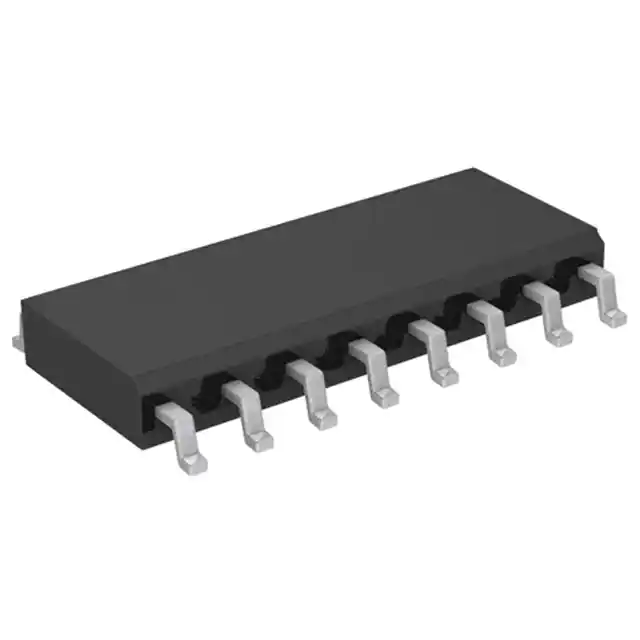
- Part No.:
- U2270B-MFPG3
- Manufacturer:
- Microchip Technology
- Category:
- RFID, RF Access, Monitoring ICs
- Package:
- 16-SOIC (0.154", 3.90mm Width)
- Datasheet:
-
 U2270B-MFPG3.pdf
- Description:
- IC RFID READER 100-150KHZ 16SO
- Quantity:
- Payment:

- Shipping:

Inventory:1,365
Please send an inquiry. Send us your inquiry, and we will respond immediately.
Product details
Overview
U2270B-MFPG3 from Atmel is a 125 kHz RFID base station IC for contactless IDIC® read/write systems, integrating oscillator, coil driver, low-pass filter, amplifier, and Schmitt trigger. It delivers up to 4.7 VPP driver output in battery-voltage mode, supports Manchester/bi-phase modulation at up to 5 Kbaud, and features standby current as low as 30 µA. It is optimized for automotive immobilizer transceivers with coil driver differential mode operation.
For engineers reviewing the U2270B-MFPG3 datasheet, U2270B-MFPG3 pinout, U2270B-MFPG3 application, or U2270B-MFPG3 equivalent, key selection criteria include carrier frequency tuning via RF pin (110 kΩ for 125 kHz), dual-mode power supply (one-rail/two-rail/battery), microcontroller-compatible data interface with open-collector OUTPUT and OE enable, and SO16 package compatibility with automotive-grade thermal performance (Tj ≤ 150°C).
Technical Context
The U2270B-MFPG3 implements a fully integrated 125 kHz RFID base station architecture: an on-chip oscillator controlled by external resistor (RF–VS), a 4th-order Butterworth low-pass filter (fcut ≈ fOsc/18), and a fixed-gain (typ. 30×) differential amplifier with HIPASS DC decoupling. Its driver supports both common-mode (high-current) and differential-mode (higher-voltage, improved sensitivity) coil excitation.
Power management includes three distinct operational modes: one-rail (5V only), two-rail (5V + 7–8V for extended field), and battery-voltage (6–16V input with internal VS/VEXT generation). Standby mode disables internal circuitry except VEXT output, enabling microcontroller supply during low-power states.
Key Specifications
| Parameter | Value and Actual Design Meaning |
|---|---|
| Carrier Frequency | 100–150 kHz, adjustable via RF pin resistor; 125 kHz typical with 110 kΩ (±4 kHz tolerance) |
| Data Rate Support | Up to 5 Kbaud using Manchester or bi-phase encoding; LPF cut-off at ~7 kHz enables reliable demodulation |
| Driver Output Swing | 4.3–4.7 VPP in battery-voltage mode (VBatt = 12 V); enables >10 cm read range with tuned antenna |
| Standby Current | 30–70 µA at 12 V; allows continuous microcontroller operation via VEXT while minimizing system quiescent draw |
| Supply Voltage Range | VBatt: 7–16 V; VS: 4.5–6.3 V; VEXT/DVS: 4.5–8 V - supports direct car battery connection without external regulator |
| Amplifier Gain | Typ. 30× (linear voltage gain); sufficient for sub-2 mVPP transponder signal recovery after coil coupling loss |
| Operating Temperature | –40°C to +105°C ambient; qualified for under-hood automotive environments per datasheet specification |
Pinout & Package
U2270B-MFPG3 is housed in a Pb-free SO16 (Small Outline, 16-pin) package with 1.27 mm pitch, 9.9 mm × 3.9 mm body, and thermal resistance RthJA = 120 K/W. Pin 1 marked by notch or dot; pins arranged in two rows of eight.
| Pin/Terminal | Circuit Role | Design Meaning |
|---|---|---|
| GND (1) | Ground reference | Primary analog/digital ground return; must be low-impedance connection to minimize noise coupling into LPF/AMP |
| OUTPUT (2) | Data output | Open-collector output; requires external pull-up to VEXT or MCU rail; driven low upon valid demodulated data |
| OE (3) | Output enable | Active-low control; disables OUTPUT when high, allowing shared bus or synchronized data capture |
| INPUT (4) | Demodulated signal input | AC-coupled (CIN) input with 220 kΩ impedance; accepts <2 VPP signals post-LPF |
| MS (5) | Mode select | Configures COIL1/COIL2 as common-mode (low) or differential-mode (high); critical for magnetic field optimization |
| CFE (6) | Carrier frequency enable | Controls RF field interruption for write operations to crypto/read-write transponders |
| DGND (7) | Driver ground | Dedicated ground for high-current coil driver stage; must be routed separately from GND to avoid switching noise |
| COIL2 (8) | Coil driver output 2 | Complements COIL1; used in differential mode for ±VDRV drive across antenna |
| COIL1 (9) | Coil driver output 1 | Primary coil drive terminal; tied to COIL2 in common mode for parallel high-current output |
| VEXT (10) | External supply output | Regulated ~5 V output; powers external MCU or logic even in standby mode |
| DVS (11) | Driver supply voltage | Input for driver-stage bias; set to 7–8 V in two-rail mode to maximize magnetic field strength |
| VBatt (12) | Battery voltage input | Direct 7–16 V automotive battery connection; feeds internal power supply for VS/VEXT generation |
| STANDBY (13) | Standby control | Active-high input; disables internal circuits except VEXT regulator to reduce current to µA range |
| VS (14) | Internal 5 V supply | Stable 4.5–6.3 V output for core logic; switched off in standby unless VEXT remains active |
| RF (15) | Oscillator frequency adjust | Current-sink input; sets fOsc via resistor to VS (e.g., 110 kΩ → 125 kHz) |
| HIPASS (16) | DC decoupling node | Connects external CHP capacitor (e.g., 100 nF) to set amplifier high-pass cutoff for data-rate matching |
Key Features
| Feature | Design Value |
|---|---|
| Integrated 4th-order Butterworth LPF | Removes 125 kHz carrier residue and noise; cut-off at ~7 kHz ensures clean digital signal recovery for 5 Kbaud Manchester |
| Differential coil driver mode | Enables anti-phase COIL1/COIL2 drive, doubling effective voltage across antenna and improving system sensitivity by >3 dB |
| Three configurable power modes | Supports direct 12 V battery operation (no external regulator), 5 V one-rail, or 5 V + 7–8 V two-rail for extended range |
| Microcontroller-compatible interface | Open-collector OUTPUT with OE enable and TTL-level INPUT/MS/CFE/STANDBY simplify integration with 3.3 V/5 V MCUs |
| VEXT-regulated output | Provides stable ~5 V supply to external microcontroller even during STANDBY, eliminating need for separate LDO |
Applications
| Automotive Immobilizer Systems | Animal Identification Readers |
|---|---|
Use Scenario: Embedded in vehicle ECU to authenticate transponder keys during ignition sequence. IC Role / Device Role / Timing Role: Base station controller generating 125 kHz RF field, demodulating backscatter response, and delivering decoded data to host MCU via OUTPUT/OE. Use Value: Enables secure, contactless key verification with <10 cm operating distance and immunity to vibration-induced coil misalignment due to differential driver mode. |
Use Scenario: Handheld or fixed-mount reader for livestock ear tags or pet microchips. IC Role / Device Role / Timing Role: RFID front-end providing regulated coil drive, signal conditioning, and MCU interface for ISO 11784/11785-compliant tag interrogation. Use Value: Supports battery-powered portability via ultra-low standby current (30 µA) and direct 12 V operation, extending field unit runtime without external regulators. |
| Access Control Terminals | Industrial Process Tagging |
Use Scenario: Secure door entry system reading employee badges in office or facility gates. IC Role / Device Role / Timing Role: Contactless IDIC® base station handling Manchester-encoded challenge-response with crypto transponders via CFE-controlled field gaps. Use Value: Integrates carrier enable (CFE), mode select (MS), and frequency tuning (RF) to support multiple tag types and adapt to varying antenna coupling conditions. |
Use Scenario: Asset tracking on factory floors where metal interference degrades RF coupling. IC Role / Device Role / Timing Role: Robust RFID interface with diode feedback + fine frequency tuning (per Table 4-1) to maintain resonance despite environmental detuning. Use Value: Adjustable oscillator (via RF pin) and differential driver mode compensate for antenna Q-factor degradation, sustaining >5 cm read range near machinery. |
Equivalent & Alternatives
The following parts are listed as comparable options for similar RFID base station applications.
| Alternative Part | Technical Difference | Application Difference | Selection Advice |
|---|---|---|---|
| SLI1300B (Infineon) | Single 5 V supply only; no internal VBatt regulator or VEXT output; max driver swing 3.5 VPP | Lacks battery-voltage operation and MCU power capability; requires external LDO and higher coil current for same range | Choose SLI1300B only if system uses clean 5 V rail and does not require standby-powered MCU operation. |
| TDA8029 (NXP) | Higher integration: includes 13.56 MHz option, built-in EEPROM, and enhanced security features; larger TSSOP20 package | Targets multi-frequency or secure authentication systems; overqualified for basic 125 kHz immobilizer use | Select TDA8029 when migrating to dual-frequency (125 kHz + 13.56 MHz) or requiring embedded cryptographic key storage. |
Compared with SLI1300B and TDA8029, U2270B-MFPG3 uniquely combines direct 12 V battery operation, integrated VEXT MCU supply, and differential coil drive in SO16 - making it optimal for cost-sensitive, space-constrained automotive immobilizers needing zero external regulators and minimal BOM count.
Availability
U2270B-MFPG3 is available at Aetrix Electronics and suitable for automotive immobilizer systems, animal identification readers, access control terminals, and industrial process tagging requiring stable component supply across extended temperature ranges and long production lifecycles.
Supply support for U2270B-MFPG3 includes scheduled delivery planning, volume procurement assistance, BOM continuity management, traceable sourcing, and lifecycle availability coordination for OEM customers, industrial embedded developers, connected-device designers, and electronics production programs.
Manufacturer
Atmel Corporation (now part of Microchip Technology) is a semiconductor manufacturer specializing in microcontrollers, nonvolatile memory, and RF/ID solutions for embedded and automotive applications.
The U2270B-MFPG3 belongs to Atmel's IDIC® RFID base station IC product line, designed specifically for 125 kHz contactless identification systems requiring robust coil driver performance, low-power standby, and seamless integration with 8-bit microcontrollers.
FAQ
What is the recommended resistor value for 125 kHz operation on the RF pin of U2270B-MFPG3?
The U2270B-MFPG3 requires a 110 kΩ resistor between RF (pin 15) and VS (pin 14) to achieve a nominal carrier frequency of 125 kHz. This value yields a typical fOsc of 125 kHz with ±4 kHz tolerance across temperature and supply voltage, as confirmed in Section 3.3 and Table 8 of the datasheet. Deviations beyond ±3% may impact transponder interoperability.
Can U2270B-MFPG3 operate directly from a 12 V car battery without external regulation?
Yes, U2270B-MFPG3 supports battery-voltage operation with VBatt input ranging from 7 V to 16 V. Its internal power supply generates regulated VS (~5 V) and VEXT outputs, eliminating the need for external voltage regulators. This mode also enables standby functionality and powers external microcontrollers via VEXT - all verified in Section 3.2.3 and Table 3-1.
How does the MS pin affect coil driver configuration in U2270B-MFPG3?
The MS (Mode Select) pin on U2270B-MFPG3 configures the COIL1 and COIL2 outputs: logic low selects common-mode (in-phase drive, higher current), while logic high selects differential-mode (anti-phase drive, higher voltage across antenna). Differential mode improves magnetic field sensitivity and is preferred for longer-range or noisy environments, as detailed in Section 3.7 and Figure 3-9.
What is the maximum data rate supported by U2270B-MFPG3, and which encoding schemes are compatible?
U2270B-MFPG3 supports a maximum data rate of 5 Kbaud using Manchester or bi-phase modulation, as stated in the Features section and validated by LPF cut-off at ~7 kHz (fOsc/18) and amplifier bandwidth. These encodings ensure DC balance and clock recovery - essential for reliable transponder communication in automotive and industrial settings.
Does U2270B-MFPG3 provide any built-in protection against overvoltage on VBatt or VEXT pins?
Yes, U2270B-MFPG3 includes internal Zener diodes protecting VBatt and VEXT pins against overvoltage, as described in Section 3.2.3. The absolute maximum rating for VBatt is 16 V, and VEXT is rated to 8 V. Exceeding these limits risks permanent damage, but within spec, the Zener clamping ensures robustness against load-dump transients common in automotive electrical systems.
U2270B-MFPG3 Specifications
- Product attributes
- Attribute value
- Manufacturer:
- Microchip Technology
- Series:
- U2270B
- Package/Case:
- 16-SOIC (0.154", 3.90mm Width)
- Packaging:
- Tape & Reel (TR)
- Product Status:
- Obsolete
- Type:
- RFID Reader
- Frequency:
- 100kHz ~ 150kHz
- Standards:
- -
- Interface:
- -
- Voltage - Supply:
- 8V ~ 16V
- Operating Temperature:
- -40°C ~ 105°C
- Grade:
- -
- Qualification:
- -
- Mounting Type:
- Surface Mount
- Supplier Device Package:
- 16-SO
U2270B-MFPG3 FAQ
1.How can I place an order for U2270B-MFPG3 through Aetrix?
Please submit a Request for Quotation (RFQ) for U2270B-MFPG3 on Aetrix. Our sales agent will provide a competitive quotation and guide you through the order confirmation once you accept the terms.
2.Are the price and stock information for U2270B-MFPG3 reliable?
The price and inventory of U2270B-MFPG3 are updated periodically and may fluctuate due to market conditions. Stock and pricing data are typically refreshed every 24 hours. Quotation validity for U2270B-MFPG3 is usually 5 days.
3.What payment methods are accepted for U2270B-MFPG3?
We accept Wire Transfer, PayPal, Credit Card, Western Union, MoneyGram, and Escrow for U2270B-MFPG3 transactions.
Note: Certain payment methods may incur a processing fee.
4.How is shipping managed for U2270B-MFPG3?
U2270B-MFPG3 orders can be shipped via leading logistics carriers, including DHL, UPS, FedEx, TNT, or Registered Mail.
Once your U2270B-MFPG3 order is processed, you will receive an email with the shipment details and tracking number.
Note: Tracking information may take up to 24 hours to appear. Express delivery typically takes 3–5 business days.
5.How can I obtain technical support or documentation for U2270B-MFPG3?
For technical support, including U2270B-MFPG3 datasheets, pinout diagrams, or application guidance, please contact our engineering support team. They can provide detailed documentation and assistance for your U2270B-MFPG3 requirements.
6.How does Aetrix verify that U2270B-MFPG3 is sourced from the original manufacturer or authorized distributors?
All U2270B-MFPG3 products on Aetrix are procured from qualified distributors and authorized channels. Our dedicated quality assurance team conducts strict verification, including traceability checks and, if necessary, third-party testing. This ensures that U2270B-MFPG3 meets industry standards.
7.What is the process for return or replacement of U2270B-MFPG3?
All U2270B-MFPG3 units undergo pre-shipment inspection (PSI). If there is an issue with U2270B-MFPG3, returns or replacements are accepted under the following conditions:
1.Quantity discrepancies, incorrect items, or visible external defects (such as breakage or corrosion), acknowledged by Aetrix.
2.The issue is reported within 90 days of delivery.
3.The U2270B-MFPG3 part is unused and in its original packaging.
Return procedure for U2270B-MFPG3:
1.Submit a request within 90 days.
2.Obtain a Return Material Authorization (RMA) from Aetrix.
U2270B-MFPG3 Tags

-
SL2S2602FTBX
NXP Semiconductors
-
ST25DV04K-IER6S3
STMicroelectronics
-
ST25DV04K-IER6C3
STMicroelectronics
-
LXMSJZNCMD-217
Murata Electronics

-
NT3H2111W0FTTJ
NXP Semiconductors
-
NT3H2111W0FHKH
NXP Semiconductors
-
M24LR04E-RMC6T/2
STMicroelectronics
-
ST25DV04KC-JF6D3
STMicroelectronics
-
ST25DV64KC-IE6S3
STMicroelectronics
-
ST25DV64K-IER6T3
STMicroelectronics
-
NT3H2211W0FTTJ
NXP Semiconductors
-
NT3H2211W0FHKH
NXP Semiconductors
Tech Hub

TTL and CMOS logic families differ in thresholds, loading, output drive, power and timing. This engineering guide compares 74HC and 74HCT, calculates noise margins and checks 3.3 V/5 V compatibility.

A practical engineering guide to 3.3V and 5V logic compatibility, input thresholds, resistor dividers, translator ICs, MOSFET level shifting, I2C pull-ups, timing limits and power-sequencing risks.

The 74HC595 uses push-pull logic outputs, while the TPIC6B595 uses 50 V open-drain DMOS sinks for higher-power loads. This guide compares timing, current limits, 3.3 V interfacing, load wiring, thermal…

The 74HC595 converts serial data into eight stable parallel outputs. This guide covers pin functions, shift and storage timing, OE and MR behavior, drive-current limits, cascading, voltage compatibilit…

A technical comparison of level-sensitive latches and edge-triggered flip-flops, covering timing windows, setup and hold limits, master–slave operation, time borrowing, race-through, HDL inference and…

A D latch stores one bit while Enable controls when data can pass. This reference covers gate-level operation, truth tables, transparency, setup and hold timing, LE versus OE, common ICs and practical …

An SR latch stores one bit through cross-coupled feedback. This engineering reference covers NOR and NAND implementations, truth tables, forbidden-state recovery, gated operation, switch debouncing, fa…

Latch circuits retain one bit through feedback. This technical reference covers SR and D latches, truth tables, transparency, timing limits, latch-versus-flip-flop behavior, applications and common log…

An engineering guide to LED driver operation, constant-current and constant-voltage outputs, linear and switching topologies, dimming, IC selection, calculations, replacement compatibility, and fault c…

Operational amplifier guide covering op amp basics, feedback, ideal vs real op amps, common configurations, buffer circuits, offset, bias current, gain-bandwidth, slew rate, rail-to-rail limits and sel…


