
 My Inquiry
 My Account


Microchip Technology U3280M-NFBG3Y-18
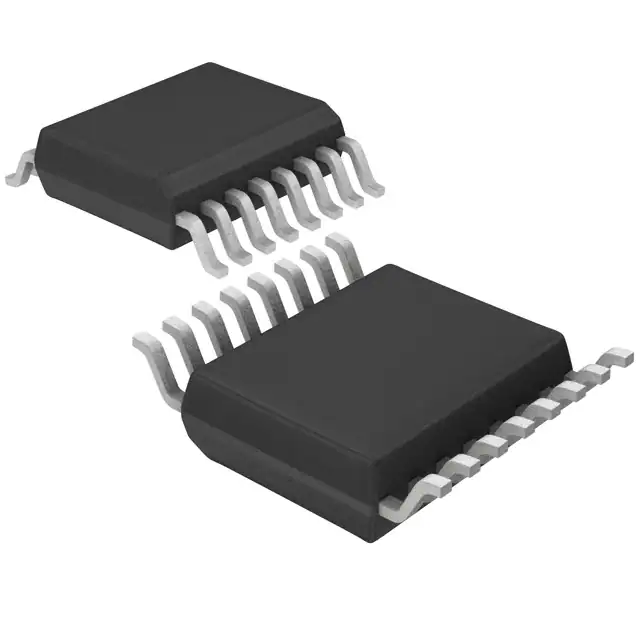
- Part No.:
- U3280M-NFBG3Y-18
- Manufacturer:
- Microchip Technology
- Category:
- RFID, RF Access, Monitoring ICs
- Package:
- 16-LSSOP (0.154", 3.90mm Width)
- Datasheet:
-
 U3280M-NFBG3Y-18.pdf
- Description:
- IC RFID TRANSP 100-150KHZ 16SSO
- Quantity:
- Payment:

- Shipping:

Inventory:1,852
Please send an inquiry. Send us your inquiry, and we will respond immediately.
Product details
Overview
U3280M-NFBG3Y-18 from Microchip Technology (formerly Atmel) is a contactless transponder interface IC designed to power and communicate with low-power microcontrollers in passive RFID systems. It provides dual-mode power management (RF field or battery), 512-bit EEPROM, two-wire serial interface, field clock extraction, and gap detection - enabling wireless sensor readout, access control, and telemetry at 100–150 kHz.
For engineers reviewing the U3280M-NFBG3Y-18 datasheet, U3280M-NFBG3Y-18 pinout, U3280M-NFBG3Y-18 application, or U3280M-NFBG3Y-18 equivalent, this device serves as a complete front-end for battery-assisted or fully passive contactless ID systems requiring field-powered wake-up, bi-directional data exchange, and on-chip nonvolatile storage.
Technical Context
The U3280M-NFBG3Y-18 integrates a full RF front-end: LC-resonant coil interface (Coil 1/Coil 2), rectifier, VDD regulator with automatic battery-to-field switching (VFDon = 2.3–2.9 V), and damping-based modulation via MOD pin. Its internal power management supports seamless transition between VBatt (2.0–6.5 V) and field supply (VDDC = 2.6–3.2 V), with tBFS = 1 ms and tFBS = 5–30 ms delay timing.
It implements a synchronous two-wire serial interface (SCL/SDA) compliant with standard I²C-like protocol (fSCL ≤ 100 kHz), supporting EEPROM read/write, Bi-phase/Manchester modulator control, and power management enable/disable via dedicated control bytes (e.g., 11xx0111b disables auto-switching). The NGAP output delivers field/gap detection with 1–50 µs response, serving as both wake-up signal and demodulation trigger.
Key Specifications
| Parameter | Value and Actual Design Meaning |
|---|---|
| Operating Frequency | 100–150 kHz - matches ISO/IEC 18000-3 Mode 1 LF RFID standards; enables interoperability with industrial readers and passive tag infrastructure. |
| Data Rate (R/O) | Up to 10 kbaud - sufficient for secure key transmission, sensor status updates, and configuration reads in low-power telemetry nodes. |
| EEPROM Size | 32 × 16-bit (512-bit) - stores unique identifiers, calibration data, or access credentials; supports byte/word read and 16-bit write with 10 ms erase/write cycle. |
| Power Supply Modes | Battery (VBatt: 2.0–6.5 V) + contactless field - automatic switchover ensures continuous operation during field presence; VDDC clamped to 2.9 V max during field supply. |
| Modulation Interface | Damping-stage MOD input - direct TTL-level control (0/1) of coil load for amplitude-shift keying; generates ~2 Vpp voltage stroke at coil inputs. |
| Field Detection | NGAP output with field-on threshold VFDon ≥ 2.3 V and field-off threshold VFDoff ≤ 0.8 V - provides reliable wake-up and gap-synchronized demodulation for base station communication. |
| Serial Interface | Two-wire SCL/SDA (I²C-compatible) - supports 100 kHz max clock, acknowledge polling, auto-increment reads, and special control bytes for modulator/power management configuration. |
Pinout & Package
U3280M-NFBG3Y-18 is housed in a Pb-free, tape-and-reel SSO16 (Shrink Small Outline) package measuring 4.9 mm × 6.0 mm × 1.7 mm (JEDEC MO-137 AB compliant), with 0.635 mm lead pitch and exposed pad not present.
| Pin/Terminal | Circuit Role | Design Meaning |
|---|---|---|
| VBatt (Pin 1) | Battery supply input | Accepts 2.0–6.5 V DC; powers device when field is absent; source for VDD during battery-only mode. |
| VDD (Pin 2) | Main power output | Supplies microcontroller and EEPROM; requires 0.5–10 µF buffer capacitor to sustain operation during field gaps/damping cycles. |
| SCL (Pin 3) | Serial clock input/output | Master-generated clock for EEPROM access and control byte transfers; also used as modulator clock in Bi-phase/Manchester mode. |
| NRST (Pin 4) | Bi-directional reset line | Generates reset on VDD rise or field-to-battery switch; accepts external low pulse to force reset; outputs reset to MCU during supply transitions. |
| SDA (Pin 5) | Serial data bidirectional line | Carries EEPROM data, control bytes, and modulator data; supports open-drain operation with external pull-up; used as modulator data input in special modes. |
| VSS (Pin 6) | Ground reference | Common return for all analog/digital circuits; must be low-impedance connection to minimize noise coupling into coil interface. |
| FC (Pin 8) | Field clock output | Provides extracted 100–150 kHz clock from RF field; used to synchronize MCU timers for precise modulation/demodulation timing. |
| MOD (Pin 9) | Modulation control input | Direct digital control of damping stage: logic high increases coil current (damps field), logic low reduces current (releases field). |
| NGAP (Pin 10) | Field/gap detection output | Active-high signal indicates field presence; falls low during gaps - used as wake-up interrupt and demodulation timing reference. |
| Coil 1 / Coil 2 (Pins 15–16) | LC resonant circuit inputs | Connect to parallel-tuned antenna coil (Q = 30–80); resonance set to 100–150 kHz using external capacitor (e.g., 2.2 nF @ 125 kHz → 737 µH). |
Key Features
| Feature | Design Value |
|---|---|
| Automatic Power Management | Seamlessly switches between VBatt and field supply based on VFDon/VFDoff thresholds; eliminates need for external power arbitration logic. |
| On-Chip Field Clock Extraction | Delivers stable 100–150 kHz clock (FC pin) derived directly from incoming RF field - enables deterministic timing for synchronous modulation without external crystal. |
| Integrated Gap Detection | NGAP output provides sub-50 µs field-on/off detection - allows MCU to precisely time demodulation windows for Manchester-encoded base station commands. |
| Configurable Modulation Control | Supports both direct MOD-pin damping control and firmware-driven Bi-phase/Manchester encoding via SCL/SDA - offers flexibility for proprietary or standard-compliant protocols. |
| EEPROM with Serial Interface | 512-bit memory accessible via standard two-wire protocol; includes auto-increment reads and acknowledge polling - simplifies secure credential storage without external memory. |
Applications
| Passive Wireless Sensors | Access Control Tags |
|---|---|
|
Use Scenario: Contactless position or status sensing in industrial machinery where wiring is impractical or hazardous. IC Role / Device Role / Timing Role: U3280M-NFBG3Y-18 acts as transponder front-end - powers MCU via coil, detects field wake-up (NGAP), extracts FC clock, and modulates sensor data via MOD pin. Use Value: Enables maintenance-free, battery-less operation in sealed enclosures; supports >10 cm read range with ferrite-core antenna and 0.5% coupling factor. |
Use Scenario: Secure entry badge with tamper-resistant identifier storage and field-triggered authentication handshake. IC Role / Device Role / Timing Role: U3280M-NFBG3Y-18 supplies MCU from reader field, reads stored UID from EEPROM via SDA/SCL, and transmits response using damping modulation synchronized to FC. Use Value: Eliminates battery replacement; leverages on-chip 500k-cycle EEPROM for long-term credential integrity; meets ISO/IEC 18000-3 timing requirements. |
| Telemetry Transponders | Battery-Assisted Asset Trackers |
|
Use Scenario: Remote monitoring of environmental parameters (temperature, humidity) in utility meters or HVAC ducts. IC Role / Device Role / Timing Role: U3280M-NFBG3Y-18 manages dual power sources - uses battery for background sensing, switches to field for burst data upload upon reader interrogation. Use Value: Extends battery life by >5× vs. always-on design; NGAP wake-up ensures MCU sleeps until field activation; 10 kbaud supports full sensor dataset transmission in <100 ms. |
Use Scenario: High-value equipment tracking with periodic location reporting and instant-read capability during inventory scans. IC Role / Device Role / Timing Role: U3280M-NFBG3Y-18 operates in hybrid mode - battery powers MCU continuously, while field supply enables high-speed EEPROM readout and modulation for rapid tag identification. Use Value: Combines long-term autonomy (µA sleep current) with instant responsiveness; VDD buffering sustains MCU during 250–500 µs field gaps per Table 4-1. |
Equivalent & Alternatives
The following parts are listed as comparable options for similar transponder interface applications.
| Alternative Part | Technical Difference | Application Difference | Selection Advice |
|---|---|---|---|
| SLI1300ATP | Single-supply only (no VBatt pin); integrated Schottky diode rectifier; no on-chip EEPROM; 13.56 MHz HF operation. | Designed for ISO 14443A/B proximity cards - incompatible with 125 kHz LF systems and battery backup requirements. | Select only for HF (13.56 MHz) reader ecosystems requiring minimal external components; not suitable for U3280M-NFBG3Y-18's LF/battery-assisted use cases. |
| TDA8520J | Standalone LF transceiver (no EEPROM or power management); requires external microcontroller and voltage supervisor; 100–150 kHz compatible. | Targeted at cost-sensitive OEM designs where full integration is unnecessary and BOM control is prioritized over footprint reduction. | Choose when system already includes robust power sequencing and nonvolatile storage; adds PCB area and firmware complexity versus U3280M-NFBG3Y-18's single-chip solution. |
Compared with SLI1300ATP and TDA8520J, U3280M-NFBG3Y-18 uniquely combines LF frequency support, dual power management, on-chip EEPROM, and field clock extraction in one SSO16 package - reducing component count, layout risk, and firmware overhead for battery-assisted passive RFID endpoints.
Availability
U3280M-NFBG3Y-18 is available at Aetrix Electronics and suitable for access control systems, wireless sensor networks, and telemetry transponders requiring stable component supply, long-term lifecycle support, and Pb-free compliance.
Supply support for U3280M-NFBG3Y-18 includes scheduled delivery planning, volume procurement assistance, BOM continuity management, traceable sourcing, and lifecycle availability coordination for OEM customers, industrial embedded developers, connected-device designers, and electronics production programs.
Manufacturer
Microchip Technology acquired Atmel in 2016 and maintains its legacy RFID product lines with full technical documentation, longevity commitments, and manufacturing continuity.
The U3280M-NFBG3Y-18 belongs to Atmel's transponder interface product line, engineered specifically for contactless ID, telemetry, and sensor applications operating in the 100–150 kHz LF band with hybrid (battery + field) power architectures.
FAQ
What is the primary function of the U3280M-NFBG3Y-18 in an RFID system?
The U3280M-NFBG3Y-18 serves as a transponder interface IC that powers and communicates with a microcontroller using contactless energy transfer. It rectifies RF energy from a 100–150 kHz magnetic field, manages automatic switching between battery and field supply, provides field clock (FC) and gap detection (NGAP) signals, and supports EEPROM-based data storage - all essential for passive or battery-assisted RFID endpoints. The U3280M-NFBG3Y-18 enables fully self-contained wireless sensor and access control nodes without external power management circuitry.
Can the U3280M-NFBG3Y-18 operate without a battery?
Yes, the U3280M-NFBG3Y-18 can operate in fully passive mode using only RF field energy - provided the LC resonant circuit delivers sufficient rectified voltage (>2.3 V) at VDD to power the internal circuitry and attached microcontroller. However, it requires a minimum coupling factor and antenna Q-factor (30–80) to sustain operation; battery backup (VBatt) is recommended for reliable wake-up, gap tolerance, and EEPROM writes during weak-field conditions. The U3280M-NFBG3Y-18's power management automatically engages field supply when VFDon threshold is exceeded.
How does the NGAP pin function in U3280M-NFBG3Y-18 applications?
The NGAP pin on the U3280M-NFBG3Y-18 outputs a digital signal indicating magnetic field presence (high) or absence/gap (low), with 1–50 µs response time. It serves two critical roles: (1) as a wake-up interrupt for the host microcontroller, triggering firmware execution upon field application; and (2) as a timing reference for demodulating base station commands encoded in field gaps. The U3280M-NFBG3Y-18's NGAP output is directly tied to the power management's field detection stage, ensuring synchronization between supply switching and data reception.
What EEPROM capabilities does the U3280M-NFBG3Y-18 provide?
The U3280M-NFBG3Y-18 integrates a 512-bit (32 × 16-bit) EEPROM accessible via its two-wire serial interface. It supports byte and word reads, 8-bit or 16-bit writes, auto-increment/decrement addressing, and acknowledge polling to detect write completion (≈10 ms cycle time). Data retention exceeds 10 years at 25°C, and endurance is rated for 500,000 erase/write cycles - making it suitable for storing immutable identifiers, calibration constants, or access credentials. All EEPROM operations occur at VDD voltage, requiring stable buffering during field modulation gaps.
Is the U3280M-NFBG3Y-18 pin-compatible with other members of the U3280M family?
Yes, the U3280M-NFBG3Y-18 shares identical pinout and electrical characteristics with other SSO16-packaged variants including U3280M-NFBY-18 (tube) and U3280M-NFBG3Y (non-18 suffix), as confirmed in Atmel's ordering information table. All share the same 16-pin SSO16 footprint, coil interface, power pins (VBatt/VDD), serial I/O (SCL/SDA), and functional pins (NRST/NGAP/FC/MOD). The "-18" suffix denotes Pb-free compliance and tape-and-reel packaging - mechanical and electrical compatibility is maintained across these variants, enabling drop-in substitution in existing designs.
U3280M-NFBG3Y-18 Specifications
- Product attributes
- Attribute value
- Manufacturer:
- Microchip Technology
- Series:
- U3280M
- Package/Case:
- 16-LSSOP (0.154", 3.90mm Width)
- Packaging:
- Tape & Reel (TR)
- Product Status:
- Obsolete
- Type:
- RFID Transponder
- Frequency:
- 100kHz ~ 150kHz
- Standards:
- -
- Interface:
- -
- Voltage - Supply:
- 2V ~ 6.5V
- Operating Temperature:
- -40°C ~ 85°C
- Grade:
- -
- Qualification:
- -
- Mounting Type:
- Surface Mount
- Supplier Device Package:
- 16-SSO
U3280M-NFBG3Y-18 FAQ
1.How can I place an order for U3280M-NFBG3Y-18 through Aetrix?
Please submit a Request for Quotation (RFQ) for U3280M-NFBG3Y-18 on Aetrix. Our sales agent will provide a competitive quotation and guide you through the order confirmation once you accept the terms.
2.Are the price and stock information for U3280M-NFBG3Y-18 reliable?
The price and inventory of U3280M-NFBG3Y-18 are updated periodically and may fluctuate due to market conditions. Stock and pricing data are typically refreshed every 24 hours. Quotation validity for U3280M-NFBG3Y-18 is usually 5 days.
3.What payment methods are accepted for U3280M-NFBG3Y-18?
We accept Wire Transfer, PayPal, Credit Card, Western Union, MoneyGram, and Escrow for U3280M-NFBG3Y-18 transactions.
Note: Certain payment methods may incur a processing fee.
4.How is shipping managed for U3280M-NFBG3Y-18?
U3280M-NFBG3Y-18 orders can be shipped via leading logistics carriers, including DHL, UPS, FedEx, TNT, or Registered Mail.
Once your U3280M-NFBG3Y-18 order is processed, you will receive an email with the shipment details and tracking number.
Note: Tracking information may take up to 24 hours to appear. Express delivery typically takes 3–5 business days.
5.How can I obtain technical support or documentation for U3280M-NFBG3Y-18?
For technical support, including U3280M-NFBG3Y-18 datasheets, pinout diagrams, or application guidance, please contact our engineering support team. They can provide detailed documentation and assistance for your U3280M-NFBG3Y-18 requirements.
6.How does Aetrix verify that U3280M-NFBG3Y-18 is sourced from the original manufacturer or authorized distributors?
All U3280M-NFBG3Y-18 products on Aetrix are procured from qualified distributors and authorized channels. Our dedicated quality assurance team conducts strict verification, including traceability checks and, if necessary, third-party testing. This ensures that U3280M-NFBG3Y-18 meets industry standards.
7.What is the process for return or replacement of U3280M-NFBG3Y-18?
All U3280M-NFBG3Y-18 units undergo pre-shipment inspection (PSI). If there is an issue with U3280M-NFBG3Y-18, returns or replacements are accepted under the following conditions:
1.Quantity discrepancies, incorrect items, or visible external defects (such as breakage or corrosion), acknowledged by Aetrix.
2.The issue is reported within 90 days of delivery.
3.The U3280M-NFBG3Y-18 part is unused and in its original packaging.
Return procedure for U3280M-NFBG3Y-18:
1.Submit a request within 90 days.
2.Obtain a Return Material Authorization (RMA) from Aetrix.
U3280M-NFBG3Y-18 Tags

-
SL2S2602FTBX
NXP Semiconductors
-
ST25DV04K-IER6S3
STMicroelectronics
-
ST25DV04K-IER6C3
STMicroelectronics
-
LXMSJZNCMD-217
Murata Electronics

-
NT3H2111W0FTTJ
NXP Semiconductors
-
NT3H2111W0FHKH
NXP Semiconductors
-
M24LR04E-RMC6T/2
STMicroelectronics
-
ST25DV04KC-JF6D3
STMicroelectronics
-
ST25DV64KC-IE6S3
STMicroelectronics
-
ST25DV64K-IER6T3
STMicroelectronics
-
NT3H2211W0FTTJ
NXP Semiconductors
-
NT3H2211W0FHKH
NXP Semiconductors
Tech Hub

TTL and CMOS logic families differ in thresholds, loading, output drive, power and timing. This engineering guide compares 74HC and 74HCT, calculates noise margins and checks 3.3 V/5 V compatibility.

A practical engineering guide to 3.3V and 5V logic compatibility, input thresholds, resistor dividers, translator ICs, MOSFET level shifting, I2C pull-ups, timing limits and power-sequencing risks.

The 74HC595 uses push-pull logic outputs, while the TPIC6B595 uses 50 V open-drain DMOS sinks for higher-power loads. This guide compares timing, current limits, 3.3 V interfacing, load wiring, thermal…

The 74HC595 converts serial data into eight stable parallel outputs. This guide covers pin functions, shift and storage timing, OE and MR behavior, drive-current limits, cascading, voltage compatibilit…

A technical comparison of level-sensitive latches and edge-triggered flip-flops, covering timing windows, setup and hold limits, master–slave operation, time borrowing, race-through, HDL inference and…

A D latch stores one bit while Enable controls when data can pass. This reference covers gate-level operation, truth tables, transparency, setup and hold timing, LE versus OE, common ICs and practical …

An SR latch stores one bit through cross-coupled feedback. This engineering reference covers NOR and NAND implementations, truth tables, forbidden-state recovery, gated operation, switch debouncing, fa…

Latch circuits retain one bit through feedback. This technical reference covers SR and D latches, truth tables, transparency, timing limits, latch-versus-flip-flop behavior, applications and common log…

An engineering guide to LED driver operation, constant-current and constant-voltage outputs, linear and switching topologies, dimming, IC selection, calculations, replacement compatibility, and fault c…

Operational amplifier guide covering op amp basics, feedback, ideal vs real op amps, common configurations, buffer circuits, offset, bias current, gain-bandwidth, slew rate, rail-to-rail limits and sel…


