
 My Inquiry
 My Account


Renesas FS50KM-2#E52
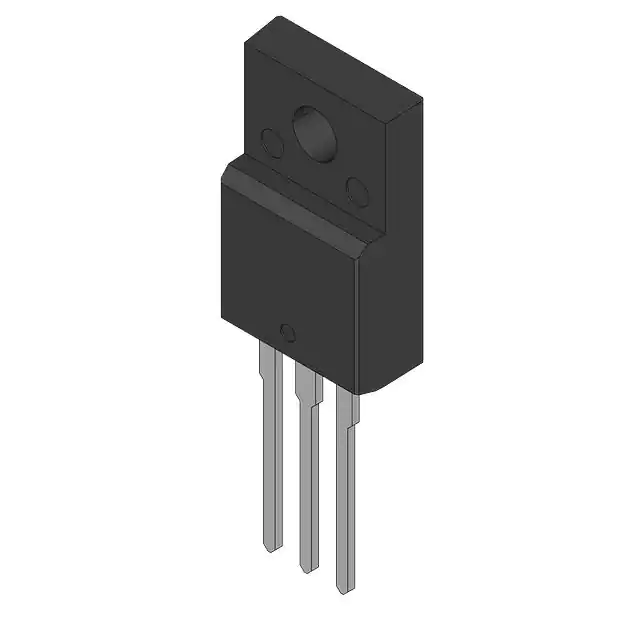
- Part No.:
- FS50KM-2#E52
- Manufacturer:
- Renesas
- Category:
- FETs, MOSFETs
- Package:
- -
- Datasheet:
-
 FS50KM-2#E52.pdf
- Description:
- DISCRETE / POWER MOSFET
- Quantity:
- Payment:

- Shipping:

Inventory:733
Please send an inquiry. Send us your inquiry, and we will respond immediately.
Product details
Overview
FS50KM-2#E52 from Micrel is a monolithic UHF ASK transmitter IC operating from 800MHz to 1GHz, delivering -3dBm EIRP output power with automatic antenna tuning and 115kbps data rate support. It functions as a "data-in, antenna-out" RF transmitter in remote wireless links, requiring only one external crystal and minimal passive components. Used in RKE, garage door openers, and remote sensor transmitters.
For engineers reviewing the FS50KM-2#E52 datasheet, FS50KM-2#E52 pinout, FS50KM-2#E52 application, or FS50KM-2#E52 equivalent, key selection criteria include its integrated UHF synthesizer architecture, ASK/OOK modulation compatibility, ±2dBm output power stability over temperature/supply, low standby current (<1µA), and SOIC-8 packaging for compact PCB integration.
Technical Context
The FS50KM-2#E52 implements a fully integrated UHF transmitter with quadrature-based PLL synthesizer generating carrier frequency (divided by 64 from REFOSC input), differential varactor-based antenna tuning, and closed-loop PA bias control to maintain constant output power. Its architecture eliminates manual antenna matching and supports direct connection to monopole or PCB antennas.
It accepts AC-coupled or crystal-referenced REFOSC inputs (e.g., 13.5625MHz for 868MHz operation), features calibrated power-on initialization (~20ms), and enforces strict timing constraints on STBY transitions and first-mark duration after wake-up to ensure RF stabilization and spectral compliance.
Key Specifications
| Parameter | Value and Actual Design Meaning |
|---|---|
| Frequency Range | 800MHz to 1GHz - covers global unlicensed UHF bands including 868MHz (EU) and 915MHz (US). |
| Output Power (EIRP) | -3dBm - compliant with ETSI EN 300 220 and FCC Part 15.247 limits for license-free operation. |
| Data Rate | Up to 115kbps - supports high-speed remote commands and sensor telemetry without external encoding. |
| Standby Current | <1µA - enables multi-year battery life in coin-cell-powered transmitters. |
| Modulation Type | ASK/OOK - compatible with all standard super-regenerative and super-heterodyne UHF receivers. |
| Reference Input | 300kΩ impedance, 0.2–1.0Vpp - accepts crystal or external clock for precise frequency synthesis. |
| Operating Temp | -40°C to +85°C - qualified for automotive RKE and industrial remote control environments. |
Pinout & Package
FS50KM-2#E52 is housed in an 8-pin SOIC (Small Outline Integrated Circuit) package, 3.9mm × 4.9mm body size, 1.27mm pitch, with gull-wing leads and JEDEC MS-012AC compliance.
| Pin/Terminal | Circuit Role | Design Meaning |
|---|---|---|
| 1 - PC | Power Control Input | Analog voltage (0.1–0.4V) setting MARK output power level; enables fine-tuning of transmit power within regulatory limits. |
| 2 - VDD | Positive Supply | 4.75–5.5V main supply; requires low-ESR bypass capacitor directly to VSS for RF stability. |
| 3 - VSS | Ground Reference | Common return for analog/digital/RF sections; shortest possible trace to bypass cap essential. |
| 4 - REFOSC | Reference Oscillator Input | Accepts 13.5625MHz crystal (for 868MHz) or AC-coupled clock; internal 5µA bias current source. |
| 5 - STBY | Standby Control | Active-high logic: VDD = transmit, VSS = standby (<1µA); 5ms hold-off after rising edge before first MARK. |
| 6 - ANTM | Negative RF Output | Differential RF port; connects to one side of balanced antenna or SAW filter input. |
| 7 - ANTP | Positive RF Output | Differential RF port; pairs with ANTM to drive antenna with controlled common-mode rejection. |
| 8 - ASK | Modulation Data Input | CMOS-compatible digital input (0.1VDD/0.8VDD thresholds); HIGH = MARK, LOW = SPACE; CW mode when tied to VDD. |
Key Features
| Feature | Design Value |
|---|---|
| Automatic Antenna Tuning | Internal differential varactor dynamically adjusts antenna resonance using phase feedback-eliminates factory tuning labor and test fixtures. |
| Integrated UHF Synthesizer | Quadrature VCO + ÷64 prescaler enables precise carrier generation from low-frequency crystal-reduces BOM and layout sensitivity. |
| Regulatory-Compliant Output | Fixed -3dBm EIRP with ±2dBm variation across temp/supply-guarantees consistent emissions without recalibration. |
| Ultra-Low Standby Power | <1µA quiescent current in STBY mode-enables >10-year shelf life in battery-operated remotes. |
| Single-Chip Transmitter Architecture | No external PA, matching network, or IF stages required-reduces bill-of-materials to crystal, decoupling caps, and antenna. |
Applications
| Remote Keyless Entry (RKE) | Garage Door Opener Transmitter |
|---|---|
Use Scenario: Handheld fob transmitting encrypted unlock command to vehicle receiver within 5–10m range. IC Role / Device Role / Timing Role: Primary ASK transmitter generating 868MHz carrier modulated at ~10kbps with burst-mode duty cycle. Use Value: Automatic antenna tuning maintains link margin across battery voltage drop and mechanical housing variations. | Use Scenario: Wall-mounted or handheld transmitter sending ON/OFF signal to motorized garage door controller. IC Role / Device Role / Timing Role: Low-power UHF transmitter operating at 315MHz or 433MHz (via crystal selection) with ASK envelope shaping. Use Value: Integrated PA bias control sustains -3dBm output over full battery life (3–5 years), ensuring reliable actuation. |
| Wireless Light/Fan Remote | Industrial Sensor Beacon |
Use Scenario: Battery-powered wall switch replacing wired control for ceiling fan or LED lighting system. IC Role / Device Role / Timing Role: ASK transmitter driving short-burst commands (e.g., dim/bright/on/off) at ≤20kbps data rate. Use Value: 115kbps capability allows future firmware upgrades supporting multi-button encoding without hardware change. | Use Scenario: Periodic temperature/humidity beacon in warehouse or cold chain monitoring node. IC Role / Device Role / Timing Role: Low-duty-cycle transmitter sending 32-bit payload every 60s at 915MHz under FCC Part 15.247 rules. Use Value: <1µA standby current extends CR2032 battery life beyond 36 months with 10-second active transmission time per day. |
Equivalent & Alternatives
The following parts are listed as comparable options for similar UHF ASK transmitter applications.
| Alternative Part | Technical Difference | Application Difference | Selection Advice |
|---|---|---|---|
| Silicon Labs Si4010 | Integrated MCU + ASK transmitter; 2.2–3.6V supply; no external crystal required (internal RC + PLL). | Enables embedded protocol handling (e.g., rolling code) but increases design complexity and cost. | Choose Si4010 when firmware-defined packet structure or secure authentication is required. |
| ON Semiconductor NB3N502 | Dedicated UHF ASK transmitter; 4.5–5.5V supply; fixed 433.92MHz or 868.35MHz variants; no PC pin for power adjustment. | Limited to single-frequency operation; lacks automatic antenna tuning and programmable output power. | Choose NB3N502 for cost-sensitive, fixed-frequency designs where antenna matching is stable and pre-characterized. |
Compared with FS50KM-2#E52, the Si4010 adds programmability at the expense of higher BOM count and development effort, while the NB3N502 offers lower unit cost but sacrifices adaptability to varying antenna environments and regulatory bands.
Availability
FS50KM-2#E52 is available at Aetrix Electronics and suitable for remote keyless entry, garage door opener transmitters, and industrial sensor beacons requiring stable component supply across automotive, building automation, and consumer electronics programs.
Supply support for FS50KM-2#E52 includes scheduled delivery planning, volume procurement assistance, BOM continuity management, traceable sourcing, and lifecycle availability coordination for OEM customers, industrial embedded developers, connected-device designers, and electronics production programs.
Manufacturer
Micrel, Inc. was a U.S.-based semiconductor company specializing in analog, power management, and RF solutions before its acquisition by Microchip Technology in 2015. Known for QwikRadio™ and PowerPath™ product lines.
The FS50KM-2#E52 belongs to Micrel's QwikRadio™ family of single-chip UHF transmitters, designed specifically for ultra-low-cost, high-volume remote control systems requiring minimal external components and zero factory tuning.
FAQ
What is the operating frequency range supported by the FS50KM-2#E52?
The FS50KM-2#E52 operates from 800MHz to 1GHz, covering major unlicensed ISM bands including 868MHz (Europe), 915MHz (North America), and 920MHz (Japan). Frequency selection is determined by the external crystal connected to the REFOSC pin-e.g., a 13.5625MHz crystal yields 868MHz output (×64 multiplication). The FS50KM-2#E52 does not support sub-GHz bands below 800MHz or 2.4GHz ISM band.
Does the FS50KM-2#E52 require manual antenna tuning during production?
No, the FS50KM-2#E52 incorporates an internal differential varactor and phase-sensing antenna tuner that automatically aligns the transmit frequency with the antenna impedance in real time. This eliminates manual tuning steps, fixture-dependent calibration, and post-assembly RF testing-reducing manufacturing cost and improving yield. The FS50KM-2#E52 achieves this using feedback from the ANTP/ANTM differential outputs without external couplers or detectors.
What is the maximum data rate the FS50KM-2#E52 supports for ASK modulation?
The FS50KM-2#E52 supports ASK data rates up to 115kbits/s under 50% duty cycle conditions, as specified in its electrical characteristics table. This allows robust transmission of encoded commands, status packets, or sensor readings in burst-mode operation. At higher data rates, extinction ratio degrades; for reliable operation in RKE or garage door systems, typical use is 5–20kbits/s. The FS50KM-2#E52 does not support FSK, PSK, or spread-spectrum modulation schemes.
How does the FS50KM-2#E52 maintain consistent output power over battery discharge?
The FS50KM-2#E52 uses a closed-loop power control architecture: the PC pin voltage sets the target MARK output level, while internal circuitry continuously monitors RF output and adjusts PA bias current to compensate for VDD droop and temperature drift. This ensures ±2dBm stability in EIRP across 4.75–5.5V supply and -40°C to +85°C ambient-critical for maintaining link budget in long-life battery applications. The FS50KM-2#E52 achieves this without external DACs or microcontroller intervention.
Is the FS50KM-2#E52 pin-compatible with other Micrel QwikRadio™ transmitters like the MICRF103BM?
Yes, the FS50KM-2#E52 shares identical pinout, package (8-pin SOIC), and functional mapping with the MICRF103BM, including PC, VDD, VSS, REFOSC, STBY, ANTM, ANTP, and ASK pins. Electrical behavior-including supply current, output power, and timing parameters-is functionally equivalent. The FS50KM-2#E52 is a rebranded or second-source variant of the MICRF103BM, intended for continued supply continuity following Micrel's integration into Microchip.
FS50KM-2#E52 Specifications
- Product attributes
- Attribute value
- Manufacturer:
- Renesas
- Series:
- *
- Package/Case:
- -
- Packaging:
- Bulk
- Product Status:
- Active
- FET Type:
- -
- Technology:
- -
- Drain to Source Voltage (Vdss):
- -
- Current - Continuous Drain (Id) @ 25°C:
- -
- Drive Voltage (Max Rds On, Min Rds On):
- -
- Rds On (Max) @ Id, Vgs:
- -
- Vgs(th) (Max) @ Id:
- -
- Gate Charge (Qg) (Max) @ Vgs:
- -
- Vgs (Max):
- -
- Input Capacitance (Ciss) (Max) @ Vds:
- -
- FET Feature:
- -
- Power Dissipation (Max):
- -
- Operating Temperature:
- -
- Grade:
- -
- Qualification:
- -
- Mounting Type:
- -
- Supplier Device Package:
- -
FS50KM-2#E52 FAQ
1.How can I place an order for FS50KM-2#E52 through Aetrix?
Please submit a Request for Quotation (RFQ) for FS50KM-2#E52 on Aetrix. Our sales agent will provide a competitive quotation and guide you through the order confirmation once you accept the terms.
2.Are the price and stock information for FS50KM-2#E52 reliable?
The price and inventory of FS50KM-2#E52 are updated periodically and may fluctuate due to market conditions. Stock and pricing data are typically refreshed every 24 hours. Quotation validity for FS50KM-2#E52 is usually 5 days.
3.What payment methods are accepted for FS50KM-2#E52?
We accept Wire Transfer, PayPal, Credit Card, Western Union, MoneyGram, and Escrow for FS50KM-2#E52 transactions.
Note: Certain payment methods may incur a processing fee.
4.How is shipping managed for FS50KM-2#E52?
FS50KM-2#E52 orders can be shipped via leading logistics carriers, including DHL, UPS, FedEx, TNT, or Registered Mail.
Once your FS50KM-2#E52 order is processed, you will receive an email with the shipment details and tracking number.
Note: Tracking information may take up to 24 hours to appear. Express delivery typically takes 3–5 business days.
5.How can I obtain technical support or documentation for FS50KM-2#E52?
For technical support, including FS50KM-2#E52 datasheets, pinout diagrams, or application guidance, please contact our engineering support team. They can provide detailed documentation and assistance for your FS50KM-2#E52 requirements.
6.How does Aetrix verify that FS50KM-2#E52 is sourced from the original manufacturer or authorized distributors?
All FS50KM-2#E52 products on Aetrix are procured from qualified distributors and authorized channels. Our dedicated quality assurance team conducts strict verification, including traceability checks and, if necessary, third-party testing. This ensures that FS50KM-2#E52 meets industry standards.
7.What is the process for return or replacement of FS50KM-2#E52?
All FS50KM-2#E52 units undergo pre-shipment inspection (PSI). If there is an issue with FS50KM-2#E52, returns or replacements are accepted under the following conditions:
1.Quantity discrepancies, incorrect items, or visible external defects (such as breakage or corrosion), acknowledged by Aetrix.
2.The issue is reported within 90 days of delivery.
3.The FS50KM-2#E52 part is unused and in its original packaging.
Return procedure for FS50KM-2#E52:
1.Submit a request within 90 days.
2.Obtain a Return Material Authorization (RMA) from Aetrix.
FS50KM-2#E52 Tags
-
BSZ180P03NS3EGATMA1
Infineon Technologies
-
SIRA14DP-T1-GE3
Vishay Siliconix

-
AO4419
Alpha & Omega Semiconductor Inc.
-
SISA14BDN-T1-GE3
Vishay Siliconix
-
PSMN9R5-30YLC,115
Nexperia USA Inc.
-
BUK9Y21-40E,115
Nexperia USA Inc.
-
RTQ035N03HZGTR
Rohm Semiconductor
-
FDMS7680
onsemi
-
RQ3E180BNTB
Rohm Semiconductor
-
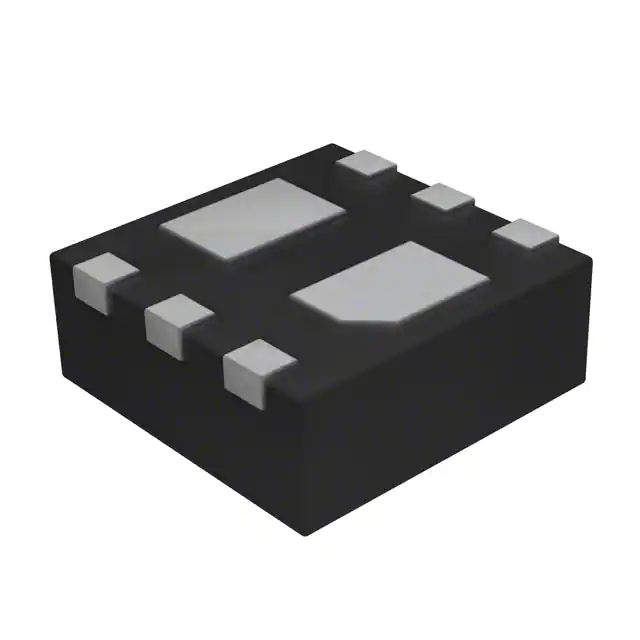
STL6N2VH5
STMicroelectronics
-
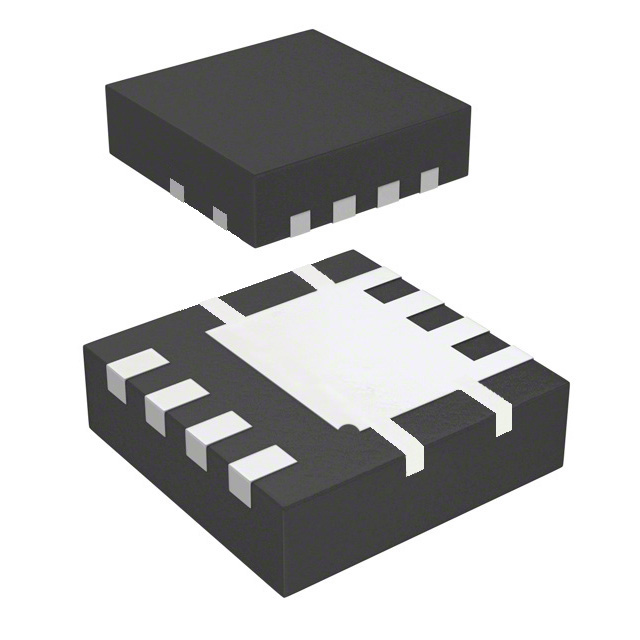
DMPH4029LFGQ-7
Diodes Incorporated
-
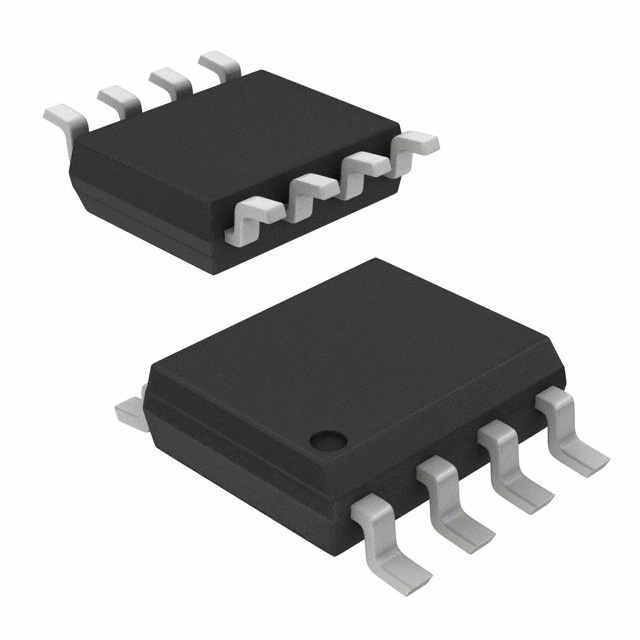
DMT6015LSS-13
Diodes Incorporated
Tech Hub

TTL and CMOS logic families differ in thresholds, loading, output drive, power and timing. This engineering guide compares 74HC and 74HCT, calculates noise margins and checks 3.3 V/5 V compatibility.

A practical engineering guide to 3.3V and 5V logic compatibility, input thresholds, resistor dividers, translator ICs, MOSFET level shifting, I2C pull-ups, timing limits and power-sequencing risks.

The 74HC595 uses push-pull logic outputs, while the TPIC6B595 uses 50 V open-drain DMOS sinks for higher-power loads. This guide compares timing, current limits, 3.3 V interfacing, load wiring, thermal…

The 74HC595 converts serial data into eight stable parallel outputs. This guide covers pin functions, shift and storage timing, OE and MR behavior, drive-current limits, cascading, voltage compatibilit…

A technical comparison of level-sensitive latches and edge-triggered flip-flops, covering timing windows, setup and hold limits, master–slave operation, time borrowing, race-through, HDL inference and…

A D latch stores one bit while Enable controls when data can pass. This reference covers gate-level operation, truth tables, transparency, setup and hold timing, LE versus OE, common ICs and practical …

An SR latch stores one bit through cross-coupled feedback. This engineering reference covers NOR and NAND implementations, truth tables, forbidden-state recovery, gated operation, switch debouncing, fa…

Latch circuits retain one bit through feedback. This technical reference covers SR and D latches, truth tables, transparency, timing limits, latch-versus-flip-flop behavior, applications and common log…

An engineering guide to LED driver operation, constant-current and constant-voltage outputs, linear and switching topologies, dimming, IC selection, calculations, replacement compatibility, and fault c…

Operational amplifier guide covering op amp basics, feedback, ideal vs real op amps, common configurations, buffer circuits, offset, bias current, gain-bandwidth, slew rate, rail-to-rail limits and sel…


