
 My Inquiry
 My Account


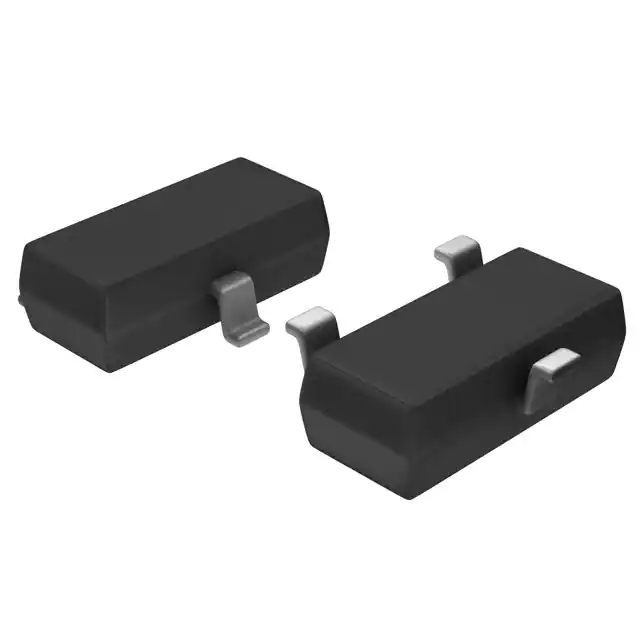
STMicroelectronics TMMDB3
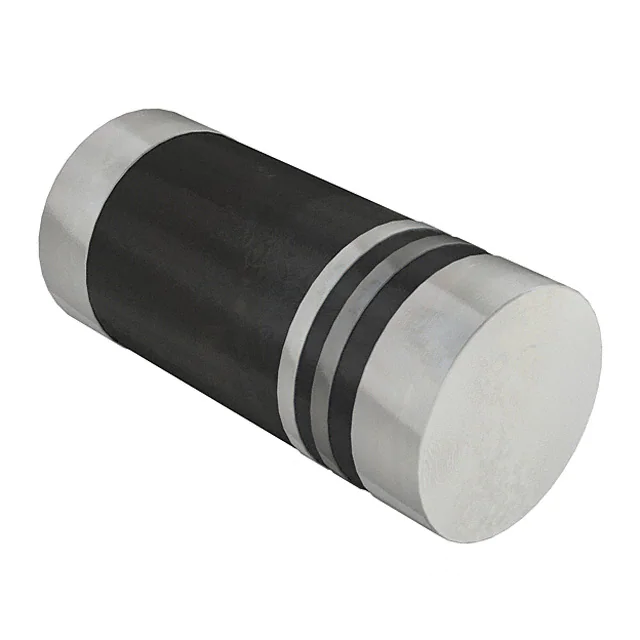
- Part No.:
- TMMDB3
- Manufacturer:
- STMicroelectronics
- Category:
- DIACs, SIDACs
- Package:
- DO-213AA
- Datasheet:
-
 TMMDB3.pdf
- Description:
- DIAC 28-36V 2A MINIMELF
- Quantity:
- Payment:

- Shipping:

Inventory:163,310
Please send an inquiry. Send us your inquiry, and we will respond immediately.
Product details
Overview
TMMDB3 from STMicroelectronics is a bidirectional trigger diode (DIAC) in MINIMELF package with 28–36 V breakover voltage range, ±3 V symmetry tolerance, and ≤50 µA breakover current; used as gate trigger for Triac-based dimmers and startup element in CFL/LED lamp ballasts.
For engineers reviewing the TMMDB3 datasheet, TMMDB3 pinout, TMMDB3 application, or TMMDB3 equivalent, key selection criteria include breakover voltage stability over temperature (±5% from −40 °C to +125 °C), dynamic breakover voltage ≥5 V, leakage current ≤10 µA at 0.5×VBO, and rise time ≤2 µs under defined test conditions.
Technical Context
The TMMDB3 operates bidirectionally with identical forward/reverse characteristics, triggering when voltage across its terminals exceeds VBO (typ. 32 V). Its symmetrical switching behavior enables reliable zero-crossing phase control in AC circuits without polarity sensitivity.
Designed for direct integration into Triac gate drive networks, it eliminates need for external timing capacitors in basic oscillator configurations and provides consistent turn-on threshold independent of load current direction or waveform asymmetry.
Key Specifications
| Parameter | Value and Actual Design Meaning |
|---|---|
| VBO | 28–36 V typ. 32 V: defines precise AC voltage threshold for bidirectional conduction initiation |
| ΔVBO (symmetry) | ≤3 V: ensures matched forward/reverse breakover points critical for balanced phase control |
| IBO | ≤50 µA: low trigger current enables compatibility with high-impedance RC timing networks |
| tr | ≤2 µs: fast switching supports clean edge generation in high-frequency oscillator and dimmer applications |
| IR | ≤10 µA at 0.5×VBO max: minimal leakage preserves timing accuracy in standby and low-power states |
| IP | ≥0.30 A: sufficient peak current to reliably fire standard Triac gates (e.g., T410) without external amplification |
Pinout & Package
MINIMELF package: surface-mount, two-terminal device with cathode/anode symmetry; dimensions A = 3.3–3.7 mm, B = 1.59–1.70 mm, C = 0.4–0.6 mm, D = 1.50 mm (diameter); RoHS-compliant ECOPACK® grade.
| Pin/Terminal | Circuit Role | Design Meaning |
|---|---|---|
| Anode / Cathode | Bidirectional main terminal | Interchangeable polarity; conducts identically in both directions upon VBO exceedance |
Key Features
| Feature | Design Value |
|---|---|
| Bidirectional symmetry | VBO1–VBO2 ≤3 V ensures matched AC half-cycle triggering for stable phase-angle control |
| Temperature-stable VBO | ±5% variation over −40 °C to +125 °C enables operation in enclosed lighting fixtures and industrial environments |
| Low IBO | ≤50 µA allows use with large-value timing resistors (>500 kΩ), reducing power loss in battery-backed or energy-efficient designs |
| Fast tr | ≤2 µs rise time prevents misfiring in high-frequency AC line harmonics and noise-prone environments |
Applications
| Motor/Light Dimmer Control | Oscillator Timing Element |
|---|---|
Use Scenario: Phase-controlled AC power delivery to universal motors or incandescent lamps using Triac-based circuitry. IC Role / Device Role / Timing Role: Bidirectional trigger device initiating Triac conduction at precise voltage threshold per half-cycle. Use Value: Eliminates need for separate trigger IC or optocoupler; enables compact, low-cost dimmer PCB layout with <5 mm² footprint. | Use Scenario: Relaxation oscillator generating fixed-frequency square wave for LED driver timing or fan speed reference. IC Role / Device Role / Timing Role: Voltage-controlled switch defining capacitor charge/discharge threshold in RC oscillator loop. Use Value: Provides deterministic 32 V switching point with <3 V hysteresis, enabling stable 50–120 Hz oscillation without trimming. |
| Fluorescent Lamp Ballast Start-up | LED Lamp Ignition Circuit |
Use Scenario: Initiating preheat and ignition sequence in magnetic/electronic ballasts for TL/CFL lamps. IC Role / Device Role / Timing Role: High-voltage trigger element discharging stored energy into lamp filaments at defined VBO. Use Value: Ensures repeatable cold-start performance across supply voltage variations (170–264 VAC) and ambient temperatures. | Use Scenario: Enabling rapid start-up of constant-current LED drivers with integrated boost converters. IC Role / Device Role / Timing Role: Gate trigger for auxiliary SCR controlling primary-side energy dump during LED ignition surge. Use Value: Delivers ≥0.3 A peak current to fire SCR reliably, supporting instant-on behavior in commercial LED retrofit lamps. |
Equivalent & Alternatives
The following parts are listed as comparable options for similar DIAC trigger applications.
| Alternative Part | Technical Difference | Application Difference | Selection Advice |
|---|---|---|---|
| DB3 | VBO = 28–32 V (typ. 30 V); no specified ΔVBO limit; IBO ≤50 µA same | Slightly lower nominal VBO reduces phase-shift margin in 230 VAC dimmers | Acceptable where 2 V lower trigger point does not compromise dimming range or EMI compliance |
| BT169G-DIAC | VBO = 30–34 V; TO-92 package; higher IR (≤20 µA); tr ≤3 µs | Through-hole mounting limits SMT production scalability and thermal performance in sealed fixtures | Preferred only for legacy through-hole designs or prototyping where MINIMELF reflow is unavailable |
Compared with DB3 and BT169G-DIAC, TMMDB3 offers tighter VBO symmetry (≤3 V), superior temperature stability (±5% over full range), and SMD MINIMELF packaging optimized for automated assembly and thermal dissipation in compact lighting modules.
Availability
TMMDB3 is available at Aetrix Electronics and suitable for motor/light dimmer control, fluorescent/LED lamp ballast start-up, and relaxation oscillator timing requiring stable component supply and long-term lifecycle support.
Supply support for TMMDB3 includes scheduled delivery planning, volume procurement assistance, BOM continuity management, traceable sourcing, and lifecycle availability coordination for OEM customers, industrial embedded developers, connected-device designers, and electronics production programs.
Manufacturer
STMicroelectronics is a global semiconductor leader headquartered in Geneva, Switzerland, designing and manufacturing analog, microcontroller, power, and sensor solutions for industrial, automotive, and consumer markets.
The TMMDB3 belongs to ST's discrete protection and trigger device portfolio, engineered specifically for robust, low-cost AC phase control and lamp ignition in energy-efficient lighting and appliance applications.
FAQ
What is the maximum junction temperature rating for TMMDB3?
The TMMDB3 has an operating junction temperature range of −40 °C to +125 °C, matching its storage temperature specification. This rating is validated per absolute maximum ratings in DS2190 Rev 4, enabling use in thermally constrained lighting enclosures and industrial controls without derating.
Can TMMDB3 replace DB3 in existing dimmer designs?
Yes, TMMDB3 is a direct functional replacement for DB3 with identical MINIMELF footprint and compatible electrical parameters. Its tighter VBO symmetry (≤3 V vs. unspecified for DB3) improves phase balance, and its ECOPACK compliance meets modern RoHS requirements without layout changes.
Does TMMDB3 require external current limiting in Triac gate circuits?
No external current-limiting resistor is required between TMMDB3 and Triac gate when used per Figure 2 in DS2190. The device delivers ≥0.30 A peak current into a 20 Ω load, sufficient to drive standard Triac gates like T410 without series resistance or amplification.
How does VBO vary with temperature in TMMDB3?
VBO varies by ±5% over −40 °C to +125 °C, as shown in Figure 4 of DS2190. At 125 °C, VBO is ~95% of its 25 °C value (e.g., 30.4 V for a 32 V typ. part), ensuring predictable triggering across automotive and industrial ambient conditions.
TMMDB3 Specifications
- Product attributes
- Attribute value
- Manufacturer:
- STMicroelectronics
- Series:
- -
- Package/Case:
- DO-213AA
- Packaging:
- Tape & Reel (TR)
- Product Status:
- Active
- Voltage - Breakover:
- 28 ~ 36V
- Current - Breakover:
- 50 µA
- Current - Hold (Ih) (Max):
- -
- Current - Peak Output:
- 2 A
- Operating Temperature:
- -40°C ~ 125°C (TJ)
- Supplier Device Package:
- Mini MELF
TMMDB3 FAQ
1.How can I place an order for TMMDB3 through Aetrix?
Please submit a Request for Quotation (RFQ) for TMMDB3 on Aetrix. Our sales agent will provide a competitive quotation and guide you through the order confirmation once you accept the terms.
2.Are the price and stock information for TMMDB3 reliable?
The price and inventory of TMMDB3 are updated periodically and may fluctuate due to market conditions. Stock and pricing data are typically refreshed every 24 hours. Quotation validity for TMMDB3 is usually 5 days.
3.What payment methods are accepted for TMMDB3?
We accept Wire Transfer, PayPal, Credit Card, Western Union, MoneyGram, and Escrow for TMMDB3 transactions.
Note: Certain payment methods may incur a processing fee.
4.How is shipping managed for TMMDB3?
TMMDB3 orders can be shipped via leading logistics carriers, including DHL, UPS, FedEx, TNT, or Registered Mail.
Once your TMMDB3 order is processed, you will receive an email with the shipment details and tracking number.
Note: Tracking information may take up to 24 hours to appear. Express delivery typically takes 3–5 business days.
5.How can I obtain technical support or documentation for TMMDB3?
For technical support, including TMMDB3 datasheets, pinout diagrams, or application guidance, please contact our engineering support team. They can provide detailed documentation and assistance for your TMMDB3 requirements.
6.How does Aetrix verify that TMMDB3 is sourced from the original manufacturer or authorized distributors?
All TMMDB3 products on Aetrix are procured from qualified distributors and authorized channels. Our dedicated quality assurance team conducts strict verification, including traceability checks and, if necessary, third-party testing. This ensures that TMMDB3 meets industry standards.
7.What is the process for return or replacement of TMMDB3?
All TMMDB3 units undergo pre-shipment inspection (PSI). If there is an issue with TMMDB3, returns or replacements are accepted under the following conditions:
1.Quantity discrepancies, incorrect items, or visible external defects (such as breakage or corrosion), acknowledged by Aetrix.
2.The issue is reported within 90 days of delivery.
3.The TMMDB3 part is unused and in its original packaging.
Return procedure for TMMDB3:
1.Submit a request within 90 days.
2.Obtain a Return Material Authorization (RMA) from Aetrix.
TMMDB3 Tags
;;2.jpg)
Tech Hub

Jumper cables guide covering safe connection order, red and black clamp placement, final ground connection, cable gauge, length, clamp quality, copper vs CCA cables, jump starter comparison and battery…

LDO regulator guide covering low dropout voltage, power dissipation, thermal design, PSRR, output noise, capacitor stability, adjustable LDO circuits, LDO vs buck converter and datasheet selection chec…

Conditional Access Module guide covering CAM meaning, CI/CI+ interface, smart card authorization, DVB security workflow, TV and set-top box compatibility, internal electronics, ESD protection, connecto…

Guide to electronic component obsolescence covering EOL risk, PCN/PDN notices, last-time buy planning, replacement options, form-fit-function validation, counterfeit risk and BOM lifecycle management.

18650 battery guide covering lithium-ion cell basics, 3.6V/3.7V voltage, 4.2V charging, mAh and Wh capacity, protected cells, chargers, BMS, series-parallel packs, holders, welding and sourcing checks.…

Hall effect sensor guide covering working principle, linear and digital sensors, Arduino circuits, current sensing, speed detection, automotive applications, A3144 examples, signal filtering and datash…

Product Change Notification guide for electronic components, covering PCN meaning, PCN vs PDN/EOL, common change types, risk levels, form-fit-function review, engineering validation, BOM control, LTB/L…

A practical guide to blend door actuators, covering HVAC function, symptoms, location, AC and heater issues, reset and calibration, replacement cost, electrical diagnosis, compatibility checks, and rep…

Engineering guide to Raspberry Pi alternatives, covering chip-level differences, Orange Pi, ROCK, Jetson, Banana Pi, NanoPi, Compute Module, Pico, GPIO, camera, HAT compatibility, and replacement risks…
Engineering guide to dynamic load response testing for high-current buck converters, covering load step setup, slew rate, Vcore undershoot, overshoot, recovery time, probe location, output capacitors a…


