
 My Inquiry
 My Account


STMicroelectronics L9960
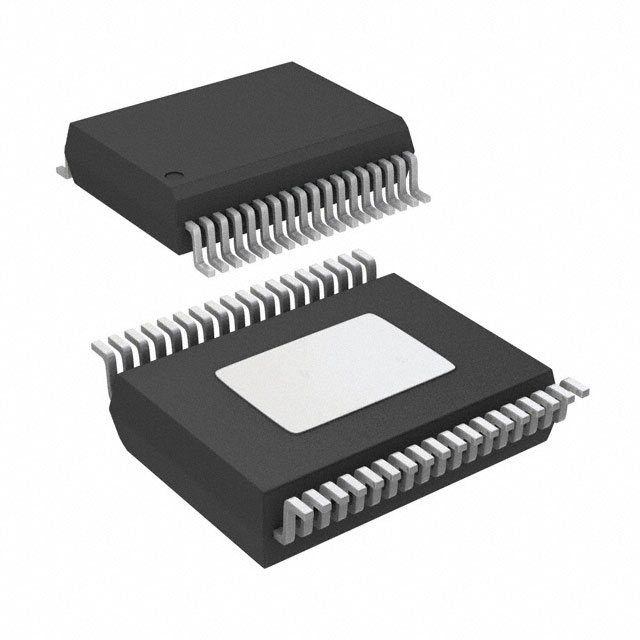
- Part No.:
- L9960
- Manufacturer:
- STMicroelectronics
- Category:
- Full Half-Bridge (H Bridge) Drivers
- Package:
- 36-PowerBFSOP (0.295", 7.50mm Width)
- Datasheet:
-
 L9960.pdf
- Description:
- IC HALF BRIDGE DRIVER PWRSSO36
- Quantity:
- Payment:

- Shipping:

Inventory:1,540
Please send an inquiry. Send us your inquiry, and we will respond immediately.
Product details
Overview
L9960 from STMicroelectronics is an AEC-Q100 qualified automotive H-bridge DC motor driver supporting single brushed motor control via SPI configuration and PWM/DIR or IN1/IN2 logic interface. It operates from 4.5 V to 28 V battery supply, delivers RDS(on) < 400 mΩ (full path, Tj = 150 °C), supports up to 20 kHz switching frequency, and integrates charge pump for 100% duty cycle operation - used in throttle actuators, EGR valves, and turbocharger flap control.
For engineers reviewing the L9960 datasheet, L9960 pinout, L9960 application, or L9960 equivalent, this page provides verified functional identity, validated pin roles, confirmed thermal/current protection thresholds, and real-world automotive use cases with design-meaning context for motor drive selection.
Technical Context
The L9960 implements a dual-channel half-bridge output stage with integrated freewheeling diodes and low-side active freewheeling to minimize conduction loss. Its programmable slew rate control (voltage and current) and four-step SPI-adjustable current limit enable precise torque and EMI management in safety-critical 12 V/24 V automotive systems.
Functional safety is enhanced by bidirectional VDD5 monitoring, SOPC (Switch-off Path Check), hardware self-check (HWSC), and diagnostics including open-load detection in ON-state, over-temperature warning/shutdown, and short-circuit detection on both high- and low-side transistors - all accessible via SPI register reads.
Key Specifications
| Parameter | Value and Actual Design Meaning |
|---|---|
| Battery supply range | 4.5 V to 28 V - supports full automotive cold-crank (4.5 V) to load-dump (28 V) transient conditions without external regulation. |
| RDS(on) (full H-bridge) | < 400 mΩ at Tj = 150 °C - enables ≥3 A continuous output current with <1.2 W conduction loss per bridge leg. |
| Max switching frequency | 20 kHz - allows smooth motor commutation while staying below audible noise range and enabling effective PWM-based speed control. |
| Slew rate control | Programmable voltage & current slew rates - reduces EMI emissions and limits dv/dt-induced gate oscillation during turn-on/turn-off transitions. |
| Current limitation | 4-step SPI-adjustable threshold - permits dynamic adaptation to motor inrush, stall, or fault conditions without hardware change. |
| Diagnostic coverage | Open-load (ON), short-circuit (HS/LS), over-temperature warning/shutdown, VDD5 monitoring - provides ASIL-B–aligned fault detection per ISO 26262 requirements. |
| Package | PowerSSO-36 (exposed pad) - delivers 2.5 K/W junction-to-case thermal resistance for direct PCB heatsinking in compact engine bay layouts. |
Pinout & Package
Delivered in PowerSSO-36 package with exposed thermal pad for enhanced power dissipation and automotive-grade mechanical robustness.
| Pin/Terminal | Circuit Role | Design Meaning |
|---|---|---|
| VPS | Main power supply input | Accepts 4.5–28 V battery rail; internal UVLO and overvoltage protection ensure safe startup under cranking/load-dump. |
| VDD5 | Regulated 5 V supply output | Provides stable 5 V for internal logic and external peripherals; monitored for brownout detection and system-level fail-safe shutdown. |
| IN1 / IN2 | H-bridge control inputs | Direct logic-level interface for full-bridge direction/speed control; compatible with 3.3 V or 5 V microcontrollers. |
| PWM / DIR | Alternative control interface | Enables standard motor driver protocol compatibility; DIR sets direction, PWM modulates duty cycle for speed regulation. |
| NDIS / DIS | Independent enable/disable pins | Allow hardware-level fault isolation: NDIS disables outputs actively, DIS forces safe state via pull-down logic. |
| SPI_MOSI / MISO / SCK / NSS | SPI communication interface | Configures protection thresholds, reads diagnostics, and enables daisy-chain topology for multi-device systems. |
| OL_DIAG / NGFAIL | Diagnostic status outputs | Open-drain flags indicating real-time fault conditions (e.g., OL_ON, over-temp, short-circuit) for MCU interrupt handling. |
Key Features
| Feature | Design Value |
|---|---|
| Spread Spectrum EMI reduction | Modulates switching frequency to lower peak radiated emissions - meets CISPR 25 Class 5 requirements without added filtering. |
| Temperature-dependent current limit | Automatically derates current threshold as junction temperature rises - prevents thermal runaway during sustained overload. |
| Active freewheeling control | Engages low-side MOSFET during freewheeling instead of relying on body diode - cuts conduction loss by ~40% vs. passive diode path. |
| Switch-off Path Check (SOPC) | Verifies integrity of disable path before enabling outputs - ensures fail-safe shutdown capability required for ASIL-B systems. |
| Hardware Self-Check (HWSC) | Performs internal analog/digital integrity test at power-up and on-demand - satisfies diagnostic coverage targets for ISO 26262 FMEDA. |
Applications
| Throttle Actuator Control | EGR Valve Positioning |
|---|---|
Use Scenario: Precise angular positioning of electronic throttle bodies in ICE powertrains under varying engine load and temperature. IC Role / Device Role / Timing Role: Dual H-bridge driver executing closed-loop position control via PWM-modulated current feedback. Use Value: Integrated current sensing and programmable slew rate suppress torque ripple and EMI, ensuring smooth pedal response and EMC compliance. |
Use Scenario: Regulating exhaust gas recirculation flow in diesel engines to reduce NOx emissions across wide operating ranges. IC Role / Device Role / Timing Role: High-reliability motor driver managing bi-directional valve actuation with diagnostic reporting for OBD-II compliance. Use Value: Open-load diagnosis in ON-state detects stuck-valve faults early; thermal shutdown prevents coil burnout during extended idle operation. |
| Turbocharger Wastegate Actuation | Electric Coolant Pump Control |
Use Scenario: Dynamic boost pressure control via wastegate vane positioning in gasoline turbocharged engines. IC Role / Device Role / Timing Role: SPI-configurable H-bridge delivering fast, accurate step-response to ECU commands with real-time fault logging. Use Value: 20 kHz max switching frequency enables fine-grained duty-cycle resolution for rapid transient response; spread spectrum lowers radiated noise near sensitive sensors. |
Use Scenario: Variable-speed coolant circulation in electric and hybrid vehicle thermal management systems. IC Role / Device Role / Timing Role: Robust motor driver interfacing with CAN-connected thermal controller, supporting duty-cycle modulation and stall detection. Use Value: Bidirectional VDD5 monitoring triggers immediate shutdown during supply anomaly - preventing pump lock-up and overheating in sealed cooling loops. |
Equivalent & Alternatives
The following parts are listed as comparable options for similar H-bridge motor driver applications.
| Alternative Part | Technical Difference | Application Difference | Selection Advice |
|---|---|---|---|
| TB9051FTG | Single H-bridge, 40 V max VBB, no integrated charge pump - requires external bootstrap circuit for 100% duty cycle. | Lacks SOPC, HWSC, and OL_ON diagnostics - limited to ASIL-A or non-safety-critical functions. | Preferred where cost sensitivity outweighs functional safety requirements and external components are acceptable. |
| VNH7040ASTR | Higher RDS(on) (600 mΩ typ.), no SPI interface - configuration fixed at factory; only basic fault flag outputs. | No programmable slew rate or current limit steps - less adaptable to diverse motor loads or EMI constraints. | Selected when simple on/off control suffices and diagnostic depth is not required for system architecture. |
Compared with TB9051FTG and VNH7040ASTR, the L9960 provides superior integration (charge pump, SPI configurability, ASIL-B–ready diagnostics), tighter thermal/current protection granularity, and automotive-specific validation - making it optimal for next-generation engine management and electrified thermal systems requiring field-upgradable behavior and full fault traceability.
Availability
L9960 is available at Aetrix Electronics and suitable for throttle actuators, EGR valves, turbocharger flaps, and electric coolant pumps requiring stable component supply across automotive production lifecycles.
Supply support for L9960 includes scheduled delivery planning, volume procurement assistance, BOM continuity management, traceable sourcing, and lifecycle availability coordination for OEM customers, industrial embedded developers, connected-device designers, and electronics production programs.
Manufacturer
STMicroelectronics is a global semiconductor leader headquartered in Geneva, Switzerland, specializing in automotive, industrial, and power management ICs with broad AEC-Q100 product coverage.
The L9960 belongs to ST's automotive motor driver portfolio, designed specifically for high-reliability brushed DC motor control in engine management, emission control, and thermal subsystems - emphasizing functional safety, thermal resilience, and EMI robustness.
FAQ
What is the maximum continuous output current supported by the L9960?
The L9960 supports ≥3 A continuous output current per H-bridge leg under typical conditions (Tj ≤ 150 °C, PCB copper area ≥ 200 mm², ambient ≤ 85 °C), based on its RDS(on) < 400 mΩ and thermal performance in PowerSSO-36. Actual current depends on layout, heatsinking, and ambient temperature - refer to Figure 12 (Thermal Resistance vs. Copper Area) and Table 7 (Bridge Output Drivers) in DS11115 Rev 10.
Does the L9960 support daisy-chained SPI configuration?
Yes, the L9960 supports daisy-chain SPI mode using the NSS pin and internal shift-register architecture, allowing multiple devices to share one SPI bus with individual addressability. This is documented in Section 4.9.6 and Figure 23 of DS11115 Rev 10, enabling scalable multi-motor control without additional GPIO overhead.
How does the L9960 handle open-load detection in the ON state?
The L9960 performs active open-load diagnosis by measuring voltage drop across the low-side MOSFET during conduction; if VDS exceeds threshold (indicating no current flow), OL_ON bit is asserted in SPI status register. Confirmed in Section 4.8.5 and Table 83 (Open Load in ON-state electrical characteristics) of DS11115 Rev 10.
Is the L9960 pin-compatible with the L9960T variant?
No - while both use PowerSSO-36 packaging, the L9960 (single H-bridge) and L9960T (dual independent H-bridges) have different pin mappings for motor outputs, diagnostics, and control signals. Table 2 (Pin definition) in DS11115 Rev 10 confirms distinct assignments for OUT1A/OUT1B (L9960) versus OUT1A/OUT1B/OUT2A/OUT2B (L9960T), requiring separate PCB layouts.
L9960 Specifications
- Product attributes
- Attribute value
- Manufacturer:
- STMicroelectronics
- Series:
- -
- Package/Case:
- 36-PowerBFSOP (0.295", 7.50mm Width)
- Packaging:
- Tube
- Product Status:
- Active
- Output Configuration:
- Half Bridge (2)
- Applications:
- General Purpose
- Interface:
- SPI
- Load Type:
- Inductive, Capacitive, Resistive
- Technology:
- Power MOSFET
- Rds On (Typ):
- 400mOhm LS + HS
- Current - Output / Channel:
- -
- Current - Peak Output:
- -
- Voltage - Supply:
- 4.5V ~ 5.5V
- Voltage - Load:
- 4.5V ~ 28V
- Operating Temperature:
- -40°C ~ 170°C (TJ)
- Grade:
- Automotive
- Qualification:
- AEC-Q100
- Features:
- Slew Rate Controlled
- Fault Protection:
- Over Temperature, Short Circuit
- Mounting Type:
- Surface Mount
- Supplier Device Package:
- PowerSSO-36 EPD
L9960 FAQ
1.How can I place an order for L9960 through Aetrix?
Please submit a Request for Quotation (RFQ) for L9960 on Aetrix. Our sales agent will provide a competitive quotation and guide you through the order confirmation once you accept the terms.
2.Are the price and stock information for L9960 reliable?
The price and inventory of L9960 are updated periodically and may fluctuate due to market conditions. Stock and pricing data are typically refreshed every 24 hours. Quotation validity for L9960 is usually 5 days.
3.What payment methods are accepted for L9960?
We accept Wire Transfer, PayPal, Credit Card, Western Union, MoneyGram, and Escrow for L9960 transactions.
Note: Certain payment methods may incur a processing fee.
4.How is shipping managed for L9960?
L9960 orders can be shipped via leading logistics carriers, including DHL, UPS, FedEx, TNT, or Registered Mail.
Once your L9960 order is processed, you will receive an email with the shipment details and tracking number.
Note: Tracking information may take up to 24 hours to appear. Express delivery typically takes 3–5 business days.
5.How can I obtain technical support or documentation for L9960?
For technical support, including L9960 datasheets, pinout diagrams, or application guidance, please contact our engineering support team. They can provide detailed documentation and assistance for your L9960 requirements.
6.How does Aetrix verify that L9960 is sourced from the original manufacturer or authorized distributors?
All L9960 products on Aetrix are procured from qualified distributors and authorized channels. Our dedicated quality assurance team conducts strict verification, including traceability checks and, if necessary, third-party testing. This ensures that L9960 meets industry standards.
7.What is the process for return or replacement of L9960?
All L9960 units undergo pre-shipment inspection (PSI). If there is an issue with L9960, returns or replacements are accepted under the following conditions:
1.Quantity discrepancies, incorrect items, or visible external defects (such as breakage or corrosion), acknowledged by Aetrix.
2.The issue is reported within 90 days of delivery.
3.The L9960 part is unused and in its original packaging.
Return procedure for L9960:
1.Submit a request within 90 days.
2.Obtain a Return Material Authorization (RMA) from Aetrix.
L9960 Tags
-
NCP1393BDR2G
onsemi
-
A3909GLNTR-T
Allegro MicroSystems
-
NCP51530BDR2G
onsemi
-
A3909GLYTR-T
Allegro MicroSystems
-
SIC631CD-T1-GE3
Vishay Siliconix
-
BTN70301EPAXUMA1
Infineon Technologies

-
TDA21520AUMA1
Infineon Technologies
-
AOZ5116QI
Alpha & Omega Semiconductor Inc.
-
IRSM005-301MHTR
Infineon Technologies
-
IRSM005-301MH
Infineon Technologies
-
MP6610GJ-Z
Monolithic Power Systems Inc.
-
DRV8908QPWPRQ1
Texas Instruments
Tech Hub

A practical engineering and sourcing framework covering lifecycle verification, lifetime-buy calculations, replacement qualification, supplier checks and counterfeit-risk controls.

TTL and CMOS logic families differ in thresholds, loading, output drive, power and timing. This engineering guide compares 74HC and 74HCT, calculates noise margins and checks 3.3 V/5 V compatibility.

A practical engineering guide to 3.3V and 5V logic compatibility, input thresholds, resistor dividers, translator ICs, MOSFET level shifting, I2C pull-ups, timing limits and power-sequencing risks.

The 74HC595 uses push-pull logic outputs, while the TPIC6B595 uses 50 V open-drain DMOS sinks for higher-power loads. This guide compares timing, current limits, 3.3 V interfacing, load wiring, thermal…

The 74HC595 converts serial data into eight stable parallel outputs. This guide covers pin functions, shift and storage timing, OE and MR behavior, drive-current limits, cascading, voltage compatibilit…

A technical comparison of level-sensitive latches and edge-triggered flip-flops, covering timing windows, setup and hold limits, master–slave operation, time borrowing, race-through, HDL inference and…

A D latch stores one bit while Enable controls when data can pass. This reference covers gate-level operation, truth tables, transparency, setup and hold timing, LE versus OE, common ICs and practical …

An SR latch stores one bit through cross-coupled feedback. This engineering reference covers NOR and NAND implementations, truth tables, forbidden-state recovery, gated operation, switch debouncing, fa…

Latch circuits retain one bit through feedback. This technical reference covers SR and D latches, truth tables, transparency, timing limits, latch-versus-flip-flop behavior, applications and common log…

An engineering guide to LED driver operation, constant-current and constant-voltage outputs, linear and switching topologies, dimming, IC selection, calculations, replacement compatibility, and fault c…


