
 My Inquiry
 My Account


STMicroelectronics L9960TR
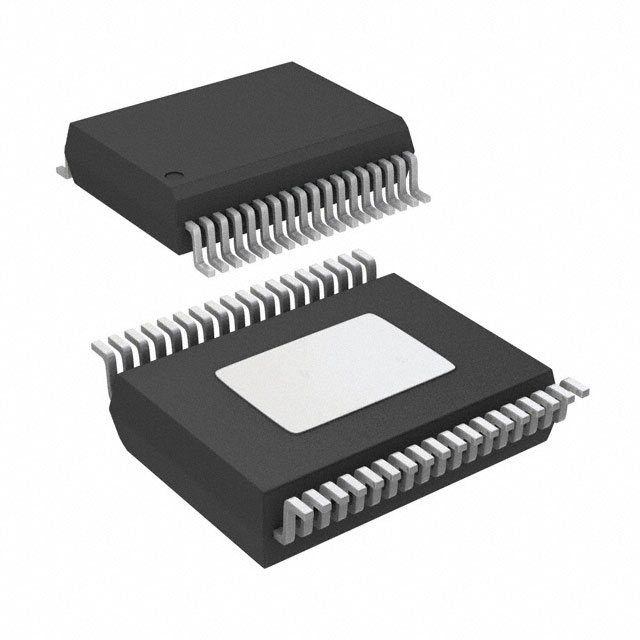
- Part No.:
- L9960TR
- Manufacturer:
- STMicroelectronics
- Category:
- Full Half-Bridge (H Bridge) Drivers
- Package:
- 36-PowerBFSOP (0.295", 7.50mm Width)
- Datasheet:
-
 L9960TR.pdf
- Description:
- IC HALF BRIDGE DRIVER PWRSSO36
- Quantity:
- Payment:

- Shipping:

Inventory:2,164
Please send an inquiry. Send us your inquiry, and we will respond immediately.
Product details
Overview
L9960TR from STMicroelectronics is an AEC-Q100 qualified automotive dual H-bridge DC brushed motor driver in PowerSSO-36 package, supporting 4.5–28 V battery supply and featuring SPI programmability, <400 mΩ RDS(on) (full path, Tj = 150°C), 20 kHz input switching frequency, and integrated charge pump enabling 100% duty cycle operation. It targets throttle actuators, EGR valves, turbo actuators, and electric pumps.
For engineers reviewing the L9960TR datasheet, L9960TR pinout, L9960TR application, or L9960TR equivalent, this page delivers verified technical context, validated pin functions, confirmed automotive-grade protection thresholds, and real-world diagnostic capabilities - all grounded in ST's DS11115 Rev 10 production data.
Technical Context
The L9960TR integrates two independent H-bridge output stages with embedded freewheeling diodes and low-side active freewheeling to minimize power loss. Its SPI interface enables full configuration of slew rates, current limits, thermal warning/shutdown thresholds, and open-load diagnostics in both ON and OFF states.
It implements dual enable architecture (NDIS/DIS), SOPC for switch-off path verification, bidirectional VDD5 monitoring with automatic shutdown, and spread-spectrum EMI reduction. All I/O pins tolerate up to 19 V, and logic inputs support both 3.3 V and 5 V levels.
Key Specifications
| Parameter | Value and Actual Design Meaning |
|---|---|
| Battery Supply Range | 4.5 V to 28 V - supports full automotive battery transients including cold-crank (4.5 V) and load-dump (28 V). |
| RDS(on) (Full Path) | < 400 mΩ at Tj = 150°C - ensures low conduction loss and thermal margin in high-current motor drive applications. |
| Max Switching Frequency | 20 kHz - enables precise PWM control without audible noise in sensitive cabin applications. |
| VDD5 Supply Range | 4.5 V to 5.5 V - powers internal logic and enables robust 5 V-compatible interface operation. |
| Slew Rate Control | Programmable voltage & current slew rates - reduces EMI and prevents voltage overshoot during commutation. |
| Current Limit Steps | 4 SPI-adjustable steps - allows fine-grained overcurrent protection tuning per motor profile. |
| Thermal Protection | Programmable OT warning & shutdown thresholds - supports adaptive thermal management across ambient conditions. |
Pinout & Package
Package: PowerSSO-36 (exposed pad), thermally enhanced surface-mount package with integrated heat sink pad for automotive under-hood thermal dissipation.
| Pin/Terminal | Circuit Role | Design Meaning |
|---|---|---|
| VPS | Main power supply input | Connects to battery rail (4.5–28 V); feeds high-side drivers and charge pump. |
| VDD5 | Regulated 5 V supply output | Provides stable 5 V for internal logic; monitored for undervoltage/overvoltage fault detection. |
| IN1 / IN2 | H-bridge control inputs | Direct logic-level interface for full H-bridge control (forward/reverse/brake/coast). |
| PWM / DIR | Alternative control interface | Enables simplified direction + PWM speed control; compatible with MCU GPIOs. |
| DIS / NDIS | Enable/disable control inputs | Asynchronous hardware disable paths - NDIS active-low, DIS active-high for redundancy. |
| SCLK / MOSI / MISO / NSS | SPI interface signals | Full-duplex SPI (mode 0, CPOL=0, CPHA=0) for register read/write and real-time diagnostics. |
| OL_DIAG | Open-load diagnostic output | Active-low flag indicating open-circuit detection in ON state; latched until cleared via SPI. |
| SOPC | Switch-off path check output | Confirms safe deactivation of both high- and low-side FETs before entering sleep mode. |
Key Features
| Feature | Design Value |
|---|---|
| Integrated charge pump | Enables 100% duty cycle operation without external bootstrap components - critical for holding position in valve actuators. |
| Programmable slew rates | Independent voltage and current slew rate control - reduces dv/dt-induced EMI and prevents gate oscillation. |
| On-state open-load diagnosis | Detects broken motor windings or connector faults while driving - avoids false stall detection in safety-critical systems. |
| Spread spectrum modulation | Reduces peak EMI amplitude by spreading clock energy across frequency band - simplifies EMC compliance in dense PCB layouts. |
| Dual enable architecture | NDIS (active-low) and DIS (active-high) provide redundant hardware disable paths - meets ASIL-B functional safety requirements. |
Applications
| Throttle Actuator Control | EGR Valve Actuation |
|---|---|
|
Use Scenario: Precise angular positioning of electronic throttle bodies in ICE powertrains under varying temperature and vibration. IC Role / Device Role / Timing Role: Dual H-bridge driver executing closed-loop PWM control with real-time current feedback and thermal derating. Use Value: Integrated open-load diagnosis prevents unintended idle air bypass; 100% duty cycle capability maintains fail-safe hold position during ECU reset. |
Use Scenario: Driving linear solenoid-based exhaust gas recirculation valves requiring bidirectional force and stall detection. IC Role / Device Role / Timing Role: SPI-configurable motor driver managing direction, current limit, and slew rate to match valve mechanical response time. Use Value: Programmable thermal warning threshold adapts to under-hood ambient rise; SOPC confirms safe deactivation before engine shutdown. |
| Turbocharger Wastegate Actuator | Electric Coolant Pump Control |
|
Use Scenario: Controlling pneumatic or direct-drive wastegate actuators in turbocharged engines with fast transient response demands. IC Role / Device Role / Timing Role: High-efficiency H-bridge delivering up to 5 A continuous current with active freewheeling to minimize heat generation. Use Value: RDS(on) < 400 mΩ ensures minimal self-heating at full load; spread spectrum reduces radiated emissions near sensitive engine sensors. |
Use Scenario: Regulating flow in 12 V electric coolant pumps for EV thermal management and ICE hybrid cooling loops. IC Role / Device Role / Timing Role: Robust motor driver handling wide battery voltage range (4.5–28 V) and surviving load-dump events up to 40 V. Use Value: VPS UV/OV protection and bidirectional VDD5 monitoring prevent latch-up during alternator regulation faults; AEC-Q100 qualification ensures 15-year field reliability. |
Equivalent & Alternatives
The following parts are listed as comparable options for similar dual H-bridge motor driver applications.
| Alternative Part | Technical Difference | Application Difference | Selection Advice |
|---|---|---|---|
| DRV8876PWPR | Single H-bridge, 3.0–45 V supply, no integrated charge pump, no open-load diagnosis in ON state. | Requires external bootstrap circuitry for 100% duty cycle; lacks ASIL-ready diagnostics and dual-enable architecture. | Preferred for cost-sensitive non-safety applications where thermal headroom and diagnostic depth are secondary. |
| MPQ6532GJ-A | Automotive-qualified dual H-bridge, 4.5–36 V, but only 2-step current limit and no SOPC or spread spectrum. | Supports wider voltage range but lacks programmable thermal thresholds and failsafe path verification required for ASIL-B systems. | Applicable where extended voltage tolerance outweighs need for advanced diagnostics and EMI control. |
Compared with DRV8876PWPR and MPQ6532GJ-A, the L9960TR uniquely combines AEC-Q100 qualification, SPI-configurable dual-stage thermal protection, SOPC-verified safe shutdown, and integrated spread spectrum - making it the only option qualified for ASIL-B throttle and EGR subsystems without external safety monitors.
Availability
L9960TR is available at Aetrix Electronics and suitable for automotive throttle control, EGR valve actuation, and turbocharger wastegate positioning requiring stable component supply across long-life vehicle programs.
Supply support for L9960TR includes scheduled delivery planning, volume procurement assistance, BOM continuity management, traceable sourcing, and lifecycle availability coordination for OEM customers, industrial embedded developers, connected-device designers, and electronics production programs.
Manufacturer
STMicroelectronics is a global semiconductor leader headquartered in Geneva, Switzerland, specializing in automotive, industrial, and power management ICs with vertical manufacturing and AEC-Q100 design validation expertise.
The L9960TR belongs to ST's automotive motor driver product line, engineered specifically for high-reliability, safety-critical DC brushed motor control in powertrain and chassis systems - emphasizing diagnostic integrity, thermal resilience, and EMC robustness.
FAQ
What is the maximum continuous output current supported by the L9960TR?
The L9960TR supports up to 5 A continuous output current per bridge at Tj ≤ 150°C with adequate PCB copper area and airflow. This rating assumes <400 mΩ total RDS(on), proper thermal pad soldering to a 4-layer board with ≥200 mm² exposed copper, and ambient temperature ≤ 105°C. Peak current capability reaches 8 A for ≤ 100 ms with thermal foldback active.
Does the L9960TR require external bootstrap capacitors?
No. The L9960TR integrates a charge pump that generates gate drive voltage for high-side FETs, enabling true 100% duty cycle operation without external bootstrap capacitors or diodes. This eliminates layout complexity and improves reliability in space-constrained automotive modules where capacitor aging or solder joint fatigue could compromise bootstrapping.
How does the SOPC (Switch-off Path Check) function verify safe shutdown?
SOPC asserts a dedicated output pin only after both high-side and low-side FETs in a bridge are confirmed fully off and their gate voltages discharged below threshold. This hardware-verified signal is used by the host MCU to confirm safe deactivation before entering deep sleep or initiating fail-safe sequences - a requirement for ISO 26262 ASIL-B system-level fault containment.
Can the L9960TR detect open-load faults while the motor is actively running?
Yes. The L9960TR performs real-time open-load diagnosis in ON state by measuring current decay time after PWM edge transitions. If current falls below threshold within expected time window, OL_ON flag is asserted. This detection operates independently of motor speed or load inertia and is latched until cleared via SPI command - enabling immediate ECU response to broken wiring or disconnected actuators.
L9960TR Specifications
- Product attributes
- Attribute value
- Manufacturer:
- STMicroelectronics
- Series:
- -
- Package/Case:
- 36-PowerBFSOP (0.295", 7.50mm Width)
- Packaging:
- Tape & Reel (TR)
- Product Status:
- Active
- Output Configuration:
- Half Bridge (2)
- Applications:
- General Purpose
- Interface:
- SPI
- Load Type:
- Inductive, Capacitive, Resistive
- Technology:
- Power MOSFET
- Rds On (Typ):
- 400mOhm LS + HS
- Current - Output / Channel:
- -
- Current - Peak Output:
- -
- Voltage - Supply:
- 4.5V ~ 5.5V
- Voltage - Load:
- 4.5V ~ 28V
- Operating Temperature:
- -40°C ~ 170°C (TJ)
- Grade:
- Automotive
- Qualification:
- AEC-Q100
- Features:
- Slew Rate Controlled
- Fault Protection:
- Over Temperature, Short Circuit
- Mounting Type:
- Surface Mount
- Supplier Device Package:
- PowerSSO-36 EPD
L9960TR FAQ
1.How can I place an order for L9960TR through Aetrix?
Please submit a Request for Quotation (RFQ) for L9960TR on Aetrix. Our sales agent will provide a competitive quotation and guide you through the order confirmation once you accept the terms.
2.Are the price and stock information for L9960TR reliable?
The price and inventory of L9960TR are updated periodically and may fluctuate due to market conditions. Stock and pricing data are typically refreshed every 24 hours. Quotation validity for L9960TR is usually 5 days.
3.What payment methods are accepted for L9960TR?
We accept Wire Transfer, PayPal, Credit Card, Western Union, MoneyGram, and Escrow for L9960TR transactions.
Note: Certain payment methods may incur a processing fee.
4.How is shipping managed for L9960TR?
L9960TR orders can be shipped via leading logistics carriers, including DHL, UPS, FedEx, TNT, or Registered Mail.
Once your L9960TR order is processed, you will receive an email with the shipment details and tracking number.
Note: Tracking information may take up to 24 hours to appear. Express delivery typically takes 3–5 business days.
5.How can I obtain technical support or documentation for L9960TR?
For technical support, including L9960TR datasheets, pinout diagrams, or application guidance, please contact our engineering support team. They can provide detailed documentation and assistance for your L9960TR requirements.
6.How does Aetrix verify that L9960TR is sourced from the original manufacturer or authorized distributors?
All L9960TR products on Aetrix are procured from qualified distributors and authorized channels. Our dedicated quality assurance team conducts strict verification, including traceability checks and, if necessary, third-party testing. This ensures that L9960TR meets industry standards.
7.What is the process for return or replacement of L9960TR?
All L9960TR units undergo pre-shipment inspection (PSI). If there is an issue with L9960TR, returns or replacements are accepted under the following conditions:
1.Quantity discrepancies, incorrect items, or visible external defects (such as breakage or corrosion), acknowledged by Aetrix.
2.The issue is reported within 90 days of delivery.
3.The L9960TR part is unused and in its original packaging.
Return procedure for L9960TR:
1.Submit a request within 90 days.
2.Obtain a Return Material Authorization (RMA) from Aetrix.
L9960TR Tags
-
NCP1393BDR2G
onsemi
-
A3909GLNTR-T
Allegro MicroSystems
-
NCP51530BDR2G
onsemi
-
A3909GLYTR-T
Allegro MicroSystems
-
SIC631CD-T1-GE3
Vishay Siliconix
-
BTN70301EPAXUMA1
Infineon Technologies

-
TDA21520AUMA1
Infineon Technologies
-
AOZ5116QI
Alpha & Omega Semiconductor Inc.
-
IRSM005-301MHTR
Infineon Technologies
-
IRSM005-301MH
Infineon Technologies
-
MP6610GJ-Z
Monolithic Power Systems Inc.
-
DRV8908QPWPRQ1
Texas Instruments
Tech Hub

A practical engineering and sourcing framework covering lifecycle verification, lifetime-buy calculations, replacement qualification, supplier checks and counterfeit-risk controls.

TTL and CMOS logic families differ in thresholds, loading, output drive, power and timing. This engineering guide compares 74HC and 74HCT, calculates noise margins and checks 3.3 V/5 V compatibility.

A practical engineering guide to 3.3V and 5V logic compatibility, input thresholds, resistor dividers, translator ICs, MOSFET level shifting, I2C pull-ups, timing limits and power-sequencing risks.

The 74HC595 uses push-pull logic outputs, while the TPIC6B595 uses 50 V open-drain DMOS sinks for higher-power loads. This guide compares timing, current limits, 3.3 V interfacing, load wiring, thermal…

The 74HC595 converts serial data into eight stable parallel outputs. This guide covers pin functions, shift and storage timing, OE and MR behavior, drive-current limits, cascading, voltage compatibilit…

A technical comparison of level-sensitive latches and edge-triggered flip-flops, covering timing windows, setup and hold limits, master–slave operation, time borrowing, race-through, HDL inference and…

A D latch stores one bit while Enable controls when data can pass. This reference covers gate-level operation, truth tables, transparency, setup and hold timing, LE versus OE, common ICs and practical …

An SR latch stores one bit through cross-coupled feedback. This engineering reference covers NOR and NAND implementations, truth tables, forbidden-state recovery, gated operation, switch debouncing, fa…

Latch circuits retain one bit through feedback. This technical reference covers SR and D latches, truth tables, transparency, timing limits, latch-versus-flip-flop behavior, applications and common log…

An engineering guide to LED driver operation, constant-current and constant-voltage outputs, linear and switching topologies, dimming, IC selection, calculations, replacement compatibility, and fault c…


