
 My Inquiry
 My Account


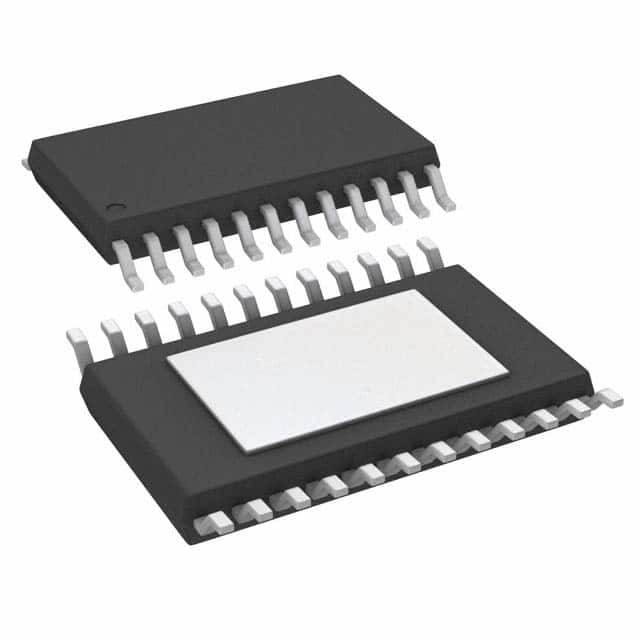
Monolithic Power Systems Inc. MP86950GLVT-Z
- Part No.:
- MP86950GLVT-Z
- Manufacturer:
- Monolithic Power Systems Inc.
- Category:
- Full Half-Bridge (H Bridge) Drivers
- Package:
- 27-PowerVFLGA
- Datasheet:
-
 MP86950GLVT-Z.pdf
- Description:
- IC HALF BRIDGE DRIVER 50A 27TLGA
- Quantity:
- Payment:

- Shipping:

Inventory:5,427
Please send an inquiry. Send us your inquiry, and we will respond immediately.
Product details
Overview
MP86950GLVT-Z from Monolithic Power Systems is a monolithic half-bridge Intelli-Phase™ solution integrating high-side and low-side power MOSFETs, gate drivers, Accu-Sense™ current sensing, temperature sensing, and fault reporting in a single TLGA-27 package. It delivers 50A continuous output current across 4.5V–16V input, supports 100kHz–2MHz switching, and enables diode emulation via tri-state PWM for server core voltage regulation.
For engineers reviewing the MP86950GLVT-Z datasheet, MP86950GLVT-Z pinout, MP86950GLVT-Z application, or MP86950GLVT-Z equivalent, key selection criteria include its integrated 50A half-bridge topology, bidirectional CS output (10μA/A), TMON/FLT dual-function junction temperature reporting (8mV/°C), dead time control (3–35ns), and compatibility with multi-phase buck controllers requiring precise phase-current balancing and active voltage positioning.
Technical Context
The MP86950GLVT-Z implements a fully integrated synchronous half-bridge architecture with internal HS/LS MOSFETs and level-shifted gate drivers optimized for high-frequency buck conversion. Its functional block includes zero-current detection (ZCD), cycle-by-cycle HS current limiting (75A), negative LS current limiting (−30A), and over-temperature shutdown at 160°C with 30°C hysteresis.
It operates with external 3.3V supplies on VDD and VDRV, accepts tri-state PWM inputs (1.10–1.90V mid-range) to enable diode emulation mode, and provides a bi-directional current-source CS output referenced to an external common-mode voltage - enabling real-time inductor current monitoring for controller-based current balancing and droop compensation.
Key Specifications
| Parameter | Value and Actual Design Meaning |
|---|---|
| Continuous Output Current | 50A - Enables single-phase core rail delivery in high-density server VRMs without external MOSFETs or driver ICs. |
| Input Voltage Range | 4.5V to 16V - Supports 5V, 12V, and hybrid intermediate bus architectures in datacenter power systems. |
| Switching Frequency Range | 100kHz to 2MHz - Allows optimization of inductor size vs. efficiency trade-offs in compact multi-phase designs. |
| Current Sense Gain | 10μA/A with ±2% accuracy - Provides linear, bidirectional inductor current feedback for precise phase-current matching and OCP. |
| Junction Temp Sensing | 8mV/°C with 800mV offset at 25°C - Enables real-time thermal monitoring and closed-loop thermal management without external sensors. |
| HS Current Limit Threshold | 75A (cycle-by-cycle, 4-cycle latch) - Protects against short-circuit and overload while supporting transient current demands in CPU/GPU rails. |
| Dead Time Control | 3ns (rising), 6ns/35ns (falling, positive/negative current) - Minimizes shoot-through risk and conduction losses across load conditions. |
Pinout & Package
The MP86950GLVT-Z is housed in a thermally enhanced TLGA-27 (4mm × 5mm) package with exposed PGND pads for low-impedance heat dissipation and optimized parasitic inductance. The package features 27 terminals, including multiple VIN, PGND, and AGND pins for high-current routing and noise isolation.
| Pin/Terminal | Circuit Role | Design Meaning |
|---|---|---|
| 1 | TMON/FLT | Dual-function pin: junction temperature sense output (8mV/°C) and open-drain fault flag pulled to VDD during OC/OTP/SW-PGND faults. |
| 2, 23 | AGND | Analog ground reference for VDD, VDRV, CS, and PWM logic - must be isolated from power ground to avoid noise coupling into sensing paths. |
| 3 | VDD | 3.3V supply for internal logic and protection circuitry; requires ≥1µF ceramic decoupling to AGND. |
| 4 | VDRV | 3.3V supply for gate drivers; decoupled with 1–4.7µF ceramic capacitor to AGND to sustain peak gate charge current. |
| 6, 7, 13, 14, 15, 26 | PGND | Power ground return for HS/LS MOSFETs and SW node; connects directly to thermal pad for thermal and EMI performance. |
| 8–12 | SW | Switch node output connecting internal HS/LS FETs; carries full 50A pulsed current and requires low-inductance layout to minimize ringing. |
| 16–18 | VIN | Main power input (4.5–16V); routed with wide copper and multiple vias to PGND to reduce IR drop and switching loop inductance. |
| 19 | PHASE | Internal connection to SW; used externally only for bootstrap capacitor return - must be placed adjacent to BST with minimal trace length. |
| 20 | BST | Bootstrap supply for HS gate driver; requires 0.1–1µF ceramic capacitor between BST and PHASE to sustain gate drive above VIN. |
| 21 | PWM | Tri-state digital input (0.8V low / 1.1–1.9V mid / 2.35V high); mid-state enables diode emulation mode via ZCD detection. |
| 22 | EN | Active-high enable; pulled low disables device and places SW in high-impedance state - used for phase shedding and sequencing. |
| 25 | CS | Bidirectional current-source output (10μA/A); sinks/sourcing current proportional to inductor current for controller-based current sensing. |
Key Features
| Feature | Design Value |
|---|---|
| Integrated Half-Bridge with MOSFETs & Drivers | Eliminates discrete driver + dual-MOSFET layout complexity, reduces BOM count by ≥5 components, and cuts PCB area by >40% vs. discrete solutions. |
| Accu-Sense™ Bidirectional Current Sensing | Delivers ±2% gain accuracy and linear 0.7–2.1V CS voltage range - enables precise per-phase current reporting for dynamic load-line control and AVP. |
| Tri-State PWM Interface | Supports seamless transition to diode emulation mode without external logic, reducing light-load conduction losses and improving efficiency below 10% load. |
| Dual-Function TMON/FLT Pin | Combines real-time junction temperature telemetry (8mV/°C) and fault signaling (open-drain pull-up to VDD) on one pin - simplifies system monitoring and reduces GPIO usage. |
| Programmable HS Current Limit & OTP Protection | 75A cycle-by-cycle HS limit with 4-cycle latch and 160°C OTP with 30°C hysteresis provide robust, self-resetting protection without external circuitry. |
Applications
| Server Core Voltage Regulation | GPU Power Delivery |
|---|---|
Use Scenario: High-current, multi-phase buck converter supplying CPU VDD_SOC or VDD_IO rails in cloud-scale servers. IC Role / Device Role / Timing Role: Monolithic half-bridge power stage delivering up to 50A per phase with integrated current and temperature telemetry. Use Value: Enables <1.5mm² per-phase footprint, eliminates gate driver timing skew, and supports phase shedding via EN pin for dynamic efficiency scaling. | Use Scenario: Compact, high-efficiency VRM powering discrete graphics processing units in AI accelerators and gaming workstations. IC Role / Device Role / Timing Role: Synchronous buck power stage operating at 800kHz–1.2MHz with diode emulation for improved light-load efficiency. Use Value: Reduces thermal hotspots through TLGA-27's low θJB (3.1°C/W), supports fast transient response via accurate CS feedback, and simplifies layout with integrated bootstrap circuitry. |
| AI Accelerator Module Power | High-Density Power Modules |
Use Scenario: On-board power stage in FPGA or ASIC accelerator modules where space, thermal density, and current accuracy are critical. IC Role / Device Role / Timing Role: Single-chip half-bridge providing 50A output with bidirectional current sense and junction temperature reporting for closed-loop thermal derating. Use Value: Delivers ±2% current measurement accuracy for per-module current balancing and enables predictive thermal throttling using TMON/FLT analog output. | Use Scenario: Embedded power module design targeting telecom baseband units and edge computing platforms requiring scalable, pre-validated power stages. IC Role / Device Role / Timing Role: Plug-in half-bridge building block with standardized TLGA-27 footprint and pin-compatible layout across MPS Intelli-Phase portfolio. Use Value: Accelerates module development with validated thermal and EMI layout guidelines, reduces qualification time via integrated protection features, and supports volume production with tape-and-reel packaging (5000/reel). |
Equivalent & Alternatives
The following parts are listed as comparable options for similar monolithic half-bridge power stage applications.
| Alternative Part | Technical Difference | Application Difference | Selection Advice |
|---|---|---|---|
| MP86932GLVT-Z | 32A rated, same TLGA-27 package, identical pinout and feature set except lower current rating and reduced HS current limit (45A). | Suitable for lower-power server DIMMs or peripheral rails where 50A headroom is unnecessary. | Select when thermal budget or cost sensitivity outweighs need for 50A capability; shares layout and firmware compatibility. |
| ISL99390HRZ-T | 50A rating, QFN-32 package, supports 3.3V VDD/VDRV but lacks integrated Accu-Sense™ CS and uses separate TEMP/FLT pins. | Requires external current-sense amplifier and thermal monitoring circuitry; higher component count and layout complexity. | Choose only if existing design uses Renesas ecosystem or requires pin-level compatibility with ISL993xx family; no CS or TMON/FLT integration benefit. |
Compared with MP86932GLVT-Z and ISL99390HRZ-T, the MP86950GLVT-Z uniquely combines 50A capability, single-pin TMON/FLT telemetry, and Accu-Sense™ bidirectional current sensing in a 4mm×5mm footprint - delivering the highest functional integration and smallest per-amp footprint for next-gen server VRMs.
Availability
MP86950GLVT-Z is available at Aetrix Electronics and suitable for server core voltage regulation, GPU power delivery, AI accelerator module power, and high-density power modules requiring stable component supply, long-term lifecycle support, and RoHS-compliant packaging.
Supply support for MP86950GLVT-Z includes scheduled delivery planning, volume procurement assistance, BOM continuity management, traceable sourcing, and lifecycle availability coordination for OEM customers, industrial embedded developers, connected-device designers, and electronics production programs.
Manufacturer
Monolithic Power Systems (MPS) is a fabless semiconductor company specializing in high-performance power management ICs, with design centers in the US, China, and Taiwan, and global manufacturing partnerships.
The MP86950 belongs to MPS's Intelli-Phase™ monolithic power stage product line, engineered specifically for high-current, high-frequency DC-DC conversion in datacenter and AI infrastructure where integration, thermal performance, and current sensing accuracy are critical.
FAQ
What is the recommended input capacitance for MP86950GLVT-Z?
Place ceramic input capacitors (MLCCs) as close as possible to the VIN and PGND pins, using multiple 0402 or 0805 packages. Total capacitance should be ≥22µF with low-ESR/ESL characteristics; layout priority is minimizing loop inductance over absolute capacitance value.
How does the TMON/FLT pin differentiate between temperature reporting and fault signaling?
When active and fault-free, TMON/FLT outputs a linear 8mV/°C voltage with 800mV offset (e.g., 0.8V at 25°C, 1.4V at 100°C). During any fault (OC, OTP, SW-PGND short), it is actively pulled to VDD voltage level - overriding the analog temperature signal and providing unambiguous fault indication.
Can MP86950GLVT-Z operate without an external bootstrap capacitor?
No. The BST pin requires a 0.1µF–1µF ceramic capacitor connected between BST and PHASE to generate the floating voltage needed to drive the high-side MOSFET gate above VIN. Omitting this capacitor prevents HS-FET turn-on and causes immediate functional failure.
What is the minimum PWM pulse width supported, and why does it matter?
The MP86950GLVT-Z supports a minimum PWM pulse width of 20ns. This enables stable operation at high switching frequencies (up to 2MHz) and fine-grained duty-cycle control for tight output voltage regulation - especially critical in low-VOUT, high-current applications like CPU core rails.
Does the CS pin require external amplification or filtering?
No. The CS pin is a calibrated current source (10μA/A, ±2%) designed to interface directly with standard controller current-sense inputs. A single resistor from CS to a stable common-mode voltage (e.g., 1.65V) sets the output voltage range (0.7–2.1V); no op-amp or RC filtering is required for basic operation.
How is the dead time adjusted, and is it user-configurable?
Dead time is fixed by internal circuitry: 3ns for rising edge, 6ns for falling edge under positive inductor current, and 35ns under negative current. It is not user-configurable but is optimized to prevent shoot-through while minimizing conduction loss - verified across process, voltage, and temperature corners.
What thermal metrics define the TLGA-27 package's cooling performance?
The TLGA-27 package has θJB = 3.1°C/W (junction-to-board) and θJC_TOP = 9.1°C/W (junction-to-case top). These values assume proper PCB layout: ≥6 thermal vias under the exposed PGND pad, 2oz copper on inner layers, and adequate copper pour - enabling 50A operation within 125°C junction limit at 20°C ambient with 200LFM airflow.
MP86950GLVT-Z Specifications
- Product attributes
- Attribute value
- Manufacturer:
- Monolithic Power Systems Inc.
- Series:
- Intelli-Phase™
- Package/Case:
- 27-PowerVFLGA
- Packaging:
- Tape & Reel (TR)
- Product Status:
- Active
- Output Configuration:
- Half Bridge
- Applications:
- Buck Converters
- Interface:
- Analog, PWM
- Load Type:
- Inductive
- Technology:
- Power MOSFET
- Rds On (Typ):
- -
- Current - Output / Channel:
- 50A
- Current - Peak Output:
- 90A
- Voltage - Supply:
- 3V ~ 3.6V
- Voltage - Load:
- 4.5V ~ 16V
- Operating Temperature:
- -40°C ~ 125°C (TJ)
- Grade:
- -
- Qualification:
- -
- Features:
- Bootstrap Circuit, Diode Emulation
- Fault Protection:
- Current Limiting, ESD, Over Temperature, UVLO
- Mounting Type:
- Surface Mount
- Supplier Device Package:
- 27-TLGA (4x5)
MP86950GLVT-Z FAQ
1.How can I place an order for MP86950GLVT-Z through Aetrix?
Please submit a Request for Quotation (RFQ) for MP86950GLVT-Z on Aetrix. Our sales agent will provide a competitive quotation and guide you through the order confirmation once you accept the terms.
2.Are the price and stock information for MP86950GLVT-Z reliable?
The price and inventory of MP86950GLVT-Z are updated periodically and may fluctuate due to market conditions. Stock and pricing data are typically refreshed every 24 hours. Quotation validity for MP86950GLVT-Z is usually 5 days.
3.What payment methods are accepted for MP86950GLVT-Z?
We accept Wire Transfer, PayPal, Credit Card, Western Union, MoneyGram, and Escrow for MP86950GLVT-Z transactions.
Note: Certain payment methods may incur a processing fee.
4.How is shipping managed for MP86950GLVT-Z?
MP86950GLVT-Z orders can be shipped via leading logistics carriers, including DHL, UPS, FedEx, TNT, or Registered Mail.
Once your MP86950GLVT-Z order is processed, you will receive an email with the shipment details and tracking number.
Note: Tracking information may take up to 24 hours to appear. Express delivery typically takes 3–5 business days.
5.How can I obtain technical support or documentation for MP86950GLVT-Z?
For technical support, including MP86950GLVT-Z datasheets, pinout diagrams, or application guidance, please contact our engineering support team. They can provide detailed documentation and assistance for your MP86950GLVT-Z requirements.
6.How does Aetrix verify that MP86950GLVT-Z is sourced from the original manufacturer or authorized distributors?
All MP86950GLVT-Z products on Aetrix are procured from qualified distributors and authorized channels. Our dedicated quality assurance team conducts strict verification, including traceability checks and, if necessary, third-party testing. This ensures that MP86950GLVT-Z meets industry standards.
7.What is the process for return or replacement of MP86950GLVT-Z?
All MP86950GLVT-Z units undergo pre-shipment inspection (PSI). If there is an issue with MP86950GLVT-Z, returns or replacements are accepted under the following conditions:
1.Quantity discrepancies, incorrect items, or visible external defects (such as breakage or corrosion), acknowledged by Aetrix.
2.The issue is reported within 90 days of delivery.
3.The MP86950GLVT-Z part is unused and in its original packaging.
Return procedure for MP86950GLVT-Z:
1.Submit a request within 90 days.
2.Obtain a Return Material Authorization (RMA) from Aetrix.
MP86950GLVT-Z Tags
-
NCP1393BDR2G
onsemi
-
A3909GLNTR-T
Allegro MicroSystems
-
NCP51530BDR2G
onsemi
-
A3909GLYTR-T
Allegro MicroSystems
-
SIC631CD-T1-GE3
Vishay Siliconix
-
BTN70301EPAXUMA1
Infineon Technologies

-
TDA21520AUMA1
Infineon Technologies
-
AOZ5116QI
Alpha & Omega Semiconductor Inc.
-
IRSM005-301MHTR
Infineon Technologies
-
IRSM005-301MH
Infineon Technologies
-
MP6610GJ-Z
Monolithic Power Systems Inc.
-
DRV8908QPWPRQ1
Texas Instruments
Tech Hub

Jumper cables guide covering safe connection order, red and black clamp placement, final ground connection, cable gauge, length, clamp quality, copper vs CCA cables, jump starter comparison and battery…

LDO regulator guide covering low dropout voltage, power dissipation, thermal design, PSRR, output noise, capacitor stability, adjustable LDO circuits, LDO vs buck converter and datasheet selection chec…

Conditional Access Module guide covering CAM meaning, CI/CI+ interface, smart card authorization, DVB security workflow, TV and set-top box compatibility, internal electronics, ESD protection, connecto…

Guide to electronic component obsolescence covering EOL risk, PCN/PDN notices, last-time buy planning, replacement options, form-fit-function validation, counterfeit risk and BOM lifecycle management.

18650 battery guide covering lithium-ion cell basics, 3.6V/3.7V voltage, 4.2V charging, mAh and Wh capacity, protected cells, chargers, BMS, series-parallel packs, holders, welding and sourcing checks.…

Hall effect sensor guide covering working principle, linear and digital sensors, Arduino circuits, current sensing, speed detection, automotive applications, A3144 examples, signal filtering and datash…

Product Change Notification guide for electronic components, covering PCN meaning, PCN vs PDN/EOL, common change types, risk levels, form-fit-function review, engineering validation, BOM control, LTB/L…

A practical guide to blend door actuators, covering HVAC function, symptoms, location, AC and heater issues, reset and calibration, replacement cost, electrical diagnosis, compatibility checks, and rep…

Engineering guide to Raspberry Pi alternatives, covering chip-level differences, Orange Pi, ROCK, Jetson, Banana Pi, NanoPi, Compute Module, Pico, GPIO, camera, HAT compatibility, and replacement risks…
Engineering guide to dynamic load response testing for high-current buck converters, covering load step setup, slew rate, Vcore undershoot, overshoot, recovery time, probe location, output capacitors a…


