
 My Inquiry
 My Account


Renesas UPD168111AMA-6A5-E2-A
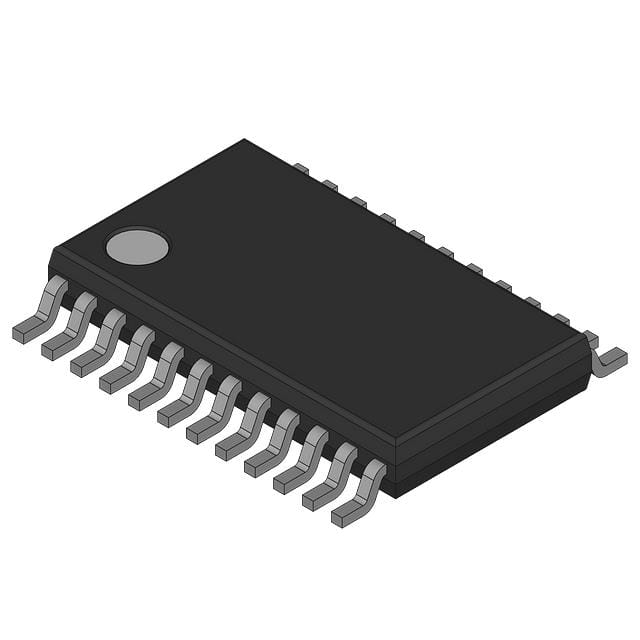
- Part No.:
- UPD168111AMA-6A5-E2-A
- Manufacturer:
- Renesas
- Category:
- Full Half-Bridge (H Bridge) Drivers
- Package:
- -
- Datasheet:
-
 UPD168111AMA-6A5-E2-A.pdf
- Description:
- MOTION CONTROL ELECTRONIC, CMOS
- Quantity:
- Payment:

- Shipping:

Inventory:7,500
Please send an inquiry. Send us your inquiry, and we will respond immediately.
Product details
Overview
UPD168111AMA-6A5-E2-A from Renesas Electronics is a monolithic 2-channel H-bridge microstep driver IC for digital still camera lens actuation, featuring 64-step microstepping, two-phase excitation mode, serial 16-bit configuration interface (LSB-first), and P-channel high-side MOSFETs eliminating charge-pump circuitry. It operates from a 2.7–3.6 V logic supply and supports motor power up to 15 V.
For engineers reviewing the UPD168111AMA-6A5-E2-A datasheet, UPD168111AMA-6A5-E2-A pinout, UPD168111AMA-6A5-E2-A application, or UPD168111AMA-6A5-E2-A equivalent, key selection considerations include its 24-pin TSSOP package, 6 MHz max serial clock frequency, undervoltage lockout at 1.7 V, Hi-Z output disable via EN/RESETB, and dual-channel current feedback architecture optimized for low-noise lens positioning.
Technical Context
The UPD168111AMA-6A5-E2-A integrates a CMOS control block and MOS output stage with independent current-sense resistors per channel (FB1/FB2), enabling closed-loop 64-step microstepping via internal D/A + PWM synthesis of dummy sine waves. Its oscillator uses external capacitor (COSC) or crystal (OSCIN) input for timing generation.
It implements a dual-mode excitation controller: selectable microstep (64 steps/rev) or two-phase full-step mode, with acceleration/deceleration parameters programmable via serial register addresses 0–5. Motor position monitoring is supported through MOB phase-detection output and EXT0/EXT1 logic monitor pins.
Key Specifications
| Parameter | Value and Actual Design Meaning |
|---|---|
| Output Channels | 2 independent H-bridge drivers with P-channel high-side and N-channel low-side MOSFETs |
| Microstep Resolution | 64-step per electrical cycle - enables precise lens focus positioning with sub-degree angular control |
| Logic Supply Range | 2.7 V to 3.6 V - compatible with 3.3 V systems; undervoltage lockout activates at 1.7 V (typ) |
| Serial Interface | 16-bit LSB-first SPI-like protocol (SCLK/SDATA/LATCH); 6 MHz max SCLK frequency |
| Current Feedback | Analog current sensing via external sense resistors on FB1/FB2 pins - enables real-time chopper control |
| Package | 24-pin TSSOP (5.72 mm width) - surface-mount, thermally enhanced for compact camera modules |
| Standby Current | 30 µA max (CLK off) or 300 µA max (CLK on) - critical for battery-powered camera power budgeting |
Pinout & Package
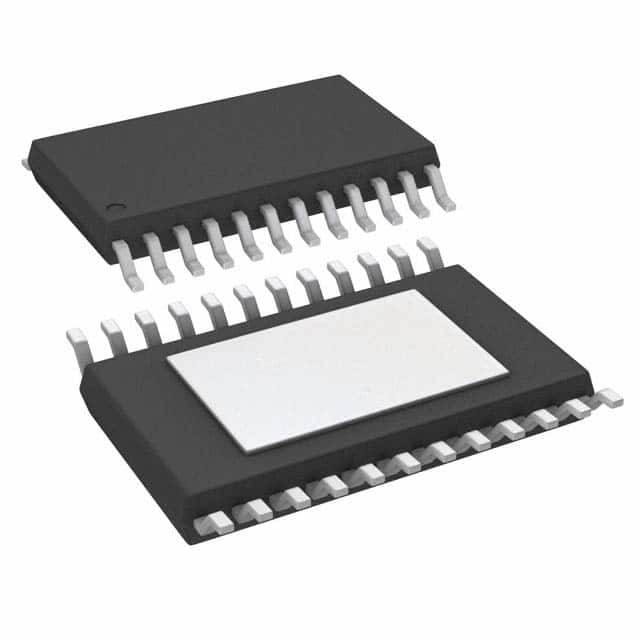
UPD168111AMA-6A5-E2-A is housed in a 24-pin plastic TSSOP (5.72 mm body width, 0.65 mm pitch), with exposed thermal pad not electrically connected. Pin 1 is top-left corner (LATCH), pin 24 is top-right (OSCIN), and pin 13 (RESETB) is center-top.
| Pin/Terminal | Circuit Role | Design Meaning |
|---|---|---|
| SCLK | Serial clock input | Synchronizes 16-bit SDATA loading; rising edge triggers bit sampling |
| SDATA | Serial data input | LSB-first 16-bit command stream; address bits Df–Dd select registers 0–5 |
| MOB | Motor phase detection output | Indicates one-phase or two-phase excitation position; used for closed-loop stop detection |
| EN | Output enable control | Active-high: enables pulse output; low forces Hi-Z outputs and enters standby mode |
| RESETB | Active-low reset input | Pulls all registers to 0; disables outputs and reduces current to 1 µA max |
| OUT1A/OUT1B, OUT2A/OUT2B | H-bridge motor outputs | Drive stepper coil terminals; support bidirectional current flow for CW/CCW control |
| FB1/FB2 | Current sense inputs | Connect to external sense resistors; feed back voltage proportional to motor phase current |
| VM1/VM2 | Motor power supply inputs | Accept up to 15 V; separate from logic VDD to isolate noise and optimize efficiency |
Key Features
| Feature | Design Value |
|---|---|
| No charge pump required | P-channel high-side MOSFETs eliminate external charge-pump components - reduces BOM count and board area |
| Programmable acceleration/deceleration | Configurable via Address 3 registers - prevents step loss during lens start/stop transitions |
| Dual excitation modes | Runtime-selectable 64-step microstep or two-phase full-step - balances resolution vs. torque for zoom/focus tasks |
| Stop-mode auto-hold | MOB-triggered stop mode retains excitation state without CPU intervention - maintains lens position during idle |
| Low-power standby | 30 µA max quiescent current with CLK disabled - extends battery life in always-on camera modules |
Applications
| Auto-Focus Lens Control | Optical Zoom Actuation |
|---|---|
|
Use Scenario: Precise positioning of lens elements in DSLR or mirrorless camera bodies during autofocus acquisition. IC Role / Device Role / Timing Role: Dual-channel microstep driver executing 64-step position commands from host MCU via serial interface; MOB pin confirms final focus position. Use Value: Enables sub-micron lens movement resolution and silent operation - critical for video AF and low-light performance. |
Use Scenario: Smooth, jitter-free extension/retraction of multi-element zoom lenses in compact digital cameras. IC Role / Device Role / Timing Role: Two-phase excitation mode delivers maximum torque for mechanical load; acceleration/deceleration registers prevent gear slippage. Use Value: Eliminates audible stepping noise and mechanical backlash - improves user experience and lens longevity. |
| Image Stabilization Compensation | Camera Module Calibration |
|
Use Scenario: Real-time correction of hand-shake-induced image blur using piezo or voice-coil assisted lens shift. IC Role / Device Role / Timing Role: High-speed microstep updates (via serial interface) respond to gyro/accelerometer feedback within <1 ms latency. Use Value: Achieves ±0.5° angular correction range with 0.01° step resolution - meets OIS performance targets. |
Use Scenario: Factory calibration of lens position sensors and encoder alignment during camera module assembly. IC Role / Device Role / Timing Role: Uses EXT0/EXT1 monitor outputs and MOB status to verify excitation sequence fidelity across temperature/voltage corners. Use Value: Reduces test time by enabling automated pass/fail validation of microstep linearity and phase matching. |
Equivalent & Alternatives
The following parts are listed as comparable options for similar microstep driver applications.
| Alternative Part | Technical Difference | Application Difference | Selection Advice |
|---|---|---|---|
| TB6600HG | Higher voltage rating (40 V VM), but requires external charge pump and lacks integrated microstep waveform synthesis | Better suited for industrial stepper motors; not optimized for low-noise, low-voltage camera lens loads | Choose TB6600HG only if >15 V motor supply or higher current (>2 A) is required; UPD168111AMA-6A5-E2-A offers superior integration for portable optics. |
| LV8731V | Single-channel, 32-step microstepping, no MOB position feedback output; smaller 16-pin HTSSOP package | Limited to simpler focus-only modules; cannot support dual-axis zoom+focus or OIS compensation | Select LV8731V for space-constrained single-lens designs where 64-step resolution and position confirmation are unnecessary. |
Compared with TB6600HG and LV8731V, the UPD168111AMA-6A5-E2-A uniquely combines dual-channel 64-step microstepping, on-chip sine-wave synthesis, MOB-based position verification, and ultra-low standby current - making it purpose-built for high-fidelity, battery-efficient camera lens actuation.
Availability
UPD168111AMA-6A5-E2-A is available at Aetrix Electronics and suitable for digital still camera autofocus systems, optical zoom mechanisms, and image stabilization modules requiring stable component supply, long-term lifecycle support, and RoHS-compliant packaging.
Supply support for UPD168111AMA-6A5-E2-A includes scheduled delivery planning, volume procurement assistance, BOM continuity management, traceable sourcing, and lifecycle availability coordination for OEM customers, industrial embedded developers, connected-device designers, and electronics production programs.
Manufacturer
Renesas Electronics Corporation is a global semiconductor leader specializing in microcontrollers, analog, power, and mixed-signal solutions for automotive, industrial, and consumer applications.
The UPD168111AMA-6A5-E2-A belongs to Renesas' µPD168xx microstep driver family, designed specifically for low-voltage, low-noise precision motion control in portable imaging devices.
FAQ
What is the function of the MOB pin on the UPD168111AMA-6A5-E2-A?
The MOB pin on the UPD168111AMA-6A5-E2-A outputs a logic-level signal indicating motor excitation position - "L" during one-phase (±100% ch1) or two-phase (equal +ve ch1/ch2) states. It enables closed-loop stop detection and position verification without external encoders, directly supporting lens calibration and auto-focus confirmation in the UPD168111AMA-6A5-E2-A system.
Does the UPD168111AMA-6A5-E2-A require an external clock source?
Yes, the UPD168111AMA-6A5-E2-A requires an external clock source applied to the OSCIN pin (pin 23) to generate internal timing for PWM chopping and microstep sequencing. It accepts either a crystal (1–10 MHz) or CMOS clock signal; the COSC pin (pin 5) connects a timing capacitor only when using the internal oscillator mode - not applicable to the UPD168111AMA-6A5-E2-A's default crystal-based operation.
How does the UPD168111AMA-6A5-E2-A handle undervoltage conditions?
The UPD168111AMA-6A5-E2-A incorporates an undervoltage lockout (ULVO) circuit that disables internal operation when VDD drops below 1.7 V (typ). This prevents erratic behavior or partial drive activation during brownout events. Once VDD recovers above threshold, normal operation resumes after RESETB deassertion - ensuring robust power sequencing in battery-powered UPD168111AMA-6A5-E2-A implementations.
Can the UPD168111AMA-6A5-E2-A drive both focus and zoom motors simultaneously?
Yes, the UPD168111AMA-6A5-E2-A integrates two fully independent H-bridge channels (ch1: OUT1A/OUT1B; ch2: OUT2A/OUT2B), each with dedicated current sense (FB1/FB2), filter (FIL1/FIL2), and power (VM1/VM2) connections. This allows concurrent, asynchronous control of focus and zoom stepper motors - a core capability confirmed in the UPD168111AMA-6A5-E2-A datasheet's dual-channel block diagram and application examples.
What is the purpose of the LATCH pin on the UPD168111AMA-6A5-E2-A?
The LATCH pin (pin 24) on the UPD168111AMA-6A5-E2-A controls serial data registration: when pulled high, it enables SDATA sampling on SCLK rising edges; its falling edge latches the full 16-bit word into the selected register (addressed by Df–Dd bits). This synchronous latch mechanism ensures deterministic command execution timing - essential for reliable microstep sequencing in the UPD168111AMA-6A5-E2-A.
UPD168111AMA-6A5-E2-A Specifications
- Product attributes
- Attribute value
- Manufacturer:
- Renesas
- Series:
- *
- Package/Case:
- -
- Packaging:
- Bulk
- Product Status:
- Active
- Output Configuration:
- -
- Applications:
- -
- Interface:
- -
- Load Type:
- -
- Technology:
- -
- Rds On (Typ):
- -
- Current - Output / Channel:
- -
- Current - Peak Output:
- -
- Voltage - Supply:
- -
- Voltage - Load:
- -
- Operating Temperature:
- -
- Grade:
- -
- Qualification:
- -
- Features:
- -
- Fault Protection:
- -
- Mounting Type:
- -
- Supplier Device Package:
- -
UPD168111AMA-6A5-E2-A FAQ
1.How can I place an order for UPD168111AMA-6A5-E2-A through Aetrix?
Please submit a Request for Quotation (RFQ) for UPD168111AMA-6A5-E2-A on Aetrix. Our sales agent will provide a competitive quotation and guide you through the order confirmation once you accept the terms.
2.Are the price and stock information for UPD168111AMA-6A5-E2-A reliable?
The price and inventory of UPD168111AMA-6A5-E2-A are updated periodically and may fluctuate due to market conditions. Stock and pricing data are typically refreshed every 24 hours. Quotation validity for UPD168111AMA-6A5-E2-A is usually 5 days.
3.What payment methods are accepted for UPD168111AMA-6A5-E2-A?
We accept Wire Transfer, PayPal, Credit Card, Western Union, MoneyGram, and Escrow for UPD168111AMA-6A5-E2-A transactions.
Note: Certain payment methods may incur a processing fee.
4.How is shipping managed for UPD168111AMA-6A5-E2-A?
UPD168111AMA-6A5-E2-A orders can be shipped via leading logistics carriers, including DHL, UPS, FedEx, TNT, or Registered Mail.
Once your UPD168111AMA-6A5-E2-A order is processed, you will receive an email with the shipment details and tracking number.
Note: Tracking information may take up to 24 hours to appear. Express delivery typically takes 3–5 business days.
5.How can I obtain technical support or documentation for UPD168111AMA-6A5-E2-A?
For technical support, including UPD168111AMA-6A5-E2-A datasheets, pinout diagrams, or application guidance, please contact our engineering support team. They can provide detailed documentation and assistance for your UPD168111AMA-6A5-E2-A requirements.
6.How does Aetrix verify that UPD168111AMA-6A5-E2-A is sourced from the original manufacturer or authorized distributors?
All UPD168111AMA-6A5-E2-A products on Aetrix are procured from qualified distributors and authorized channels. Our dedicated quality assurance team conducts strict verification, including traceability checks and, if necessary, third-party testing. This ensures that UPD168111AMA-6A5-E2-A meets industry standards.
7.What is the process for return or replacement of UPD168111AMA-6A5-E2-A?
All UPD168111AMA-6A5-E2-A units undergo pre-shipment inspection (PSI). If there is an issue with UPD168111AMA-6A5-E2-A, returns or replacements are accepted under the following conditions:
1.Quantity discrepancies, incorrect items, or visible external defects (such as breakage or corrosion), acknowledged by Aetrix.
2.The issue is reported within 90 days of delivery.
3.The UPD168111AMA-6A5-E2-A part is unused and in its original packaging.
Return procedure for UPD168111AMA-6A5-E2-A:
1.Submit a request within 90 days.
2.Obtain a Return Material Authorization (RMA) from Aetrix.
UPD168111AMA-6A5-E2-A Tags
-
NCP1393BDR2G
onsemi
-
A3909GLNTR-T
Allegro MicroSystems
-
NCP51530BDR2G
onsemi
-
A3909GLYTR-T
Allegro MicroSystems
-
SIC631CD-T1-GE3
Vishay Siliconix
-
BTN70301EPAXUMA1
Infineon Technologies

-
TDA21520AUMA1
Infineon Technologies
-
AOZ5116QI
Alpha & Omega Semiconductor Inc.
-
IRSM005-301MHTR
Infineon Technologies
-
IRSM005-301MH
Infineon Technologies
-
MP6610GJ-Z
Monolithic Power Systems Inc.
-
DRV8908QPWPRQ1
Texas Instruments
Tech Hub

TTL and CMOS logic families differ in thresholds, loading, output drive, power and timing. This engineering guide compares 74HC and 74HCT, calculates noise margins and checks 3.3 V/5 V compatibility.

A practical engineering guide to 3.3V and 5V logic compatibility, input thresholds, resistor dividers, translator ICs, MOSFET level shifting, I2C pull-ups, timing limits and power-sequencing risks.

The 74HC595 uses push-pull logic outputs, while the TPIC6B595 uses 50 V open-drain DMOS sinks for higher-power loads. This guide compares timing, current limits, 3.3 V interfacing, load wiring, thermal…

The 74HC595 converts serial data into eight stable parallel outputs. This guide covers pin functions, shift and storage timing, OE and MR behavior, drive-current limits, cascading, voltage compatibilit…

A technical comparison of level-sensitive latches and edge-triggered flip-flops, covering timing windows, setup and hold limits, master–slave operation, time borrowing, race-through, HDL inference and…

A D latch stores one bit while Enable controls when data can pass. This reference covers gate-level operation, truth tables, transparency, setup and hold timing, LE versus OE, common ICs and practical …

An SR latch stores one bit through cross-coupled feedback. This engineering reference covers NOR and NAND implementations, truth tables, forbidden-state recovery, gated operation, switch debouncing, fa…

Latch circuits retain one bit through feedback. This technical reference covers SR and D latches, truth tables, transparency, timing limits, latch-versus-flip-flop behavior, applications and common log…

An engineering guide to LED driver operation, constant-current and constant-voltage outputs, linear and switching topologies, dimming, IC selection, calculations, replacement compatibility, and fault c…

Operational amplifier guide covering op amp basics, feedback, ideal vs real op amps, common configurations, buffer circuits, offset, bias current, gain-bandwidth, slew rate, rail-to-rail limits and sel…


